3-day itinerary · China

3 Days in Beijing

A realistic first-timer plan that follows Beijing's central axis on day one, from Tiananmen Square through the Forbidden City to the hill of Jingshan and the lakes of Beihai and Houhai; spends day two between the Temple of Heaven, the old shopping street of Qianmen and the Summer Palace; and gives day three to the Great Wall at Mutianyu with the Lama Temple and the hutong of Nanluoguxiang on the way back. Every stop comes with walking distances and the real-name booking rules that matter in 2026.

  • 3days
  • 13sights
  • 8.4 kmon foot between sights

Updated 12 September 2026 · 10 official sources checked · report an error

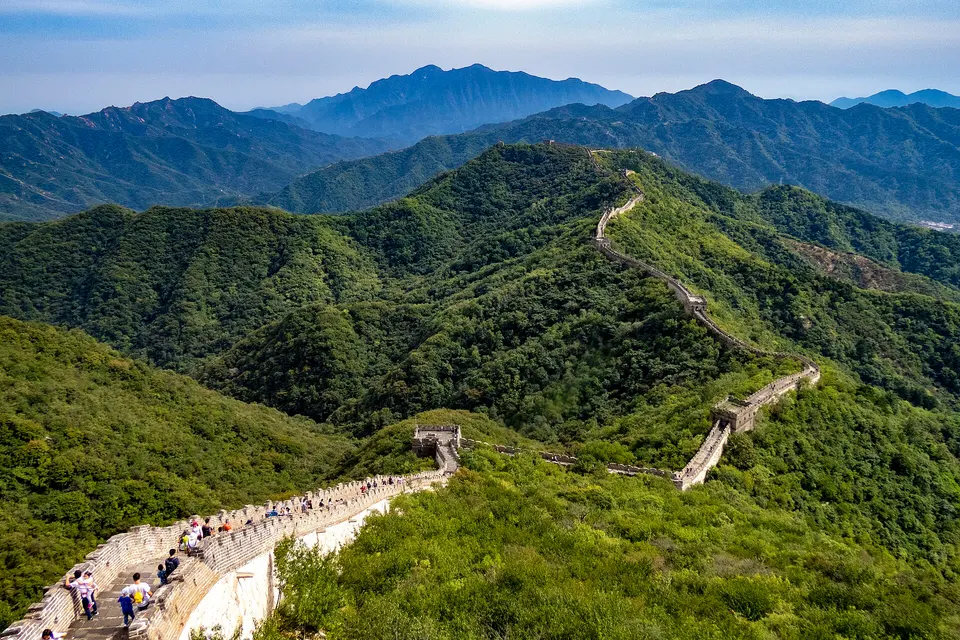
Great Wall at Mutianyu
Photo: N509FZ, CC BY-SA 4.0

The imperial axis, then heaven and the Summer Palace, then the Wall

Beijing's big sights sit on a north–south line, so day one simply walks it: Tiananmen Square, the Forbidden City from the Meridian Gate to the north gate, the view from Jingshan, Beihai's white dagoba and an evening around the Houhai lakes and the Drum Tower. Day two starts early at the Temple of Heaven with the tai chi crowd, walks up Qianmen Street for Peking duck, takes the subway out to the Summer Palace and ends on Wangfujing. Day three is the Great Wall at Mutianyu, back in the city by mid-afternoon for the Lama Temple, the Confucius Temple and the lanes of Nanluoguxiang. The Forbidden City is closed on Mondays and sells no same-day tickets, so book it a week ahead and put day one anywhere but Monday.

At a glance

Ways to use these days

Lightest day on foot
Day 1 — 4.7 km between stops
Most walking
Day 3 — 57.9 km

Day 1

The central axis: Tiananmen, the Forbidden City and the lakes

Cross Tiananmen Square at opening, walk the Forbidden City from south to north, climb Jingshan for the view over its golden roofs, cross Beihai Park past the White Dagoba, and end the day with dinner and a walk around the Houhai lakes below the Drum Tower.

  • 5 sights
  • 4.7 km on foot
  • Longest walk 1.9 km
123451 kmN
Stops in order, straight-line distancesRoute in Google Maps ↗

Morning

Tiananmen Square
Photo: N509FZ, CC BY-SA 4.0
1Public square

Tiananmen Square

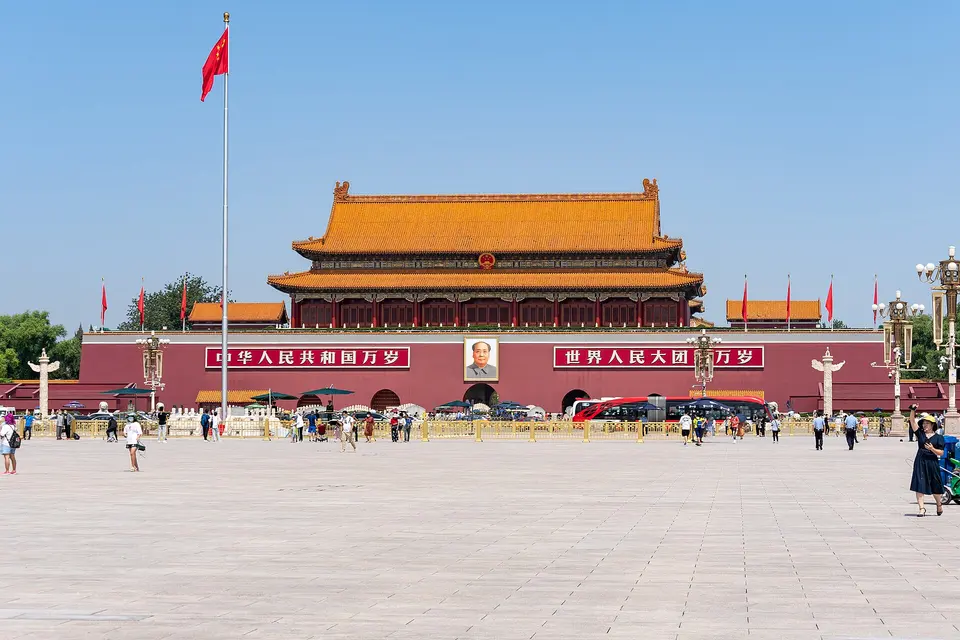
The 44-hectare square at the heart of the capital is bounded by the Great Hall of the People, the National Museum of China and the Mausoleum of Mao Zedong, with the Monument to the People's Heroes at its centre and the Tiananmen Gate, Mao's portrait and the flag-raising at sunrise to the north. It is fenced and policed: you enter through security checks with a reservation and a passport, and there is nowhere to sit, so cross it early and walk through the gate to the Forbidden City.
  • Plan about 45 min
  • Free; reservation 1–9 days ahead; passport at the checkpoint
1.3 km · about 20 min on foot
Forbidden City (Palace Museum)
Photo: N509FZ, CC BY-SA 4.0
2Imperial palace

Forbidden City (Palace Museum)

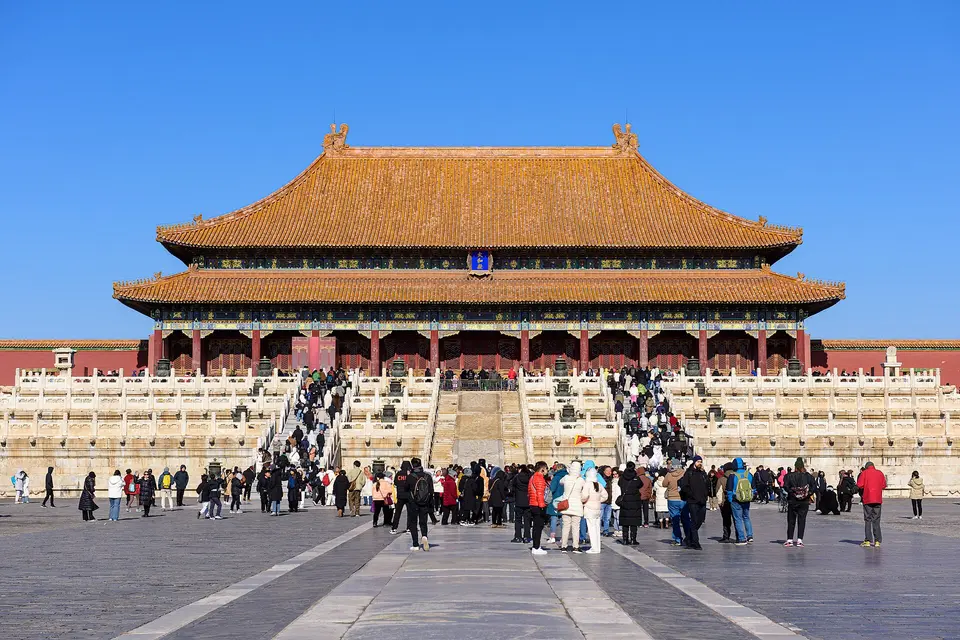
Completed in 1420 and home to 24 emperors of the Ming and Qing dynasties, the 72-hectare palace is a single walk from south to north: in through the Meridian Gate, over the marble bridges to the Hall of Supreme Harmony on its three-tiered terrace, past the throne halls to the emperors' private courtyards and the imperial garden, and out by the Gate of Divine Prowess under Jingshan. The Treasure Gallery in the north-east, with the Nine-Dragon Screen and the opera stage, and the Clock Gallery each cost a little extra and are worth it; the side courtyards are where the crowds thin.

  • Plan about 3 h 30 min
  • Closed Mondays; ¥60 (Apr–Oct) / ¥40; book 7 days ahead, no same-day tickets; last entry 16:10 (15:30 in winter)

Midday

LunchLeave the Forbidden City by the north gate and eat on Jingshan Front Street or in the lanes east of Jingshan Park: noodle shops, jianbing pancakes and dumpling houses; the park's own snack stands do for a quick lunch before the climb.

Afternoon

870 m · about 14 min on foot
Jingshan Park
Photo: N509FZ, CC BY-SA 4.0
3Park and viewpoint

Jingshan Park

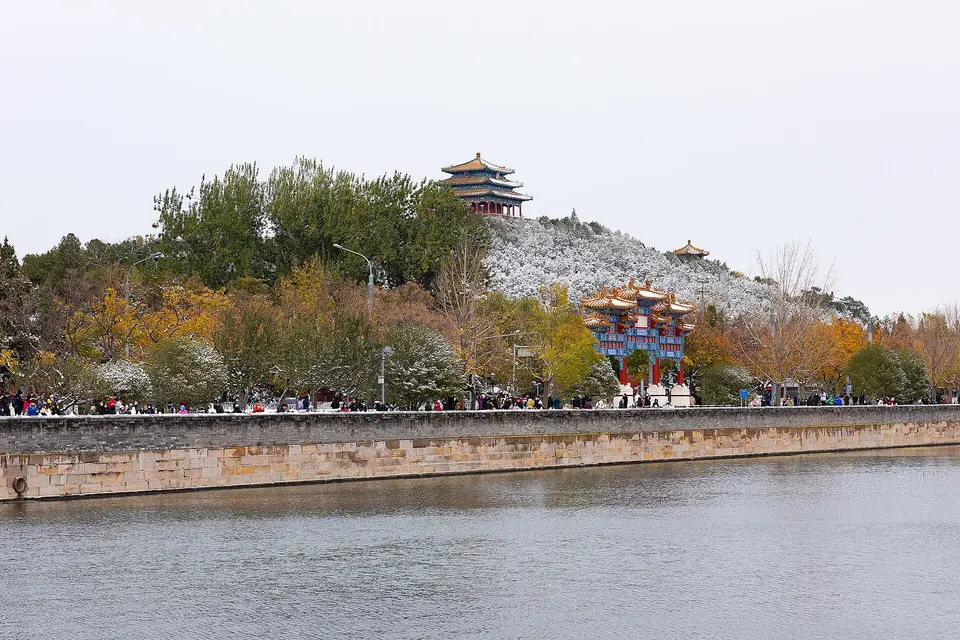
The hill directly north of the Forbidden City was piled up from the earth of its moat, and the Wanchun Pavilion on top gives the view every visitor wants: the whole palace laid out in golden roofs to the south, the Drum Tower and the lakes to the north. It is a ten-minute climb from the south gate, opposite the palace's north gate; the locust tree on the east slope marks where the last Ming emperor hanged himself in 1644 as the rebels entered the city.

  • Plan about 1 h
  • ¥2 (¥10 in mid-July to mid-August); open from 6:00
650 m · about 10 min on foot
Beihai Park
Photo: Bjoertvedt, CC BY-SA 4.0
4Imperial garden

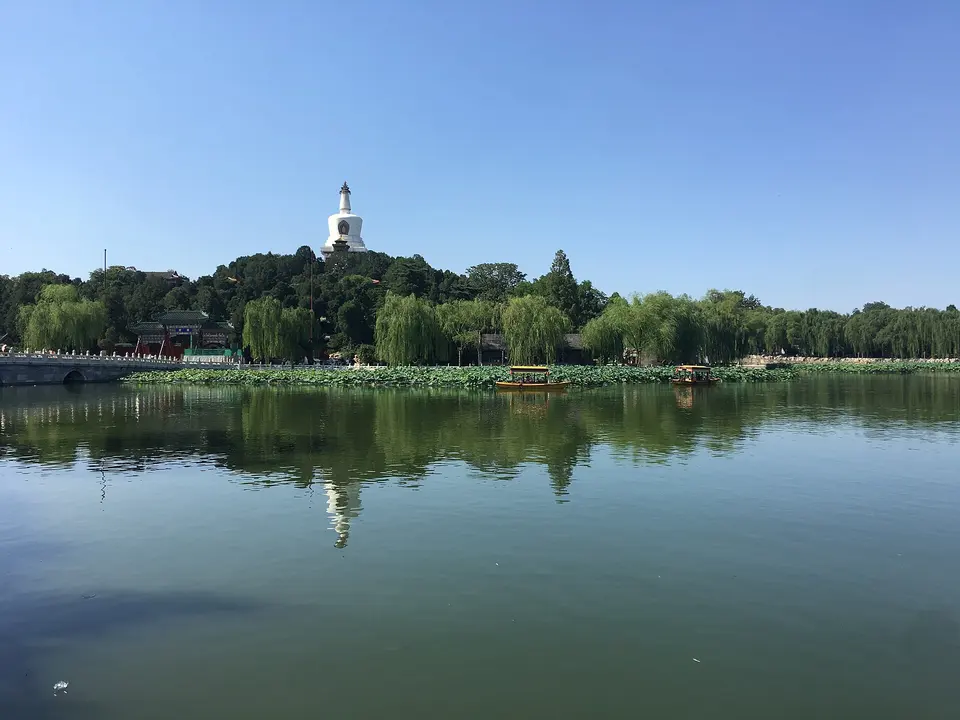
Beihai Park

An imperial garden for a thousand years and a public park since 1925, Beihai is a lake with the Jade Flower Islet in the middle and the white Tibetan-style dagoba of 1651 on top of it. Enter by the south gate opposite the Round City, cross the bridge to the island, climb to the dagoba for the view back to the Forbidden City, and walk or take the ferry to the north shore, where the Nine-Dragon Wall of 1756 stands near the north gate; pedal boats are for rent in summer, and skates in winter.

  • Plan about 1 h 15 min
  • ¥10 (Apr–Oct) / ¥5; combined ticket ¥20; island sights closed Mondays

Evening

1.9 km · about 29 min on foot
Houhai and the Shichahai lakes
Photo: Morio, CC BY-SA 4.0
5Lakes and hutong district

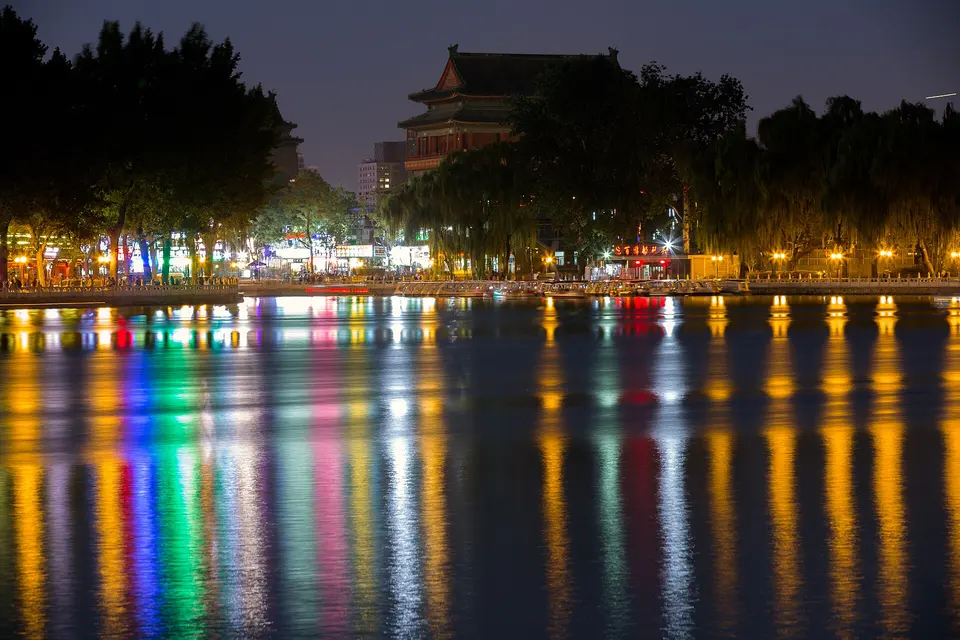
Houhai and the Shichahai lakes

North of Beihai's back gate the water continues as the three Shichahai lakes, Qianhai, Houhai and Xihai, ringed by willows, courtyard houses and hutong lanes; the Drum Tower of 1272 and the Bell Tower behind it close the view at the east end, and the Silver Ingot Bridge between the first two lakes is where the evening starts. Walk the shore, take a rickshaw through the hutong if you like, and eat in the lanes: the bars along Houhai are loud, the courtyard restaurants on Yandai Xiejie and around Gulou are better.

  • Plan about 2 h

Day 2

The Temple of Heaven, Qianmen and the Summer Palace

Join the morning exercisers in the Temple of Heaven park, see the Hall of Prayer for Good Harvests, walk up Qianmen Street for a Peking duck lunch in the old shops of Dashilan, take the subway out to the Summer Palace for the afternoon, and finish on the lights of Wangfujing.

  • 4 sights
  • 1.9 km on foot
  • Longest walk 1.9 km
12345 kmN
Stops in order, straight-line distancesRoute in Google Maps ↗

Morning

Temple of Heaven
Photo: Fong Chen, Public domain
1Imperial temple complex

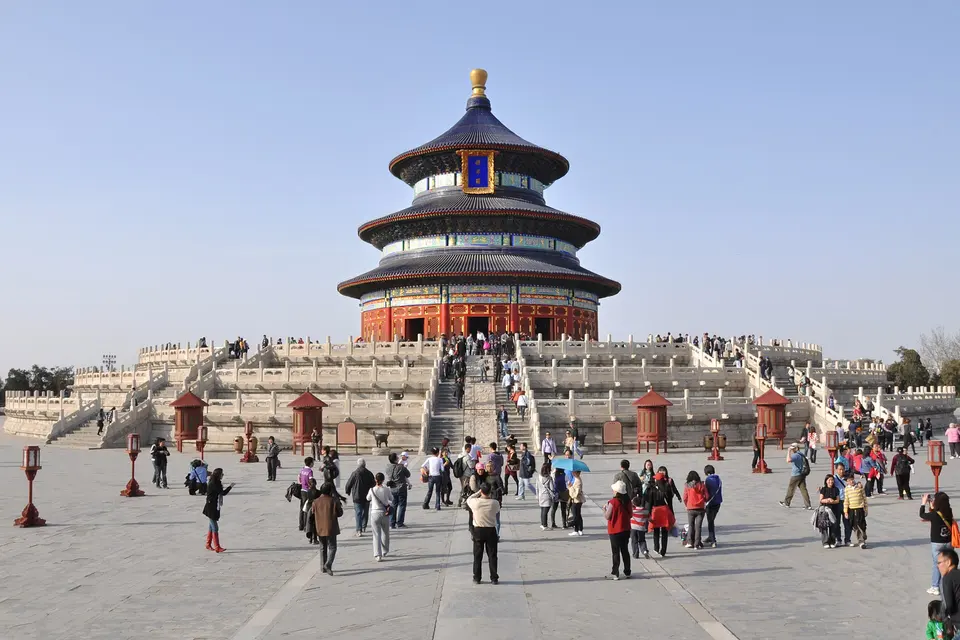
Temple of Heaven

The emperors came here each winter to pray for the harvest, and the 273-hectare park is bigger than the Forbidden City: the triple-roofed Hall of Prayer for Good Harvests, 38 metres of blue tiles and painted wood built without a nail, stands on a raised causeway that runs south to the Echo Wall, the Imperial Vault of Heaven and the open marble terraces of the Circular Mound Altar. Come in through the east gate at 8:00 and the cypress groves are full of Beijingers doing tai chi, sword drills and ballroom dancing; buy the combined ticket, the park ticket alone does not enter the halls.

  • Plan about 2 h
  • Park 6:00–22:00; halls 8:00–18:00 Tue–Sun, closed Mondays; combined ticket ¥34 (Apr–Oct)
1.9 km · about 30 min on foot
Qianmen Street and Dashilan
Photo: WiNG, CC BY-SA 3.0
2Historic shopping street

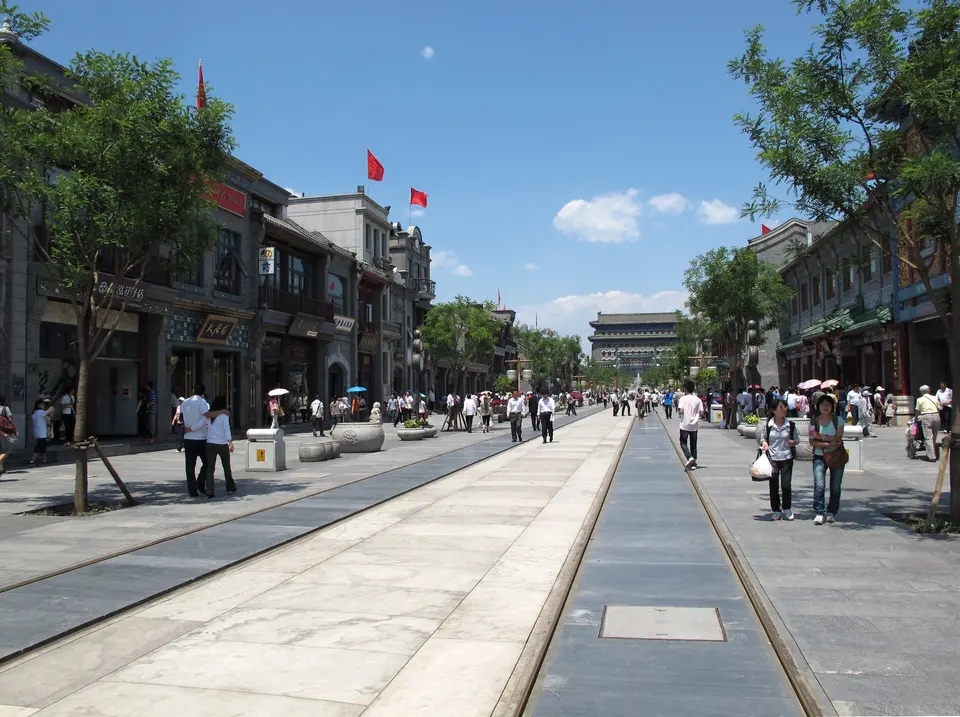
Qianmen Street and Dashilan

The pedestrian street runs 800 metres due south from the Zhengyangmen gate tower on the edge of Tiananmen Square, rebuilt in 2008 in a stage-set version of its Qing-dynasty self with a tram running down the middle; the real thing survives in Dashilan, the side street to the west, where Tongrentang has sold medicine since 1669, Ruifuxiang silk since 1893 and Neiliansheng cloth shoes since 1853, and where the duck restaurants and snack alleys are.

  • Plan about 1 h 30 min

Midday

LunchQianmen is where Peking duck was made famous: Quanjude's original 1864 branch and Bianyifang are both on the street, and the Dashilan side alleys have older, cheaper restaurants serving zhajiang noodles and boiled lamb.

Afternoon

Metro line 2 from Qianmen to Xizhimen, then line 4 to Beigongmen for the North Palace Gate, about 50 minutes; a taxi takes about 40 minutes
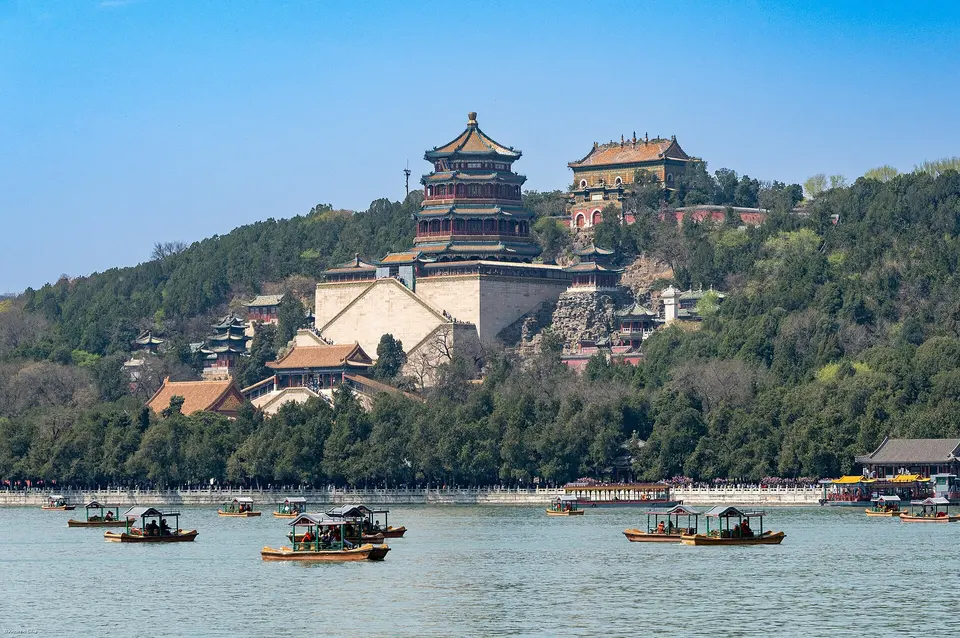
Summer Palace
Photo: xiquinhosilva, CC BY 2.0
3Imperial garden

Summer Palace

The Qing court spent its summers on this 290-hectare garden of lake and hill in the north-west of the city, laid out in 1750, burned by the British and French in 1860 and rebuilt in 1888 with money meant for the navy by the Empress Dowager Cixi, who kept the Marble Boat as a joke on the subject. Come in by the North Palace Gate, walk the shops of Suzhou Street, climb Longevity Hill to the Tower of Buddhist Incense, and come down to the 728-metre painted Long Corridor along Kunming Lake, then cross by ferry or walk the causeway to the Seventeen-Arch Bridge; allow half a day.

  • Plan about 3 h
  • Gates 6:00–19:00 (Apr–Oct); entrance ¥30, through ticket with the halls ¥60; book 1–7 days ahead or buy at the gate with a passport

Evening

Metro line 4 from Beigongmen to Xidan, then line 1 to Wangfujing, about 50 minutes
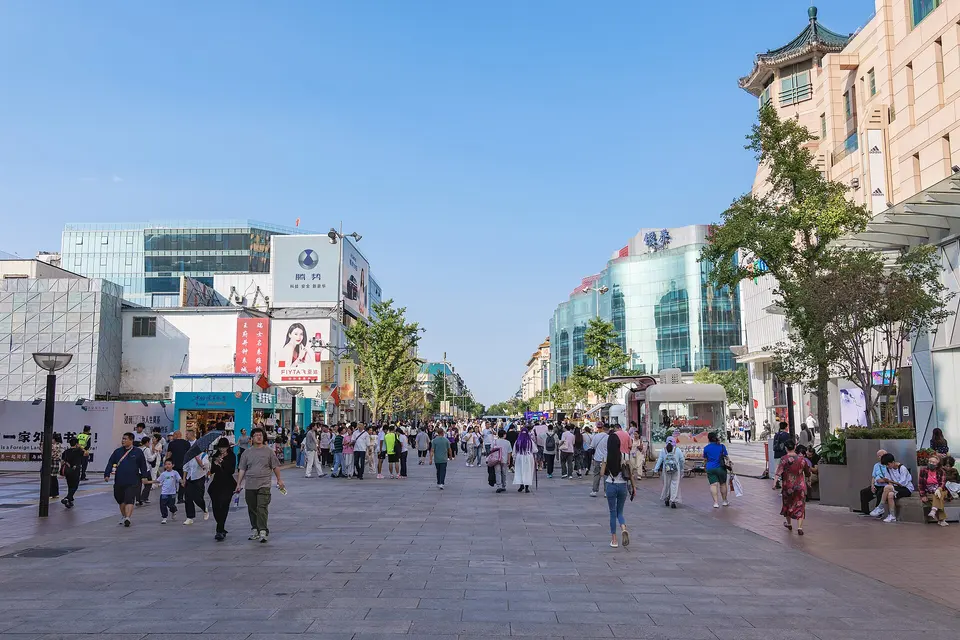
Wangfujing
Photo: TurnOnTheNight, CC BY-SA 4.0
4Shopping street

Wangfujing

Beijing's main shopping street, pedestrian since 1999, runs a kilometre north from the Oriental Plaza on Chang'an Avenue past the Beijing Department Store, the foreign-language bookshop and the malls to the grey stone front of St Joseph's, the East Church, founded by Jesuits in 1655 and rebuilt in 1904, which is lit and used as a skateboard plaza at night. It is a place for an evening walk, a duck dinner in one of the big restaurants and the night lights, not a bargain.

  • Plan about 1 h 15 min

Day 3

The Great Wall at Mutianyu, the Lama Temple and the hutong

Leave early for Mutianyu, ride the cable car up and walk the watchtowers before the tour buses arrive, come back to the city for the Lama Temple and the Confucius Temple next door, and end in the lanes of Nanluoguxiang.

  • 4 sights
  • 1.8 km on foot
  • Longest walk 1.5 km
12345 kmN
Stops in order, straight-line distancesDriving route in Google Maps ↗

Morning

Great Wall at Mutianyu
Photo: N509FZ, CC BY-SA 4.0
1Great Wall section

Great Wall at Mutianyu

Seventy kilometres north-east of the city, the 5.4-kilometre Mutianyu section climbs a wooded ridge with 22 watchtowers, restored on Ming foundations that the general Qi Jiguang strengthened in 1569; it is longer, greener and far less crowded than Badaling, and the views run along the crenellations in both directions. A shuttle bus takes you from the ticket plaza to the foot of the wall; a cable car goes up to tower 14 and a chairlift to tower 6, with a toboggan run back down, and the walk between the two is the classic hour on the wall. Towers 19 to 20, the steep unrestored stretch at the west end, are for the fit.

  • Plan about 4 h
  • 7:30–18:00 (Mar 16–Nov 15), 8:00–17:30 in winter; ¥45; ticket sales stop an hour before closing

Midday

LunchEat at the foot of the wall before the drive back: the restaurants around the Mutianyu ticket plaza and the village serve trout from the local streams, stir-fries and noodles, and the shuttle-bus stop has cafés.

Afternoon

Hired car or taxi back from Mutianyu to Yonghegong, about 90 minutes; by bus and subway allow two hours
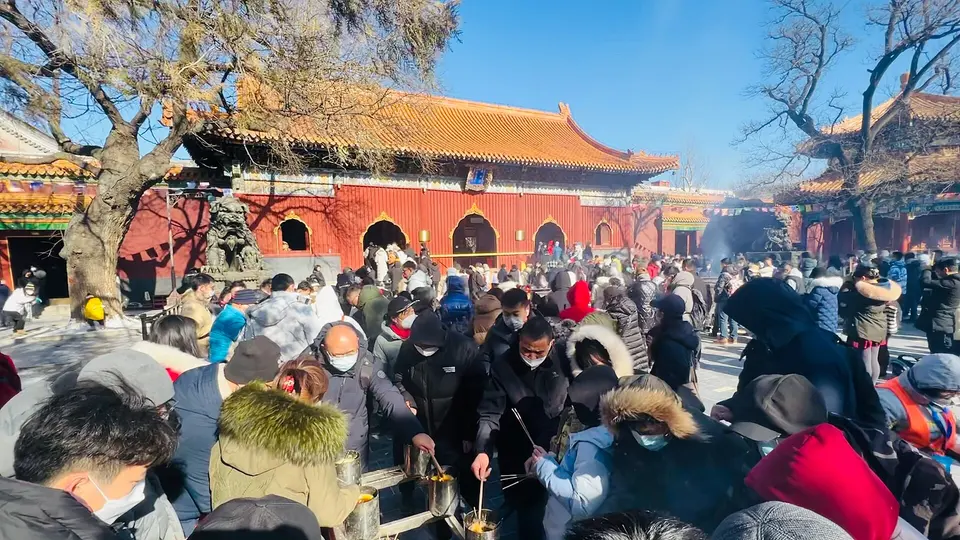
Lama Temple (Yonghe Temple)
Photo: Charlie fong, CC BY-SA 4.0
2Tibetan Buddhist temple

Lama Temple (Yonghe Temple)

Built in 1694 as the residence of the prince who became the Yongzheng Emperor and turned into a Tibetan Buddhist lamasery by his son in 1744, Yonghegong is the busiest working temple in the city: five halls in a line, each higher than the last, thick with the smoke of the incense that is handed out free at the gate, and at the end the Pavilion of Ten Thousand Happinesses with an 18-metre Maitreya Buddha carved from a single trunk of white sandalwood. Come after the Wall, when the morning crowds have gone.

  • Plan about 1 h 15 min
  • ¥25; timed ticket via the temple's WeChat mini-program, up to 10 days ahead; last entry an hour before closing
310 m · about 5 min on foot
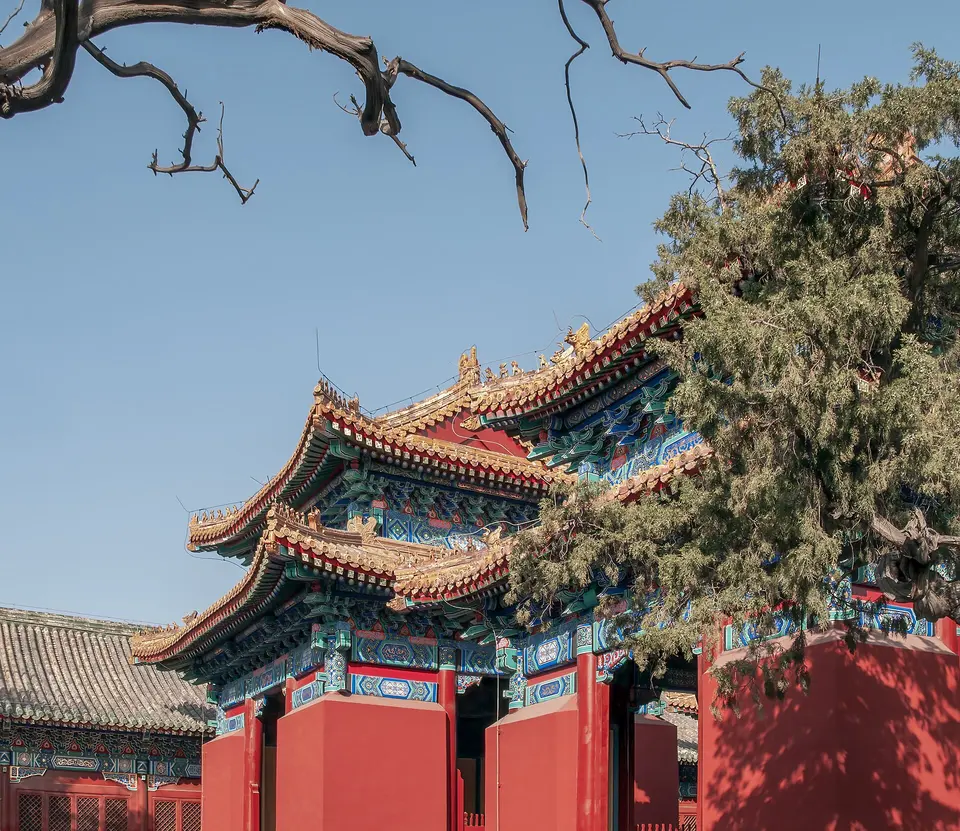
Confucius Temple and the Imperial College
Photo: Ermell, CC BY-SA 4.0
3Temple and museum

Confucius Temple and the Imperial College

Across the street from the Lama Temple, in a lane of old cypresses and painted archways, the Confucius Temple of 1302 is the quiet counterpart: 198 stone tablets in its courtyard carry the names of 51,624 scholars who passed the imperial examinations over six centuries. Next door and on the same ticket, the Imperial College, Guozijian, was the top school of the empire, with the square Biyong Hall of 1784 standing in a round pool where the emperor lectured to the students once a year.

  • Plan about 1 h
  • 9:00–17:00, closed Mondays; ¥30 for both

Evening

1.5 km · about 23 min on foot
Nanluoguxiang
Photo: Anagoria, CC BY 3.0
4Hutong street

Nanluoguxiang

The 786-metre alley has kept its Yuan-dynasty plan of 1267, with eight hutong branching off each side like the legs of a centipede, and is now the most visited lane in Beijing: snack windows, cafés, souvenir shops and courtyard bars shoulder to shoulder. The main street is packed after dark; the side hutong, Mao'er, Ju'er and Heizhima, are where the courtyard houses, the old doorways and the quiet are. Dinner is here or a short walk west at the Drum Tower.

  • Plan about 1 h 30 min

Good to know in Beijing

Tickets, reservations and opening days

  • The Palace Museum (Forbidden City) admits from 8:30, with last admission at 16:10 from April to October and 15:30 from November to March; it is closed on Mondays except statutory holidays. Admission is ¥60 in peak season and ¥40 in low season, plus ¥10 each for the Treasure Gallery and the Gallery of Clocks. No same-day tickets are sold; everyone books in advance through the museum's official website or WeChat mini-program.Source: Beijing Municipal Government, Visit Beijing · checked Sep 2026
  • Palace Museum tickets are released seven days ahead at 20:00. Tiananmen Square requires a separate free reservation, which individuals can make one to nine days in advance through the official website or the Tiananmen Square Reservation and Jing Tong mini-programs.Source: Beijing Municipal Government · checked Sep 2026
  • Mutianyu Great Wall is open 7:30–18:00 from March 16 to November 15 (until 18:30 at weekends) and 8:00–17:30 in winter; adult tickets are ¥45 and no reservation is required, tickets are sold on site. The scenic area's own site adds that ticket sales stop an hour before closing and entry half an hour before.Source: Beijing Municipal Government, Visit Beijing / Mutianyu Great Wall · checked Sep 2026
  • The Summer Palace gates are open 6:00–19:00 from April to October (park cleared at 20:00) and 6:30–18:00 in winter; the ticketed halls inside open 8:00–17:30 in summer. Entrance is ¥30 in peak season and ¥20 in low season, the through ticket including the halls ¥60. Tickets can be booked 1–7 days ahead on the park's WeChat account, and visitors with passports can also buy at the gate's service window.Source: Beijing Municipal Government · checked Sep 2026
  • Temple of Heaven park is open 6:00–22:00 (last entry 21:00); the ticketed sights inside open 8:00–18:00 Tuesday to Sunday (last entry 17:30) and are closed on Mondays except statutory holidays. In high season the park ticket is ¥15 and the combined ticket with the Hall of Prayer, the Echo Wall and the Circular Mound Altar ¥34; tickets are reserved 1–7 days ahead through the park's WeChat account, which foreign visitors can also use.Source: Beijing Municipal Government, Visit Beijing · checked Sep 2026
  • Beihai Park is open 6:00–21:00 in peak season (last entry 20:30) and 6:30–20:00 in winter; the scenic spots inside open 8:00–18:00 and most are closed on Mondays. Entrance is ¥10 in peak season (¥5 in winter) and the combined ticket ¥20 (¥15). The park's English page asks international visitors to reserve by phone a day ahead and buy at the south gate information desk with their passport.Source: Beijing Municipal Government, Beijing Park Tours · checked Sep 2026
  • Jingshan Park is open 6:00–21:00 from April to October (last entry 20:30) and 6:30–20:00 in winter. The adult ticket is ¥2, raised to ¥10 from July 14 to mid-August.Source: Beijing Municipal Government, Beijing Park Tours · checked Sep 2026
  • Yonghe Temple (the Lama Temple) charges ¥25 and sells its admission tickets only through the official WeChat mini-program for visitors, with real-name registration; tickets go on sale 10 days in advance, one ticket per person per day. The temple's listed hours are 9:00–16:00 on ordinary days.Source: Beijing Municipal Government · checked Sep 2026
  • The Confucian Temple and Imperial College Museum is open 9:00–17:00 (last entry 16:30), closed on Mondays except statutory holidays; the ticket for both is ¥30, bought online through the museum's WeChat account or at the ticket office.Source: Beijing Municipal Government, Visit Beijing · checked Sep 2026

Getting around

  • Beijing's subway accepts tap-and-go payment with contactless UnionPay, Mastercard, Visa, JCB and American Express cards at every gate of all 29 lines and 523 stations, including the airport express lines; since June 2025 all five brands work across the network, so no advance ticket or app is needed.Source: Beijing Municipal Government Foreign Affairs Office · checked Sep 2026

3 days in Beijing: quick answers

Is 3 days enough for Beijing?

Three days cover the Forbidden City and Tiananmen, the imperial parks and the lakes, the Temple of Heaven, the Summer Palace, the Great Wall at Mutianyu and the Lama Temple. A fourth day allows the 798 Art Zone and Sanlitun, the Ming Tombs on the way to another section of the Wall, or the Olympic Park and the Bird's Nest.

Which days should I plan around?

The Forbidden City is closed on Mondays and so are the ticketed halls of the Temple of Heaven, the Confucius Temple and the paid sights inside Beihai Park, so keep days one and two off a Monday. The Forbidden City sells no same-day tickets and its 40,000 daily places open seven days ahead at 20:00; Tiananmen Square needs its own free reservation, one to nine days ahead.

Do I need a Chinese app to visit?

For the Forbidden City, no: the Palace Museum's English website takes bookings with a passport number. Tiananmen Square, the Temple of Heaven, the Summer Palace and the Lama Temple sell timed tickets through WeChat mini-programs, which now accept foreign cards; the Summer Palace and Mutianyu also sell tickets at the gate. Bring your passport everywhere, because every ticket is tied to it.

How do I pay for the subway?

Tap a contactless Visa, Mastercard, JCB, American Express or UnionPay card, or a phone wallet, on the gate reader at any station; the network's own transport card and the Alipay and WeChat ride codes work too. A taxi or a ride-hailing car is the practical way to and from Mutianyu.

How much walking is this itinerary?

Day one is the longest on foot, about 5 km in a straight line from Tiananmen to Houhai plus the length of the Forbidden City itself; day two is about 2 km between sights plus two subway rides and a lot of walking inside the Summer Palace; day three is the steps and slopes of the Wall, then under 2 km in the city.

Other Beijing itineraries

Keep exploring

Where this connects

THE TRIPWOA APP

Go somewhere.
Make it yours.

Build days around what you love. Follow your route, find your next stop and keep the moments along the way.

Get it on Google PlayAvailable for Android
Free to start
Tripwoa home with a Paris trip and nearby places to explore
Tripwoa day plan for New York with a route map and Times Square stop

A day that feels like you.

Sources and method

Places and coordinates: Wikidata and Tripwoa's open-data place catalog (Overture Maps Foundation, © OpenStreetMap contributors). Photos: Wikimedia Commons, credited on each image. Practical rules: the official sources linked in each note, checked in September 2026.

How this plan was made: Tripwoa's planner drafted the day order from real coordinates and typical visit times. Each stop was then reviewed, reordered where needed and rewritten with AI assistance. Walking distances are straight-line estimates, so allow a little extra time on real streets.