3-day itinerary · Thailand

3 Days in Chiang Mai

A realistic first-timer plan that walks the old city on day one, from the Lion Buddha of Wat Phra Singh and the ruined great stupa of Wat Chedi Luang to the Three Kings Monument and the Lanna Folklife Museum, the oldest temple in the city at Wat Chiang Man, Tha Phae Gate and the Night Bazaar; climbs on day two, to the golden stupa of Wat Phra That Doi Suthep, the gardens of Bhubing Palace and the tunnel temple of Wat Umong, with dinner in Nimman; and spends day three with rescued elephants at Elephant Nature Park before a last evening at Warorot Market by the river. Every stop comes with walking distances and the rules that matter in 2026.

  • 3days
  • 11sights
  • 3.0 kmon foot between sights

Updated 12 September 2026 · 4 official sources checked · report an error

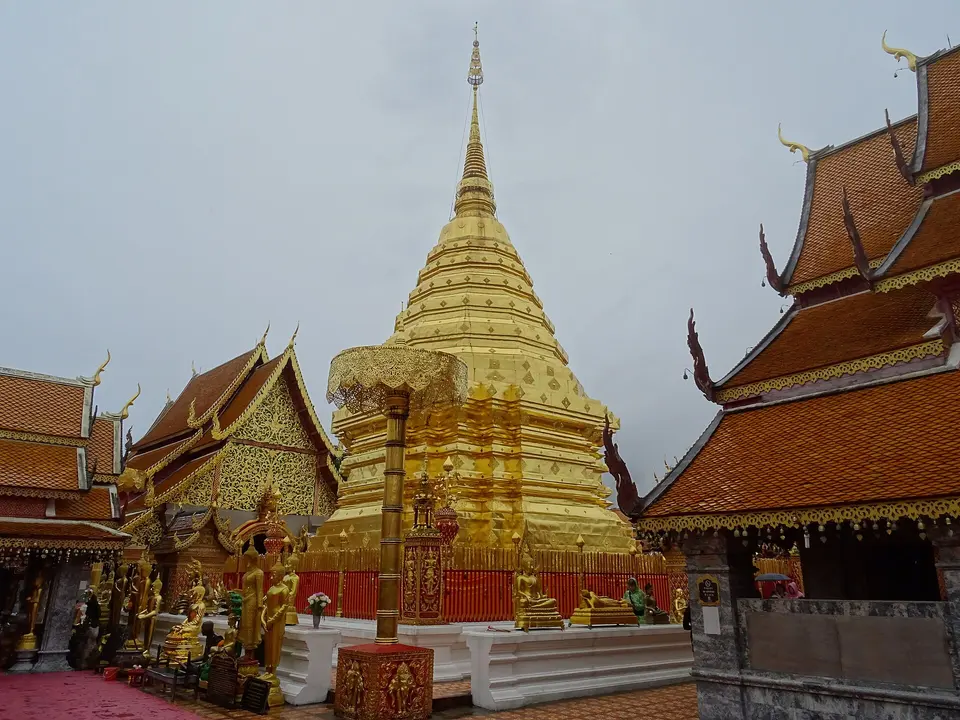
Wat Phra That Doi Suthep
Photo: Christophe95, CC BY-SA 4.0

The old city on foot, then the mountain, then the elephants

The old city is a square of 1.5 km inside its moat, flat and shaded, so day one is entirely on foot, temple to temple, with the Night Bazaar just outside the east gate. Day two needs a red songthaew or a booked driver up the 15 km mountain road to Doi Suthep, on to Bhubing Palace, and down to Wat Umong in the foothills, with the evening in Nimman's cafés. Day three is booked weeks ahead: Elephant Nature Park's single-day visit collects you from your hotel at 8:00 and returns at 17:30, leaving the evening for Warorot Market and the river. Temples ask for covered shoulders and knees and shoes off in the halls; the walking street closes Ratchadamnoen Road every Sunday evening, so if a Sunday falls in the three days, move day one to it.

At a glance

Ways to use these days

If it rains
3 of the stops are indoors — Wat Phra Singh · Wat Chedi Luang · Wat Chiang Man
Lightest day on foot
Day 1 — 3.0 km between stops
Most walking
Day 3 — 49.4 km

Day 1

The old city: Wat Phra Singh, Wat Chedi Luang, the Three Kings, Wat Chiang Man and the Night Bazaar

Walk the old city's temples from west to east, Wat Phra Singh and its Lion Buddha, the great ruined stupa of Wat Chedi Luang, the Three Kings Monument and the Lanna Folklife Museum, khao soi for lunch, Wat Chiang Man and the walls at Tha Phae Gate, and the Night Bazaar after dark.

  • 6 sights
  • 3.0 km on foot
  • Longest walk 810 m
123456500 mN
Stops in order, straight-line distancesRoute in Google Maps ↗

Morning

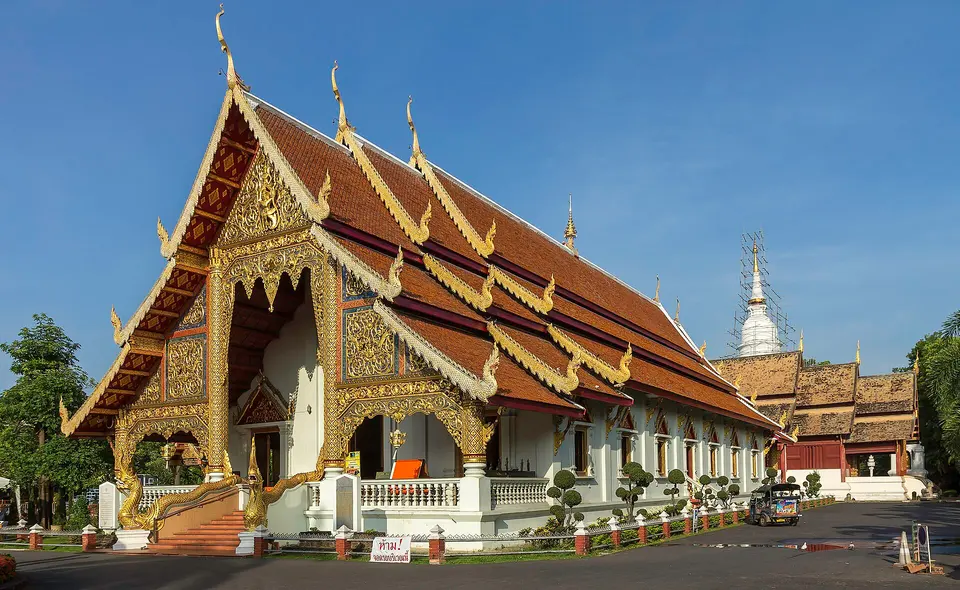
Wat Phra Singh
Photo: Stefan Fussan, CC BY-SA 3.0
1Temple

Wat Phra Singh

The most revered temple in the city, founded in 1345 at the west end of the old city's main street, holds the Phra Singh, the Lion Buddha, in the small Lai Kham chapel of 1345 to 1500, a jewel of Lanna architecture with its swooping three-tiered roof, gilded woodwork and murals of northern life painted around 1870; the great gilded stupa behind it, the teak scripture library raised on a carved stucco base and the vast main hall with its monks at morning chant make it the place to start. Cover shoulders and knees, take off your shoes at every hall.
  • Plan about 1 h
  • Open about 6:00–20:00; a small entry fee for foreign visitors, around THB 40; modest dress required
580 m · about 9 min on foot
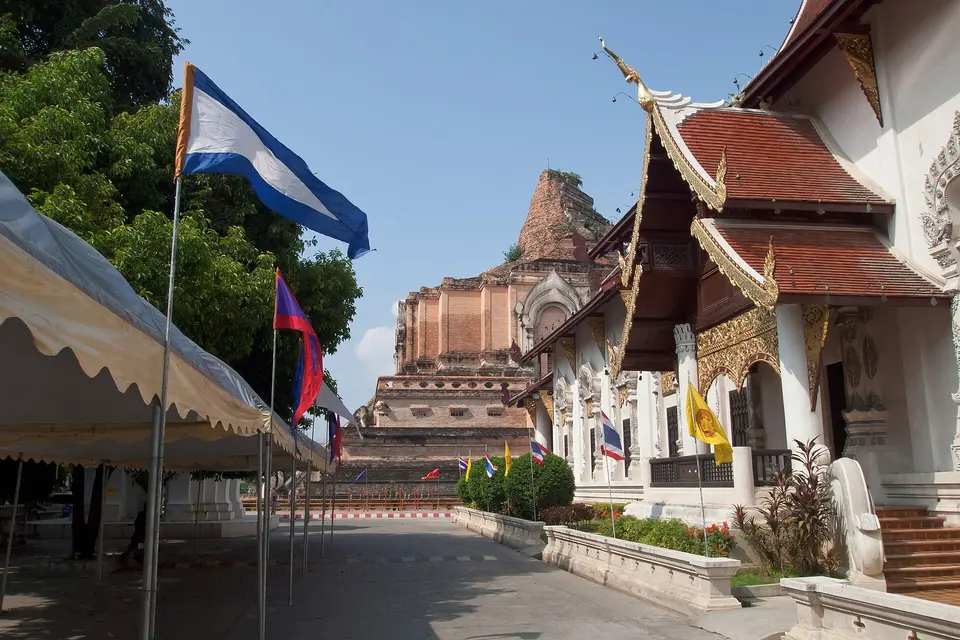
Wat Chedi Luang
Photo: Vyacheslav Argenberg, CC BY 4.0
2Temple

Wat Chedi Luang

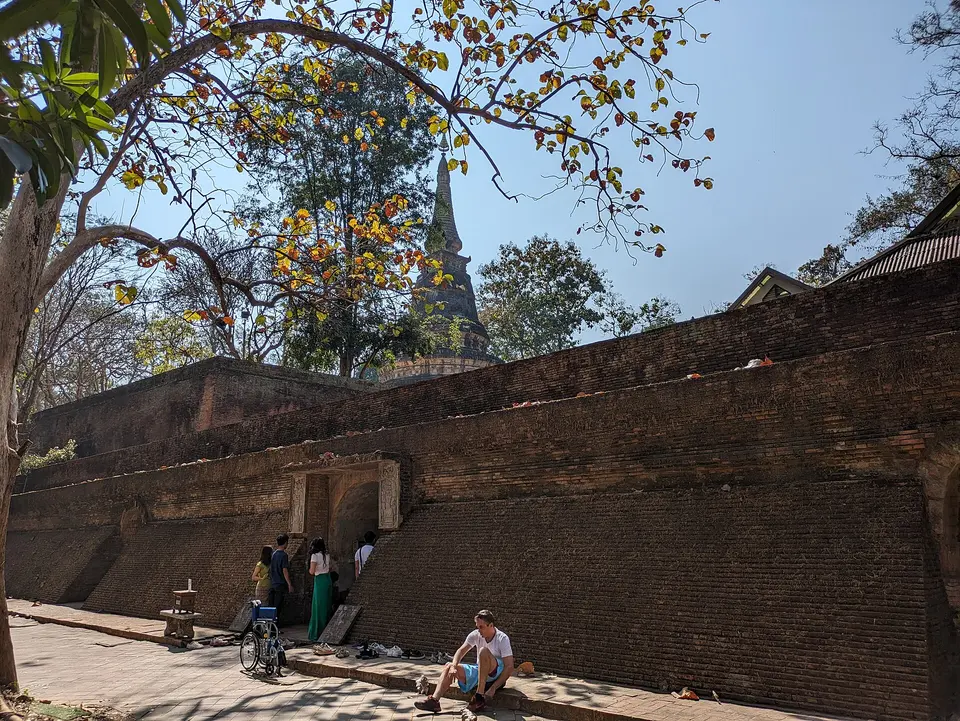
The Great Stupa, begun in 1391 and raised to some 80 metres by 1475, was the tallest structure in the kingdom and held the Emerald Buddha until an earthquake in 1545 brought its top down; the ruined brick mass with its restored elephant buttresses and naga stairs still dominates the old city's centre, with the city pillar in its own shrine, closed to women, at the gate, the large 1928 assembly hall in front, and the Monk Chat tables under the trees, where novices practise their English with visitors every afternoon. It is the second stop, 500 metres east of Wat Phra Singh.

  • Plan about 1 h
  • Open about 6:00–18:00; THB 40 for foreign visitors; the city pillar shrine does not admit women
380 m · about 6 min on foot
Three Kings Monument and Lanna Folklife Museum
Photo: ekeidar, CC BY-SA 3.0
3Monument and museum

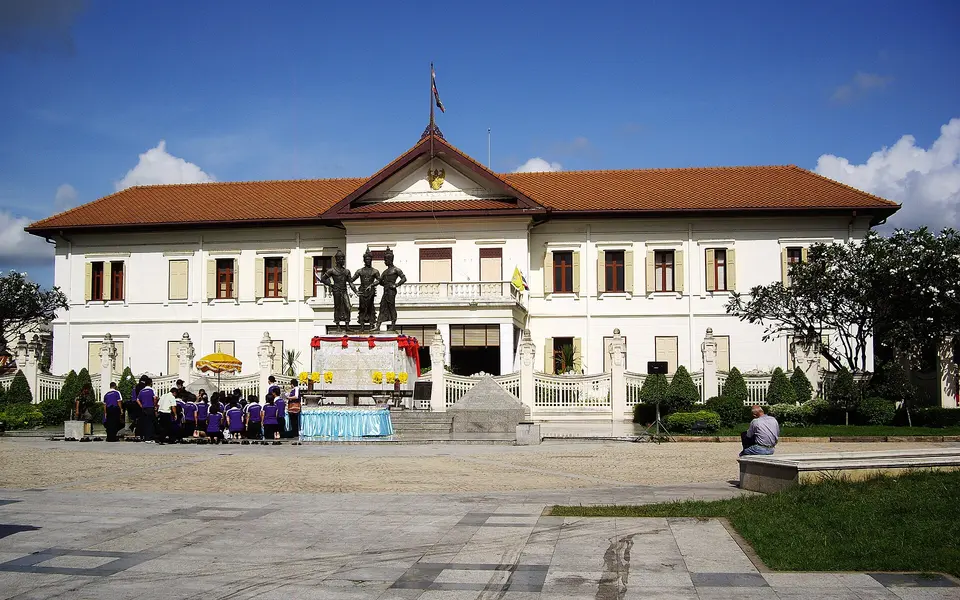
Three Kings Monument and Lanna Folklife Museum

In the square at the city's heart stand the three kings who founded it in 1296, Mangrai of Lanna with his allies Ramkhamhaeng of Sukhothai and Ngam Muang of Phayao, in bronze and still garlanded daily; behind them the white colonial-era provincial hall is the City Arts and Cultural Centre and across the square the old courthouse holds the Lanna Folklife Museum, whose rooms on Lanna Buddhism, textiles, ceramics, festivals and the northern kitchen are the best introduction to the culture you have been walking through all morning. Do the museum, then lunch nearby.

  • Plan about 1 h 15 min
  • Lanna Folklife Museum: Wed–Sun 8:30–16:30, closed Mon–Tue; THB 90 for foreign visitors

Midday

LunchKhao soi, the northern curry noodle soup with crisp noodles on top, is lunch: Khao Soi Khun Yai near Wat Chiang Man, an open-air stall that closes when the pot is empty, or the cafés along Ratchadamnoen Road; the vegetarian restaurants around Wat Phra Singh and the coffee roasters of the old city are the alternatives.

Afternoon

450 m · about 7 min on foot
Wat Chiang Man
Photo: FredTC, CC BY-SA 3.0
4Temple

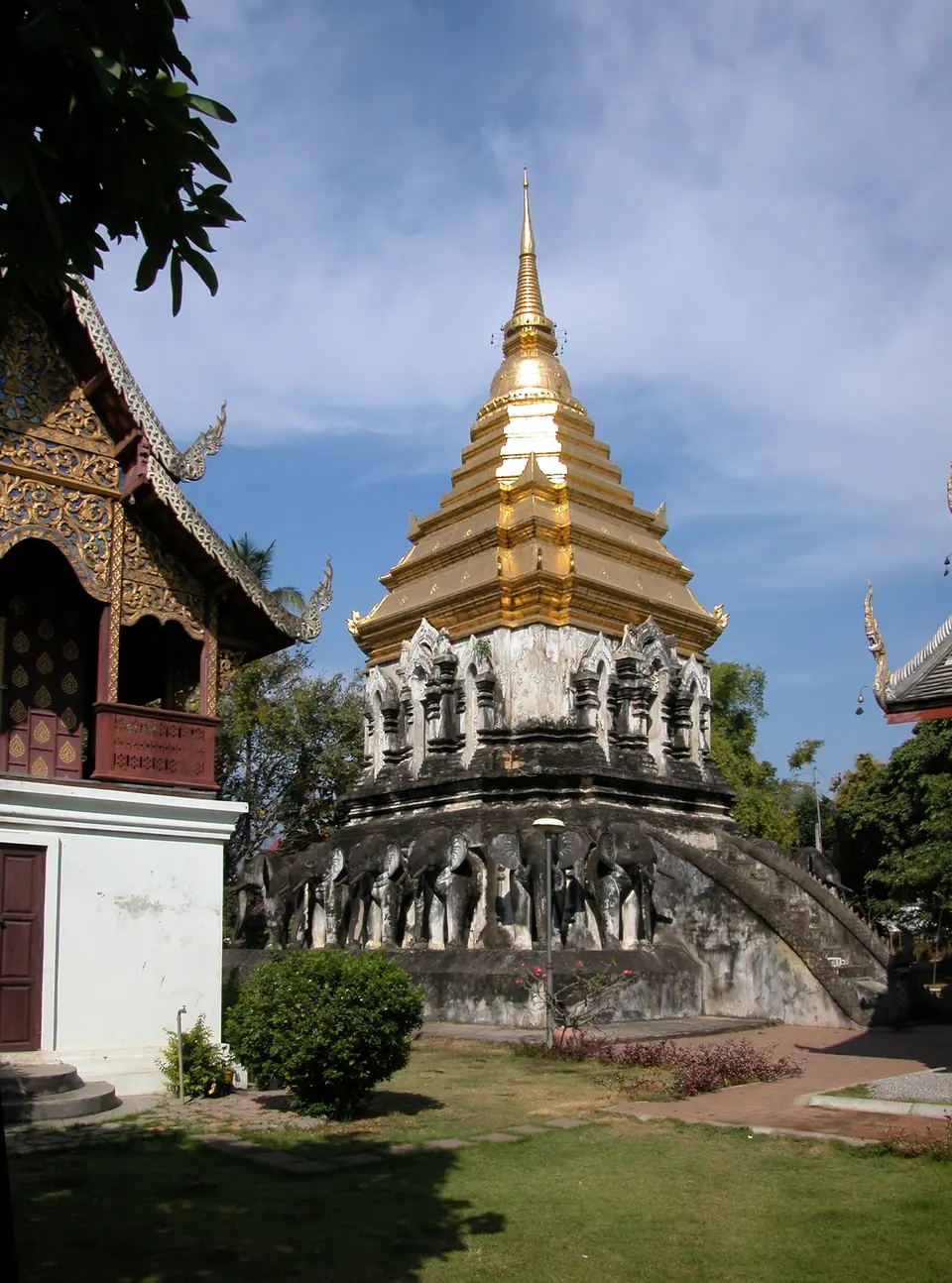
Wat Chiang Man

The oldest temple in the city, built by King Mangrai in 1296 on the site of his camp while the city was laid out, keeps its 15th-century stupa carried on a ring of brick elephants, a stone Buddha carved in 1465, two small and very old images kept behind bars in the smaller hall, the crystal Phra Sae Tang Khamani, said to be 1,800 years old and carried in procession at Songkran, and the marble Phra Sila. It is quieter than the other two, in the northeast corner of the old city, a 10-minute walk from the Three Kings.

  • Plan about 45 min
780 m · about 12 min on foot
Tha Phae Gate
Photo: Douglas Perkins, CC BY 4.0
5City gate

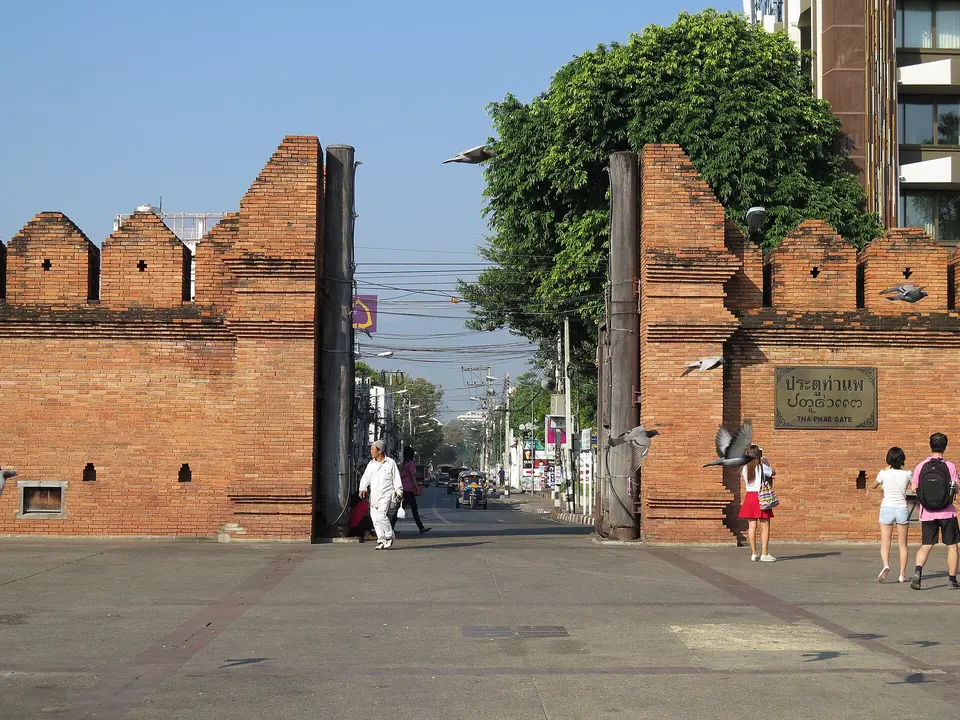
Tha Phae Gate

The east gate of the 1296 walls, rebuilt in brick in 1985 as the city's front door, opens onto a plaza of pigeons and the moat, with the restored brick ramparts running either side; it is the start of the Sunday Walking Street down Ratchadamnoen Road, the finish of the morning's walk, and the place the songthaews gather. Cross the moat and it is a 10-minute walk down Tha Phae Road to the Night Bazaar.

  • Plan about 30 min

Evening

810 m · about 13 min on foot
Chiang Mai Night Bazaar
Photo: Christophe95, CC BY-SA 4.0
6Night market

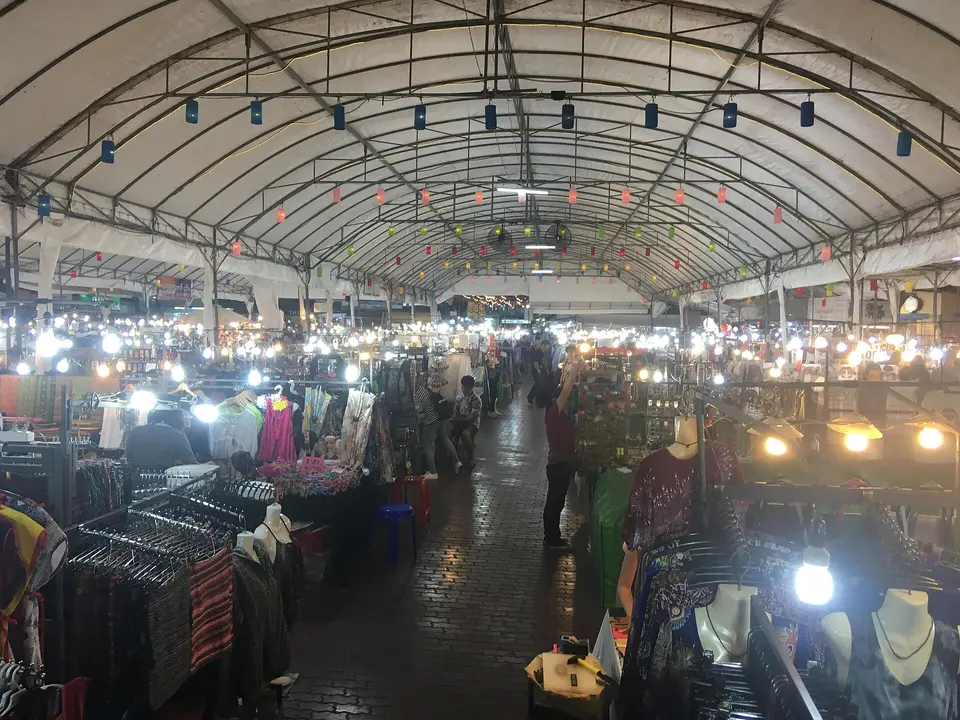
Chiang Mai Night Bazaar

Every night along Chang Khlan Road, outside the old city on the road to the river, several blocks of stalls, covered halls and courtyards sell hill-tribe textiles, silver, lacquer, carvings, clothes, phone cases and everything else, with food courts, the Kalare and Anusarn markets behind, massage chairs on the pavement and live music in the beer gardens. Bargain gently, eat at the Anusarn food court or at a riverside restaurant a few minutes further on, and come back on Sunday for the better crafts of the walking street.

  • Plan about 2 h
  • Nightly, roughly 17:00 to midnight; free

Day 2

The mountain: Doi Suthep, Bhubing Palace, Wat Umong and Nimman

Ride up the mountain early to Wat Phra That Doi Suthep and its golden stupa above the city, go on up to the royal gardens of Bhubing Palace, come down to the forest tunnels of Wat Umong, and end in the cafés and restaurants of Nimman.

  • 3 sights
  • Transport between sights
1231 kmN
Stops in order, straight-line distancesDriving route in Google Maps ↗

Morning

Wat Phra That Doi Suthep
Photo: Christophe95, CC BY-SA 4.0
1Mountain temple

Wat Phra That Doi Suthep

The temple on the mountain above the city, founded in 1383 where, the story goes, a white elephant carrying a relic of the Buddha climbed, trumpeted three times and died, is reached by 306 steps up a staircase flanked by seven-headed nagas, or by the tram beside it; at the top, a terrace of bells, shrines and murals surrounds the 24-metre gilded copper stupa, and the outer terrace looks over the whole city and the plain 1,000 metres below. Go at 8:00, before the tour buses and the heat, and walk the stairs down. The songthaews from the zoo and the university run the road.

  • Plan about 2 h
  • Temple open early morning to evening; small entry fee for foreign visitors, around THB 30; the electric tram runs 6:00–18:00, THB 20 one way, THB 50 return
4 km further up the mountain road; songthaews at the Doi Suthep car park run the leg, or keep your driver
Bhubing Palace
Photo: FredTC, CC BY-SA 4.0
2Royal gardens

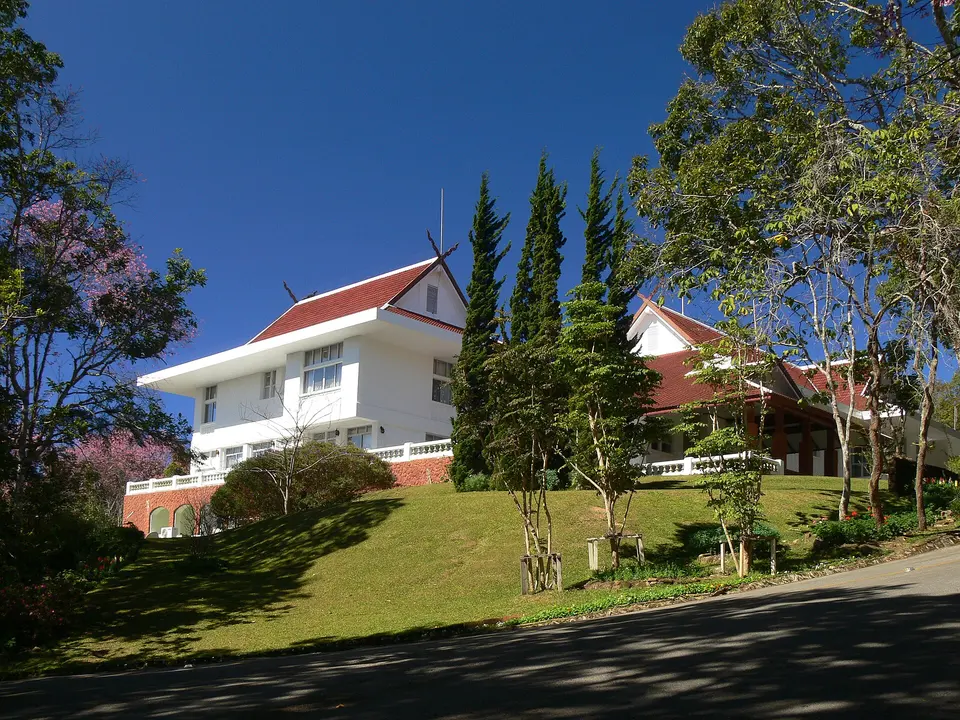
Bhubing Palace

Four kilometres above the temple, the royal family's winter residence of 1961 sits in cool hill gardens at 1,400 metres: rose gardens, fern houses, a reservoir with a fountain, and paths through the pines, open to visitors when the family is not in residence, with the dress code of a palace, long trousers or skirts and covered shoulders, and sarongs hired at the gate for those without. The Hmong village of Doi Pui, another 3 km up the road, is the last stop on the mountain if there is time.

  • Plan about 1 h 15 min
  • Open 8:30–16:30, tickets until 15:30; THB 50; closed during royal visits, usually January–March; strict dress code

Midday

LunchThe stalls at the foot of the Doi Suthep stairs and at the Bhubing car park do noodles, grilled chicken and sticky rice, and the Hmong village of Doi Pui above the palace has simple restaurants with a view; otherwise wait for Nimman.

Afternoon

Back down the mountain to the university and 3 km south, about 30 minutes; keep the driver
Wat Umong
Photo: Vano111ru, CC BY-SA 4.0
3Forest temple

Wat Umong

In the forest at the foot of the mountain, behind the university, the tunnel temple of 1297 is unlike anything in the old city: brick-lined tunnels under a mound, painted with fragments of 700-year-old murals and lined with Buddha images, a large old stupa on top, a lake with catfish and turtles to feed, deer, and Buddhist sayings pinned to the trees in Thai and English. It is a meditation centre, quiet, free and shaded, and the right end to a morning on the mountain.

  • Plan about 1 h
  • Open daily, roughly 6:00–18:00; free

Evening

DinnerNimmanhaemin Road and its numbered side lanes, the university quarter west of the old city, are the city's café and restaurant district: northern Thai at Tong Tem Toh, where the queue starts at 17:00, the food hall of One Nimman, cocktail bars in the sois and Maya mall's rooftop. Take a songthaew back to the old city afterwards.

Day 3

The elephants and the river: Elephant Nature Park and Warorot Market

Spend the day at Elephant Nature Park in the Mae Taeng valley, walking with the rescued herd, feeding them and watching them bathe in the river, with the park's minibus collecting you from your hotel and bringing you back, then finish with the Chinese-Thai quarter's Warorot Market and dinner on the Ping riverbank.

  • 2 sights
  • Transport between sights
125 kmN
Stops in order, straight-line distancesDriving route in Google Maps ↗

Morning

Elephant Nature Park
Photo: Nina R, CC BY 2.0
1Elephant sanctuary

Elephant Nature Park

Lek Chailert's sanctuary in the Mae Taeng valley, 60 km north of the city, has taken in more than a hundred elephants retired or rescued from logging, street begging, trekking camps and circuses since the 1990s, and set the standard for how the animals are now treated in Thailand: no riding, no shows, no hooks. The single-day visit collects you from your hotel, walks you among the herd with a guide who knows each animal's story, lets you feed them fruit and watch them bathe and roll in the mud, and feeds you a vegetarian buffet on the platform. Book weeks ahead; long trousers and closed shoes.

  • Plan about 7 h
  • Single-day visit THB 6,000 adults, THB 3,000 children 7–11, including hotel transfer, lunch, guide and insurance; pickup 8:00–8:45, return about 17:30; bookings close 24 hours before

Midday

LunchIncluded in the park visit: a vegetarian buffet lunch on the platform overlooking the herd, in the middle of the day's programme.

Evening

5-minute songthaew or a 15-minute walk from the Night Bazaar hotels
Warorot Market and the Ping riverbank
Photo: Christophe95, CC BY-SA 4.0
2Market

Warorot Market and the Ping riverbank

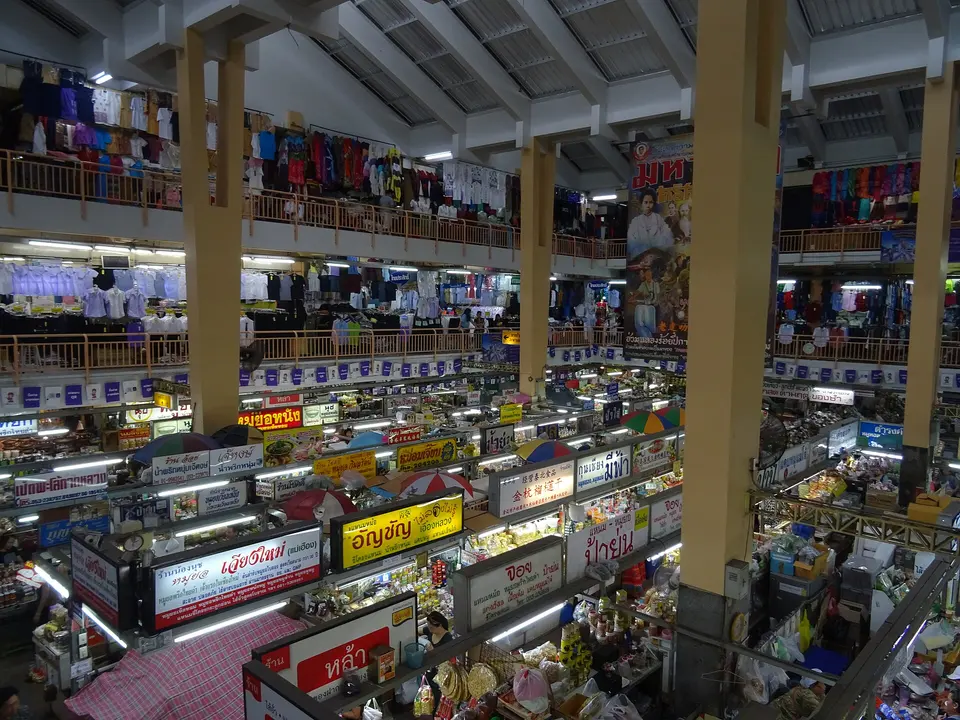
Kad Luang, the big market of the Chinese-Thai quarter by the river, is where the city itself shops: three floors of northern sausage, fried pork rind, pickled vegetables, dried fruit, textiles and hill-tribe embroidery, with the flower market spilling along the riverbank outside and the old shophouses, Chinese shrines and Hindu temple of the quarter around it. The stalls start closing in the early evening, so come straight from the elephants; then walk over the footbridge or along the bank to the Ping riverside restaurants for the last dinner.

  • Plan about 2 h
  • Daily from early morning to about 18:00; free

Good to know in Chiang Mai

Tickets and opening days

  • Elephant Nature Park's Single Day Visit costs THB 6,000 for adults and THB 3,000 for children aged 7–11, including round-trip transport from Chiang Mai hotels, a vegetarian buffet lunch, an English-speaking guide and insurance; pickup is between 8:00 and 8:45, the return to the city around 17:30–18:00, bookings close 24 hours before the visit and a 30 per cent deposit is taken at booking.Source: Elephant Nature Park · checked Sep 2026
  • At Wat Phra That Doi Suthep the electric tram beside the naga staircase runs from 6:00 to 18:00, at THB 20 one way and THB 50 for the round trip; the staircase itself has 306 steps.Source: Tourism Authority of Thailand · checked Sep 2026
  • The Lanna Folklife Museum on the Three Kings square is open Wednesday to Sunday 8:30–16:30 and closed on Mondays and Tuesdays; admission is THB 90 for foreign visitors.Source: Tourism Authority of Thailand · checked Sep 2026
  • The Sunday Walking Street closes Ratchadamnoen Road from Tha Phae Gate to Wat Phra Singh every Sunday evening for a market of northern handicrafts and street food.Source: Thailand Tourism Directory, Ministry of Tourism and Sports · checked Sep 2026

3 days in Chiang Mai: quick answers

Is 3 days enough for Chiang Mai?

Three days cover the old city, the mountain and the elephants, which is what most people come for. A fourth day is Doi Inthanon, the highest mountain in Thailand, with its twin pagodas and waterfalls, or the handicraft villages of Bo Sang and San Kamphaeng, a Thai cooking class in the morning and the Saturday Walking Street on Wualai Road in the evening. Chiang Rai and the White Temple are a long day trip, three hours each way.

Which days should I plan around?

Elephant Nature Park runs daily but its single-day visits sell out weeks ahead in the high season from November to February; book first and build the days around it. The Lanna Folklife Museum is closed on Mondays and Tuesdays, and Bhubing Palace closes when the royal family is in residence, usually from January to March. The Sunday Walking Street is Sundays only, from late afternoon; the Night Bazaar is nightly. The burning season from late February to April brings the worst air of the year to the north; November to January is cool and clear.

How much do the tickets cost?

Elephant Nature Park's single-day visit is THB 6,000 for adults and THB 3,000 for children aged 7 to 11, transport and lunch included, and is the main expense. Temples charge foreigners small fees, THB 30 to 50, with Wat Umong free and Doi Suthep's tram THB 20 up and THB 50 return. Bhubing Palace is THB 50 and the Lanna Folklife Museum THB 90. The markets and the gate are free.

How do I get around?

On foot inside the moat, and by red songthaew, the shared pick-up trucks that stop when waved down, for everything else: THB 30 to 40 a person on a short hop, negotiated before you get in, and around THB 300 to 400 per person for the Doi Suthep round trip from the university or the north gate. Grab and Bolt work for cars and motorbike taxis. Hiring a driver for day two costs about THB 1,500 to 2,000.

How much walking is this itinerary?

About 3 km on day one, all flat inside the old city, plus the market in the evening; about 1 km on day two, but with 306 steps up the naga staircase to Doi Suthep, or the tram beside it; and a few gentle kilometres on day three walking with the elephants on flat ground. The heat builds by 11:00 from March to May, so the temples and the mountain come in the morning.

Other Chiang Mai itineraries

Keep exploring

Where this connects

THE TRIPWOA APP

Go somewhere.
Make it yours.

Build days around what you love. Follow your route, find your next stop and keep the moments along the way.

Get it on Google PlayAvailable for Android
Free to start
Tripwoa home with a Paris trip and nearby places to explore
Tripwoa day plan for New York with a route map and Times Square stop

A day that feels like you.

Sources and method

Places and coordinates: Wikidata and Tripwoa's open-data place catalog (Overture Maps Foundation, © OpenStreetMap contributors). Photos: Wikimedia Commons, credited on each image. Practical rules: the official sources linked in each note, checked in September 2026.

How this plan was made: Tripwoa's planner drafted the day order from real coordinates and typical visit times. Each stop was then reviewed, reordered where needed and rewritten with AI assistance. Walking distances are straight-line estimates, so allow a little extra time on real streets.