3-day itinerary · Qatar

3 Days in Doha

A realistic first-timer plan that spends day one around the old harbour, from the Museum of Islamic Art and the Corniche to lunch and an evening in Souq Waqif and the heritage houses of the Msheireb Museums; day two on the city's newer showpieces, the National Museum of Qatar, the State Mosque, the Katara Cultural Village and the marina of The Pearl; and day three at Mathaf, the Arab museum of modern art in Education City, before a 4x4 tour to the dunes and the Inland Sea of Khor Al Adaid. Every stop comes with distances and the opening days that matter in 2026.

  • 3days
  • 10sights
  • 1.5 kmon foot between sights

Updated 12 September 2026 · 8 official sources checked · report an error

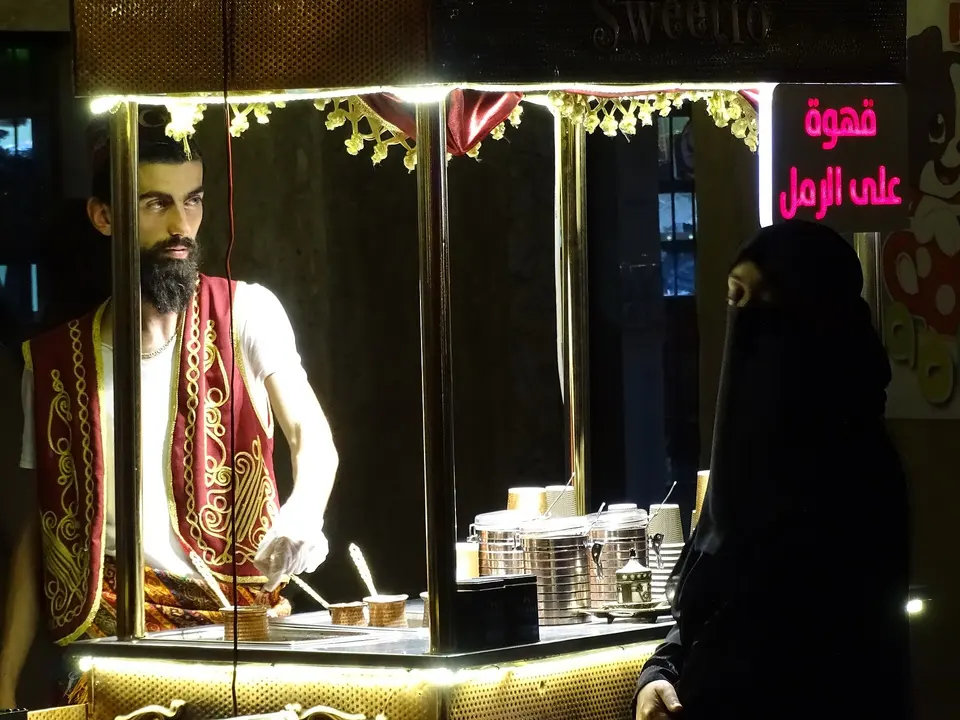
Souq Waqif
Photo: Adam Jones, CC BY-SA 2.0

The old harbour and the souq, then the museums, mosque and coast, then the desert

Doha is spread along a bay and built for cars, so the plan groups the sights into three areas and uses taxis or the metro between them. Day one is the only walking day: the Museum of Islamic Art at opening, the Corniche promenade to Souq Waqif for lunch, the four restored houses of the Msheireb Museums, and the souq again after dark, when it comes alive. Day two starts at the National Museum of Qatar, visits the State Mosque, and ends up the coast at Katara and The Pearl. Day three goes west to Mathaf and then south into the desert for Khor Al Adaid, the Inland Sea, on a half-day 4x4 tour. The museums each close one day a week, the Museum of Islamic Art on Wednesdays, the National Museum on Tuesdays and Mathaf on Mondays, so set the days accordingly.

At a glance

Ways to use these days

If it rains
4 of the stops are indoors — Museum of Islamic Art · National Museum of Qatar · Imam Muhammad ibn Abd al-Wahhab Mosque
Lightest day on foot
Day 1 — 1.5 km between stops
Most walking
Day 3 — 76.7 km

Day 1

The old harbour: the Museum of Islamic Art, the Corniche and Souq Waqif

Be at the Museum of Islamic Art when it opens, walk the Corniche around the bay to Souq Waqif for lunch, see the heritage houses of the Msheireb Museums in the afternoon, and come back to the souq for the falcons, the shisha cafés and dinner after dark.

  • 4 sights
  • 1.5 km on foot
  • Longest walk 600 m
1234250 mN
Stops in order, straight-line distancesRoute in Google Maps ↗

Morning

Museum of Islamic Art
Photo: Sandra Doha, CC BY 2.0
1Museum

Museum of Islamic Art

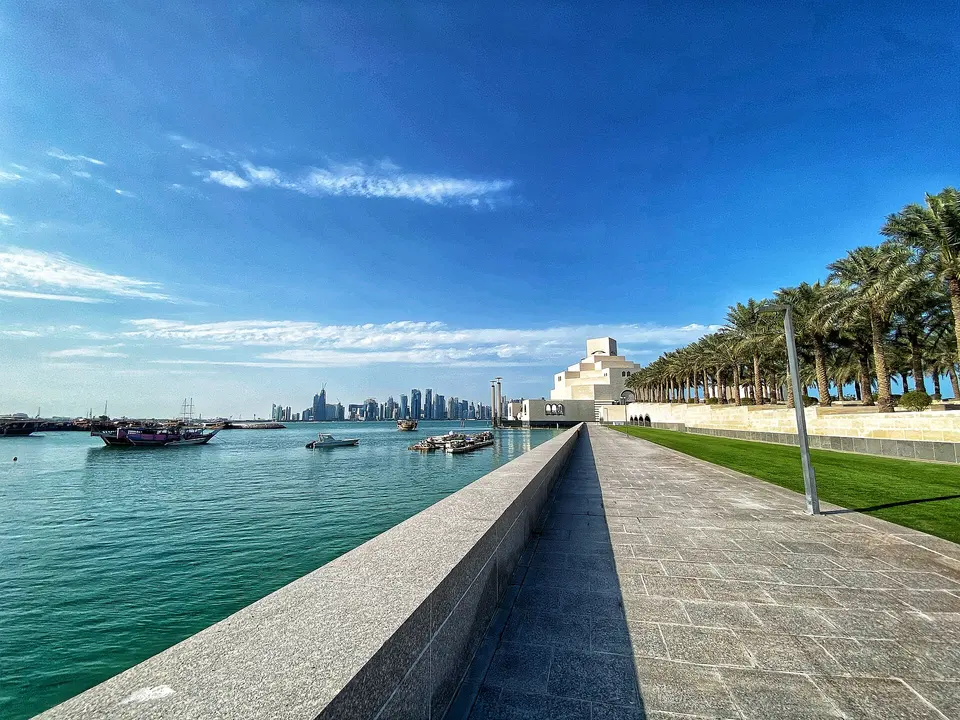
I. M. Pei came out of retirement at 91 to design this stack of cream limestone cubes on an artificial island at the end of the Corniche, opened in 2008; inside, a five-storey atrium under an oculus, and galleries of manuscripts, ceramics, metalwork, glass and textiles from Spain to India across 1,400 years, including a page of the Blue Qur'an and Mughal jades. The café at the top looks across the bay to the skyline, and the park outside is the best walk to the souq.
  • Plan about 2 h
  • Sat–Tue 9:00–19:00, Thu 9:00–21:00, Fri 13:30–19:00; closed Wednesdays
450 m · about 7 min on foot
The Corniche
Photo: Krissubh, CC BY-SA 4.0
2Waterfront promenade

The Corniche

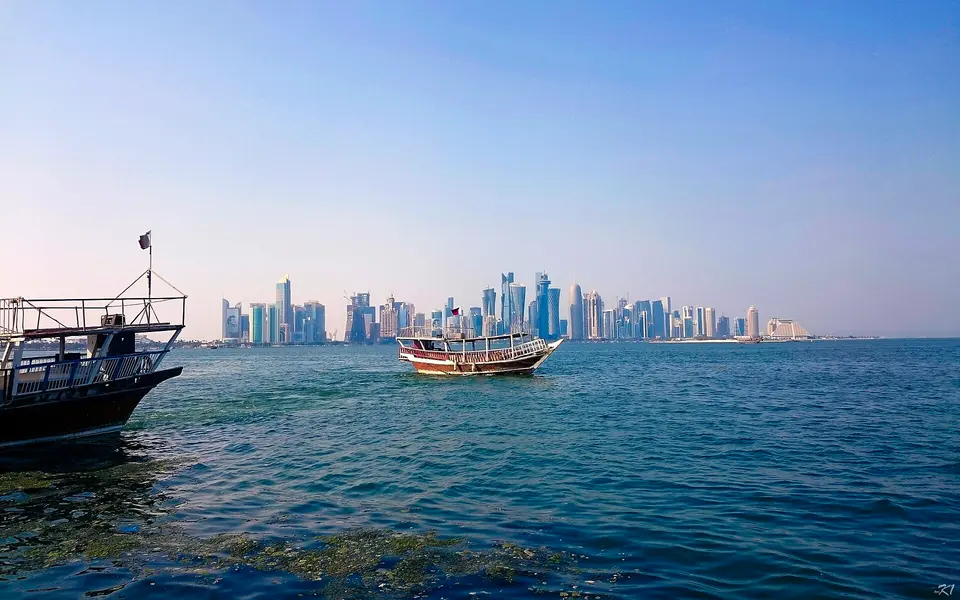
Seven kilometres of palm-lined promenade curve around Doha Bay from the museum to the towers of West Bay, with the wooden dhows moored at the old harbour halfway along and the skyline reflected in the water; it is the city's evening walk, and in the morning the way from the museum's park to the souq, past the dhow harbour and the Emiri Diwan. Boats on the harbour offer short cruises of the bay.

  • Plan about 1 h

Midday

600 m · about 9 min on foot
Souq Waqif
Photo: Adam Jones, CC BY-SA 2.0
3Market

Souq Waqif

The 'standing market', where Bedouin traded livestock and wool on the creek for a century, was rebuilt in the 2000s in mud-rendered walls and exposed timber as a working souq: alleys of spices, perfume, gold, textiles, pearl dealers and pet stalls, the falcon souq where birds sit hooded on their perches beside a falcon hospital, the Al Koot fort of 1927 on the corner, and a main lane of restaurants and shisha cafés with tables outside. Lunch is here, and so is the evening; the shops mostly close for the afternoon and reopen towards sunset.

  • Plan about 2 h

Afternoon

440 m · about 7 min on foot
Msheireb Museums
Photo: Davide Mauro, CC BY-SA 4.0
4Heritage museums

Msheireb Museums

Four courtyard houses of the 1920s and 1930s on the edge of the rebuilt Msheireb Downtown quarter tell the city's story before oil and after: Bin Jelmood House on slavery in the Gulf and its abolition, the Company House on the first Qatari oil workers of the 1930s, Mohammed Bin Jassim House on the neighbourhood itself, and Radwani House on daily life through the decades. They are free, air-conditioned and rarely crowded, and the pedestrian streets of Msheireb around them have the cafés.

  • Plan about 1 h 30 min
  • Mon–Thu and Sat 9:00–17:00, Fri 15:00–21:00; closed Sundays; free; last admission 30 minutes before closing

Evening

DinnerSouq Waqif after sunset is the evening: the alleys fill, the falcon shops open, and the restaurants along the main lane, Iranian, Yemeni, Qatari, Lebanese, set their tables outside; Shay Al Shomous and the courtyard of Al Jasra are the local names, and any café will do for karak tea and shisha.

Day 2

The National Museum, the State Mosque, Katara and The Pearl

Walk through the interlocking discs of the National Museum of Qatar, visit the State Mosque outside prayer times, go up the coast to the mosques, galleries and amphitheatre of the Katara Cultural Village, and end at the marina of The Pearl.

  • 4 sights
  • Transport between sights
12342 kmN
Stops in order, straight-line distancesRoute in Google Maps ↗

Morning

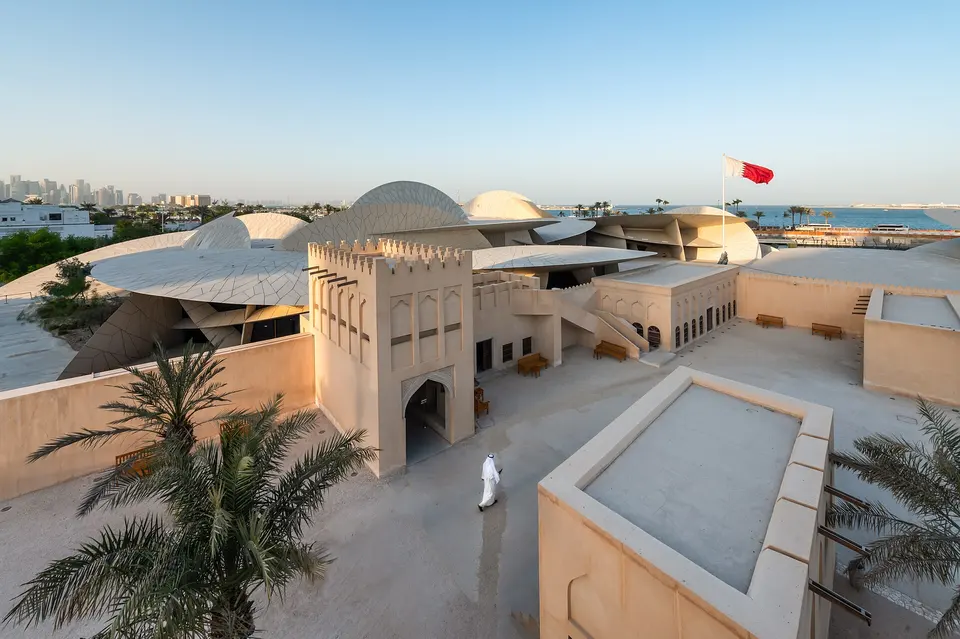
National Museum of Qatar
Photo: Musab.hawamda, CC BY-SA 4.0
1Museum

National Museum of Qatar

Jean Nouvel's museum of 2019, 539 interlocking sand-coloured discs modelled on the desert rose crystal, wraps around the restored palace of Sheikh Abdullah bin Jassim Al Thani on the harbour; inside, eleven galleries in a 1.5-kilometre loop tell the story from the geology of the peninsula through the Bedouin, pearling and the coming of oil to the modern state, with film on curved walls and the Baroda pearl carpet, sewn with a million pearls, as the treasure. Allow the morning; the discs are hot to the touch by noon.

  • Plan about 2 h 30 min
  • Sat–Mon and Wed 9:00–19:00, Thu 9:00–21:00, Fri 13:30–19:00; closed Tuesdays; last entry 45 minutes before closing
Taxi about 10 minutes
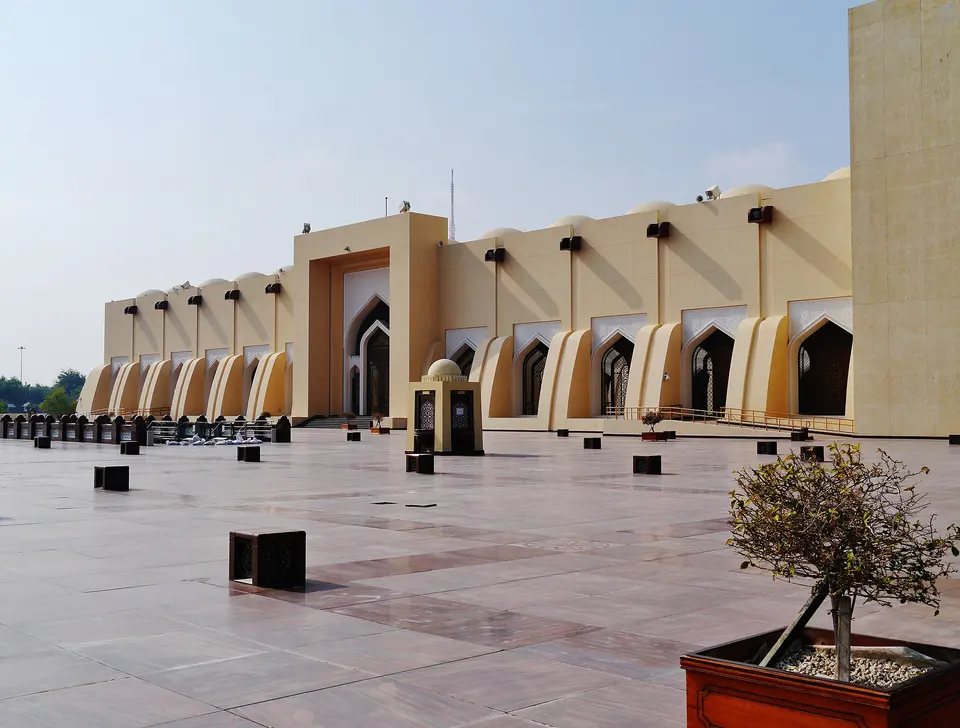
Imam Muhammad ibn Abd al-Wahhab Mosque
Photo: Zairon, CC BY 4.0
2Mosque

Imam Muhammad ibn Abd al-Wahhab Mosque

The state mosque of Qatar, opened in 2011 on a rise above the bay, holds 30,000 worshippers under 93 domes, in a sand-coloured Gulf style of plain walls and arcades rather than the marble of Abu Dhabi; the prayer hall is a field of carpet under the domes, and the terraces look over the city. Non-Muslim visitors are welcome outside prayer times: dress conservatively, women are lent headscarves and abayas, shoes come off at the door, and children under seven are not admitted.

  • Plan about 1 h
  • Open to visitors outside prayer times; modest dress, scarves provided; no children under 7

Midday

LunchKatara has the widest choice of lunch in the city, from the Lebanese and Turkish restaurants on the main street to the cafés on the beach promenade; the National Museum's own café and the Souq Al Jami under the mosque are the quicker options earlier in the day.

Afternoon

Taxi about 15 minutes up the Corniche and Lusail road
Katara Cultural Village
Photo: Davide Mauro, CC BY-SA 4.0
3Cultural district

Katara Cultural Village

A whole district built in traditional style between West Bay and The Pearl as the city's cultural centre: a Greek-style amphitheatre facing the sea, the blue-and-gold mosaic Katara Mosque and the Golden Mosque beside it, galleries, the opera house, pigeon towers, a public beach and a promenade of restaurants. It is free to walk and open all day; come in the late afternoon, when the heat goes out of the stone and the amphitheatre is lit.

  • Plan about 2 h

Evening

Taxi about 10 minutes; on foot it is 2 km along the shore road
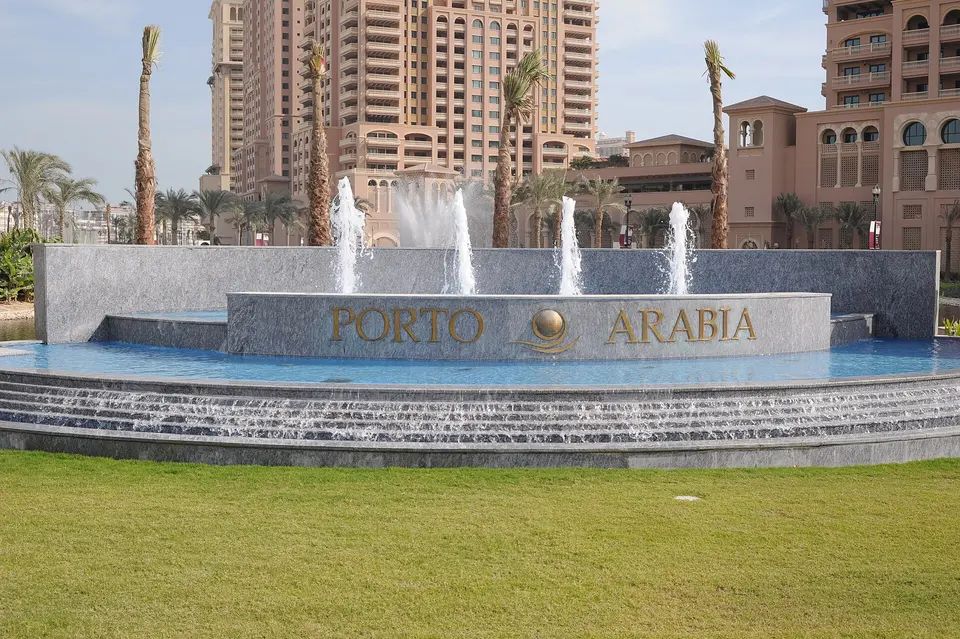
The Pearl and Porto Arabia
Photo: Steven Byles, CC BY-SA 2.0
4Island district

The Pearl and Porto Arabia

The artificial island of four square kilometres north of Katara, built on the old pearl-diving grounds, is the city's Riviera: the yacht marina of Porto Arabia ringed by pastel Mediterranean towers, cafés and restaurants along the water, the Venetian canals of Qanat Quartier with their bridges and gondolas, and shops from every luxury brand. Walk the marina promenade at dusk and eat on it.

  • Plan about 1 h 30 min

Day 3

Mathaf and the Inland Sea

Spend the morning with Arab modern art at Mathaf in Education City, lunch there, and give the afternoon to a 4x4 tour over the dunes to Khor Al Adaid, the Inland Sea, for the sunset over the water and the sand.

  • 2 sights
  • Transport between sights
125 kmN
Stops in order, straight-line distancesDriving route in Google Maps ↗

Morning

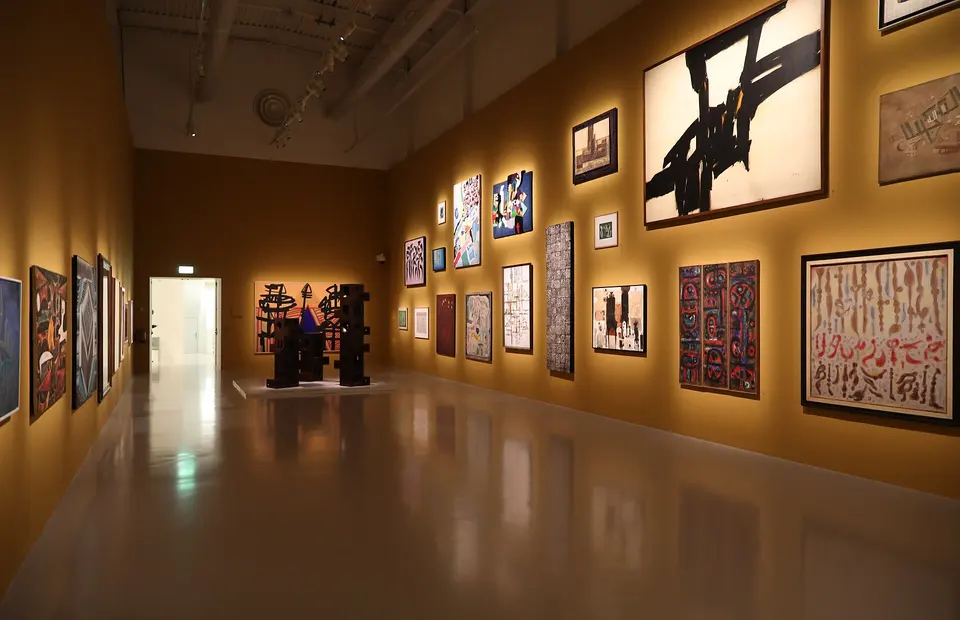
Mathaf: Arab Museum of Modern Art
Photo: Francesco Bini, CC BY-SA 4.0
1Art museum

Mathaf: Arab Museum of Modern Art

In a converted school in Education City, Mathaf holds the largest collection of modern and contemporary Arab art anywhere, some 9,000 works from the 1840s to today, from the Egyptian sculptor Mahmoud Mokhtar and the Iraqi and Lebanese modernists to the Gulf's current artists, in rotating displays and special exhibitions. Entry is free with a ticket booked online. Rem Koolhaas's Qatar National Library, a single tilted reading room with a million books on terraces, is a short tram ride across the campus and free to walk into.

  • Plan about 1 h 30 min
  • Tue–Wed and Sat–Sun 9:00–19:00, Thu 9:00–21:00, Fri 13:30–19:00; closed Mondays; free, ticket required

Midday

LunchEducation City has cafés at Mathaf, at the Qatar National Library across the campus and at Oxygen Park; most desert tours pick up around 14:00 from hotels, so eat early.

Afternoon

Booked 4x4 desert tour with hotel pickup, 1–2 hours each way via Mesaieed; there is no road and no public transport
Khor Al Adaid, the Inland Sea
Photo: FLASHPACKER TRAVELGUIDE, CC BY-SA 2.0
2Nature reserve

Khor Al Adaid, the Inland Sea

In the far south of the peninsula, 78 kilometres from the city, the sea reaches deep into the desert through a narrow channel and the dunes run straight down into the water, with Saudi Arabia on the far shore; the reserve, declared in 2007 and on UNESCO's tentative list, has no road and is reached only by 4x4 over the sand from Mesaieed, which is why everyone goes with a tour: dune driving, a camel and a sandboard if you want them, and the sunset from a ridge above the water. Entry is free; November to April is the season.

  • Plan about 4 h
  • 4x4 only, no road; half-day tours from Doha with hotel pickup; free entry; best November–April

Evening

DinnerTours return to Doha after sunset, usually with a stop for karak tea at a desert camp; dinner is back in the city, on the West Bay skyline side of the Corniche or in Msheireb Downtown, the pedestrian quarter behind the souq.

Good to know in Doha

Opening days and tickets

  • The Museum of Islamic Art is open Sunday to Tuesday and Saturday 9:00–19:00, Thursday 9:00–21:00 and Friday 13:30–19:00, and closed on Wednesdays; tickets are reserved through Qatar Museums' online ticketing.Source: Museum of Islamic Art, Qatar Museums · checked Sep 2026
  • The National Museum of Qatar is open Sunday, Monday, Wednesday and Saturday 9:00–19:00, Thursday 9:00–21:00 and Friday 13:30–19:00, closed on Tuesdays, with last entry 45 minutes before closing.Source: National Museum of Qatar, Qatar Museums · checked Sep 2026
  • Mathaf is open Sunday and Tuesday to Wednesday 9:00–19:00, Thursday 9:00–21:00, Friday 13:30–19:00 and Saturday 9:00–19:00, closed on Mondays; entry to Mathaf and all special exhibitions is free to all, but tickets are required.Source: Mathaf: Arab Museum of Modern Art, Qatar Museums · checked Sep 2026
  • The Msheireb Museums are open Monday to Thursday 9:00–17:00, Friday 15:00–21:00 and Saturday 9:00–17:00, closed on Sundays, with last admission 30 minutes before closing; hours may change on national holidays.Source: Msheireb Museums · checked Sep 2026
  • Qatar National Library in Education City is open Saturday to Thursday 8:00–20:00 and Friday 16:00–20:00.Source: Qatar National Library · checked Sep 2026
  • The Imam Muhammad ibn Abd al-Wahhab Mosque is open to all visitors, regardless of religion, during non-prayer times; visitors must dress conservatively, women are provided with headscarves and abayas where needed, everyone removes their shoes, children under seven are not allowed and photography is prohibited in the women's prayer area.Source: Visit Qatar, Qatar Tourism · checked Sep 2026
  • Khor Al Adaid, about 78 km south of Doha, has no road and a 4x4 with an experienced off-road driver is a must, deflating tyres to 18–20 psi before leaving Mesaieed; entry is free, several desert safaris and daily Inland Sea tours can be booked in Doha, and the best time to visit is November through April. The area was declared a nature reserve in 2007 and is on the tentative list for UNESCO World Heritage.Source: Visit Qatar, Qatar Tourism · checked Sep 2026

Getting around

  • The Doha Metro's Red, Green and Gold lines serve the city and, according to Qatar Tourism, you can explore all day for a maximum cost of QAR 6; services may run on extended or reduced hours during events, and the metro shuts on Friday mornings for prayers.Source: Visit Qatar, Qatar Tourism · checked Sep 2026

3 days in Doha: quick answers

Is 3 days enough for Doha?

Three days cover the souq, the three great museums, the mosque, the coast and the desert. A fourth day allows the UNESCO fort and town of Al Zubarah in the north, the mangroves of Al Thakira by kayak, the Lusail boulevard and stadium, or a morning on the beach at Katara or Banana Island.

Which days should I plan around?

Each museum closes one day: the Museum of Islamic Art on Wednesdays, the National Museum of Qatar on Tuesdays, Mathaf on Mondays and the Msheireb Museums on Sundays; all of them open late on Fridays, from 13:30 or 15:00. The State Mosque is closed to visitors at prayer times and on Friday mornings. Souq Waqif, Katara and The Pearl are open daily, and the desert is best from November to April.

How much do the tickets cost?

Mathaf, the Msheireb Museums, the souq, Katara, The Pearl and the Corniche are free, and so is the Inland Sea itself, though the 4x4 tour is not. The Museum of Islamic Art and the National Museum of Qatar are ticketed for non-residents, with tickets sold online through Qatar Museums; residents and children under 16 enter free.

How do I get around?

The Doha Metro's three lines cover the museums, the souq and Education City, and the site's own rule is that you can ride all day for a maximum of QAR 6; it does not run on Friday mornings. Karwa taxis are metered and cheap, and Uber and Careem work. The souq, the Corniche and Msheireb are walkable in the cooler months; from May to September walk only in the early morning and after dark.

How much walking is this itinerary?

About 2.5 km in a straight line on day one along the Corniche and through the souq, about 1 km on foot plus three taxis on day two, and only the museum and the dunes on day three. Summer temperatures pass 40°C, which is why the walking is concentrated in the mornings and after dark.

Other Doha itineraries

Keep exploring

Where this connects

THE TRIPWOA APP

Go somewhere.
Make it yours.

Build days around what you love. Follow your route, find your next stop and keep the moments along the way.

Get it on Google PlayAvailable for Android
Free to start
Tripwoa home with a Paris trip and nearby places to explore
Tripwoa day plan for New York with a route map and Times Square stop

A day that feels like you.

Sources and method

Places and coordinates: Wikidata and Tripwoa's open-data place catalog (Overture Maps Foundation, © OpenStreetMap contributors). Photos: Wikimedia Commons, credited on each image. Practical rules: the official sources linked in each note, checked in September 2026.

How this plan was made: Tripwoa's planner drafted the day order from real coordinates and typical visit times. Each stop was then reviewed, reordered where needed and rewritten with AI assistance. Walking distances are straight-line estimates, so allow a little extra time on real streets.