3-day itinerary · Vietnam

3 Days in Ho Chi Minh City

A realistic first-timer plan that spends day one in District 1, from the War Remnants Museum and the frozen 1975 rooms of the Independence Palace to the cathedral square, the Central Post Office, Ben Thanh Market and the Nguyen Hue walking street with a rooftop at dusk; day two underground and in Chinatown, at the Cu Chi tunnels in the morning and Cholon's Thien Hau temple and Binh Tay Market in the afternoon, with the beer street of Bui Vien at night; and day three on the city's quieter side, the incense of the Jade Emperor Pagoda, the History Museum by the zoo, a ride up Landmark 81 and dinner by the Opera House. Every stop comes with walking distances, the new metro and the rules that matter in 2026.

  • 3days
  • 14sights
  • 3.7 kmon foot between sights

Updated 12 September 2026 · 2 official sources checked · report an error

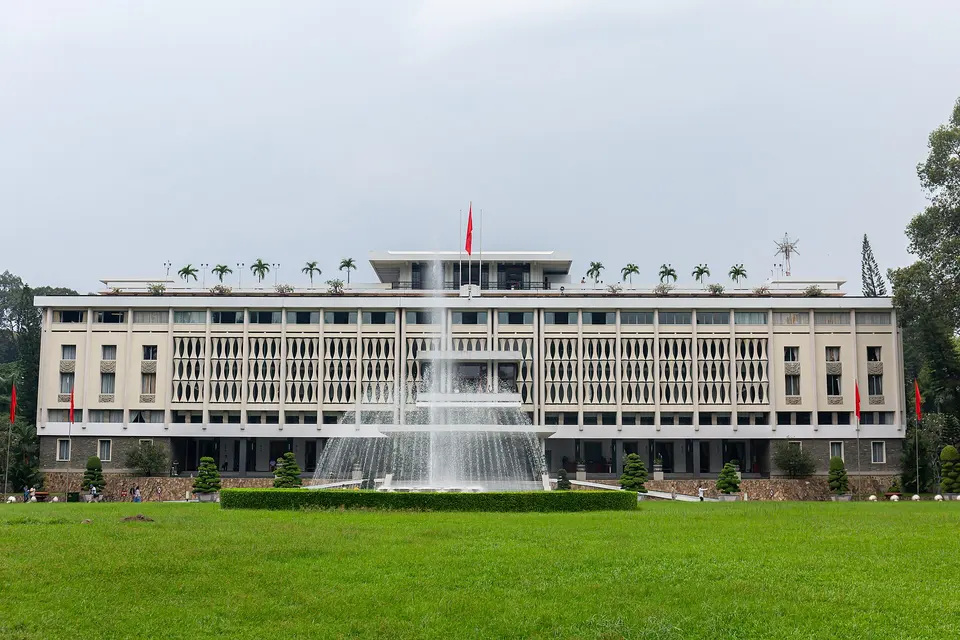
Independence Palace
Photo: Balon Greyjoy, CC0

District 1 on foot, then the tunnels and Cholon, then the pagoda, the museum and the tower

District 1 is compact enough to walk, with Grab motorbikes and taxis for anything further and, since December 2024, Metro Line 1 running from Ben Thanh under the centre to the eastern suburbs. Day one never leaves the centre. Day two starts early for the Cu Chi tunnels, 60 km northwest by tour bus or hired car, and comes back through Cholon, the Chinese city inside the city. Day three goes north to the Jade Emperor Pagoda and the History Museum and east along the river to Landmark 81. The palace and the museums open every day; the cathedral is closed inside for restoration until 2027 but its square is the city's living room. The heat is constant and the rains come in the afternoons from May to November.

At a glance

Ways to use these days

If it rains
3 of the stops are indoors — War Remnants Museum · Notre-Dame Cathedral Basilica of Saigon · Museum of Vietnamese History
Lightest day on foot
Day 1 — 2.6 km between stops
Most walking
Day 2 — 43.5 km

Day 1

District 1: the War Remnants Museum, the Independence Palace, the cathedral, Ben Thanh and Nguyen Hue

Start at the War Remnants Museum before the heat and the crowds, walk to the Independence Palace, eat street food behind Ben Thanh, see the cathedral square and the Central Post Office, wander the market, and end on the Nguyen Hue walking street with a drink on a rooftop as the motorbikes light up.

  • 6 sights
  • 2.6 km on foot
  • Longest walk 860 m
123456250 mN
Stops in order, straight-line distancesRoute in Google Maps ↗

Morning

War Remnants Museum
Photo: Prenn, CC BY-SA 3.0
1Museum

War Remnants Museum

The most visited museum in the country, opened in 1975 as the Exhibition House for US and Puppet Crimes and renamed in 1995, shows the American war from the Vietnamese side: the captured tanks, helicopters and bombs in the yard, the Requiem gallery of photographs by the war's dead photojournalists, the rooms on Agent Orange and the tiger cages of the Con Dao prison. It is graphic and one-sided and it is the place to start, before the heat and the tour groups; allow two hours and take the children's rooms into account.
  • Plan about 2 h
  • Daily about 7:30–17:30, ticket counter to 17:00; about 40,000 dong, free under 6, half price for ages 6–16 and students
460 m · about 7 min on foot
Independence Palace
Photo: Balon Greyjoy, CC0
2Historic palace

Independence Palace

The modernist palace built in 1966 for the presidents of South Vietnam on the site of the French governor's residence is where the war ended on April 30, 1975, when a North Vietnamese tank crashed through the gates; the rooms have been kept as they were that morning, the cabinet room, the president's office, the cinema, the rooftop helipad, the casino-like gaming room, and, in the basement, the war rooms with their maps and radios. The tanks stand on the lawn. The palace opens at 7:00 and the ground-floor reception rooms are best before the groups.

  • Plan about 1 h 30 min
  • Daily 7:00–18:00 including holidays and Tet; 80,000 dong adults, 40,000 students and seniors, 20,000 children 6–17; online tickets available

Midday

LunchLunch is on the street: bánh mì from Huynh Hoa on Le Thi Rieng, the queue is the sign, or the Lunch Lady's changing noodle soup in the lane off Hoang Sa, or a bowl of bún thịt nướng at the counters inside Ben Thanh Market. Cơm tấm, broken rice with grilled pork, is the city's own lunch.

Afternoon

510 m · about 8 min on foot
Notre-Dame Cathedral Basilica of Saigon
Photo: Maksim Sokolov, CC BY-SA 4.0
3Cathedral

Notre-Dame Cathedral Basilica of Saigon

The red-brick cathedral of 1880, built entirely of materials shipped from France with two 58-metre bell towers added in 1895, is the centre of the colonial quarter and of the city's photographs; it has been under restoration since 2017, with the roof, the towers and the interior closed to tourists until 2027, the new gold-plated crosses raised in March 2026, but the square in front, with the Virgin Mary statue and the coffee carts, is open and full all day, and Mass is said inside for the faithful. See it from the square and the post office steps.

  • Plan about 30 min
  • Interior closed for restoration until 2027; the square is free and always open; Mass times posted at the gate
100 m · about 2 min on foot
Saigon Central Post Office
Photo: Balon Greyjoy, CC0
4Historic building

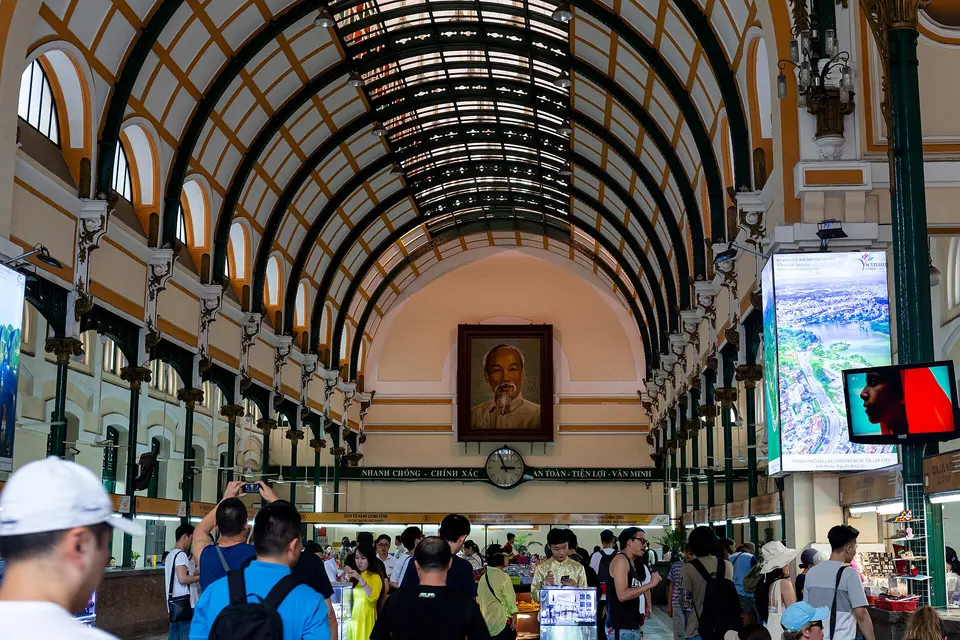
Saigon Central Post Office

Across the square from the cathedral, the post office of 1891, built by the French with an iron-and-glass vault often attributed to Gustave Eiffel, is still a working post office: under the portrait of Ho Chi Minh, the painted maps of Saigon in 1892 and of the telegraph lines, the wooden phone booths and the counters where you can send a postcard stamped by hand. Free, open daily, and the letter-writer at his desk, the last public scribe in the city, worked here into his nineties.

  • Plan about 30 min
  • Free; open daily about 7:00–19:00
860 m · about 13 min on foot
Ben Thanh Market
Photo: Keith Yahl, CC BY 2.0
5Market

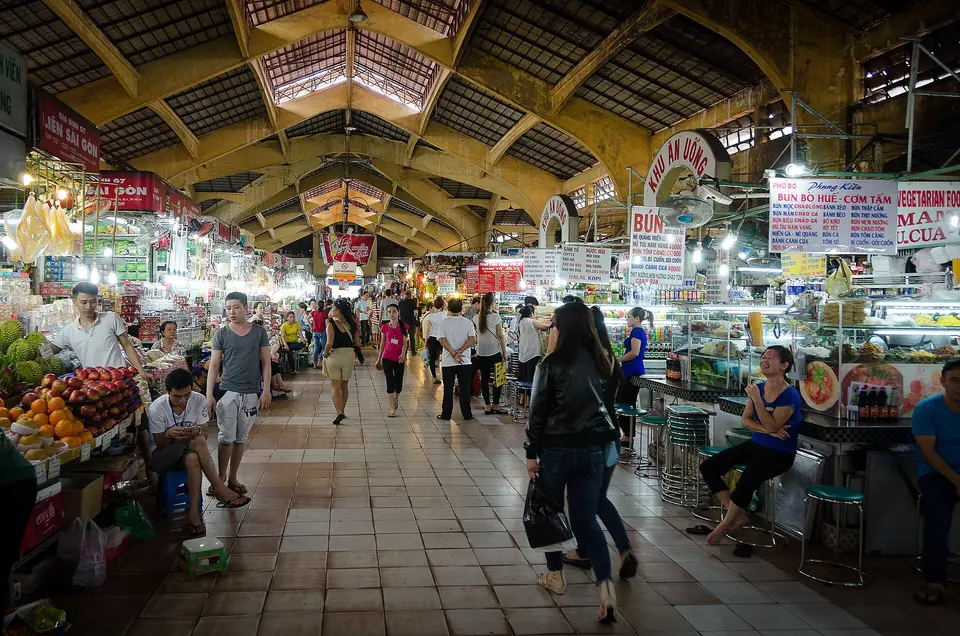
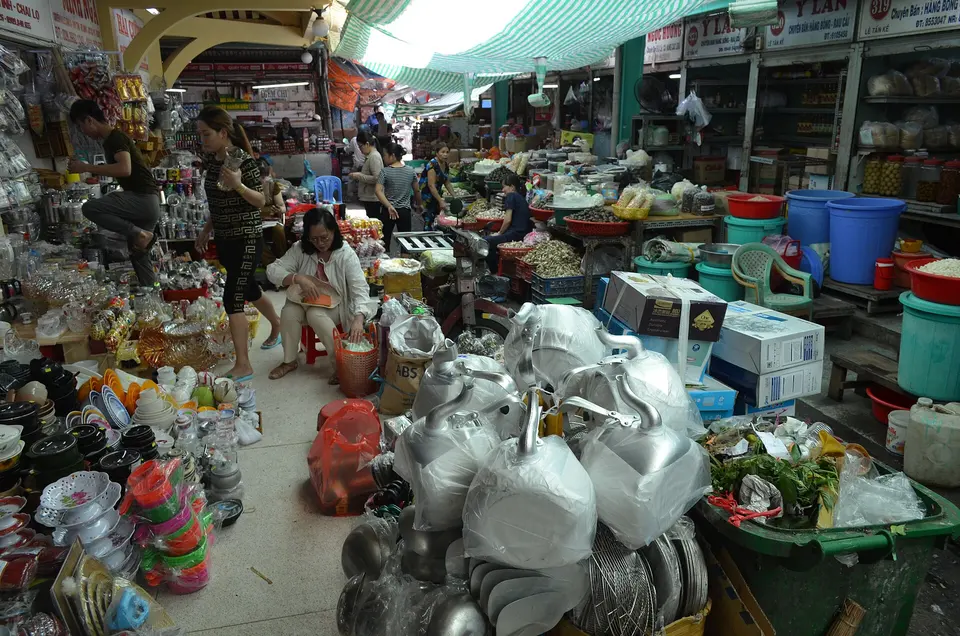
Ben Thanh Market

The covered market of 1914 with its clock tower on a roundabout at the heart of District 1, and now the terminus of Metro Line 1, sells everything under one roof: coffee, dried fruit, spices, fabric, lacquer, conical hats, knock-off everything, and, in the food section, bowls of noodles, sugar-cane juice and bánh xèo pancakes at the counters. Bargain hard inside; after 18:00 the streets around it become the night market of grilled seafood and souvenirs. It is a tourist market now, and still the city's landmark.

  • Plan about 1 h 15 min

Evening

640 m · about 10 min on foot
Nguyen Hue walking street
Photo: choi kwangmo, CC0
6Boulevard

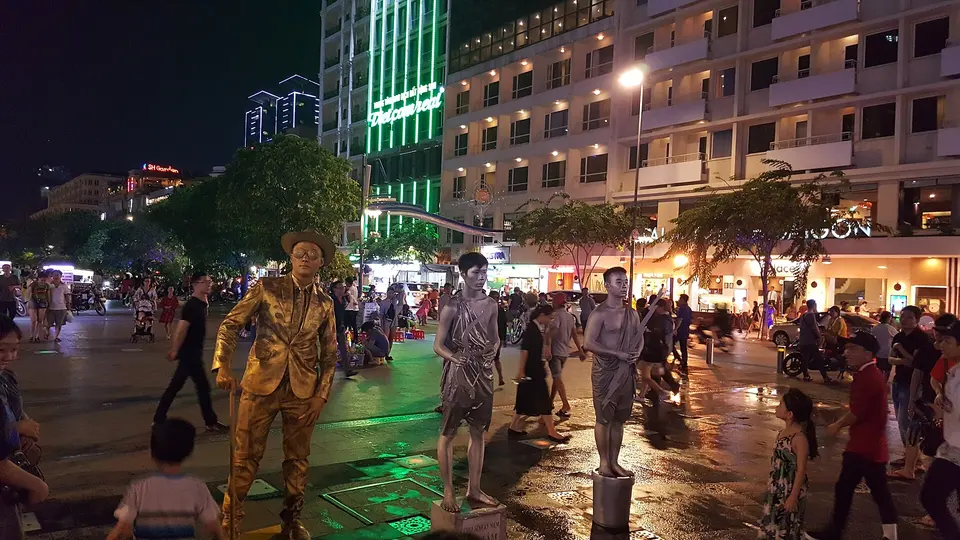
Nguyen Hue walking street

The French Boulevard Charner, once a canal, was made into a granite pedestrian promenade in 2015 from the colonial City Hall, floodlit yellow at night with the statue of Ho Chi Minh in front, down to the river: fountains, skateboarders, families on rented scooters, the Cafe Apartment, a 1960s block whose nine floors are cafés and shops you climb by the stairs, and the Bitexco Financial Tower with its Skydeck on the 49th floor and its helipad. A rooftop bar at dusk here, or the Skydeck, is the way to see the motorbikes light up.

  • Plan about 2 h
  • Free; Bitexco Saigon Skydeck daily about 9:30–21:30, about 240,000 dong

Day 2

The Cu Chi tunnels, Cholon and Bui Vien

Leave early for the Cu Chi tunnels, 60 km northwest, to crawl the guerrilla network that the Viet Cong dug under the American bases, come back for a late lunch in Cholon, the Chinese city, and its Thien Hau temple and Binh Tay Market, and finish on Bui Vien, the backpacker beer street of District 1.

  • 4 sights
  • 1.2 km on foot
  • Longest walk 1.2 km
12345 kmN
Stops in order, straight-line distancesDriving route in Google Maps ↗

Morning

Cu Chi tunnels
Photo: dronepicr, CC BY 2.0
1Historic site

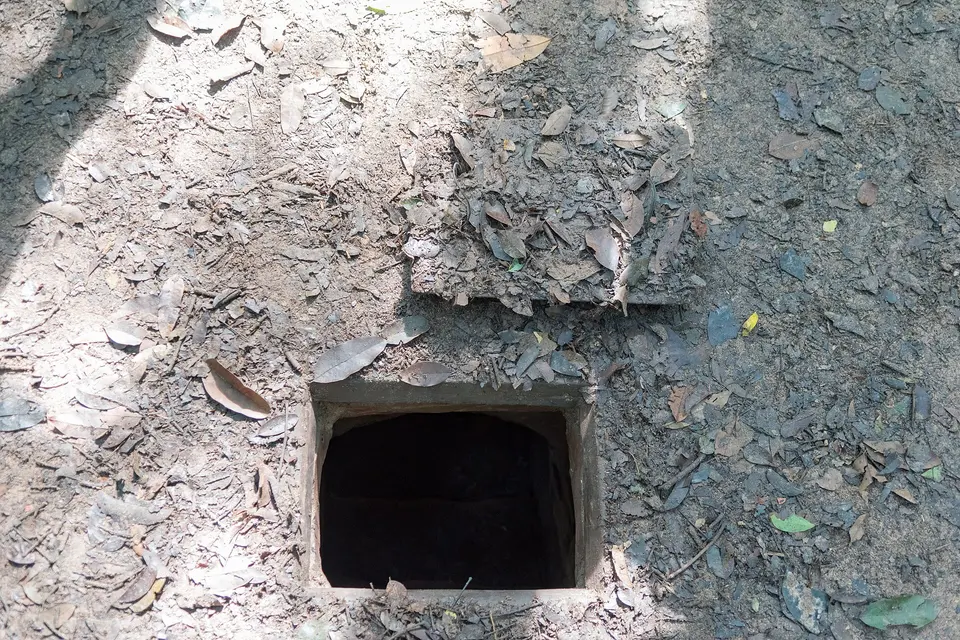
Cu Chi tunnels

The 250-kilometre network of tunnels that the Viet Cong dug by hand under the forest northwest of Saigon, three levels deep with kitchens, hospitals, weapons workshops and trapdoors, from which they fought the American 25th Division camped on top of it, is shown at two sites: Ben Dinh, closer and busier, and Ben Duoc, the original and quieter, with its memorial temple. A guide leads you through the booby traps, the smokeless kitchen and a 100-metre stretch of tunnel widened for tourists, and the shooting range sells bullets for an AK-47. Half-day tours leave the city at 8:00.

  • Plan about 3 h
  • Daily 7:00–17:00, ticket counter to 16:00; 135,000 dong for foreign visitors since February 1, 2026 (35,000 site entry plus 100,000 guide service), tours extra

Midday

LunchCholon is the place for a Chinese-Vietnamese lunch: dim sum and roast duck in the restaurants around Chau Van Liem, hủ tiếu noodle soup from the carts, or sugarcane juice and chè sweet soups in the market. The tunnel tours include only a taste of boiled cassava with salt and sesame, the guerrillas' ration.

Afternoon

Tour drop-off or Grab to Cholon, 30 minutes from the centre; bus 1 from Ben Thanh runs to Cholon's bus station
Thien Hau Temple, Cholon
Photo: Alexander Synaptic, CC BY-SA 2.0
2Chinese temple

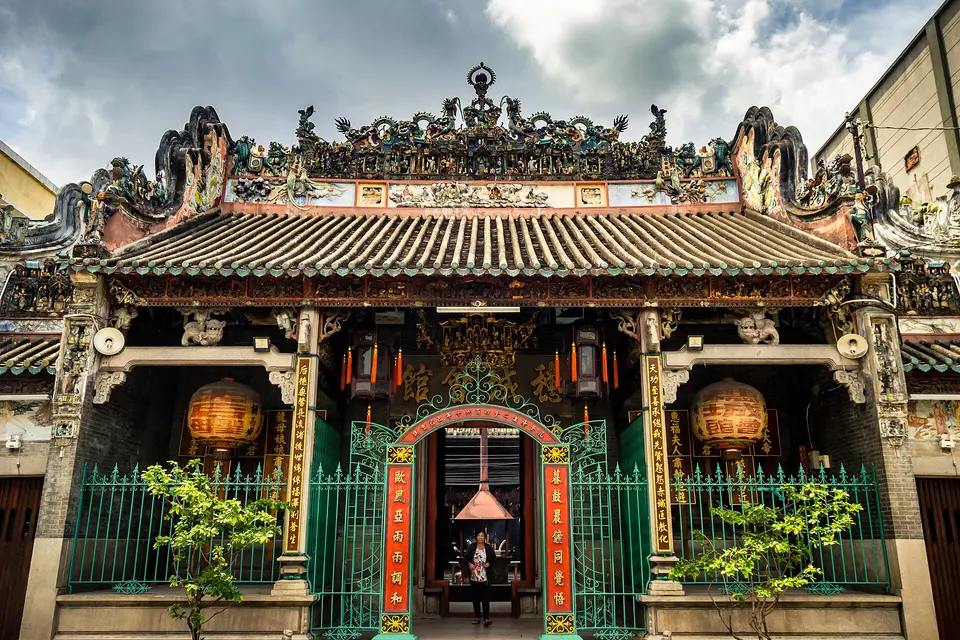
Thien Hau Temple, Cholon

The Cantonese congregation's temple of 1760 on Nguyen Trai street, dedicated to Mazu, the goddess of the sea who brought the immigrants safely across, is the heart of Cholon, the Chinese city that the Hoa built west of Saigon: a roof ridge crowded with ceramic figures from Guangdong, spirals of incense hanging from the ceiling with prayers tagged to them, and the goddess in her boat-shaped altar. Free and always full; the Quan Am pagoda and the Ong Bon temple are within a few streets.

  • Plan about 45 min
  • Free; open daily about 6:00–17:30
1.2 km · about 18 min on foot
Binh Tay Market
Photo: Nick, CC BY 2.0
3Market

Binh Tay Market

The wholesale market of Cholon, built in 1928 by a Chinese merchant in a Chinese-French style around a courtyard with a clock tower and a shrine to its founder, restored in 2018, is where the city's shops buy: 2,000 stalls of dried seafood, spices, tea, plastic, fabric and sweets sold by the sack, with a food court of Chinese-Vietnamese dishes upstairs and none of Ben Thanh's tourists. Wholesale means no bargaining and low prices; the streets around it are the herbal medicine shops.

  • Plan about 1 h

Evening

Grab or bus 1 back to District 1, about 25 minutes
Bui Vien street
Photo: Bahnfrend, CC BY-SA 4.0
4Nightlife street

Bui Vien street

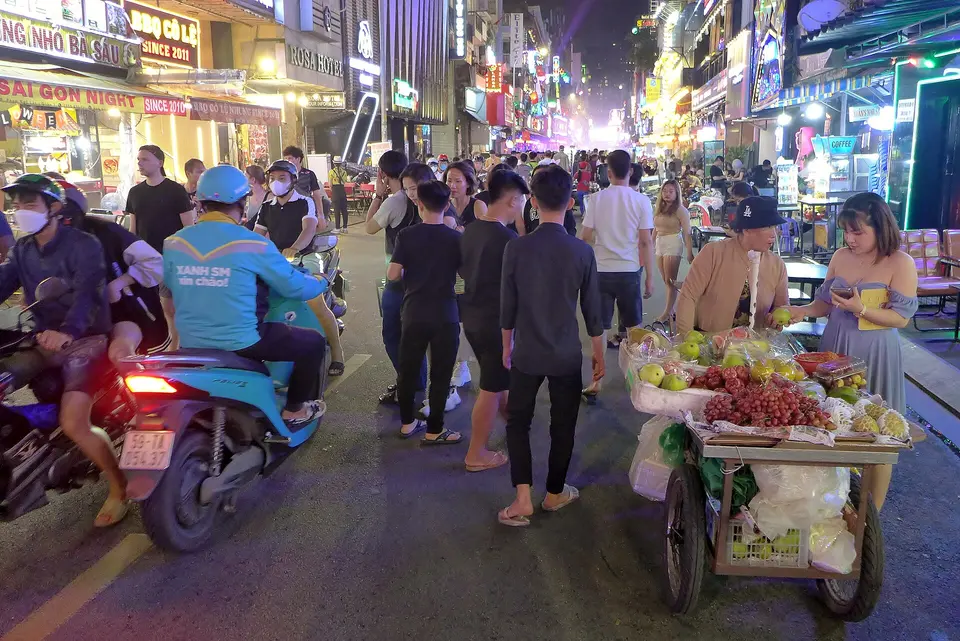
The backpacker quarter of Pham Ngu Lao has one street that becomes a walking street of beer at night: plastic stools on the pavement, 20,000-dong beers, hostels' rooftop bars, street food carts, fire-dancers and touts, and the noise of all of it until the early hours. It is not sophisticated and it is a rite; drink one beer on a stool, eat a grilled squid, and move on to the cocktail bars of District 1 or the roof of the Rex.

  • Plan about 2 h 30 min

Day 3

The Jade Emperor Pagoda, the History Museum, Landmark 81 and the Opera House

Start in the incense of the Jade Emperor Pagoda, see the Cham sculpture and the Nguyen dynasty rooms of the History Museum beside the zoo, eat pho, ride the lift to the SkyView of Landmark 81, the tallest building in Vietnam, and come back to the Opera House for the A O Show or a last dinner in the colonial quarter.

  • 4 sights
  • Transport between sights
1234500 mN
Stops in order, straight-line distancesDriving route in Google Maps ↗

Morning

Jade Emperor Pagoda
Photo: Kevin Decherf, CC BY-SA 2.0
1Taoist temple

Jade Emperor Pagoda

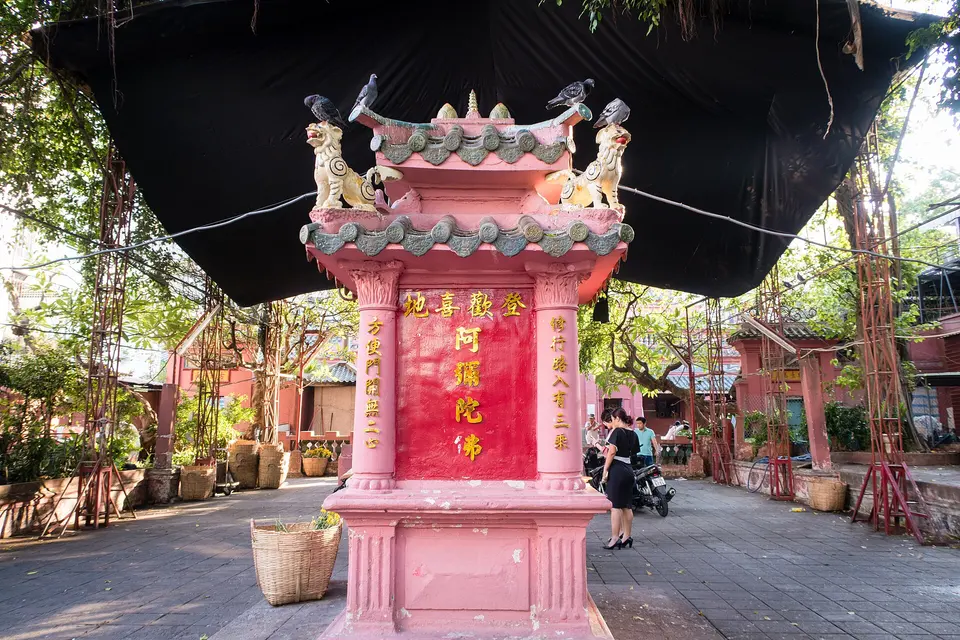
The Cantonese temple of 1909 in the Da Kao quarter, the most atmospheric in the city and the one Barack Obama visited in 2016, is dark, smoky and crowded with carved wooden figures: the Jade Emperor himself on the main altar, the King of Hell and his ten judges in the hall of the ten hells, the goddess of fertility Kim Hoa whose room is full of women praying for children, and a turtle pond in the courtyard where the animals are released for merit. Free; go early, and on the first or fifteenth of the lunar month it overflows.

  • Plan about 45 min
  • Free; open daily about 7:00–18:00, from 5:00 on the 1st and 15th of the lunar month
A 20-minute walk south or a 5-minute Grab
Museum of Vietnamese History
Photo: Nguyễn Thanh Quang, CC BY-SA 3.0
2Museum

Museum of Vietnamese History

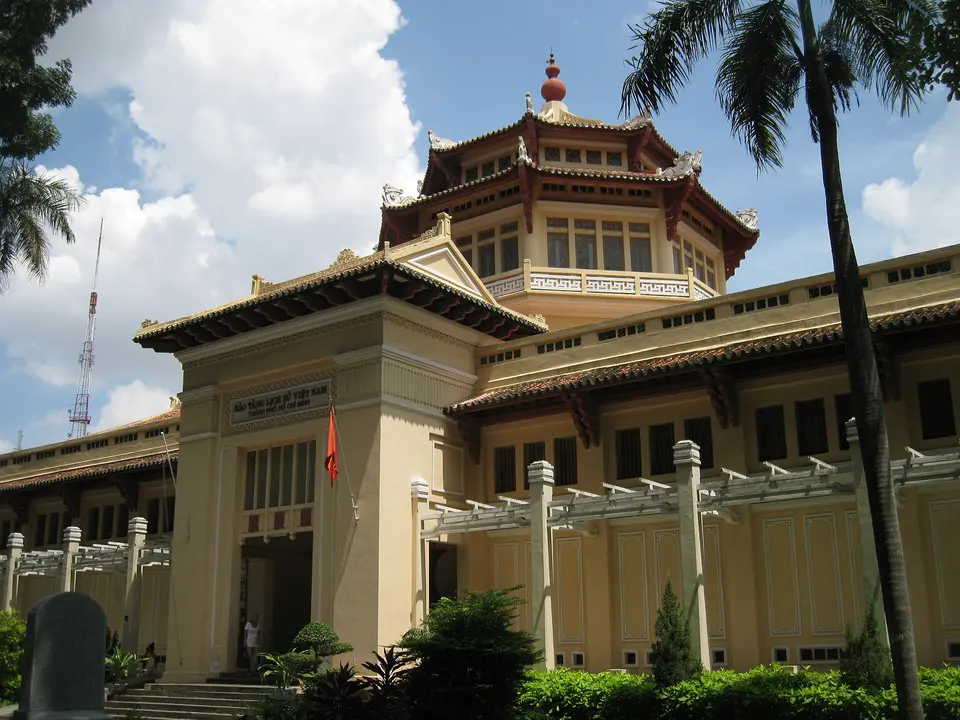
The pagoda-roofed museum of 1929 at the gate of the zoo and botanical gardens is the best place in the south to see the country's deep past: Dong Son bronze drums, the sandstone gods of the Cham kingdoms, the Oc Eo finds from the Mekong Delta's Funan culture, Buddhas from Angkor, the Nguyen dynasty's costumes and a mummy from the 19th century, with a water-puppet theatre in the courtyard. An hour, cheap, and cool; the botanical gardens next door, laid out by the French in 1864, are the shaded walk afterwards.

  • Plan about 1 h 15 min
  • Daily about 7:30–17:00; about 30,000 dong

Midday

LunchPho for lunch: Pho Hoa on Pasteur Street, open since 1968 with its side plates of fried dough and herbs, or Pho Le in District 5; the northern-style Pho Bo Vien Thap Cam stalls of Tan Dinh market are the alternative on the way.

Afternoon

Grab about 15 minutes east along Nguyen Huu Canh to Vinhomes Central Park; or the Saigon Waterbus from Bach Dang pier to Binh An and a 10-minute taxi
Landmark 81 SkyView
Photo: Thomas Galvez, CC BY 2.0
3Observation deck

Landmark 81 SkyView

The 461-metre tower of 2018 in the Vinhomes Central Park development on the river, a bundle of bamboo-like shafts by the British architects Atkins, is the tallest building in Vietnam, and the SkyView on floors 79 to 81 gives the whole city, the river's bends and the new districts across it, with a glass-floored terrace, a café and a shopping mall at the base; the park along the river below is where the city walks in the evening. Go in the late afternoon and stay for the lights.

  • Plan about 1 h 30 min
  • Daily about 8:30–23:00; SkyView from about 300,000 dong, more at weekends

Evening

Grab about 15 minutes back to Dong Khoi, or Metro Line 1 from Tan Cang station to the Opera House station, 10 minutes
Saigon Opera House and Dong Khoi
Photo: lumoplank, CC0
4Theatre and colonial quarter

Saigon Opera House and Dong Khoi

The Municipal Theatre of 1900, a slice of the Paris Opéra dropped on Dong Khoi, the old Rue Catinat, is the centre of the colonial quarter: the Hotel Continental where Graham Greene wrote The Quiet American, the Rex with its rooftop bar of the war correspondents, the Caravelle, and the boutiques and cafés running down to the river and the Majestic. The A O Show, a bamboo-and-acrobatics performance about Vietnamese village life, plays here most evenings and is the city's one must-see show; dinner is in the streets around it.

  • Plan about 2 h 30 min
  • A O Show most evenings at 18:00, tickets from the box office or online; the theatre is open for performances only

Good to know in Ho Chi Minh City

Tickets and opening days

  • The Independence Palace (135 Nam Ky Khoi Nghia Street) is open daily 7:00–18:00, including holidays and Tet unless specially announced, with the ticket office open the same hours; admission is 80,000 dong for adults, 40,000 for students and seniors and 20,000 for children aged 6–17, and tickets can be bought online.Source: Independence Palace, official site · checked Sep 2026
  • The Saigon Waterbus runs between eight stations on the Saigon River, Bach Dang, Thu Thiem, Ba Son, Binh An, Thao Dien, Thanh Da, Hiep Binh Chanh and Linh Dong, with Bach Dang in District 1 as the hub; a round trip is 30,000 dong, and the timetable in force from April 1, 2026 adds services on weekends and holidays.Source: Saigon Waterbus · checked Sep 2026

3 days in Ho Chi Minh City: quick answers

Is 3 days enough for Ho Chi Minh City?

Three days cover the centre, the war sites, Chinatown and the new skyline, which is what the city offers a first visit. A fourth day is the Mekong Delta, a day trip to My Tho and Ben Tre for the rowing boats in the coconut canals, or the Cao Dai temple at Tay Ninh combined with the tunnels, or the mangroves of Can Gio on the coast. Vung Tau's beaches are two hours by hydrofoil or bus.

Which days should I plan around?

The Independence Palace, the War Remnants Museum, the History Museum, the Fine Arts Museum and the tunnels are open every day, including holidays and Tet, with the palace open 7:00 to 18:00 and the museums closing around 17:00. The cathedral's interior is closed for restoration until 2027, though Mass is said and the square is always open. Nguyen Hue is pedestrian on weekend evenings. Tet, the lunar new year in late January or February, shuts shops and restaurants for a week and fills the city with flowers.

How much do the tickets cost?

Everything is cheap in dong: the Independence Palace is 80,000 for adults and 40,000 for students and seniors, the War Remnants Museum about 40,000, the History and Fine Arts Museums about 30,000, the Cu Chi tunnels 135,000 for foreign visitors since February 2026 with a tour on top, the Bitexco Skydeck about 240,000 and the Landmark 81 SkyView from about 300,000. Roughly 26,000 dong make a US dollar in 2026; the temples, the markets, the post office and the cathedral square are free.

How do I get around?

Grab, the ride-hailing app, on a motorbike for one person or in a car for two, is the city's transport, cheap and everywhere; Metro Line 1 runs from Ben Thanh past the Opera House and Ba Son to the eastern suburbs for 7,000 to 20,000 dong a ride, with day passes at 40,000. The Saigon Waterbus from Bach Dang pier is a 15,000-dong river cruise in disguise. Walking in District 1 is fine; crossing the road means walking slowly and steadily into the motorbikes, which flow around you.

How much walking is this itinerary?

About 4 km on day one, flat, across District 1 in the heat; about 2 km on day two, plus the crouching and crawling of the tunnels, which are widened for tourists but still tight; and about 3 km on day three. Start the outdoor stops by 8:00, keep the museums for the middle of the day, and expect an afternoon downpour from May to November.

Other Ho Chi Minh City itineraries

Keep exploring

Where this connects

THE TRIPWOA APP

Go somewhere.
Make it yours.

Build days around what you love. Follow your route, find your next stop and keep the moments along the way.

Get it on Google PlayAvailable for Android
Free to start
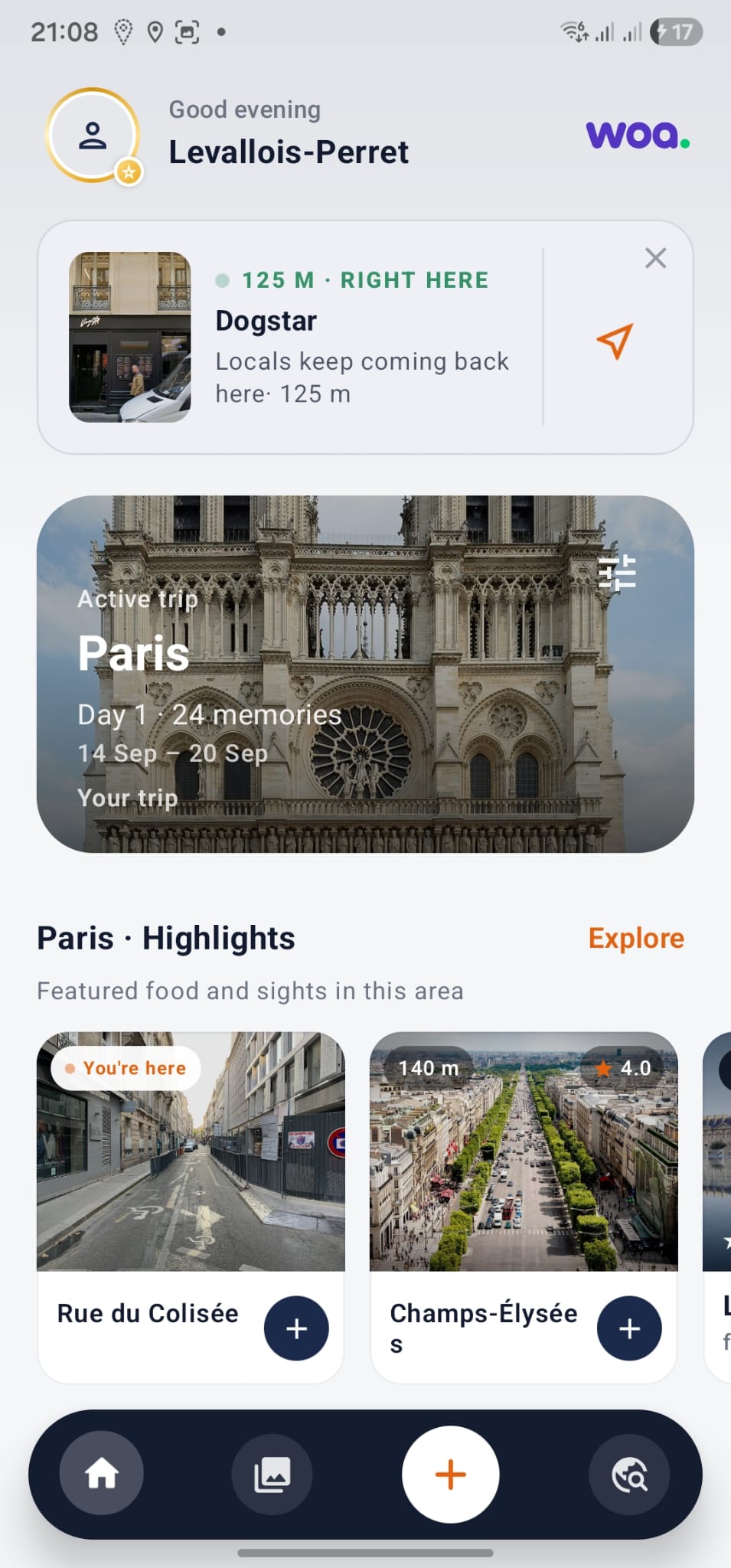
Tripwoa home with a Paris trip and nearby places to explore
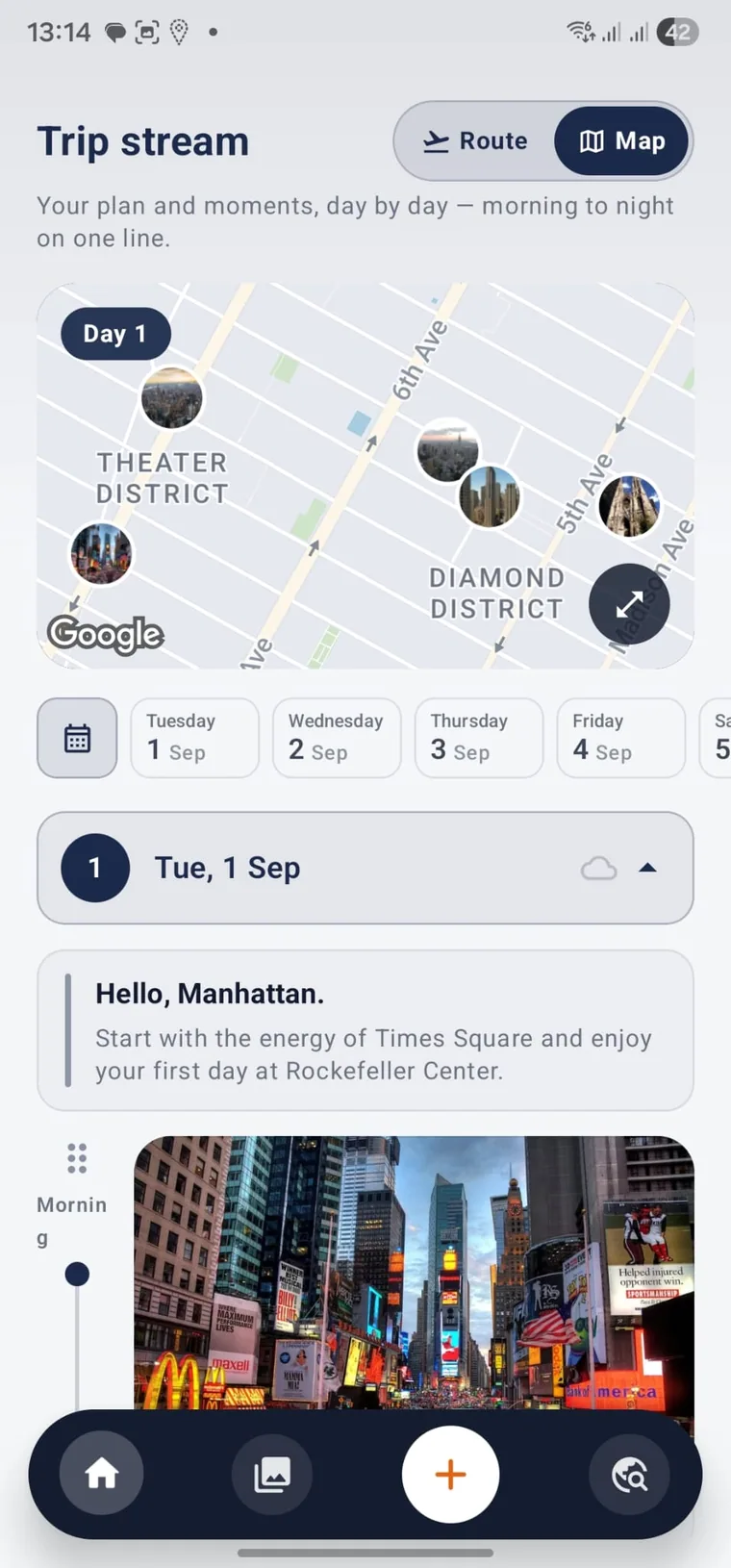
Tripwoa day plan for New York with a route map and Times Square stop

A day that feels like you.

Sources and method

Places and coordinates: Wikidata and Tripwoa's open-data place catalog (Overture Maps Foundation, © OpenStreetMap contributors). Photos: Wikimedia Commons, credited on each image. Practical rules: the official sources linked in each note, checked in September 2026.

How this plan was made: Tripwoa's planner drafted the day order from real coordinates and typical visit times. Each stop was then reviewed, reordered where needed and rewritten with AI assistance. Walking distances are straight-line estimates, so allow a little extra time on real streets.