3-day itinerary · Indonesia

3 Days in Jakarta

A realistic first-timer plan that starts day one at the top of the National Monument, walks to the bronze and gold of the National Museum and crosses the road between the Istiqlal Mosque and the cathedral before the evening traffic circle of Bundaran HI; gives day two to Kota Tua, the old Batavia of the Dutch, from the town hall square and its museums to the pinisi schooners of Sunda Kelapa and the incense of Chinatown's oldest temple; and spends day three on the archipelago in miniature at Taman Mini, the tree-lined streets of Menteng and the street food and record shops of Blok M by MRT. Every stop comes with the transport, the prices and the closing days that matter in 2026.

  • 3days
  • 14sights
  • 5.3 kmon foot between sights

Updated 12 September 2026 · 2 official sources checked · report an error

National Monument (Monas)
Photo: Ramayoni, CC BY-SA 4.0

The monuments of Merdeka Square, then old Batavia and the harbour, then the park, the garden suburb and the night

Jakarta's sights sit in three clusters, and the traffic between them is the enemy: Merdeka Square and its museums in the centre, Kota Tua and the harbour 5 km north, and the MRT corridor south to Blok M. Day one is walked around the square, with the MRT for the last stop; day two is a TransJakarta bus or a train to Jakarta Kota station and then on foot and by rented bicycle; day three is a car or taxi to Taman Mini in the south-east and the MRT for the rest. Almost every museum closes on Monday, including Monas, the National Museum, the history museum and the Bank Indonesia museum, so Monday is the day for the mosque, the harbour, Glodok and the malls. Rain comes in the afternoons from November to March and floods the north; the dry season from May to October is the time.

At a glance

Ways to use these days

If it rains
5 of the stops are indoors — National Museum of Indonesia · Istiqlal Mosque · Jakarta Cathedral
Lightest day on foot
Day 2 — 4.3 km between stops
Most walking
Day 3 — 19.8 km

Day 1

Merdeka Square: Monas, the National Museum, the Istiqlal Mosque, the cathedral, the National Gallery and Bundaran HI

Go up the National Monument when it opens for the view before the haze, cross the square to the National Museum's bronzes and gold, walk to the Istiqlal Mosque and its cathedral neighbour, look in at the National Gallery, and end the day among the fountains and towers of Bundaran HI.

  • 6 sights
  • 5.3 km on foot
  • Longest walk 2.1 km
1234561 kmN
Stops in order, straight-line distancesRoute in Google Maps ↗

Morning

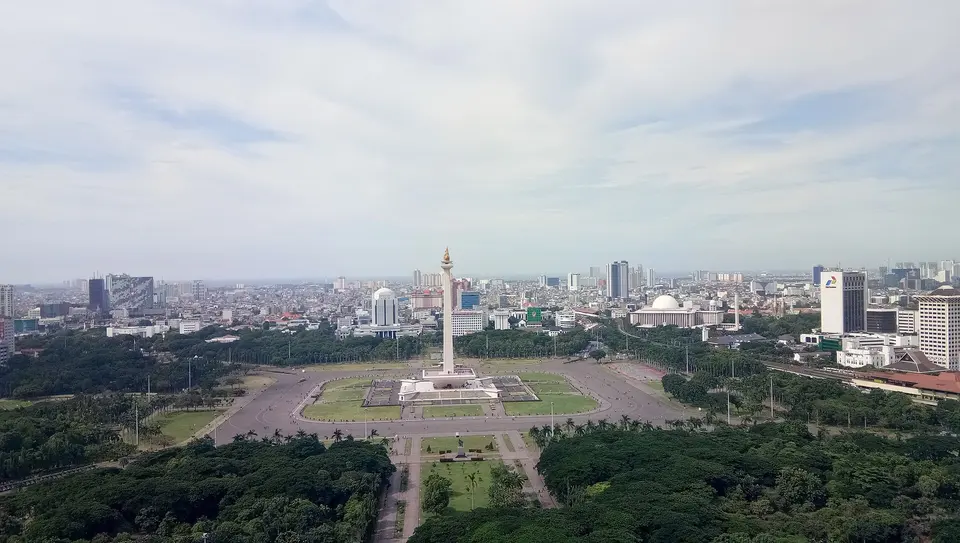
National Monument (Monas)
Photo: Ramayoni, CC BY-SA 4.0
1Monument

National Monument (Monas)

Sukarno's 132-metre obelisk in the middle of Merdeka Square, begun in 1961 and finished in 1975, is topped by a bronze flame plated with 50 kilograms of gold and stands in a park of a square kilometre that the Dutch laid out as their parade ground; underneath are a museum of the independence struggle in 51 dioramas and the Hall of Independence with the original proclamation, and a single lift takes about fifty people at a time to the observation deck at 115 metres, from which the city's towers, the mosque and the harbour haze are laid out. The queue for the lift builds by mid-morning, so arrive at 8:00; tickets are bought at the counter, and the whole site closes on Mondays.
  • Plan about 1 h 30 min
  • Tue–Fri about 8:00–18:00, Sat–Sun to 22:00, last tickets an hour before, closed Mon; deck ticket about Rp24,000 including the museum, museum only about Rp8,000
610 m · about 10 min on foot
National Museum of Indonesia
Photo: Chainwit., CC BY 4.0
2Museum

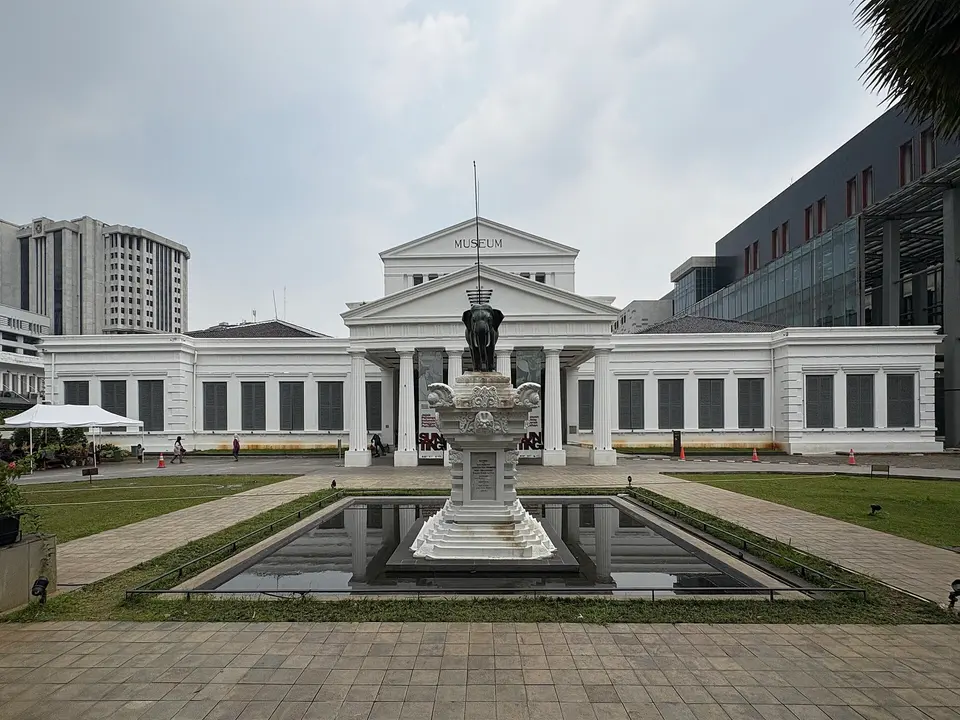
National Museum of Indonesia

The Elephant Building, named for the bronze elephant the king of Siam gave in 1871 and housed in the Batavian Society's neoclassical hall of 1868 with a modern wing behind, is the oldest and largest museum in the country and the one place to see Indonesia whole: the stone statues of Hindu-Buddhist Java in the courtyard and the Bhairava of Sumatra, the gold and jewels of the treasure room, the Chinese ceramics that came with the trade, and the ethnographic halls of houses, boats, textiles and masks from every island, reopened in 2024 after a fire with a new immersive show. Foreign visitors pay three times the local price; it is still the best money in the city.

  • Plan about 2 h
  • Tue–Thu 8:00–18:00, Fri–Sun 8:00–20:00, closed Mon and national holidays; Rp150,000 foreign visitors, Rp50,000 Indonesians, Rp30,000 students; immersive show Rp35,000 extra

Midday

LunchLunch is Padang food: the restaurants along Jalan Sabang, five minutes south of the square, pile a dozen small dishes of rendang, curried jackfruit and chilli eggs on the table and charge for what you eat, and the street carts there do sate and soto at night. The food court in the National Museum's new wing is the air-conditioned alternative. Drink bottled water and take the afternoon slowly; the humidity is the real obstacle.

Afternoon

1.2 km · about 19 min on foot
Istiqlal Mosque
Photo: Aisha Tanduk, CC BY-SA 4.0
3Mosque

Istiqlal Mosque

The Independence Mosque, designed by a Christian architect, Friedrich Silaban, and built from 1961 to 1978 on the site of a Dutch fort, is the largest in Southeast Asia, a marble and stainless-steel hall under a 45-metre dome on twelve columns that holds 200,000 people at the end of Ramadan; visitors of any faith are welcomed by guides from the desk at the entrance, given robes if needed and shown the prayer hall from the gallery, the five-storey courtyard and the drum that calls the prayers, free of charge, every day except during the Friday noon prayer. The tunnel of friendship dug in 2021 joins it to the cathedral across the road.

  • Plan about 1 h
  • Visitors about 8:00–16:00 daily, guided tours from the visitor desk, not during Friday prayers; free; modest dress, robes lent
260 m · about 4 min on foot
Jakarta Cathedral
Photo: CEphoto, Uwe Aranas, CC BY-SA 3.0
4Cathedral

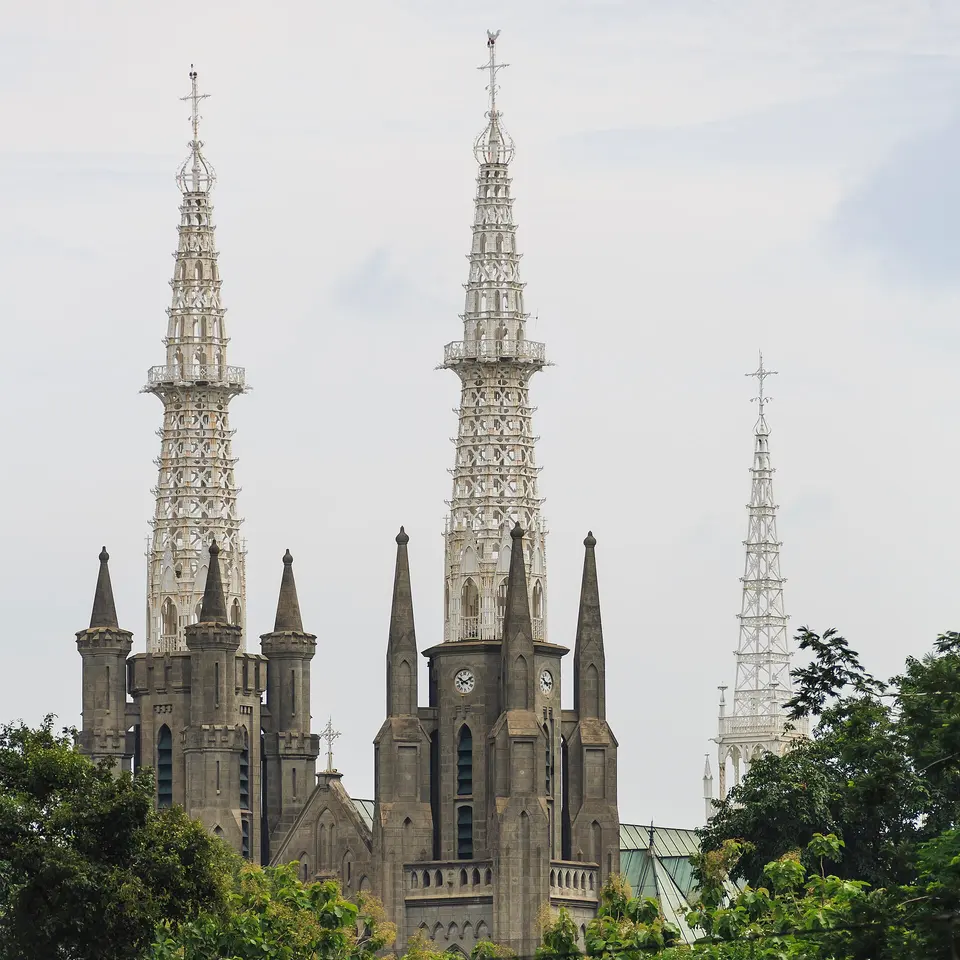
Jakarta Cathedral

The neo-Gothic cathedral of 1901, its two iron-lace spires 60 metres high and its third spire the only one in the world built of teak on an iron frame, faces the mosque across Jalan Katedral in an arrangement that the country likes to point to, and inside are the marble Pietà, the pipe organ and a small museum of the church's history in the choir loft; Mass is in Indonesian, the doors are open through the day and entry is free. The old parade ground of Lapangan Banteng behind it, with its monument of a man breaking his chains, is the green link to the National Gallery.

  • Plan about 30 min
  • Open daily about 6:00–18:00, free; museum in the loft on set days
1.0 km · about 16 min on foot

Evening

2.1 km · about 33 min on foot
Bundaran HI and the Welcome Monument
Photo: Baqotun0023, CC BY-SA 4.0
6Roundabout and fountain

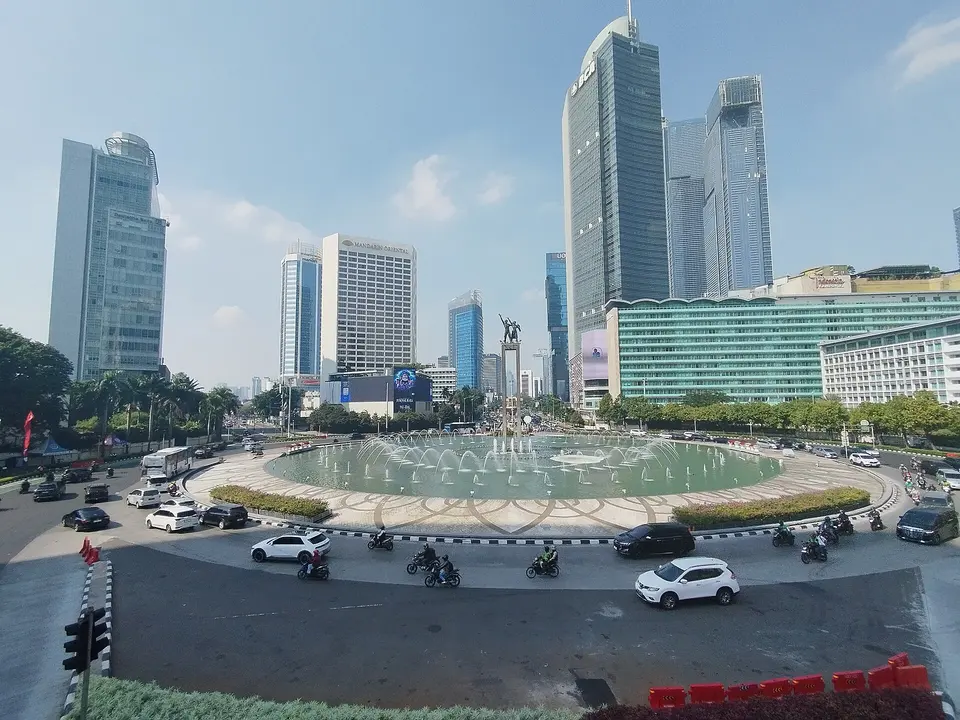
Bundaran HI and the Welcome Monument

The traffic circle in front of the Hotel Indonesia, with its fountains and the bronze couple waving a welcome to the athletes of the 1962 Asian Games, is the point the city measures itself from: the MRT terminus is under it, the malls of Grand Indonesia and Plaza Indonesia surround it, the towers of Sudirman march south from it, and on Sunday mornings the whole avenue is closed to cars and given to joggers, cyclists and food carts; at night, lit, it is the postcard. Have a drink on one of the rooftops above it and take the MRT home.

  • Plan about 1 h 30 min
  • Free; MRT Bundaran HI; car-free day Sunday mornings on Sudirman–Thamrin

Day 2

Old Batavia: Fatahillah Square, the history museum, the Bank Indonesia museum, Sunda Kelapa and Glodok

Take the train to Jakarta Kota and walk into the Dutch town hall square of old Batavia, see the history of the city in the town hall and the money of the colony in the bank, ride a rented bicycle north to the wooden schooners of Sunda Kelapa, and finish in Glodok, the oldest Chinatown, for the temples and the noodles of Petak Sembilan.

  • 5 sights
  • Transport between sights
123451 kmN
Stops in order, straight-line distancesDriving route in Google Maps ↗

Morning

Fatahillah Square (Kota Tua)
Photo: Aisha Tanduk, CC BY-SA 4.0
1Historic square

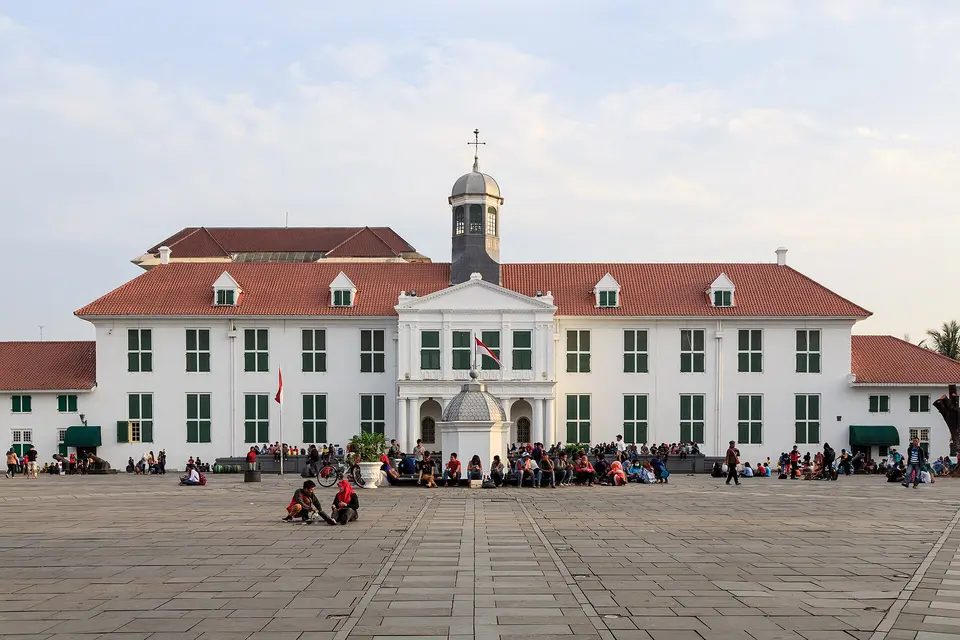
Fatahillah Square (Kota Tua)

The cobbled square in front of the town hall of Batavia, the Dutch East India Company's capital from 1619, is the heart of Kota Tua, the old town that the city has been restoring since the 2010s: the town hall of 1710 on the south side, the Wayang and Fine Arts museums in the old church and court on the west and east, the Café Batavia on the north, the Si Jagur cannon, painted bicycles for rent, street performers and the food carts of a Jakarta Sunday; beyond it are the canals of Kali Besar with the Toko Merah and the Kota Intan drawbridge. Weekday mornings are quiet; weekends are a fair.

  • Plan about 1 h
  • Free, open all the time; museums around it closed Mondays; bicycle rental on the square
On the south side of the square
Jakarta History Museum (Fatahillah)
Photo: CEphoto, Uwe Aranas, CC BY-SA 3.0
2Museum

Jakarta History Museum (Fatahillah)

The town hall of Batavia, built in 1710 with a bell tower and a dungeon under the courtyard where the Javanese prince Diponegoro was held before his exile, tells the city's story from the prehistoric finds and the Portuguese to the Company, the British interlude and the republic in rooms of Dutch furniture, maps, portraits of the governors and the cells; it is old-fashioned and the labels are patchy, but the building is the point, and the upper floor's windows look over the square. Foreign visitors pay a higher ticket; it is closed on Mondays.

  • Plan about 1 h
  • Tue–Sun about 9:00–15:00, closed Mon; about Rp50,000 for foreign visitors, Rp10,000–15,000 for Indonesians
A 3-minute walk south from the square, past the Wayang Museum
Museum Bank Indonesia
Photo: Chainwit., CC BY 4.0
3Museum

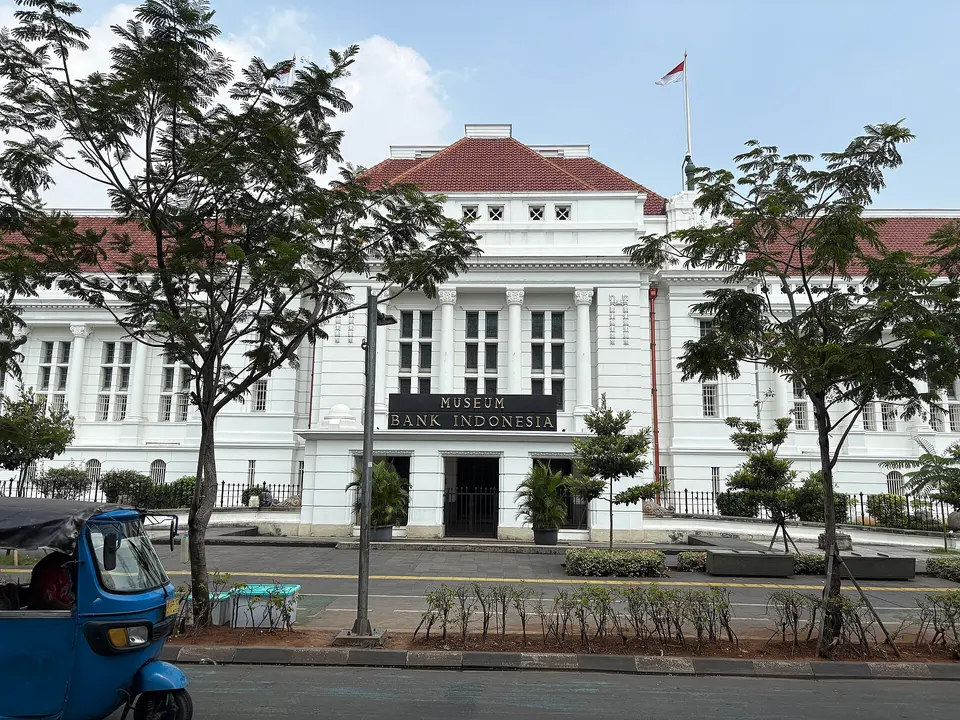
Museum Bank Indonesia

The former Javasche Bank of 1909, the Dutch colony's central bank, on the road south of the square, is the best-presented museum in the old town: air-conditioned galleries of the history of money in the archipelago from Chinese cash and Company coins to the rupiah, the spice trade and the crises, with dioramas, a gold-bar vault and a numismatic collection of thousands of notes and coins, for a ticket of Rp5,000; it is a cool hour in the middle of the day and free for students. The Mandiri bank museum next door has the old counters and the ledgers.

  • Plan about 1 h
  • Tue–Sun 8:00–15:30, closed Mon and public holidays; Rp5,000, free for students with ID

Midday

LunchCafé Batavia on the square, in a 19th-century Dutch mercantile house of teak stairs, ceiling fans and a wall of old photographs, does Indonesian and colonial dishes at prices that are still fair for the setting and is the lunch of the day; the kerak telor omelette sellers and the es selendang mayang stalls outside the square are the cheap version, and the cafés in the old warehouses by Kota Intan bridge are the modern one.

Afternoon

A 20-minute walk north along Kali Besar and the canal, or a rented bicycle from the square, or a bajaj tuk-tuk for a few thousand rupiah
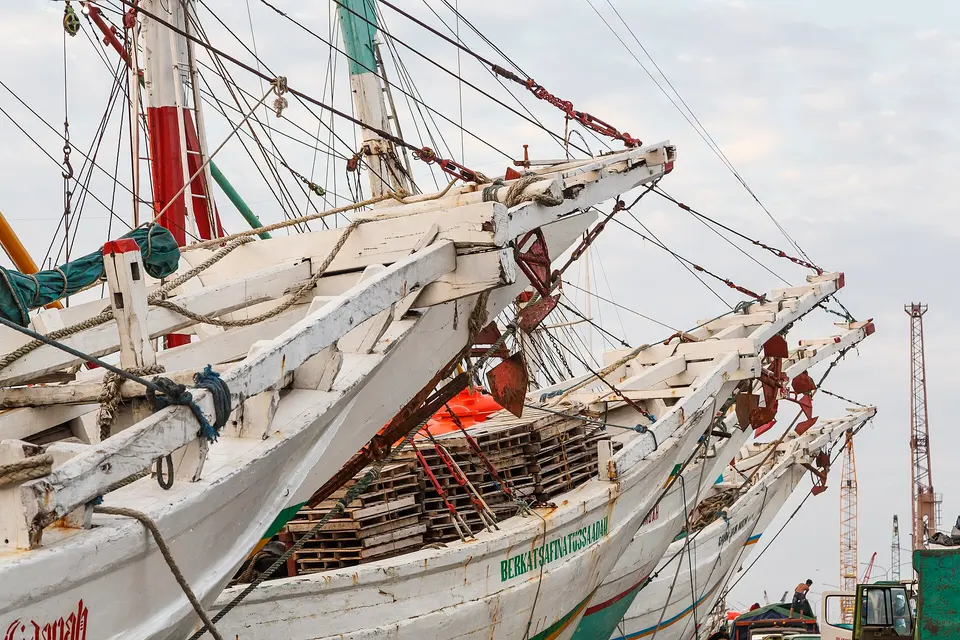
Sunda Kelapa harbour
Photo: CEphoto, Uwe Aranas, CC BY-SA 3.0
4Old harbour

Sunda Kelapa harbour

The old port at the mouth of the Ciliwung river, the Sunda kingdom's harbour before the Portuguese came in 1522 and the Dutch made it Batavia, is still a working port for the pinisi, the two-masted wooden schooners of Sulawesi that carry cement, timber and rice to the outer islands and are loaded by hand up gangplanks by men who will let you walk the quay for a small tip and row you round the hulls for another; the maritime museum in the Company's spice warehouses of 1652 and the watchtower are at the entrance. Go in the late afternoon when the light is low and the loading is done.

  • Plan about 1 h 30 min
  • Quay open through the day, free or a small tip to the gatekeeper; maritime museum Tue–Sun, closed Mon, small fee

Evening

Back through the square and 1 km south along Jalan Pintu Besar Selatan, about 15 minutes on foot, or TransJakarta one stop to Glodok
Glodok and Petak Sembilan
Photo: Cun Cun, CC BY-SA 4.0
5Chinatown

Glodok and Petak Sembilan

The oldest Chinatown in Indonesia, where the Dutch confined the Chinese after the massacre of 1740, is a grid of electronics malls, herbalists and the market lane of Petak Sembilan, with the Kim Tek Ie temple, the Jin De Yuan of 1650, the oldest in the city, its courtyard thick with incense and candles and its roof rebuilt after a fire in 2015, the Toasebio and Dharma Jaya temples beside it, and the food that people come for at dusk: kopi es Tak Kie since 1927, bakmi noodles, pork sate and the sweet soups of the stalls in Gang Gloria. Chinese New Year fills it; Monday, when the museums are shut, is a good day for it.

  • Plan about 2 h
  • Free; temples open through the day; the food lanes are best from late afternoon; TransJakarta Glodok

Day 3

The park, the garden suburb and the night: Taman Mini, Taman Suropati and Blok M

Drive out early to Taman Mini for the traditional houses of the whole archipelago in one park, come back for lunch and a walk under the trees of Menteng, the Dutch garden suburb, with the antique stalls of Jalan Surabaya, and ride the MRT south to Blok M for its Japanese lanes, record shops and street food after dark.

  • 3 sights
  • Transport between sights
1235 kmN
Stops in order, straight-line distancesDriving route in Google Maps ↗

Morning

Taman Mini Indonesia Indah
Photo: Chainwit., CC BY 4.0
1Cultural park

Taman Mini Indonesia Indah

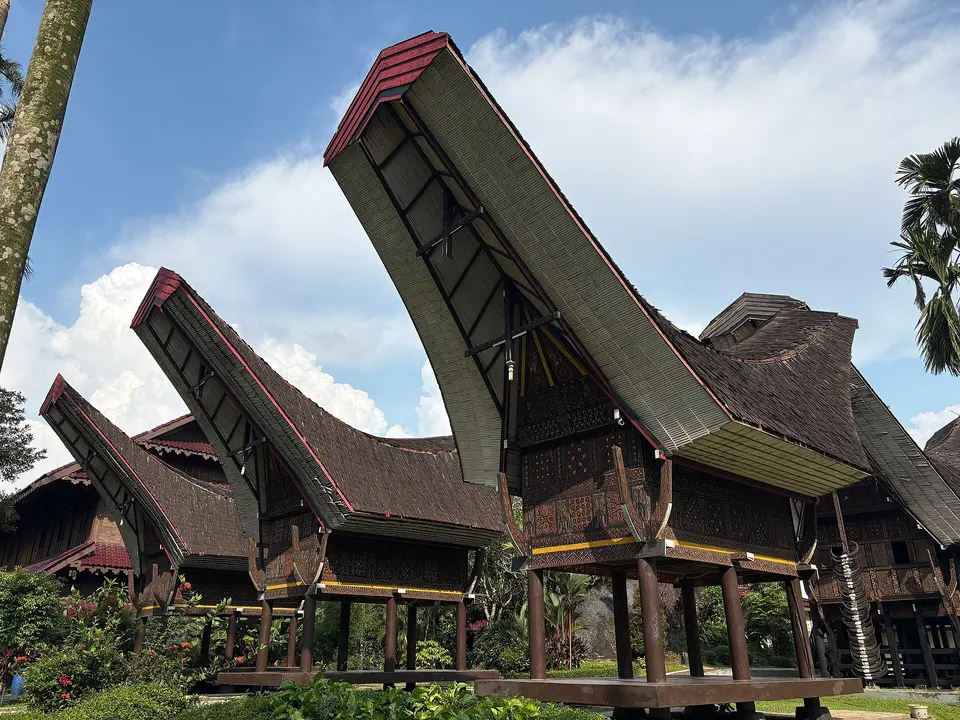
Beautiful Indonesia in Miniature, the 150-hectare park that President Suharto's wife opened in 1975 in the south-east of the city, puts the whole archipelago around a lake shaped like its map: a full-size traditional house from each of the provinces, the boat-roofed tongkonan of Toraja, the horned Minangkabau palace, the longhouses of Kalimantan and the honai of Papua, with weekend dances and craft demonstrations, plus a cable car over the lake, museums of everything from stamps to komodo dragons, a bird park and the Keong Emas IMAX theatre, all renovated for 2022; it is the way to see the country's 17,000 islands in a morning, on foot or by the electric shuttle, before the heat.

  • Plan about 4 h
  • Daily about 6:00–17:00; entry about Rp25,000–35,000, pavilions free, museums and rides extra; LRT to Taman Mini or a taxi

Midday

LunchMenteng is where Jakarta's old money eats: the cafés and restaurants around Taman Suropati and along Jalan Cikini do Javanese and Sundanese lunches under trees, Bakoel Koffie on Cikini has been roasting since 1878, and the gado-gado and soto stalls in the side streets are as good as anywhere. Eat late, after 13:30, and keep room for the night market at Blok M.

Afternoon

Taxi 45 minutes back to Menteng, or the LRT and MRT to Bundaran HI and a 15-minute walk south
Taman Suropati and Menteng
Photo: Marwan Mohamad, CC BY-SA 4.0
2Park and garden suburb

Taman Suropati and Menteng

Menteng, laid out by the Dutch in the 1910s as a garden suburb of villas, tree-lined avenues and roundabouts, is where the diplomats, the ministers and the old families live, and Taman Suropati at its centre, a round park of rain trees, fountains and the sculptures the ASEAN countries gave, is where the neighbourhood walks its dogs and plays its violins on Sunday mornings; around it are the proclamation museum in the house where independence was drafted, the Cikini cafés, and Jalan Surabaya, a street of stalls selling brass, ship's lamps, old vinyl and antiques that may or may not be, a bargain for the bargainer. Barack Obama went to school two streets away.

  • Plan about 1 h 30 min
  • Free, open all the time; Jalan Surabaya market daily until dusk; MRT Bundaran HI and a 15-minute walk

Evening

MRT from Bundaran HI or Dukuh Atas south to Blok M, about 15 minutes
Blok M
Photo: VulcanSphere, CC BY 4.0
3Shopping and nightlife district

Blok M

The 1970s shopping district at the south end of the MRT is the city's most enjoyable night: Little Tokyo on Jalan Melawai, a lane of izakaya and ramen shops that grew up around the Japanese expats, the M Bloc Space, a former mint turned into record shops, a bookshop, bars and a stage for the city's indie bands, the street food of the bus-terminal park, and the old malls with their vinyl stalls and tailors; it is safe, cheap, ten minutes from Bundaran HI by MRT, and the last train back is before midnight. Fried-rice at a tent on the pavement is the end of the trip.

  • Plan about 2 h
  • Free; bars and food until late; MRT Blok M, last trains around midnight

Good to know in Jakarta

Tickets and opening days

  • From April 1, 2026 the National Museum of Indonesia is open Tuesday to Thursday 8:00 to 18:00 and Friday to Sunday 8:00 to 20:00, closed on Mondays and national holidays; tickets are Rp50,000 for Indonesian adults, Rp30,000 for students and free under 3, Rp150,000 for foreign visitors (Rp50,000 with a KITAS), and the immersive experience is Rp35,000 per person in addition to the permanent-exhibition ticket.Source: Museum Nasional Indonesia, tiket dan jam operasional · checked Sep 2026
  • Museum Bank Indonesia at Jl. Pintu Besar Utara No. 3 in Kota Tua is open Tuesday to Sunday 8:00 to 15:30 and closed on Mondays and public holidays; individual tickets are Rp5,000 per person, with free admission for students showing a valid student card and for registered group visits.Source: Bank Indonesia, visitation · checked Sep 2026

3 days in Jakarta: quick answers

Is 3 days enough for Jakarta?

Three days cover the monuments, the museums, old Batavia, the harbour, Chinatown and a taste of the neighbourhoods. A fourth day is the Thousand Islands, an hour and a half by speedboat from Ancol to the sand and coral of Pulau Pari or Pramuka, or Ancol's beach and the sea-world aquarium, or the textile museum and the Wayang puppet museum for the collections, or the Bogor botanical garden an hour south by train. The MACAN museum of modern art in West Jakarta is worth the taxi for its Nusantara collection.

Which days should I plan around?

Monday closes almost everything: Monas, the National Museum, the Jakarta History Museum and the Bank Indonesia museum are all shut on Mondays and national holidays. The National Museum is open 8:00 to 18:00 from Tuesday to Thursday and until 20:00 from Friday to Sunday since April 2026; the Bank Indonesia museum 8:00 to 15:30 Tuesday to Sunday; Monas roughly 8:00 to 18:00 on weekdays and until 22:00 at weekends, with the last tickets an hour before. The Istiqlal Mosque takes visitors every day except during Friday prayers. Ramadan changes the rhythm of the whole city for a month, and the Idul Fitri week empties it. Sunday morning is car-free on Jalan Sudirman and Thamrin, which is the best time to walk it.

How much do the tickets cost?

The National Museum charges foreign visitors Rp150,000, Indonesians Rp50,000 and students Rp30,000, with a Rp35,000 immersive-show supplement. Monas is about Rp24,000 for the observation deck including the museum and Rp8,000 for the museum only, paid at the counter by QRIS or cash. The Jakarta History Museum is about Rp50,000 for foreigners and Rp10,000 to 15,000 for Indonesians; the Bank Indonesia museum Rp5,000 and free for students. Taman Mini is about Rp25,000 to 35,000 at the gate plus the museums inside. The Istiqlal Mosque, the cathedral, the National Gallery, Sunda Kelapa, Glodok's temples, the parks and Blok M are free.

How do I get around?

By MRT on the north-south line from Bundaran HI to Lebak Bulus, fares of roughly Rp3,000 to 14,000 by distance paid with a bank card or a JakLingko card; by TransJakarta bus, a flat Rp3,500 on dedicated lanes that beat the traffic, including corridor 1 to Kota; by the KRL commuter train to Jakarta Kota and Bogor; and by ride-hailing cars and motorbikes, Gojek and Grab, which are cheap and are how the city moves. The airport train runs to BNI City in 45 minutes. Walking is for inside the clusters; between them, the traffic can turn 5 km into an hour.

What should I know about the mosque and the cathedral?

The Istiqlal Mosque, the largest in Southeast Asia, admits non-Muslim visitors free on guided tours that start from the visitor desk through the day except during the Friday prayers; dress with shoulders and knees covered, robes are lent at the door, and shoes come off at the prayer hall. The cathedral opposite is open every day and free, and the tunnel of friendship dug under the road in 2021 connects the two car parks. Visiting both in an hour, with the parade ground of Lapangan Banteng between them, is the shortest version of the country's idea of itself.

How much walking is this itinerary?

About 5 km on day one around Merdeka Square and its neighbours; about 5 km on day two through the old town and to the harbour, less with a bicycle or a bajaj; and about 4 km on day three inside Taman Mini and around Menteng. Pavements are broken and the heat is heavy, so the distances are short by design and the middle of the day is spent indoors.

Other Jakarta itineraries

Keep exploring

Where this connects

THE TRIPWOA APP

Go somewhere.
Make it yours.

Build days around what you love. Follow your route, find your next stop and keep the moments along the way.

Get it on Google PlayAvailable for Android
Free to start
Tripwoa home with a Paris trip and nearby places to explore
Tripwoa day plan for New York with a route map and Times Square stop

A day that feels like you.

Sources and method

Places and coordinates: Wikidata and Tripwoa's open-data place catalog (Overture Maps Foundation, © OpenStreetMap contributors). Photos: Wikimedia Commons, credited on each image. Practical rules: the official sources linked in each note, checked in September 2026.

How this plan was made: Tripwoa's planner drafted the day order from real coordinates and typical visit times. Each stop was then reviewed, reordered where needed and rewritten with AI assistance. Walking distances are straight-line estimates, so allow a little extra time on real streets.