3-day itinerary · Philippines

3 Days in Manila

A realistic first-timer plan that spends day one inside the walls of Intramuros, from the fort where José Rizal waited for execution to the cathedral, the baroque San Agustin and its museum, the reconstructed merchant's house of Casa Manila and the ramparts at Baluarte de San Diego, ending at the park and monument where the hero was shot; takes day two through the free national museums on Rizal Park, across the Pasig to the oldest Chinatown in the world for lunch and the church of the first Filipino saint, and to the Baywalk for the sunset; and gives day three to the modern city, the hillside of white crosses at the American Cemetery, the gold of the Ayala Museum, the bars of Poblacion and the promenade of Bonifacio High Street. Every stop comes with the transport, the prices and the closing days that matter in 2026.

  • 3days
  • 15sights
  • 2.0 kmon foot between sights

Updated 12 September 2026 · 4 official sources checked · report an error

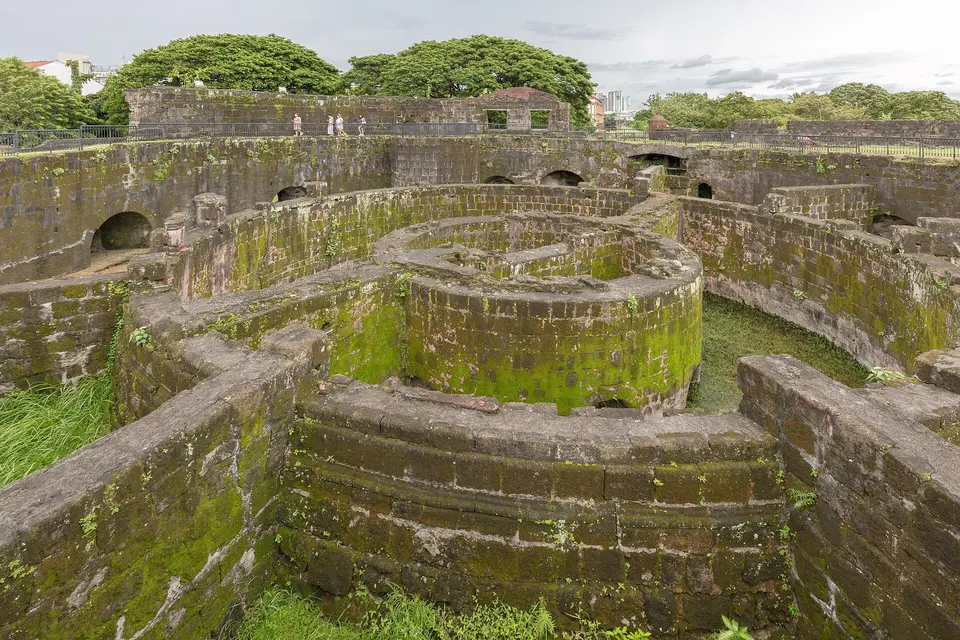
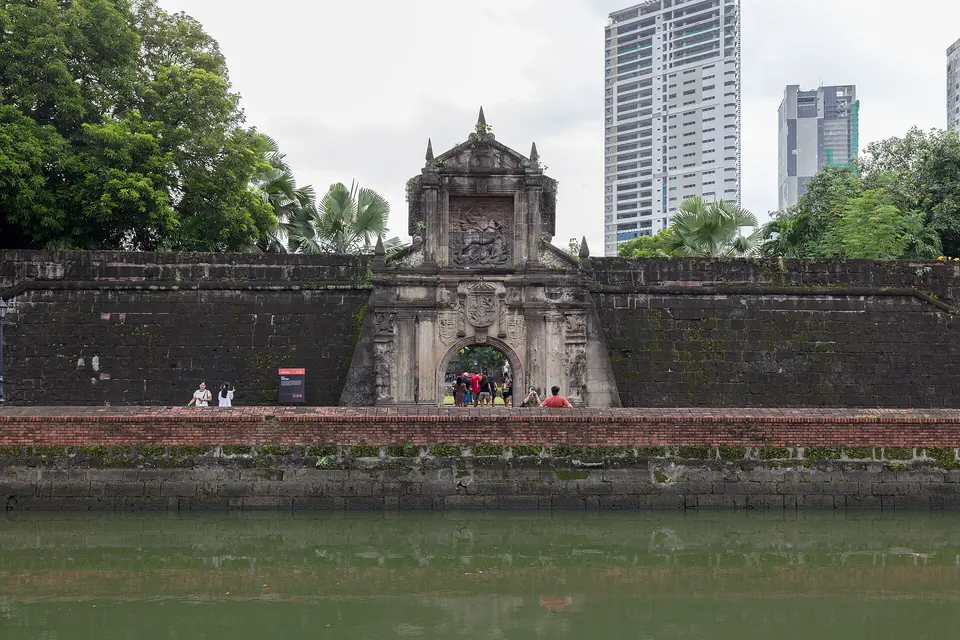
Fort Santiago
Photo: Diego Delso, CC BY-SA 4.0

Intramuros on foot, then the museums, Binondo and the bay, then Makati and BGC

Manila is three cities and the traffic between them decides the day. Day one is walked inside Intramuros and down to Rizal Park, all within a kilometre and a half. Day two is the museums at the park's edge, a 25-minute walk or a short ride to Binondo, and a taxi to the Baywalk for the sunset. Day three is Makati and Taguig, 8 km south-east and forty minutes to an hour by car depending on the hour, so it is done as a loop with ride-hailing and the pedestrian streets. The national museums are free and open every day; Fort Santiago is open until 22:00; Casa Manila and the Museo de Intramuros close on Mondays; the American Cemetery closes at 17:00. The rains run from June to October with typhoons in the mix; December to February is the dry, cooler window when the city is at its best.

At a glance

Ways to use these days

If it rains
6 of the stops are indoors — Manila Cathedral · San Agustin Church and museum · National Museum of Fine Arts
Lightest day on foot
Day 1 — 2.0 km between stops
Most walking
Day 3 — 7.6 km

Day 1

Intramuros: Fort Santiago, the cathedral, San Agustin, Casa Manila, Baluarte de San Diego and Rizal Park

Enter the walled city at Fort Santiago when it opens, walk the plaza to the cathedral, see the baroque interior and the museum of San Agustin, step into a 19th-century merchant's house at Casa Manila, climb the walls at Baluarte de San Diego, and end where Rizal was shot, in the park that carries his name, as the flag comes down at sunset.

  • 6 sights
  • 2.0 km on foot
  • Longest walk 590 m
123456500 mN
Stops in order, straight-line distancesRoute in Google Maps ↗

Morning

Fort Santiago
Photo: Diego Delso, CC BY-SA 4.0
1Fortress

Fort Santiago

The citadel at the mouth of the Pasig, begun by Legazpi in 1571 on the site of Rajah Sulayman's palisade and rebuilt in stone in the 1590s, guarded the Spanish capital for three centuries, held Filipino patriots in its dungeons, was the Japanese army's prison where hundreds died in 1945 and was destroyed in the battle for Manila that year; restored, it is entered through a gate carved with Santiago on horseback across a moat turned garden, and its Rizal Shrine, in the barracks where José Rizal spent his last night before his execution in December 1896, keeps his cell, his manuscripts and the original of his farewell poem, with his bronze footsteps leading from the cell to the gate. The ramparts over the river are the cool place at the end.

  • Plan about 1 h 30 min
  • Weekdays 8:00–22:00 (last entry 20:00), weekends 6:00–22:00 (last entry 20:30); ₱75, ₱50 for students, seniors, under-18s and PWDs
590 m · about 9 min on foot
Manila Cathedral
Photo: Diego Delso, CC BY-SA 4.0
2Cathedral

Manila Cathedral

The eighth cathedral on the site since 1571, rebuilt in 1958 in a neo-Romanesque style after the seventh was destroyed in 1945, stands on Plaza de Roma with a bronze door of the church's history, stained glass of Filipino saints and a 4,500-pipe organ, and it is the cathedral of the archdiocese where the country's cardinals are installed and its presidents mourned; it is open to visitors outside Mass from Tuesday to Saturday and on Sunday mornings, closed on Mondays, and free. The plaza outside, with the statue of Charles IV and the old governor's palace, is the centre of the walled city.

  • Plan about 45 min
  • Visiting Tue–Sat 8:00–16:30, Sun 8:00–11:30, closed Mon and holidays; free; Mass weekdays 7:30 and 12:10, Sun 8:00, 10:00 and 18:00
350 m · about 5 min on foot
San Agustin Church and museum
Photo: Ryanilinon, CC BY-SA 4.0
3Church

San Agustin Church and museum

The only building in Intramuros to survive the battle of 1945 and the oldest stone church in the country, finished in 1607 by the Augustinians who had come with Legazpi, is on the World Heritage list for its baroque interior, a trompe-l'œil vault painted in 1875 by two Italians, a 17th-century choir of carved molave stalls, the tomb of Legazpi himself, and the chapel where the Spanish governor signed the surrender of the city to the Americans in 1898; the monastery beside it is a museum of colonial religious art, vestments, ivories and the cloister garden. The church is free and often booked for weddings; the museum takes a ticket.

  • Plan about 1 h 15 min
  • Church free, open through the day outside weddings and Mass; museum daily about 8:00–12:00 and 13:00–17:00, about ₱200

Midday

LunchLunch is inside the walls: Barbara's and Ilustrado in the Casa Manila complex do Filipino-Spanish classics, kare-kare, adobo, lengua and halo-halo, in colonial rooms, and the carinderias and the coffee shops along General Luna Street are the cheap version; Bayleaf's rooftop has the view. Eat by 13:00, before the afternoon heat on the walls.

Afternoon

100 m · about 2 min on foot
Casa Manila
Photo: lumoplank, CC0
4House museum

Casa Manila

A reconstruction of an 1850s merchant's house built in the 1980s in a courtyard complex opposite San Agustin, with a stone ground floor, a wooden upper storey of capiz-shell windows, and rooms furnished from the period, the sala with its European chandeliers and Chinese porcelain, the bedrooms, the kitchen and the famous two-seat privy, it is the clearest picture of how the mestizo elite of the Spanish city lived, and the courtyard's fountain and restaurants make it the shady heart of the district. It closes on Mondays and the ticket is small.

  • Plan about 45 min
  • Tue–Sun 9:00–18:00, last entry 17:00, closed Mon; ₱75, ₱50 discounted
490 m · about 8 min on foot
Baluarte de San Diego and the walls
Photo: Diego Delso, CC BY-SA 4.0
5Bastion

Baluarte de San Diego and the walls

The oldest stone fortification in Manila, begun in 1586 as a circular fort and buried inside the bastion that replaced it, was dug out in the 1980s and turned into a garden of lawns and old cannon inside the ring of its walls, and from its top the 4.5-kilometre circuit of the Intramuros ramparts runs north past the Puerta Real and the golf course that fills the old moat to Fort Santiago; walking a stretch of the walls in the late afternoon, with the Manila Hotel and the port on one side and the churches on the other, is the best free thing inside the city. The Puerta Real gate beside it leads out toward Rizal Park.

  • Plan about 45 min
  • Daily 8:00–17:00, last entry 16:00; free; the walls are open through the day

Evening

420 m · about 7 min on foot
Rizal Park and the Rizal Monument
Photo: Patrickroque01, CC BY-SA 4.0
6Park

Rizal Park and the Rizal Monument

The 58-hectare park south of the walls, the Luneta of Spanish times, is where José Rizal, the doctor, novelist and hero of the independence movement, was executed by firing squad on 30 December 1896, and his bronze monument of 1913 over his remains, guarded round the clock, is the point from which the country measures its distances; around it are the dancing fountain, the Chinese and Japanese gardens, the open-air auditorium, the relief map of the islands, the Quirino Grandstand where presidents are sworn in, and the flag that is lowered every day at sunset with a ceremony, which is the moment to be here, with the bay's light behind the trees and the whole of Manila out for its evening.

  • Plan about 1 h 15 min
  • Open daily about 5:00–21:00, free; flag-lowering at sunset; some gardens charge a few pesos

Day 2

The museums, Binondo and the bay: the National Museums of Fine Arts and Natural History, Chinatown, Binondo Church and the Baywalk

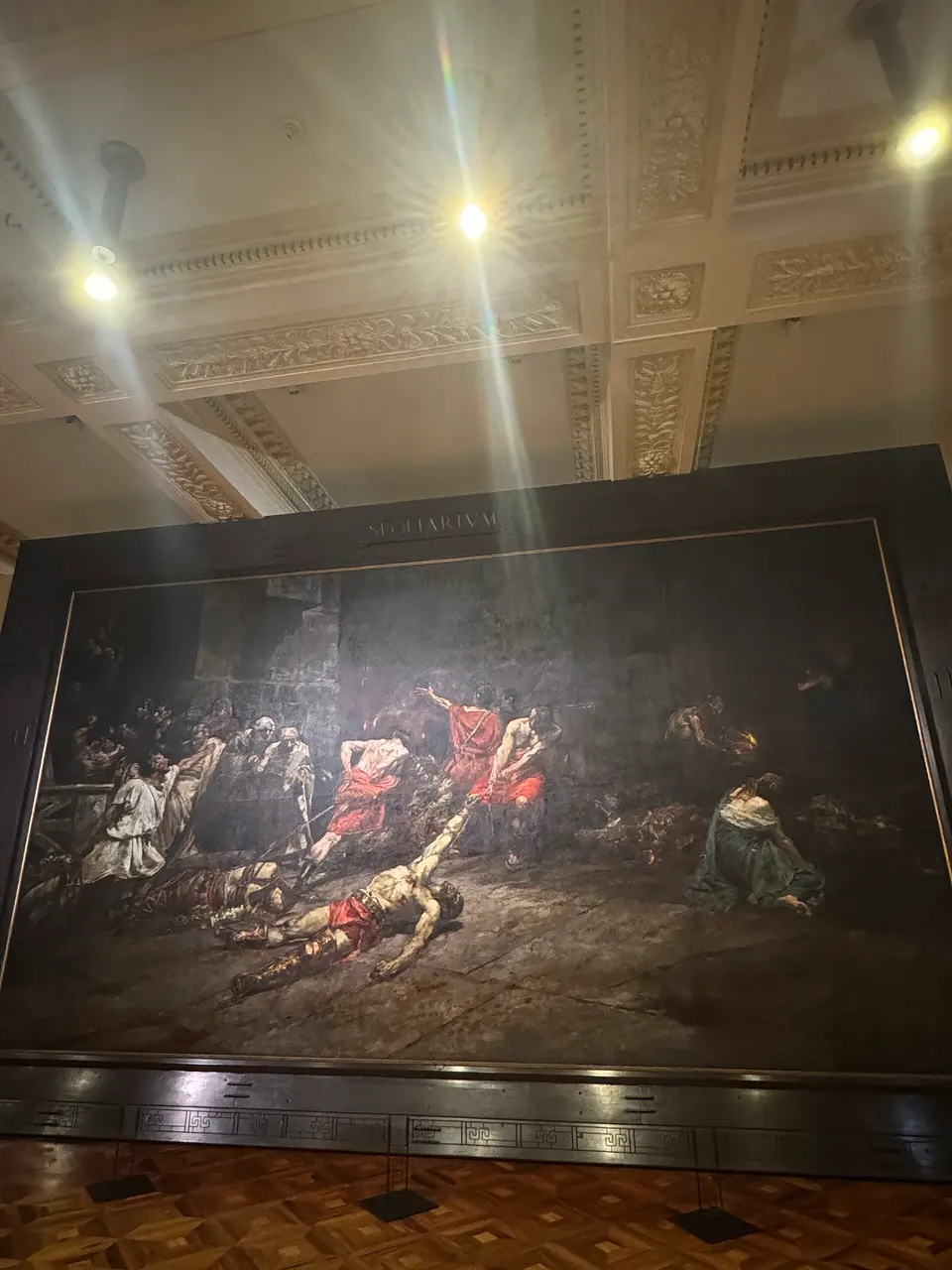
Spend the morning in the free national museums on the edge of Rizal Park, Juan Luna's Spoliarium in the old legislature and the Tree of Life in the natural history museum, cross Jones Bridge to Binondo for lunch in the oldest Chinatown in the world and the church of Saint Lorenzo Ruiz, and ride down Roxas Boulevard to the Baywalk for the sunset over Manila Bay.

  • 5 sights
  • Transport between sights
123451 kmN
Stops in order, straight-line distancesDriving route in Google Maps ↗

Morning

National Museum of Fine Arts
Photo: MikelleBandin, CC BY-SA 4.0
1Art museum

National Museum of Fine Arts

The old legislature of 1926, where the Senate sat until 1997, holds the national painting collection, and its first room is the one people come for: Juan Luna's Spoliarium of 1884, four metres by seven of dead gladiators dragged across a Roman floor, painted in Paris, prized in Madrid and read by Rizal's generation as the Philippines under Spain, facing Hidalgo's Assassination of Governor Bustamante; beyond it are the religious art of the colony, the Amorsolo landscapes, the modernists and the Senate session hall itself, restored. It is free, air-conditioned and open every day, and it faces the natural history museum across the circle.

  • Plan about 1 h 30 min
  • Daily 9:00–18:00, free; groups of 20 or more book ahead; last entry 17:30
Across Agrifina Circle from the Fine Arts building, a 5-minute walk
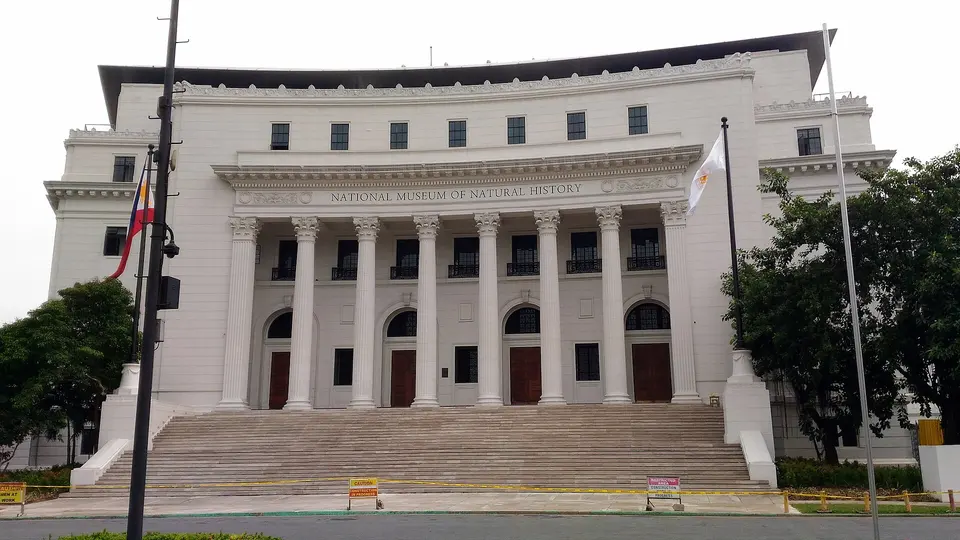
National Museum of Natural History
Photo: RoyKabanlit, CC BY-SA 4.0
2Museum

National Museum of Natural History

The former agriculture and commerce building of 1940, rebuilt inside in 2018 around a glass-domed atrium and the Tree of Life, a white steel trunk carrying a lift up through six floors of galleries, is the museum of the archipelago's biodiversity: the skeleton of Lolong, the largest crocodile ever held in captivity, the tamaraw and the eagle, the reefs and the mangroves, the forests of Luzon and Mindanao and the geology of the ring of fire, told with the children of Manila in mind and free like its two sisters. The anthropology museum next door, with the Manunggul jar and the gold of Butuan, is the third of the row if there is time.

  • Plan about 1 h 30 min
  • Daily 9:00–18:00, free; the Tree of Life lift queues on weekends

Midday

LunchBinondo's lunch is the point of going: the old-school Chinese-Filipino restaurants along Ongpin and Benavidez streets do fresh lumpia, kiampong rice, oyster cake, the Cantonese dumplings of Wai Ying, the noodles of Mañosa, and the hopia pastries of Eng Bee Tin to carry away; the Chinatown food tours run from the church square if you want a guide through the alleys. Eat by 13:30 and walk it off along Escolta, the old commercial street of Art Deco banks.

Afternoon

A 25-minute walk north through Intramuros and over Jones Bridge, or a 10-minute taxi; LRT-1 Carriedo is 10 minutes east of the church
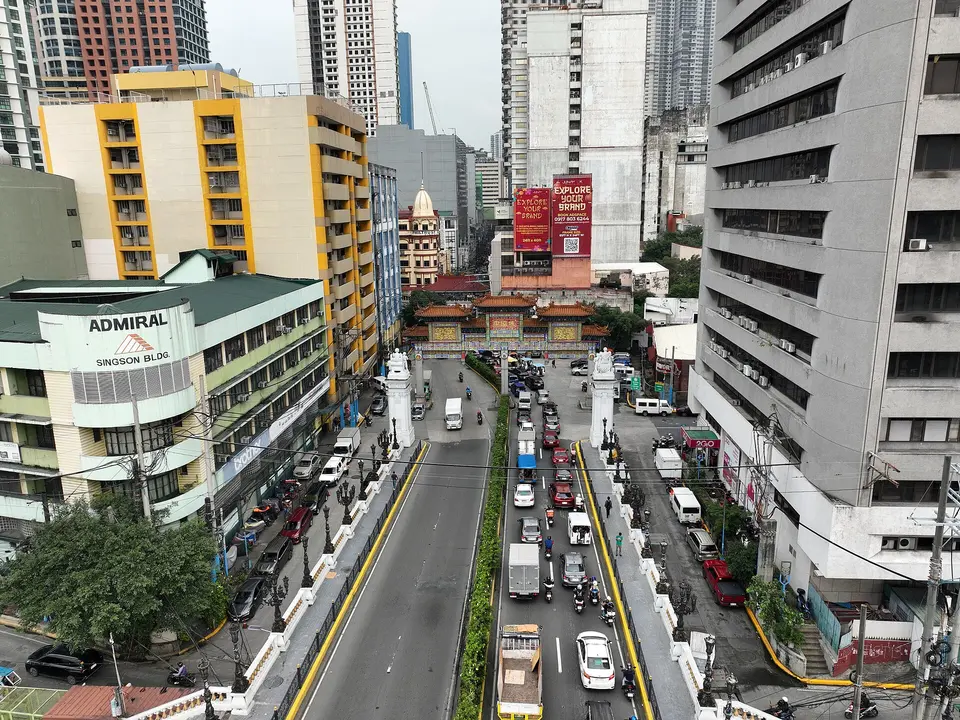
Binondo
Photo: Patrickroque01, CC BY-SA 4.0
3Chinatown

Binondo

Across the Pasig from the walls, reached by the Jones Bridge with its restored bronze lamps, the district the Spanish set aside in 1594 for converted Chinese merchants is the oldest Chinatown in the world and still the city's wholesale and gold-trading quarter, its arches, Ongpin Street's jewellers and apothecaries, the Carvajal alley of fruit stalls and the restaurants that have fed it for a century, from dumpling houses to the hopia bakeries and the coffee of Eng Bee Tin; Escolta, its neighbour, was the Wall Street of Manila in the Art Deco 1930s and has the buildings to show. Go for lunch and stay for the late afternoon, and cross back over the bridge when it is lit.

  • Plan about 2 h
  • Free; shops and restaurants open through the day; LRT-1 Carriedo or a walk over Jones Bridge from Intramuros
On Plaza San Lorenzo Ruiz at the foot of Ongpin Street
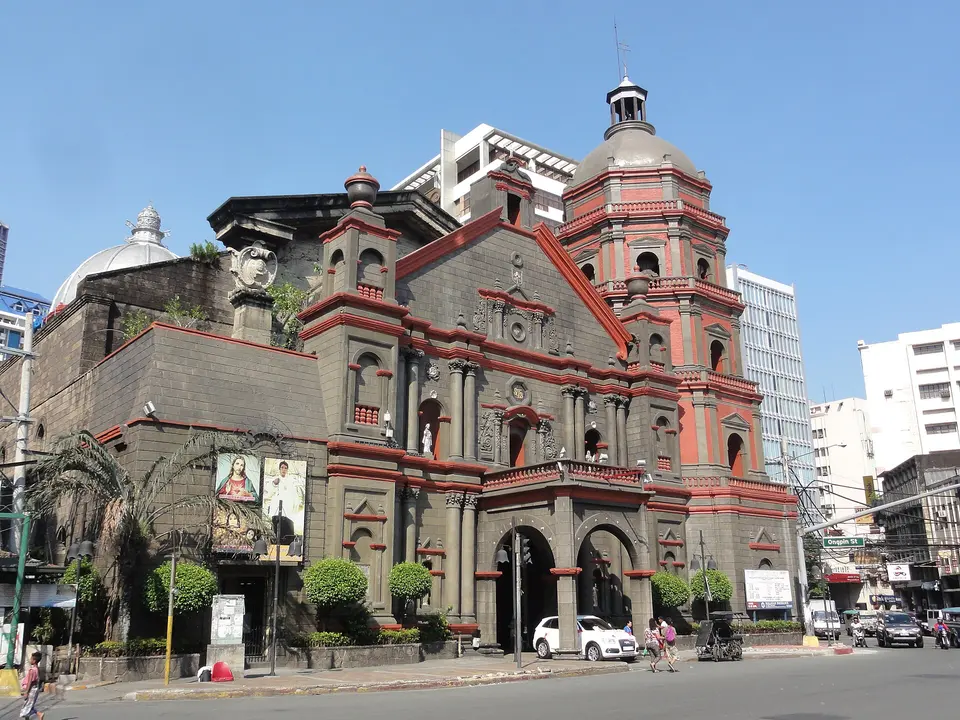
Binondo Church
Photo: Patrick Roque, CC BY-SA 3.0
4Church

Binondo Church

The Minor Basilica of San Lorenzo Ruiz, founded by the Dominicans in 1596 for their Chinese converts and rebuilt after every earthquake and the war, with its octagonal granite bell tower of 1781 the one part to survive, is named for the Chinese-Filipino altar boy of the parish who was martyred in Nagasaki in 1637 and canonised as the first Filipino saint in 1987; his statue stands in the plaza in front, where the Chinese-Filipino community holds its feasts, and the church's painted ceiling and the Masses in Filipino, Mandarin and Hokkien are the district's centre. It is open through the day and free.

  • Plan about 30 min
  • Open daily about 6:00–19:00, free; Masses in the morning and evening

Evening

Taxi or ride-hailing 15 minutes south along Roxas Boulevard, or LRT-1 to Vito Cruz and a 10-minute walk; be there by 17:30
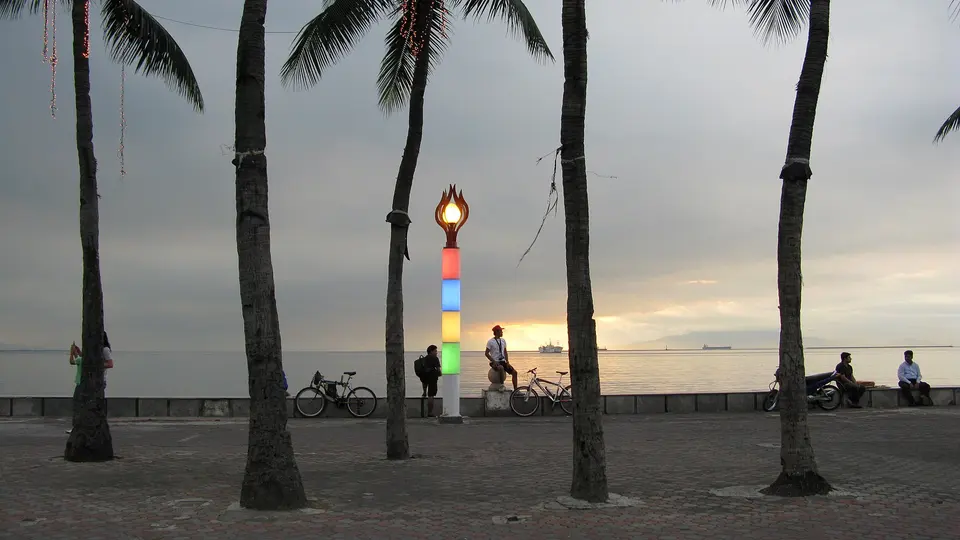
Manila Baywalk
Photo: Vyacheslav Argenberg, CC BY 4.0
5Waterfront promenade

Manila Baywalk

The two-kilometre seawall promenade along Roxas Boulevard from the US Embassy to the Cultural Center of the Philippines, planted with coconut palms and lined with benches, is where the city comes for the sunset that the bay is famous for, the sun going down red through the haze behind the ships at anchor and the outline of Bataan across the water, with the artificial white-sand beach of dolomite added in 2020 at the northern end and the yacht club and the Manila Hotel behind; there are food carts, buskers and, on weekends, everyone. It is free, and it is the end of the day.

  • Plan about 1 h 30 min
  • Free, open all the time; sunset about 17:30–18:30 depending on the season; LRT-1 Vito Cruz or a taxi along Roxas Boulevard

Day 3

The modern city: the American Cemetery, the Ayala Museum, Poblacion and Bonifacio High Street

Drive out to the quietest place in the metropolis, the white crosses and mosaic maps of the Manila American Cemetery, come into Makati for the pre-colonial gold and the dioramas of the Ayala Museum and lunch in Greenbelt's gardens, walk the bars and murals of Poblacion, and finish on the pedestrian promenade of Bonifacio High Street among the towers of BGC.

  • 4 sights
  • Transport between sights
12341 kmN
Stops in order, straight-line distancesDriving route in Google Maps ↗

Morning

Manila American Cemetery and Memorial
Photo: American Battle Monuments Commission, CC0
1War cemetery

Manila American Cemetery and Memorial

On 62 hectares of lawn on the slopes of Fort Bonifacio, the largest American war cemetery outside the United States holds 17,000 graves of the dead of the Pacific war in circles of white marble crosses and stars around a chapel and two hemicycles carrying the names of 36,000 missing, with mosaic maps of the campaigns from Guadalcanal to Okinawa on their walls and a new visitor centre that tells the Philippine campaigns and the battle for Manila; it is quiet, immaculate, free, and the only place in the metropolis where the towers of BGC are seen across silence. Bring identification for the gate and dress with some respect.

  • Plan about 1 h 30 min
  • Daily 9:00–17:00, closed Dec 25 and Jan 1; free; identification required at the gate
Taxi 15 to 25 minutes west to Makati Avenue at Greenbelt Park
Ayala Museum
Photo: Ralff Nestor Nacor, CC BY-SA 4.0
2Museum

Ayala Museum

The private museum of the Ayala family on the edge of Greenbelt Park in Makati, rebuilt in 2021, holds the two things that explain the country before the Spanish: the Gold of Ancestors, more than a thousand pieces of pre-colonial gold from the 10th to 13th centuries, sashes, death masks and the four-kilogram Surigao sash of a Hindu-Buddhist chief, and the sixty dioramas of Philippine history that every schoolchild has seen; upstairs are the Amorsolo, Luna and Zóbel paintings and the ceramics of the trade with China. It is the best hour in Makati, and closed on Mondays.

  • Plan about 1 h 30 min
  • Tue–Sun about 10:00–18:00, closed Mon; about ₱425 adults, reductions for students and seniors; Makati Avenue at De La Rosa Street, Greenbelt

Midday

LunchGreenbelt, the mall built around a chapel and a garden next to the Ayala Museum, has every kind of restaurant from Filipino to Japanese under its trees, and Legazpi Village behind it has the cafés and the weekend market; for a Filipino lunch that locals rate, Manam and Sarsa do the modern versions of sisig and sinigang. Eat here, since Poblacion is for the evening and BGC's restaurants are dearer.

Afternoon

A 15-minute walk north across Makati Avenue, or a short ride
Poblacion, Makati
Photo: patrickroque01, CC BY-SA 4.0
3Nightlife district

Poblacion, Makati

The old town of Makati, a grid of low streets around the 17th-century church of Saints Peter and Paul that was the red-light district of the American bases' era, has become the city's most alive neighbourhood in a decade: rooftop bars, natural-wine bars, Filipino tasting menus, Korean barbecue, speakeasies behind noodle shops, murals on every wall, the Kalayaan Avenue food stalls and the crowds of Makati's office workers from Thursday to Saturday; by day it is a walk of street art and coffee, and the Makati museum in the old town hall tells the story. It is a 15-minute walk from the Ayala Museum and a world away from the mall.

  • Plan about 2 h
  • Free; bars and restaurants from late afternoon until 2:00 or later at weekends

Evening

Taxi or the BGC bus from Ayala station, 15 to 30 minutes east to Bonifacio Global City
Bonifacio High Street (BGC)
Photo: Hans Olav Lien, CC BY-SA 3.0
4Pedestrian promenade

Bonifacio High Street (BGC)

The kilometre of lawns, fountains, public sculpture and open-air restaurants down the middle of Bonifacio Global City, the financial district built since 2003 on the old Fort Bonifacio army base beside the cemetery, is the Manila that looks like Singapore: clean, planned, walkable, with the Mind Museum for children, the murals of the Art BGC programme on the tower walls, a weekend market and the bars and rooftops of Uptown at the north end; it is where the city's young professionals spend their evenings and the safest walk after dark in the metropolis. A drink on a rooftop with the towers lit is the last night.

  • Plan about 2 h
  • Free; restaurants and bars open late; BGC bus from Ayala station or a taxi

Good to know in Manila

Tickets and opening days

  • Fort Santiago is open 8:00 to 22:00 on weekdays (last entry 20:00) and 6:00 to 22:00 at weekends (last entry 20:30), with entrance ₱75.00 regular and ₱50.00 discounted for students, seniors and persons with disabilities; Baluarte de San Diego is open daily 8:00 to 17:00 (last entry 16:00); Casa Manila and the Museo de Intramuros are open Tuesday to Sunday 9:00 to 18:00 and closed on Mondays.Source: Intramuros Administration, sites hours and fees · checked Sep 2026
  • Casa Manila charges ₱75.00 regular and ₱50.00 discounted, and the Museo de Intramuros ₱200.00 regular and ₱160.00 discounted, the discount applying to children under 18, senior citizens 60 and over, students, persons with disabilities and government employees with valid ID.Source: Intramuros Administration, guide for Casa Manila and Museo de Intramuros · checked Sep 2026
  • The National Museum of the Philippines Central Complex in Ermita (the National Museum of Fine Arts, the National Museum of Anthropology and the National Museum of Natural History) is open to the general public every day, Monday to Sunday, except on selected religious holidays, from 9:00 to 18:00; admission is free, walk-in visitors are welcome and groups of 20 or more must book in advance through the museum's website.Source: National Museum of the Philippines, Visitor Guidelines (Annex 10.2, ver. 2025-007) · checked Sep 2026
  • Manila Cathedral's visiting hours are Tuesday to Saturday 8:00 to 16:30 and Sunday 8:00 to 11:30, closed on Mondays and holidays; Masses are at 7:30 and 12:10 on weekdays, 7:30 on Saturdays and 8:00, 10:00 and 18:00 on Sundays.Source: Manila Cathedral · checked Sep 2026

3 days in Manila: quick answers

Is 3 days enough for Manila?

Three days cover the walled city, the museums, Chinatown, the bay and the modern districts. A fourth day is the day trip to Tagaytay, two hours south, for the view of Taal volcano in its lake, or the rice terraces and old churches of the provinces need longer; within the city, the Ayala Triangle gardens, the National Museum of Anthropology, the Chinese cemetery with its mausoleum streets, Manila Ocean Park for families, or a Pasig river ferry are the extras. Corregidor island, a day trip by ferry across the bay when the service runs, is the war-history day.

Which days should I plan around?

The three national museums are open every day 9:00 to 18:00, except a few religious holidays, and are free. Fort Santiago is open 8:00 to 22:00 on weekdays and 6:00 to 22:00 at weekends, last entry 20:00 or 20:30. Casa Manila and the Museo de Intramuros are open Tuesday to Sunday 9:00 to 18:00 and closed on Mondays; Baluarte de San Diego 8:00 to 17:00 daily. The cathedral's visiting hours are Tuesday to Saturday 8:00 to 16:30 and Sunday mornings, closed Mondays. The American Cemetery is open daily 9:00 to 17:00 except Christmas Day and New Year's Day. The Ayala Museum is closed on Mondays. Holy Week closes much of the city, and the Black Nazarene procession on January 9 stops all of Quiapo.

How much do the tickets cost?

Fort Santiago is ₱75, ₱50 for students, seniors, under-18s and persons with disabilities; Casa Manila ₱75 and ₱50; the Museo de Intramuros ₱200 and ₱160; Baluarte de San Diego and the walls are free. The national museums are free. The cathedral is free; San Agustin's church is free and its museum about ₱200. Binondo, the church, Rizal Park, the Baywalk, the American Cemetery, Greenbelt, Poblacion and Bonifacio High Street are free. The Ayala Museum is about ₱425 for adults with reductions for students and seniors and occasional free Fridays.

How do I get around?

On foot inside Intramuros and Rizal Park, and along the promenades of Makati and BGC; by LRT-1 along Taft Avenue, ₱16 to 52 with a Beep card, which links United Nations for the museums, Carriedo for Binondo and Vito Cruz for the bay; and by Grab ride-hailing cars and taxis for everything else, cheap but slow, with the Skyway avoiding the worst of EDSA. Jeepneys and the BGC bus are the local options. The airport is 10 km south of the centre and can take an hour in traffic; allow two for departures. Walking between the old city and Makati is not realistic.

Is Manila safe to walk?

The tourist areas, Intramuros, Rizal Park, Binondo by day, Makati and BGC, are walked without trouble; the usual big-city care applies to phones and bags in crowds, on jeepneys and at the LRT stations, and the streets around Ermita and Malate after dark are for taxis rather than strolling. The heat is the real hazard: the walls of Intramuros have no shade at midday and the Baywalk is exposed, so water, a hat and the museum hours in the middle of the day are the plan.

How much walking is this itinerary?

About 5 km on day one inside the walls and down to the park, on cobbles and ramparts; about 5 km on day two between the museums, Binondo and the bay, with a taxi for the last stretch; and about 4 km on day three, most of it inside the cemetery and along the promenades. The distances between the districts are done by car. Mornings and late afternoons are for the outdoors; noon is for the museums.

Other Manila itineraries

Keep exploring

Where this connects

THE TRIPWOA APP

Go somewhere.
Make it yours.

Build days around what you love. Follow your route, find your next stop and keep the moments along the way.

Get it on Google PlayAvailable for Android
Free to start
Tripwoa home with a Paris trip and nearby places to explore
Tripwoa day plan for New York with a route map and Times Square stop

A day that feels like you.

Sources and method

Places and coordinates: Wikidata and Tripwoa's open-data place catalog (Overture Maps Foundation, © OpenStreetMap contributors). Photos: Wikimedia Commons, credited on each image. Practical rules: the official sources linked in each note, checked in September 2026.

How this plan was made: Tripwoa's planner drafted the day order from real coordinates and typical visit times. Each stop was then reviewed, reordered where needed and rewritten with AI assistance. Walking distances are straight-line estimates, so allow a little extra time on real streets.