3-day itinerary · Italy

3 Days in Palermo

A realistic first-timer plan that walks the Arab-Norman core on day one, from the Cappella Palatina's mosaics in the Palazzo dei Normanni and the royal tombs of the cathedral to the street food of Ballarò, the baroque corner of the Quattro Canti, the Byzantine dome of the Martorana and a tour of the Teatro Massimo; goes up on day two to the golden nave of Monreale, then to the Capuchin Catacombs, the Arab palace of the Zisa and the bars of the Vucciria; and takes day three in the Kalsa, with Antonello da Messina's Annunciation at Palazzo Abatellis, the giant ficus of Piazza Marina and lunch at the oldest focacceria in town, before the bus to the beach at Mondello. Every stop comes with walking distances and the rules that matter in 2026.

  • 3days
  • 13sights
  • 2.4 kmon foot between sights

Updated 12 September 2026 · 5 official sources checked · report an error

Palazzo dei Normanni and the Cappella Palatina
Photo: Andrea Schaffer, CC BY 2.0

The Arab-Norman core on foot, then Monreale and the west, then the Kalsa and the sea

Palermo's centre is the cross of two streets, Via Maqueda and Corso Vittorio Emanuele, and nearly everything on day one is within ten minutes of where they meet, so it is walked. Day two takes the 389 bus up to Monreale, restored to the route in June 2026, and comes back for the west of the city, the catacombs and the Zisa, by bus or taxi. Day three is the Kalsa quarter on foot and the 806 bus to Mondello. The Palazzo dei Normanni's royal apartments are open only Thursday to Monday and the Cappella Palatina closes on Sunday mornings for Mass; the Salinas museum and Palazzo Abatellis close on Mondays; the catacombs close for lunch. August empties the city and closes the market stalls in the afternoon heat.

At a glance

Ways to use these days

If it rains
4 of the stops are indoors — Palermo Cathedral · Teatro Massimo · Monreale Cathedral and cloister
Lightest day on foot
Day 1 — 2.2 km between stops
Most walking
Day 3 — 10.1 km

Day 1

The Arab-Norman core: the Palazzo dei Normanni, the cathedral, Ballarò, the Quattro Canti and the Teatro Massimo

Be at the Palazzo dei Normanni when it opens for the Cappella Palatina, walk down to the cathedral for the royal tombs and the roofs, eat your way through Ballarò market, stand in the Quattro Canti and the Piazza Pretoria, see the mosaics of the Martorana, and finish with a guided tour of the Teatro Massimo and an aperitivo on its steps.

  • 6 sights
  • 2.2 km on foot
  • Longest walk 790 m
123456250 mN
Stops in order, straight-line distancesRoute in Google Maps ↗

Morning

Palazzo dei Normanni and the Cappella Palatina
Photo: Andrea Schaffer, CC BY 2.0
1Palace and chapel

Palazzo dei Normanni and the Cappella Palatina

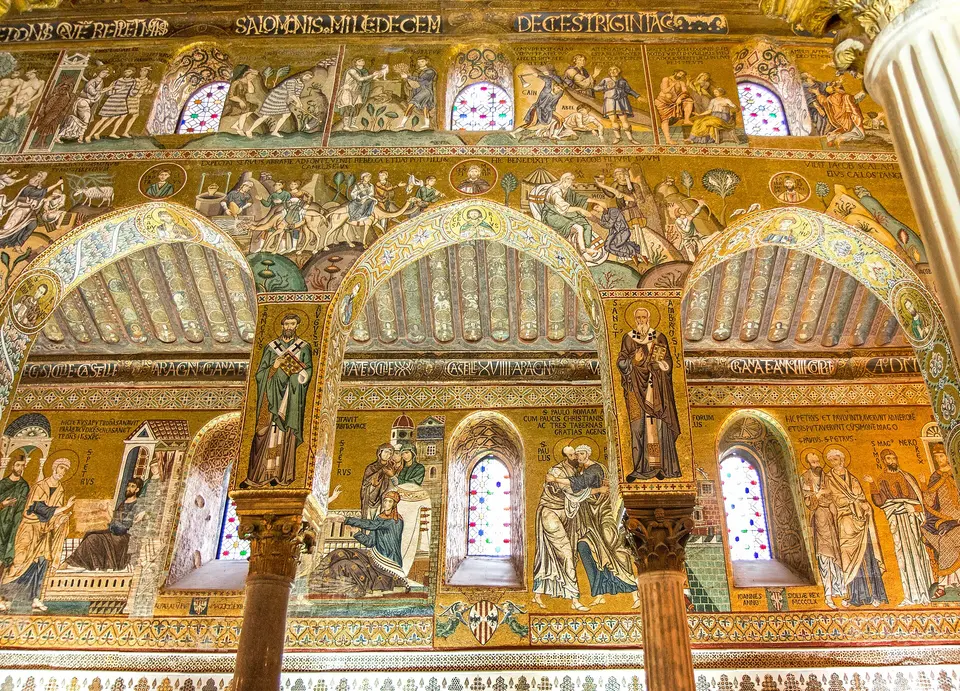
The oldest royal residence in Europe, an Arab fortress rebuilt as the palace of the Norman kings in the 12th century and the seat of the Sicilian parliament since 1947, holds the Cappella Palatina, Roger II's chapel of 1132–1143, where Byzantine mosaics of Christ Pantocrator and the Bible cover every wall in gold beneath a painted wooden muqarnas ceiling carved by Fatimid craftsmen, the summit of the Arab-Norman synthesis that UNESCO listed in 2015; upstairs, on the days the parliament allows, the Royal Apartments and the mosaic Sala di Ruggero of hunting scenes. Book the first slot; the chapel is small and fills.
  • Plan about 2 h
  • Mon–Sat 8:30–16:30 last entry, Sun and holidays 8:30–12:30; €19 Thu–Mon with the Royal Apartments, €15.50 Tue–Wed without; chapel closed for Mass on Sunday mornings
420 m · about 7 min on foot
Palermo Cathedral
Photo: Berthold Werner, CC BY-SA 4.0
2Cathedral

Palermo Cathedral

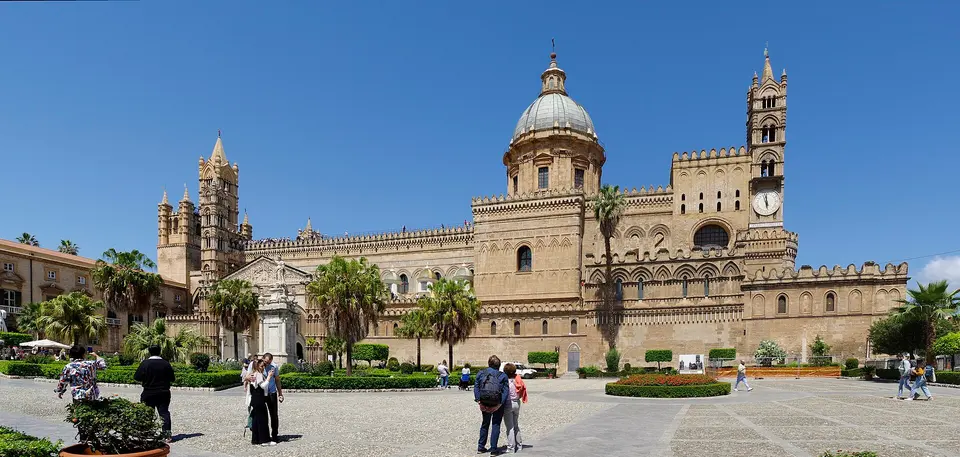
Built in 1185 on the site of a mosque that had been a basilica, and remodelled in every century since, the cathedral is a catalogue of the city's rulers: a Norman-Arab exterior of interlaced arches, a Catalan Gothic porch with a Qur'anic inscription on a column, a neoclassical interior of 1800, the porphyry tombs of Roger II and the emperor Frederick II, the treasury with the gold crown of Constance of Aragon, the crypt, and the roofs, reached by a spiral stair, for the view over the domes and the palace. The church is free; the tombs, treasury, crypt and roofs are ticketed in combinations.

  • Plan about 1 h 15 min
  • Church free, Mon–Sat 7:00–19:00, Sun 8:00–19:00; monumental area 9:30–18:00 (Sun 10:00–18:00), combined tickets for roofs, tombs, crypt and treasury up to about €12

Midday

420 m · about 6 min on foot
Ballarò market
Photo: Benjamín Núñez González, CC BY-SA 4.0
3Street market

Ballarò market

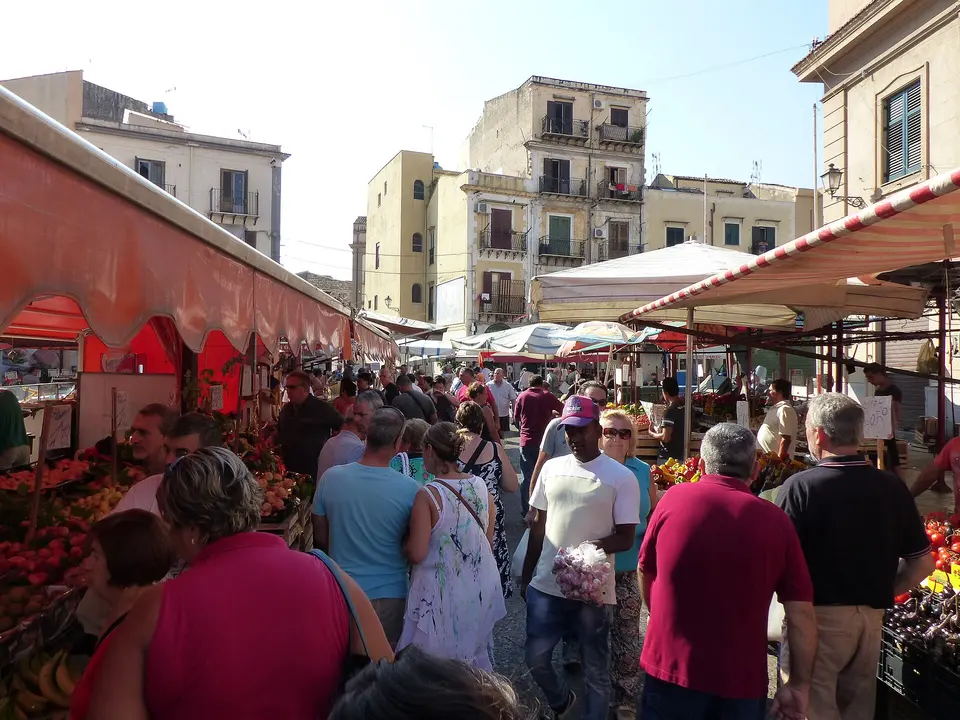
The oldest and loudest of the city's markets, in the lanes of the Albergheria quarter behind the palace, is where the vendors sing their prices over the swordfish, the tomatoes and the mountains of olives, and where lunch is eaten standing: panelle, chickpea fritters in a bun, arancine, sfincione, the thick Palermo pizza, boiled octopus, stigghiola, grilled lamb intestines, and, for the brave, pane ca' meusa, the spleen sandwich. Go before 13:00; it winds down in the afternoon and the Capo market north of the cathedral is the alternative.

  • Plan about 1 h 15 min

Afternoon

380 m · about 6 min on foot
Quattro Canti and Piazza Pretoria
Photo: Bengt Nyman, CC BY 2.0
4Baroque squares

Quattro Canti and Piazza Pretoria

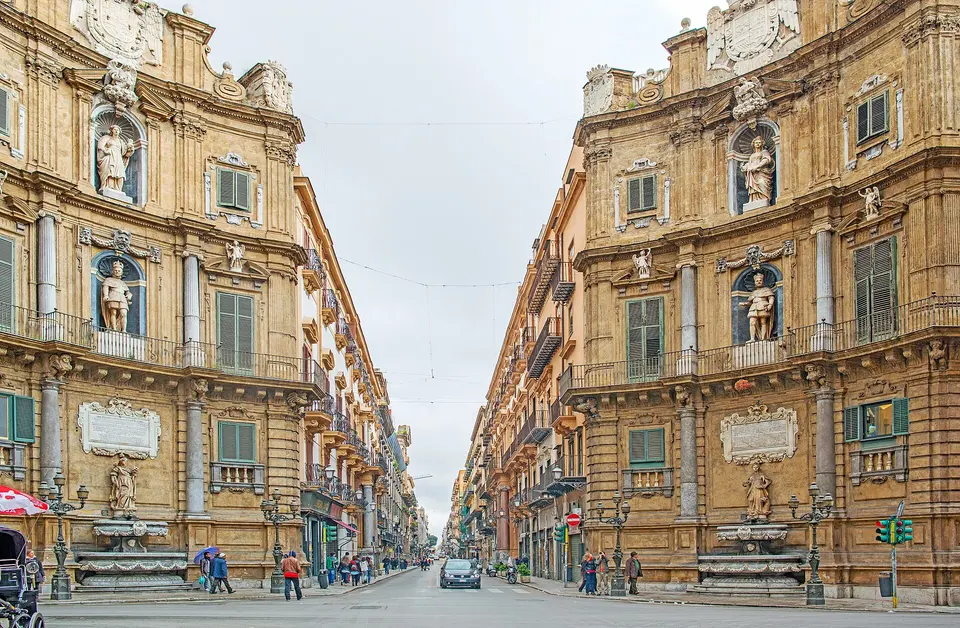
The crossing of the two great streets was made into an octagonal theatre in 1608, four identical concave façades with fountains, the four seasons, the four Spanish kings and the four patron saints of the quarters stacked in tiers, one façade lit by the sun at each time of day; a few steps away, Piazza Pretoria is filled by the Florentine fountain of 1554 whose naked marble gods earned it the name Piazza della Vergogna, the square of shame, from the nuns next door. The town hall and the church of Santa Caterina, with its rooftop walk and convent sweets, close the square.

  • Plan about 45 min
160 m · about 2 min on foot
La Martorana and San Cataldo
Photo: Livioandronico2013, CC BY-SA 4.0
5Churches

La Martorana and San Cataldo

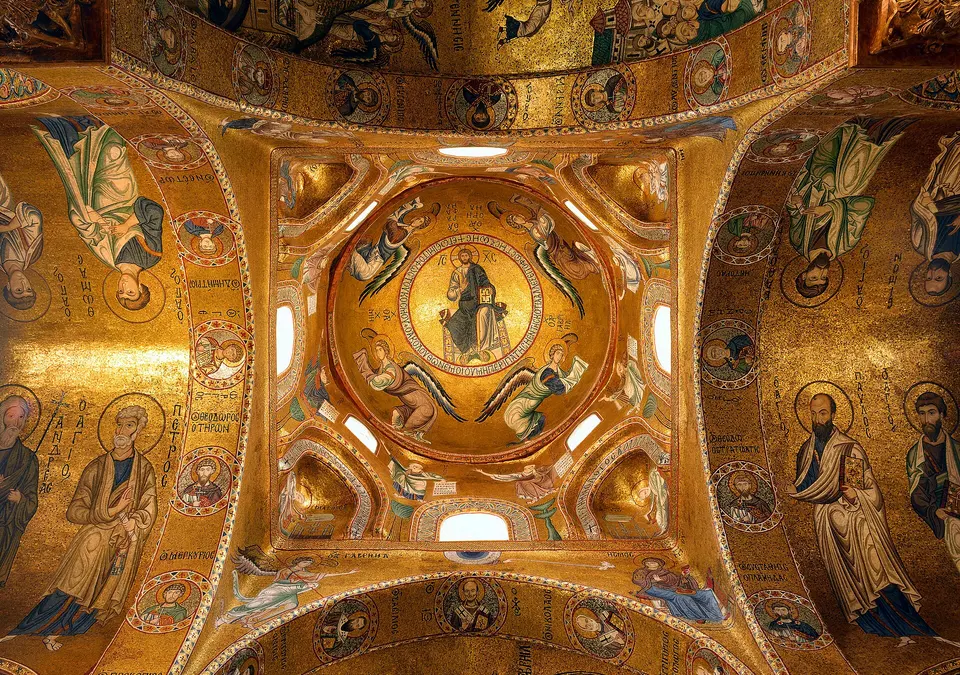
On Piazza Bellini, two Norman churches stand side by side: the Martorana, built in 1143 by Roger II's admiral George of Antioch, with the oldest Byzantine mosaics in Sicily in its dome and the famous panel of Roger crowned by Christ, overlaid with a baroque nave and now the cathedral of the city's Albanian-rite Catholics; and San Cataldo, three squat red domes on a plain stone box, the purest Arab-Norman building in the city. Both charge a couple of euros and close for lunch.

  • Plan about 45 min
  • Martorana Mon–Sat about 9:45–13:00 and 15:30–17:30, Sun mornings; about €2; San Cataldo about €2.50

Evening

790 m · about 12 min on foot
Teatro Massimo
Photo: Vinpao, CC BY-SA 4.0
6Opera house

Teatro Massimo

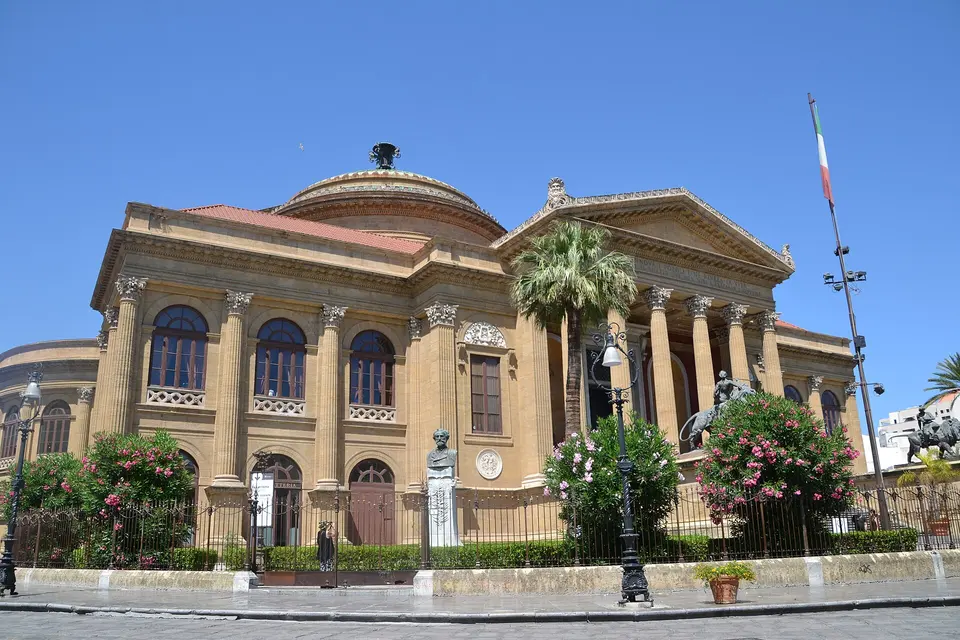
The largest opera house in Italy and the third in Europe, opened in 1897 after 22 years of building, is a neoclassical temple on a flight of steps where the last scene of The Godfather Part III was shot; inside, the horseshoe auditorium of 1,300 seats, the royal box, the echo chamber under the painted ceiling and the Pompeian hall are shown on guided tours through the day in five languages, and the season's operas and ballets are the evening alternative. Aperitivo is on the steps or in the bars of Piazza Verdi.

  • Plan about 1 h 15 min
  • Guided tours about every 30 minutes, 9:30–18:20, about 40 minutes; €12 (€14 from July 2026), €6 under 26; suspended on rehearsal and performance days

Day 2

Monreale, the Capuchin Catacombs, the Zisa and the Vucciria

Take the bus up the hill to Monreale for the largest Byzantine mosaic cycle in Italy and the cloister, come back down for the dressed dead of the Capuchin Catacombs and the cool halls of the Zisa, the Arab-Norman pleasure palace, and end in the Vucciria, the old market that turns into the city's street party after dark.

  • 4 sights
  • Transport between sights
12342 kmN
Stops in order, straight-line distancesDriving route in Google Maps ↗

Morning

Monreale Cathedral and cloister
Photo: Ludvig14, CC BY-SA 4.0
1Cathedral

Monreale Cathedral and cloister

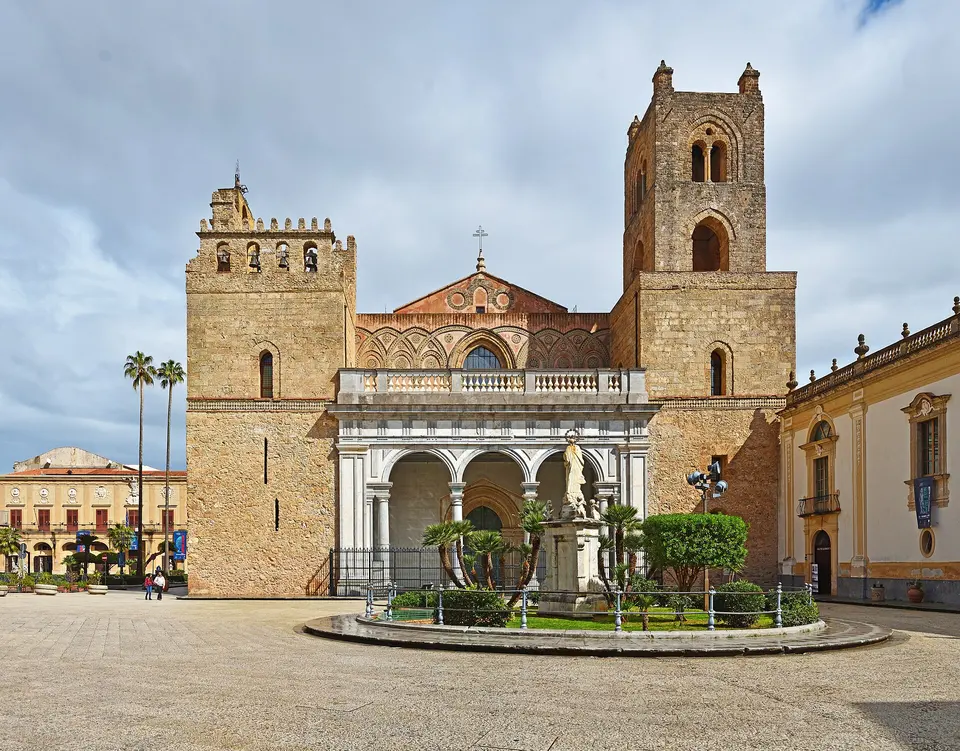
William II built the cathedral on the hill above the city between 1174 and 1189 to rival his grandfather's chapel and outdid it in size: 6,340 square metres of gold mosaic covering the nave and apses, the Old and New Testaments in a hundred scenes and a Pantocrator 20 metres wide, under a painted wooden ceiling, with the bronze doors of Bonanno of Pisa and the tombs of the kings; beside it the Benedictine cloister of 228 paired columns, no two capitals alike, around a fountain, is the finest in Italy. The terraces on the roof look down on the Conca d'Oro and the sea.

  • Plan about 2 h 30 min
  • Cathedral free, Mon–Sat mornings and afternoons, Sunday afternoons only, closed during Mass; terraces, treasury and Roano chapel ticketed; cloister €7 (€3.50 reduced), Mon–Sat 9:00–19:00, Sun 9:00–13:30

Midday

LunchMonreale's square in front of the cathedral has cafés and trattorie for a plate of pasta alla Norma or busiate with pesto; the bakeries sell cannoli filled to order. Eat before 14:30, when the bus and the afternoon catacomb hours make the timing tight.

Afternoon

Bus 389 back to Piazza Indipendenza and a 15-minute walk along Via Cappuccini, or a 10-minute taxi from Monreale's centre
Capuchin Catacombs
Photo: Eugenio Interguglielmi, CC0
2Catacombs

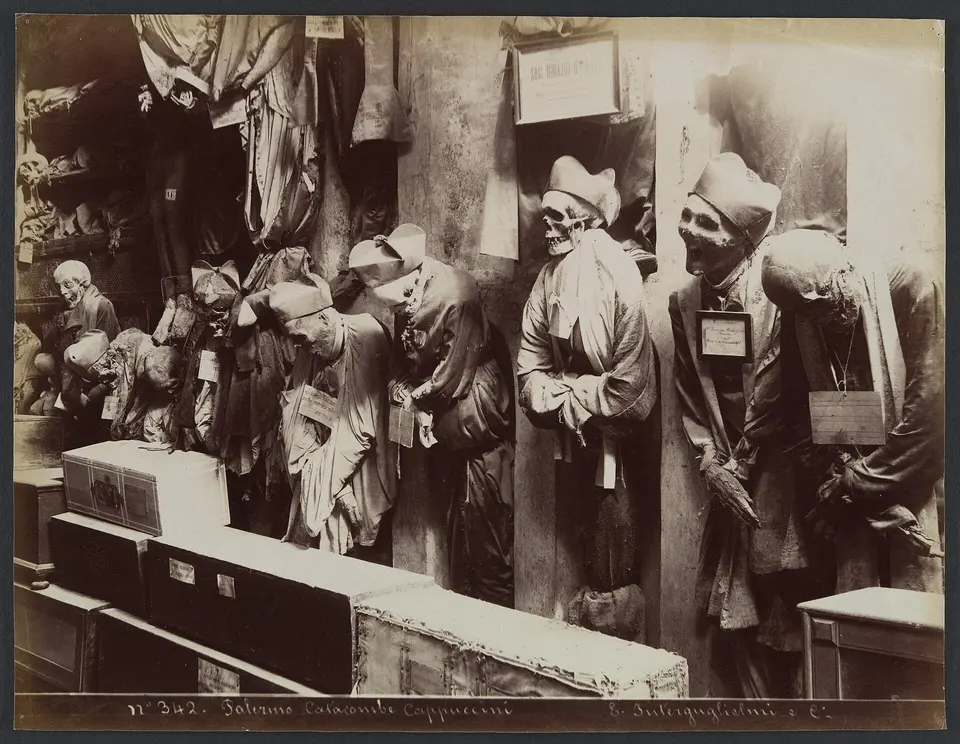
Capuchin Catacombs

Under the Capuchin convent west of the palace, some 8,000 Palermitans who died between 1599 and the 1920s stand, sit and lie in corridors sorted by sex, profession and rank, dried, embalmed and dressed in the clothes they chose, the friars in their habits, the professionals in frock coats, the virgins in white, and the two-year-old Rosalia Lombardo, embalmed in 1920, so perfectly preserved she is called the sleeping beauty. It is macabre, quiet and unforgettable; photography is forbidden and the corridors are cool.

  • Plan about 1 h
  • Mon–Sat 9:00–12:30 and 15:00–17:30, last entry 15 minutes before; a few euros, cash; no photography
A 15-minute walk north from the catacombs through the Zisa quarter
La Zisa
Photo: Matthias Süßen, CC BY-SA 4.0
3Arab-Norman palace

La Zisa

The summer palace that William I and William II built in the 1160s outside the walls, in the royal park of the Genoard, is the most Islamic building in Sicily: a cube of pale stone whose name comes from al-Aziza, the splendid, with a fountain hall of mosaics and muqarnas where water ran through the floor to cool the air, wind towers and a fishpond in front. Restored after a collapse in 1971, it holds the regional museum of Islamic art and is part of the UNESCO Arab-Norman route.

  • Plan about 1 h
  • Tue–Sat 9:00–19:00, Sun 9:00–13:30, closed Mondays; about €6

Evening

Bus 101 or 106 from Via Dante to Via Roma, or a 15-minute taxi
La Vucciria
Photo: Imprekant, CC BY-SA 4.0
4Market and nightlife

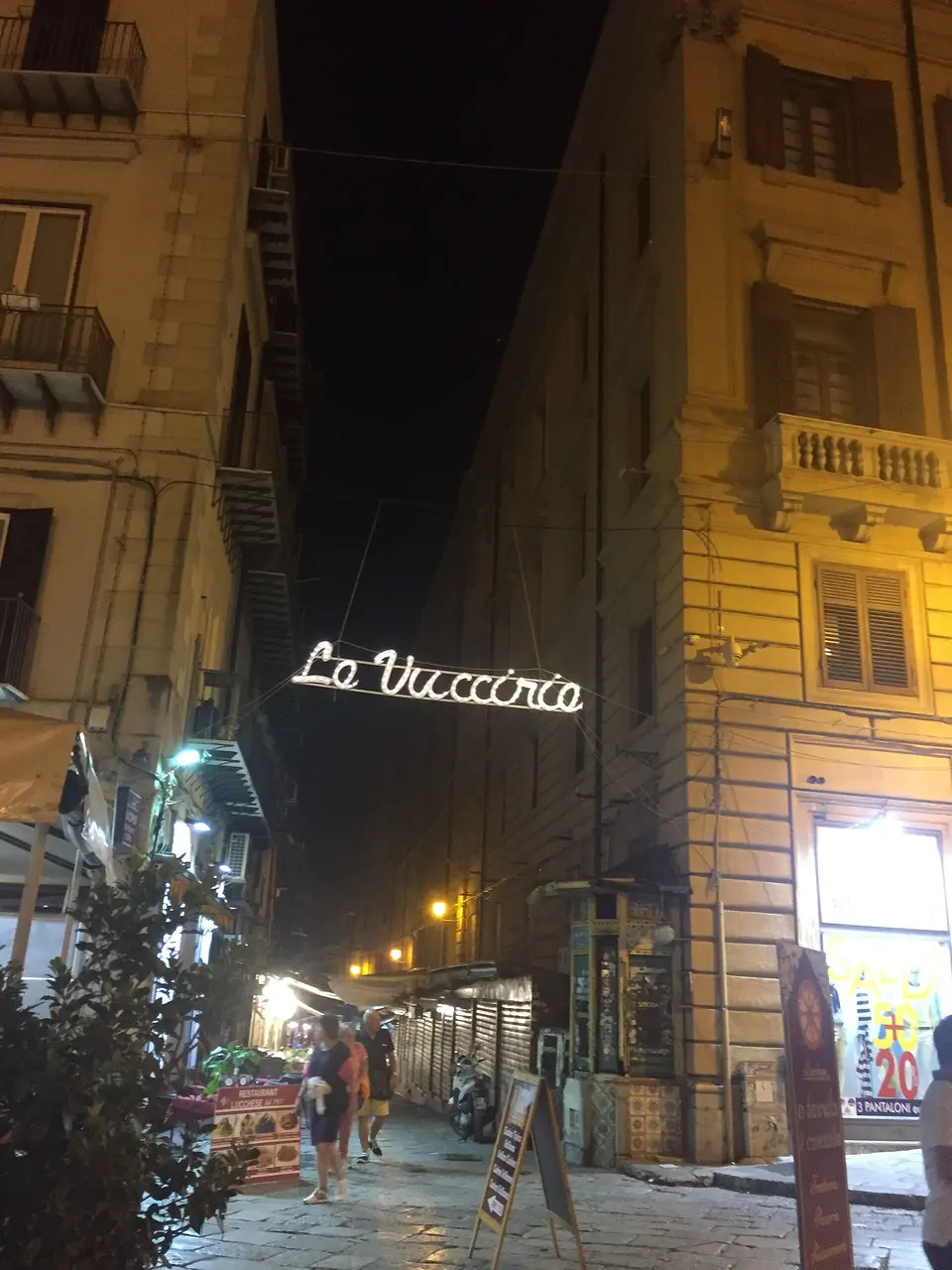
La Vucciria

The market that Renato Guttuso painted in 1974 has shrunk to a few stalls by day, but after dark the lanes and Piazza Caracciolo around it fill with the city's cheapest bars, grills and crowds: beer from a hatch, grilled meat and stigghiola from a cart, music, students, and the old men who never left. The Oratorio di Santa Cita and the Oratorio di San Domenico nearby, with Serpotta's white stucco, are the daytime reason to come to the quarter; the nights are their own reason.

  • Plan about 2 h 30 min

Day 3

The Kalsa and the sea: Palazzo Abatellis, Piazza Marina and Mondello

Spend the morning in the Kalsa, the old Arab quarter by the port, at Palazzo Abatellis for Antonello da Messina and the Triumph of Death, under the giant ficus of Piazza Marina and the Gothic Steri palace, eat a spleen sandwich or a proper lunch at the Focacceria San Francesco, and take the bus to Mondello for an afternoon on the sand and a seafood dinner by the water.

  • 3 sights
  • 250 m on foot
  • Longest walk 250 m
1232 kmN
Stops in order, straight-line distancesRoute in Google Maps ↗

Morning

Palazzo Abatellis
Photo: Phyrexian, Public domain
1Art museum

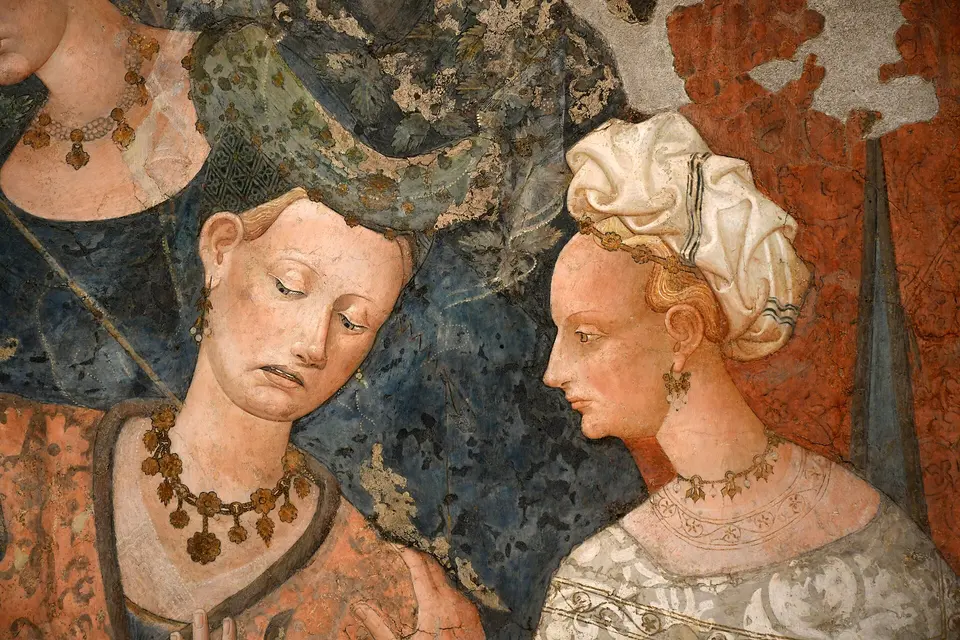
Palazzo Abatellis

The Catalan Gothic palace of 1495 in the Kalsa, rebuilt by Carlo Scarpa after the war into one of the most beautiful museum installations in Italy, holds the regional gallery of Sicily: Antonello da Messina's Virgin Annunciate of 1476, a girl in a blue veil turning from her book, the anonymous 15th-century fresco of the Triumph of Death, with its skeleton horseman riding down the rich, Francesco Laurana's bust of Eleanor of Aragon and the Arab-Norman ceilings. It takes an hour and there is no queue.

  • Plan about 1 h 30 min
  • Tue–Sun about 9:00–19:00, closed Mondays; about €8
250 m · about 4 min on foot
Piazza Marina and the Kalsa
Photo: Giorgio Galeotti, CC BY-SA 4.0
2Square and quarter

Piazza Marina and the Kalsa

The square where the Inquisition burned heretics and the Spanish held their festivals is now the Giardino Garibaldi, planted in 1864 around the largest ficus in Europe, a Moreton Bay fig whose aerial roots have become a grove of trunks; around it are the Palazzo Chiaramonte-Steri, the 14th-century palace whose cells keep the graffiti of the Inquisition's prisoners, the puppet museum a street away, and the lanes of the Kalsa, the quarter the Arabs called al-Khalisa, down to the Porta Felice and the Foro Italico seafront. The Sunday flea market fills the square.

  • Plan about 1 h

Midday

LunchThe Antica Focacceria San Francesco, open since 1834 on the square of the same name, is the place for pane ca' meusa, the spleen sandwich, or arancine and panelle at the counter; the trattorie of the Kalsa around Piazza Marina do the sit-down version with pasta con le sarde and grilled swordfish.

Afternoon

AMAT bus 806 from Piazza Crispi or Viale della Libertà to Mondello, about 35 minutes, every 10 minutes in summer, €1.40; a taxi takes 25 minutes
Mondello
Photo: Andrea Calcagno, CC BY-SA 2.0
3Beach

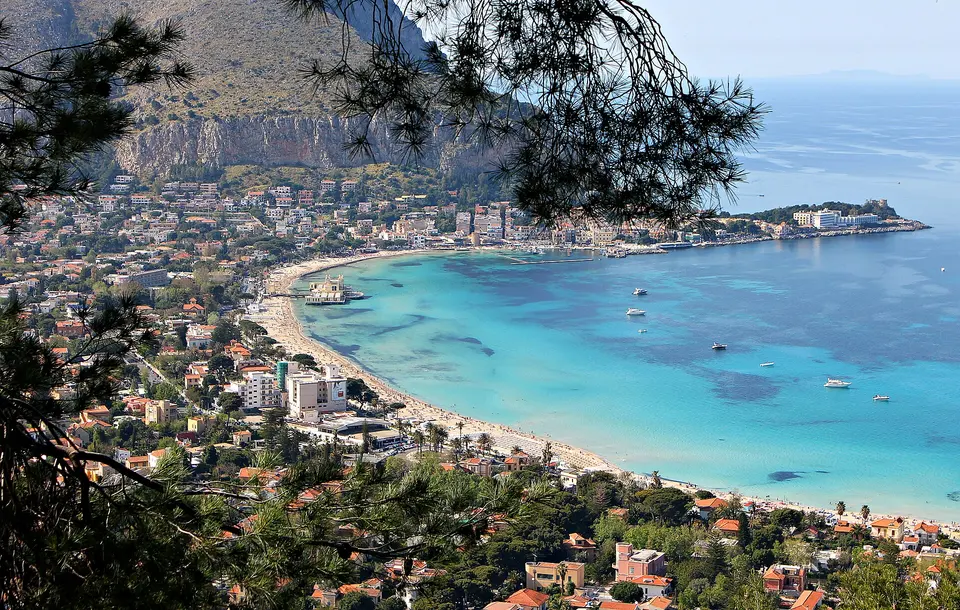
Mondello

The city's beach, 10 km north between the headlands of Monte Pellegrino and Monte Gallo, is 1.5 km of white sand and shallow turquoise water in a bay that was a malarial marsh until 1910, when a Belgian company drained it and built the Art Nouveau bathhouse on stilts that is still the landmark; in summer the lidos rent chairs, the free stretches fill with families, and the seafront restaurants and the Bar Antico Chiosco's granita serve everyone. The 806 bus from the centre runs every ten minutes in season.

  • Plan about 3 h
  • Free beach with paid lidos; bus 806 from the centre, €1.40, about 35 minutes

Evening

DinnerDinner at Mondello: the seafood restaurants along the seafront and in the piazza, or the Art Nouveau bathhouse of the Charleston on its pier, with a granita from a bar on the way back to the bus. Back in town, the Foro Italico seafront and the Kalsa bars are the late option.

Good to know in Palermo

Tickets and opening days

  • The Royal Palace of Palermo (Palazzo dei Normanni) is open Monday to Saturday 8:30 to 16:30 (last admission) and Sundays and public holidays 8:30 to 12:30, closed December 25 and January 1. From Thursday to Monday and on holidays the ticket with the Royal Apartments is €19 full, €17 reduced (teachers, EU citizens 18–25), €15.50 over 65 and €11 for ages 14–17; on Tuesdays and Wednesdays, without the apartments, €15.50, €13.50, €13.50 and €9. Children under 13 enter free. On Sundays in September 2026 the Palatine Chapel closes to visitors from 9:30 to 11:30 for Mass.Source: Fondazione Federico II, visit · checked Sep 2026
  • Palermo Cathedral's church is open free of charge Monday to Saturday 7:00–19:00 and Sunday 8:00–19:00; the ticketed monumental area (treasury, crypt, royal tombs and roofs) is open Monday to Saturday 9:30–18:00 and Sunday 10:00–18:00, with tickets sold through the cathedral's online shop.Source: Cattedrale di Palermo · checked Sep 2026
  • The cloister of Santa Maria la Nuova at Monreale costs €7 full and €3.50 reduced, with a €2 supplement when exhibitions are on display; it is open Monday to Saturday 9:00–19:00 and Sundays and holidays 9:00–13:30, last entry 30 minutes before closing.Source: CoopCulture, Monreale cloister ticket · checked Sep 2026
  • The Antonino Salinas Regional Archaeological Museum costs €7 full and €3.50 reduced and is open Tuesday to Saturday 9:00–18:00 and Sundays and holidays 9:00–13:30, closed on Mondays (except August 14) and on August 16, with last admission 30 minutes before closing.Source: CoopCulture, Salinas museum ticket · checked Sep 2026
  • The Capuchin Catacombs of Palermo are open Monday to Saturday 9:00–12:30 (last entry 12:15) and 15:00–17:30 (last entry 17:15).Source: Catacombe dei Cappuccini, opening hours · checked Sep 2026

3 days in Palermo: quick answers

Is 3 days enough for Palermo?

Three days cover the Arab-Norman monuments, the markets, Monreale, the catacombs, the Kalsa and the beach. A fourth day is Cefalù, an hour east by train, for its Norman cathedral and its beach, or the Greek temple of Segesta and the hill town of Erice to the west, or the villas of Bagheria and the Greek ruins of Solunto twenty minutes away. Palermo's own Salinas archaeological museum and the puppet museum fit into any spare hour.

Which days should I plan around?

The Palazzo dei Normanni's Royal Apartments are open only Thursday to Monday and holidays, so Tuesday and Wednesday tickets are cheaper but show less, and the Cappella Palatina closes to visitors on Sunday mornings for Mass; the palace closes at 12:30 on Sundays. The catacombs are open Monday to Saturday with a lunch break. The Salinas museum, Palazzo Abatellis and the Zisa close on Mondays. The Teatro Massimo suspends tours on rehearsal and performance days. Markets are at their best in the morning and the Vucciria at night.

How much do the tickets cost?

The Palazzo dei Normanni with the chapel and the royal apartments is €19 from Thursday to Monday and €15.50 on Tuesday and Wednesday without the apartments; the cathedral church is free and its monumental area, roofs, tombs, crypt and treasury, is sold in combinations up to about €12; Monreale's cathedral is free to enter with tickets for the terraces and treasury, and its cloister is €7; the catacombs a few euros; the Teatro Massimo tour €12, rising to €14 from July 2026; the Salinas museum €7; the Zisa and Abatellis around €6 to €8. The markets, the squares, Piazza Marina and the beach are free.

How do I get around?

On foot in the centre, which is mostly closed to cars, and by AMAT bus for Monreale (389) and Mondello (806): a ticket is €1.40 for 90 minutes from a tabacchi or €1.80 from the driver, and a day ticket €3.50. Taxis and the ride-hailing apps work, and the airport bus and train run to the central station. Do not drive in the old town.

How much walking is this itinerary?

About 4 km on day one, all in the centre on uneven stone; about 3 km on day two, including the cathedral roofs at Monreale if you climb them; and about 3 km on day three, flat, between the Kalsa and the beach. Summer heat is serious from June to September, so the markets and the palaces are morning work and the beach the afternoon.

Other Palermo itineraries

Keep exploring

Where this connects

THE TRIPWOA APP

Go somewhere.
Make it yours.

Build days around what you love. Follow your route, find your next stop and keep the moments along the way.

Get it on Google PlayAvailable for Android
Free to start
Tripwoa home with a Paris trip and nearby places to explore
Tripwoa day plan for New York with a route map and Times Square stop

A day that feels like you.

Sources and method

Places and coordinates: Wikidata and Tripwoa's open-data place catalog (Overture Maps Foundation, © OpenStreetMap contributors). Photos: Wikimedia Commons, credited on each image. Practical rules: the official sources linked in each note, checked in September 2026.

How this plan was made: Tripwoa's planner drafted the day order from real coordinates and typical visit times. Each stop was then reviewed, reordered where needed and rewritten with AI assistance. Walking distances are straight-line estimates, so allow a little extra time on real streets.