3-day itinerary · Croatia

3 Days in Split

A realistic first-timer plan that spends day one inside and around Diocletian's Palace, from the Peristyle and the cathedral bell tower to the Temple of Jupiter, the vaulted cellars and the Golden Gate, then the Meštrović Gallery and the pine paths of Marjan hill before an evening on the Riva; goes out on day two to the UNESCO island town of Trogir and its Kamerlengo fortress, then up to Klis Fortress on its ridge, with a swim at Bačvice to finish; and gives day three to Krka National Park, the boat from Skradin and the waterfalls of Skradinski buk. Every stop comes with walking distances and the rules that matter in 2026.

  • 3days
  • 13sights
  • 1.3 kmon foot between sights

Updated 12 September 2026 · 3 official sources checked · report an error

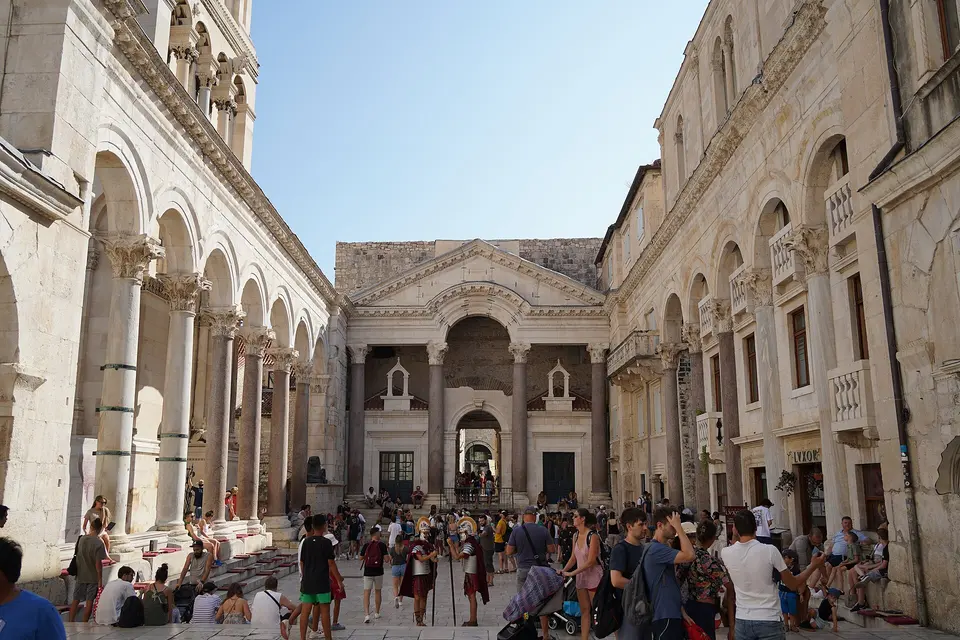
Diocletian's Palace and the Peristyle
Photo: TimeTravelRome, CC BY 2.0

The palace and the hill on foot, then Trogir and Klis, then the waterfalls

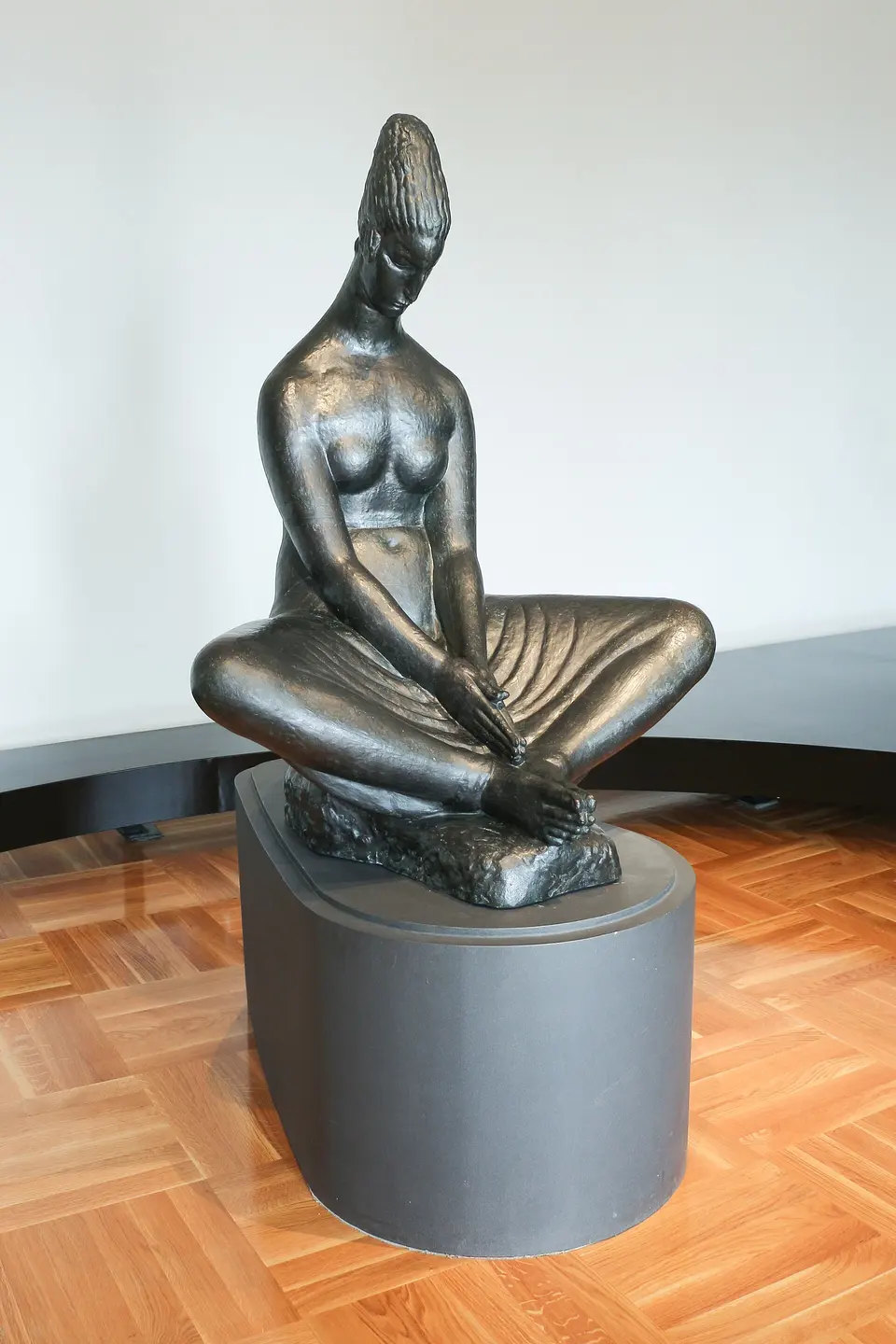
Split's old town is the palace, four gates and a few hundred metres across, so day one is entirely on foot: the Peristyle at 8:00 before the tour groups, the bell tower for the view, the cellars, then west along the waterfront to the Meštrović Gallery and up Marjan. Day two uses the city buses or a taxi, west to Trogir on the number 37 and then northeast to Klis, and comes back for the beach. Day three is the coach or a tour to Krka, 75 km north, entering at Skradin for the boat up the river. The cathedral complex sells combined tickets at the kiosk on the Peristyle, Krka's summer prices drop after 15:00, and the Meštrović Gallery is under renovation in 2026 with the garden and the Kaštilac chapel open.

At a glance

Ways to use these days

If it rains
2 of the stops are indoors — Cathedral of St Domnius and the bell tower · Meštrović Gallery and Kaštilac
Lightest day on foot
Day 1 — 5.1 km between stops
Most walking
Day 2 — 32.0 km

Day 1

The palace and the hill: the Peristyle, the cathedral, the cellars, Meštrović and Marjan

Start on the Peristyle when the palace is still quiet, climb the bell tower and see the mausoleum-cathedral, cross to the Temple of Jupiter and go down into the cellars, walk out through the Golden Gate past Gregory of Nin, then take the waterfront west to the Meštrović Gallery and up through the pines of Marjan for the view, and end on the Riva.

  • 8 sights
  • 1.1 km on foot
  • Longest walk 840 m
12345678500 mN
Stops in order, straight-line distancesRoute in Google Maps ↗

Morning

Diocletian's Palace and the Peristyle
Photo: TimeTravelRome, CC BY 2.0
1Roman palace

Diocletian's Palace and the Peristyle

The emperor Diocletian, the only Roman emperor to retire, built himself a fortified palace on the bay near his birthplace and moved in in 305 AD; when Salona fell in the 7th century, the refugees moved into it and never left, and the palace became the city. The Peristyle is its heart, the colonnaded court where the emperor appeared to his subjects, with the cathedral on one side, the Temple of Jupiter on the other, an Egyptian sphinx of 1500 BC on the steps and the vestibule's open dome behind. Come at 8:00, before the cruise passengers, and sit on the steps with a coffee; at night the café here puts cushions on them.

  • Plan about 1 h
  • The palace is free and open all day and night; the ticketed sights inside it are the cathedral complex and the cellars
Right next door
Cathedral of St Domnius and the bell tower
Photo: Sumitsurai, CC BY-SA 4.0
2Cathedral

Cathedral of St Domnius and the bell tower

Diocletian's octagonal mausoleum became the cathedral of the man he had martyred, Saint Domnius, in the 7th century, which makes it the oldest cathedral building in the world still in use; inside are the original dome and frieze, the 13th-century carved walnut doors of Andrija Buvina, a Romanesque pulpit and the altars of the two saints. The Romanesque-Gothic bell tower beside it, 57 metres, is the climb of the day: open iron stairs to a platform with the whole city, the harbour and the islands. The crypt and the treasury are on the same combined tickets, sold at the kiosk opposite.

  • Plan about 1 h 15 min
  • Tickets and combined passes at the kiosk on the Peristyle; the church closes to visitors during Mass and has shorter Sunday hours
Right next door
Temple of Jupiter
Photo: Mark Ahsmann, CC BY-SA 3.0
3Roman temple

Temple of Jupiter

Down the narrowest lane off the Peristyle, past a headless black-granite sphinx, the small temple Diocletian dedicated to his patron Jupiter kept its coffered barrel vault intact and became the cathedral's baptistery in the Middle Ages: inside are an 11th-century font carved with a Croatian king and Meštrović's bronze of John the Baptist. Five minutes, and one of the best-preserved Roman interiors anywhere.

  • Plan about 20 min
Right next door
Cellars of Diocletian's Palace
Photo: dronepicr, CC BY 2.0
4Roman substructures

Cellars of Diocletian's Palace

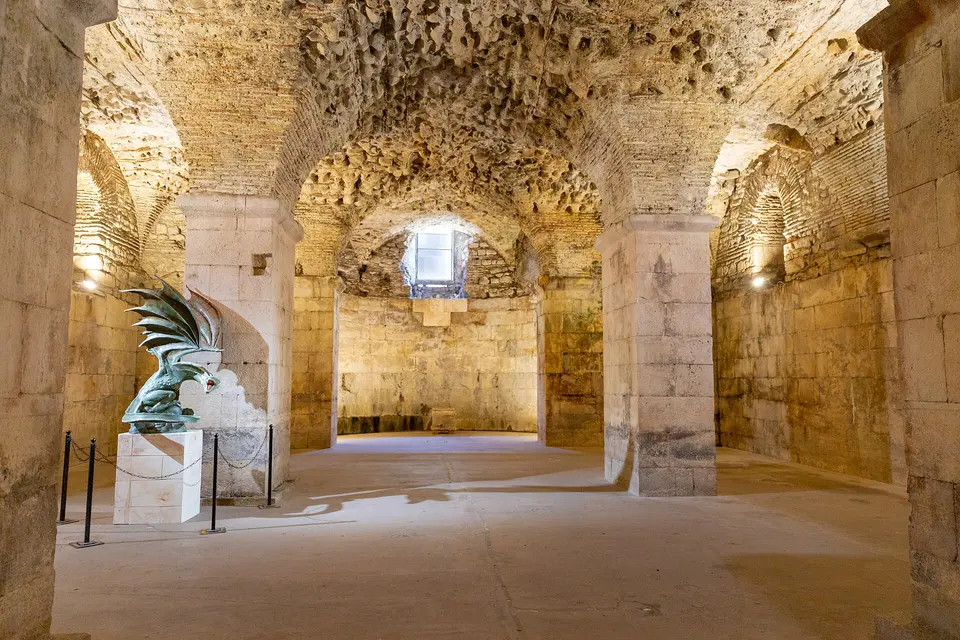
The vaulted halls under the emperor's apartments, built to raise the palace level with the Peristyle and used for centuries as the town's rubbish dump, were dug out in the 20th century and are the largest and best-preserved Roman substructures anywhere, mirroring the plan of the rooms that stood above them; they doubled as Daenerys's dragon dungeon in Game of Thrones. The central passage from the Peristyle to the sea gate is free and lined with souvenir stalls; the halls either side are ticketed and run by the City Museum.

  • Plan about 45 min
  • Ticketed east and west halls, about €8; the central passage to the Riva is free

Midday

LunchLunch inside the walls or just outside them: the konobas of the Varoš quarter under Marjan for grilled fish and black risotto, the Green Market east of the Silver Gate for fruit and burek, or a table on Fruit Square. Villa Spiza, a tiny kitchen in the palace with a daily menu and no reservations, is the local favourite; go early.

Afternoon

100 m · about 1 min on foot
Golden Gate and Gregory of Nin
Photo: dronepicr, CC BY 2.0
5City gate and statue

Golden Gate and Gregory of Nin

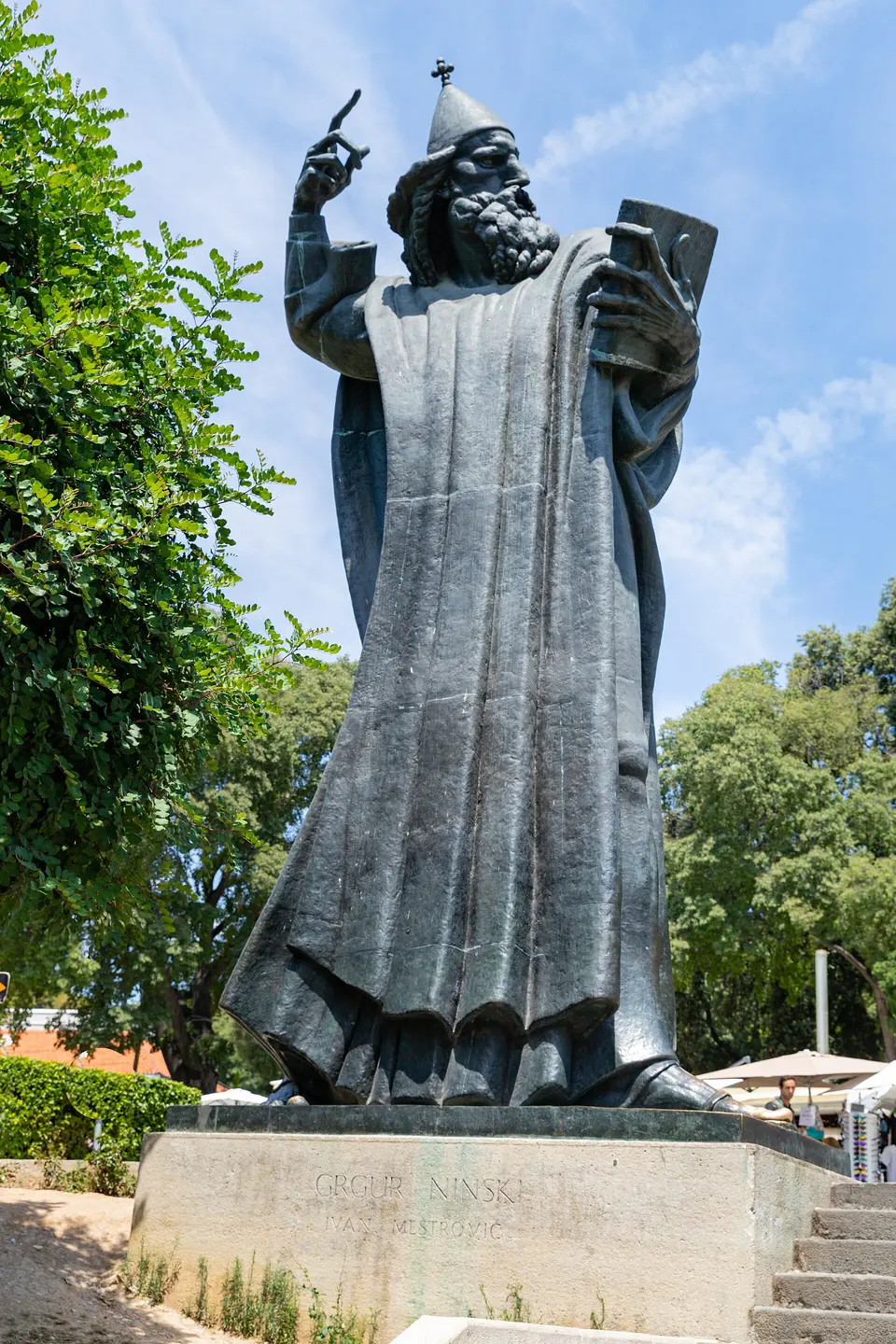
The north gate, the emperor's ceremonial entrance from Salona, keeps its niches and the guardhouse above, and just outside it stands Ivan Meštrović's 1929 colossus of Gregory of Nin, the 10th-century bishop who fought for the Croatian language in the liturgy; rubbing his big toe, polished gold by a century of hands, brings luck and a return to Split. The Strossmayer park behind is the way to the bus stations, and the old town's north lanes lead back to the People's Square and the clock tower.

  • Plan about 30 min
A 25-minute walk west along the waterfront and Šetalište Ivana Meštrovića, or bus 12 from the Riva
840 m · about 13 min on foot
Marjan hill
Photo: Falk2, CC BY-SA 4.0
7Park and viewpoint

Marjan hill

The pine-covered peninsula west of the old town, protected as a park since 1903, is where Split runs, swims and walks the dog: a stair-street climbs from the Varoš quarter to the Vidilica café terrace and the first viewpoint over the palace and the harbour, then paths lead on to the Telegrin summit at 178 metres, the hermits' chapels cut into the cliffs on the south side and the beaches of Kašjuni and Bene below. Free, shaded, and the best view of the city.

  • Plan about 1 h 30 min
  • Free; the Vidilica viewpoint is 15 minutes up from Varoš, the summit another 20

Evening

Down the Marjan steps to Varoš and 10 minutes along the waterfront
The Riva and the Prokurative
Photo: DIREKTOR, CC BY-SA 3.0
8Waterfront promenade

The Riva and the Prokurative

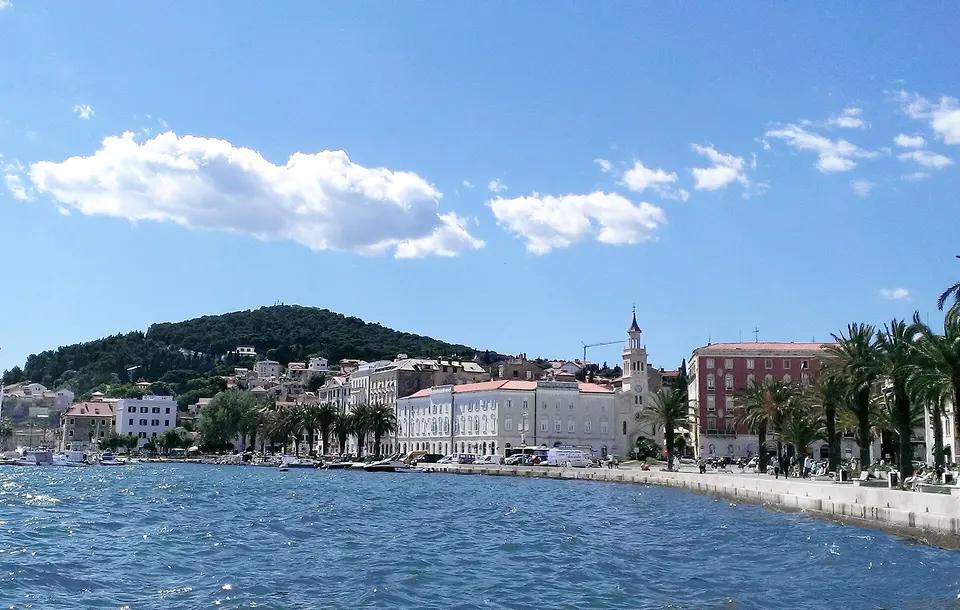
The palm-lined promenade along the south wall of the palace, laid out by the French in 1807 on top of the Roman sea gate, is the city's living room, where the evening korzo, the stroll, has happened every day for two centuries; the cafés face the harbour and the ferries. At its west end opens the Prokurative, Republic Square, a three-sided neo-Renaissance piazza built to look like Venice, and beyond it the little Matejuška harbour where the fishermen and the students drink on the wall. Dinner is here or back in the lanes.

  • Plan about 2 h

Day 2

Trogir, Klis Fortress and Bačvice

Take the bus west to the island town of Trogir for its cathedral portal, its lanes and the Kamerlengo fortress, eat by the water, then go up to Klis Fortress on the ridge behind Split for the view over the whole coast, and come back for a swim and the evening at Bačvice.

  • 4 sights
  • 250 m on foot
  • Longest walk 250 m
12345 kmN
Stops in order, straight-line distancesDriving route in Google Maps ↗

Morning

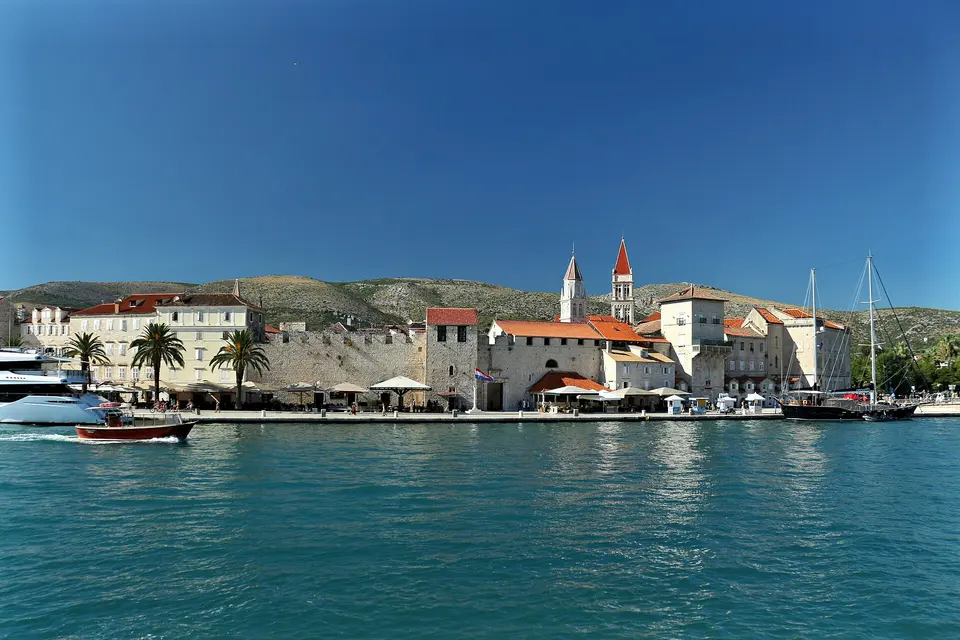
Trogir
Photo: VitVit, CC BY-SA 4.0
1Historic island town

Trogir

A Greek colony of the 3rd century BC on an island the size of a few football pitches, joined by bridges to the mainland and to the island of Čiovo, Trogir kept its Venetian walls, palaces and lanes intact enough to be a World Heritage Site in its own right; the Cathedral of St Lawrence on the main square has the portal Master Radovan carved in 1240, the finest Romanesque sculpture in Croatia, and a bell tower to climb, and the loggia, the clock tower and the Cipiko palaces stand around it. Walk the waterfront under the palms to the fortress at the far end.

  • Plan about 2 h 30 min
  • Cathedral, baptistery and bell tower ticketed, with a combined ticket around €10; the town is free
250 m · about 4 min on foot
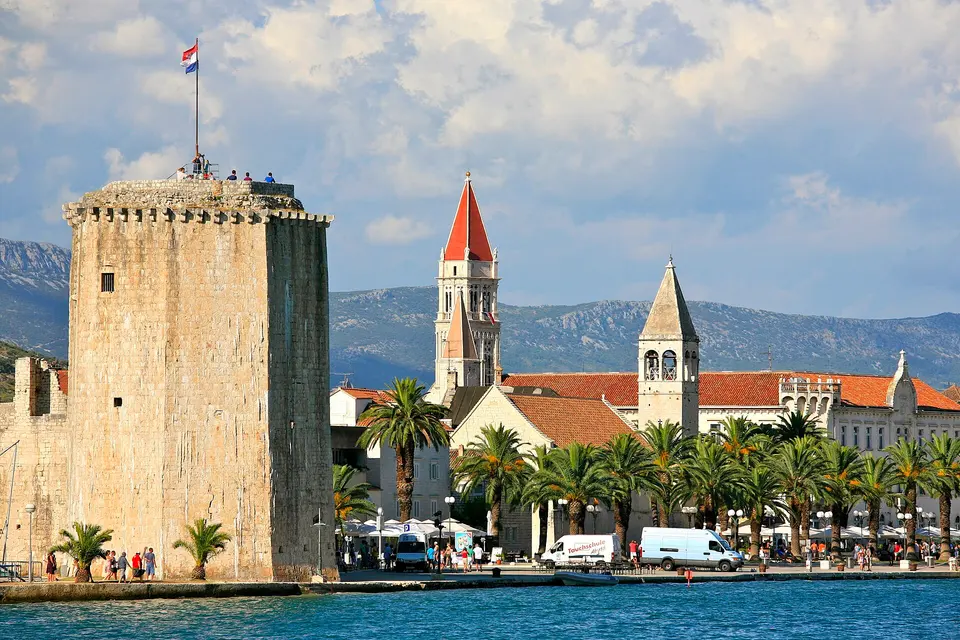
Kamerlengo Fortress
Photo: Alex Proimos, CC BY 2.0
2Fortress

Kamerlengo Fortress

The Venetians built the fortress at the southwest corner of the island in the 1420s to hold the town and the channel, and named it for the camerlengo, the paymaster who lived in it; its walls and the tower are open to climb for the view over the roofs, the channel and Čiovo, and the courtyard is an open-air cinema and concert stage in summer. A small ticket at the gate; the walk along the seafront from the cathedral takes ten minutes.

  • Plan about 45 min
  • Open daily, about €5; long hours in summer, shorter in winter

Midday

LunchTrogir's waterfront and the lanes behind the cathedral are full of konobas; eat grilled squid or pašticada on a terrace on the Riva of Trogir, facing the Kamerlengo, before the bus back.

Afternoon

Back to Split by bus 37 and bus 22 from the main bus station to Klis, about 30 minutes; a taxi from Trogir takes 30 minutes
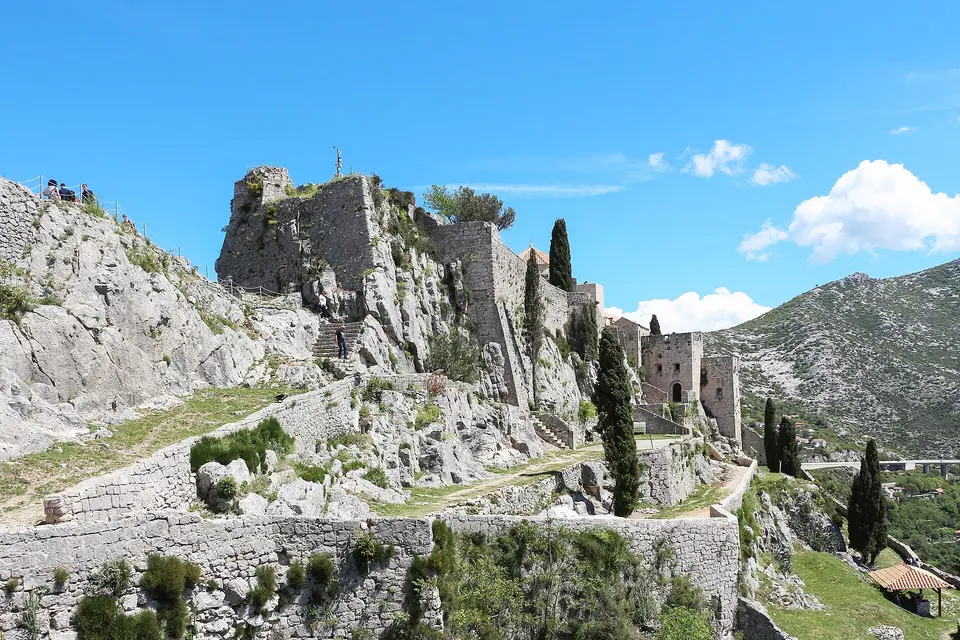
Klis Fortress
Photo: Bernard Gagnon, CC BY-SA 4.0
3Fortress

Klis Fortress

The fortress on the limestone ridge in the pass between the Kozjak and Mosor mountains, 12 km behind Split, held the road from the coast to the interior for 2,000 years: the Illyrians, the Romans, the Croatian kings, the Uskok captain Petar Kružić, who held it against the Ottomans until 1537, and the Ottomans and Venetians after him. It is a long, narrow stone ship on three levels with the whole coast from Trogir to Omiš below, and it played Meereen in Game of Thrones. The ticket includes the interpretation centre in the village, the Stella Croatica ethno park and the olive museum.

  • Plan about 1 h 30 min
  • Daily 8:30–20:30; €12 adults, €4 up to age 15; the ticket includes the interpretation centre, Stella Croatica and the olive museum

Evening

Bus 22 back to the main bus station and a 10-minute walk east along the shore
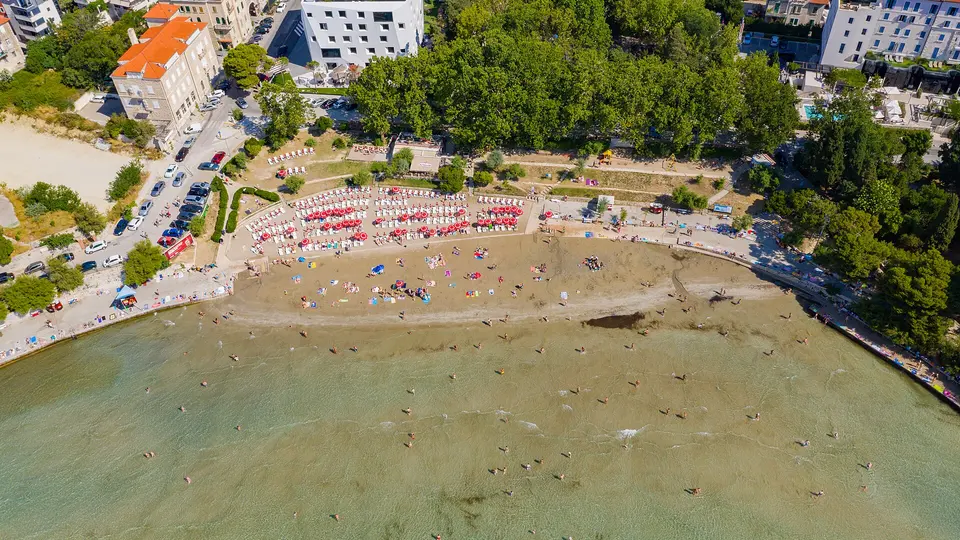
Bačvice
Photo: dronepicr, CC BY 2.0
4City beach

Bačvice

The city's sandy beach, ten minutes' walk east of the ferry port, is where Split invented picigin, the game of keeping a small ball in the air while diving spectacularly into shin-deep water, and it is played here every day of the year, the winter swimmers included; the bay is shallow and warm, the 1920s bathing pavilion is a listed monument, and the cafés and clubs along the shore go on late. Swim at the end of day two and stay for the evening.

  • Plan about 2 h

Day 3

Krka National Park

Spend the day at Krka National Park: the boat from Skradin up the river to Skradinski buk, the boardwalk loop around seventeen tiers of waterfall, lunch by the mills, and, if there is time, the boat on to the island monastery of Visovac, before the ride back to Split for a last dinner.

  • 1 sights
  • Transport between sights
1100 mN
Stops in order, straight-line distances

Morning

Krka National Park and Skradinski buk
Photo: kallerna, CC BY-SA 4.0
1National park

Krka National Park and Skradinski buk

The Krka river drops through a limestone canyon in a series of travertine barriers, and the last and biggest of them, Skradinski buk, is seventeen steps of waterfall 800 metres long and 46 metres high, with old watermills, a boardwalk loop of an hour through the cascades and, from Skradin, the park's own boat up the river to reach it. From the falls, further boats go on to Visovac, the Franciscan island monastery in the middle of the lake, and to Roški slap upstream. Swimming at the main falls has been banned since 2021; the park is open every day and the summer ticket is cheaper after 15:00.

  • Plan about 6 h
  • Adults €40 in June–September (€30 after 15:00), €20 in April, May and October, €7 in winter; the Skradin boat and the Lozovac bus are included April–October; Visovac boat €15 extra

Midday

LunchThere are restaurants and snack bars among the old mills at Skradinski buk and better ones on the waterfront of Skradin, a Venetian-looking little town at the park entrance; the Krka trout and the Skradin risotto are the dishes.

Evening

DinnerBack in Split by early evening: dinner in the palace lanes, a last drink on the Riva, or the restaurants along the Bačvice shore. The Matejuška fishermen's harbour at the west end of the Riva is where locals drink a beer on the wall at sunset.

Good to know in Split

Tickets and opening days

  • Krka National Park's 2026 entrance ticket for all accessible land sites costs €40 for individual adults and €15 for children aged 7–18 and students in June, July, August and September, dropping to €30 and €11.25 after 15:00; €20 and €12 in April, May and October; and €7 and €4 from November to March. The ticket includes the boat Skradin–Skradinski buk and the bus Lozovac–Skradinski buk from April 1 to October 31; children under 7 enter free. Boat excursions are extra: Skradinski buk to Visovac €15 (2 hours), to Visovac and Roški slap €20 (4 hours).Source: Krka National Park, entrance ticket prices 2026 · checked Sep 2026
  • Klis Fortress is open every day 8:30–20:30; tickets are €12 for adults and €4 for children up to 15, and include the interpretation centre on Mejdan square, the Stella Croatica ethno-agro park and the Olive Museum. Split to Klis is 12 km.Source: Tvrđava Klis, visit us · checked Sep 2026
  • The Meštrović Gallery in Split is open Tuesday to Sunday 8:00–18:00 with last entry half an hour before closing, and closed on Mondays and public holidays; the gallery building is undergoing an energy renovation project.Source: Muzeji Ivana Meštrovića · checked Sep 2026

3 days in Split: quick answers

Is 3 days enough for Split?

Three days cover the palace, the hill, the two best day trips on the mainland and the waterfalls. A fourth day is an island: the catamaran to Hvar town for its Venetian square and fortress, the ferry to Brač for the Zlatni Rat beach at Bol, or, further, the Blue Cave on Biševo by speedboat. Salona, the Roman capital of Dalmatia whose ruins lie just below Klis, fits into day two for anyone with the energy.

Which days should I plan around?

The palace and its cathedral complex are open daily, with shorter Sunday hours. The Meštrović Gallery is closed on Mondays. Klis Fortress is open every day, Krka every day of the year with the boats and buses inside the park running from April to October. Summer weekends bring the Croatian crowds to Bačvice and the Krka boardwalks, so go early on both; from June to September Krka's entrance price drops after 15:00.

How much do the tickets cost?

The palace itself is free and open all the time, since it is the town. The cathedral sells single tickets for the church, the bell tower, the crypt and the Temple of Jupiter and cheaper combined passes at the kiosk on the Peristyle; the cellars have their own ticket. Klis is €12, and Krka €40 for adults in the summer months, €30 after 15:00, and €20 in spring and autumn, with the Skradin boat included. Marjan, the Riva and the beaches are free.

How do I get around?

On foot for everything on day one. Promet Split's city buses cover Trogir (line 37), Klis (line 22) and Salona (line 1) for a few euros a ride, bought at kiosks or from the driver. Coaches to Krka and the islands leave from the main bus station next to the ferry port, a 10-minute walk from the palace. Taxis and Uber work and are reasonable for the Trogir–Klis leg.

How much walking is this itinerary?

About 4 km on day one, including the 300 steps of the bell tower and the climb up Marjan; about 3 km on day two, with the steep lane up to Klis; and about 3 km of boardwalks at Krka on day three, which are flat but slippery when wet. Everything in the palace is on stone and cobbles; wear shoes with grip.

Other Split itineraries

Keep exploring

Where this connects

THE TRIPWOA APP

Go somewhere.
Make it yours.

Build days around what you love. Follow your route, find your next stop and keep the moments along the way.

Get it on Google PlayAvailable for Android
Free to start
Tripwoa home with a Paris trip and nearby places to explore
Tripwoa day plan for New York with a route map and Times Square stop

A day that feels like you.

Sources and method

Places and coordinates: Wikidata and Tripwoa's open-data place catalog (Overture Maps Foundation, © OpenStreetMap contributors). Photos: Wikimedia Commons, credited on each image. Practical rules: the official sources linked in each note, checked in September 2026.

How this plan was made: Tripwoa's planner drafted the day order from real coordinates and typical visit times. Each stop was then reviewed, reordered where needed and rewritten with AI assistance. Walking distances are straight-line estimates, so allow a little extra time on real streets.