3-day itinerary · Jordan

3 Days in Amman

A realistic first-timer plan that starts day one under the blue dome of the King Abdullah Mosque, climbs the Citadel for the Temple of Hercules and the Umayyad palace, comes down to the Roman theatre and the souks of the old downtown, sees the Ain Ghazal statues and the Dead Sea Scrolls at the Jordan Museum, and ends among the cafés of Rainbow Street; drives north on day two to the colonnades of Jerash, the Crusader-era castle of Ajloun and the Ottoman stairways of Salt, with a last drink at the Boulevard; and goes down on day three to the mosaic map in Madaba's church, the view from Mount Nebo, the baptism site on the Jordan and a float in the Dead Sea at sunset. Every stop comes with the transport, the Jordan Pass and the prices that matter in 2026.

  • 3days
  • 14sights
  • 0.0 kmon foot between sights

Updated 12 September 2026 · 3 official sources checked · report an error

Amman Citadel
Photo: Deror_avi, CC BY-SA 3.0

The citadel and the downtown, then Jerash, Ajloun and Salt, then Madaba, Nebo and the Dead Sea

Amman's old centre is small and steep: the citadel, the theatre, the souks and the Jordan Museum are within a kilometre and a half of each other, downhill from the citadel, and Rainbow Street is a taxi or a stiff climb above them. Days two and three are drives, 50 km north to Jerash and 50 km south-west to the Dead Sea, by hired car, a taxi for the day or the tours that every hotel sells, since the public buses from Tabarbour reach Jerash and Madaba but not the rest. The Jordan Pass, bought before arrival, covers the citadel, the theatre, Jerash, Ajloun, Madaba's park, Mount Nebo and the baptism site as well as Petra and waives the visa fee for a stay of three nights; the Jordan Museum is not on it. Fridays close the Jordan Museum in the morning and slow the downtown until noon; the citadel opens later on Fridays too. Summer is hot and dry, the Dead Sea hotter still; March to May and October to November are the months.

At a glance

Ways to use these days

If it rains
3 of the stops are indoors — King Abdullah I Mosque · The Jordan Museum · Ajloun Castle
Lightest day on foot
Day 1 — 4.7 km between stops
Most walking
Day 2 — 67.3 km

Day 1

The hills of the old city: the King Abdullah Mosque, the Citadel, the Roman Theatre, the souks, the Jordan Museum and Rainbow Street

Begin at the blue-domed mosque while it is open to visitors, cross to the Citadel for the Temple of Hercules, the Umayyad palace and the view over every hill, walk down the stairs to the Roman theatre and the gold and spice souks around the Husseini Mosque, give the afternoon to the Jordan Museum, and climb to Rainbow Street for the evening.

  • 6 sights
  • Transport between sights
123456500 mN
Stops in order, straight-line distancesDriving route in Google Maps ↗

Morning

King Abdullah I Mosque
Photo: Tarawneh, CC BY-SA 3.0
1Mosque

King Abdullah I Mosque

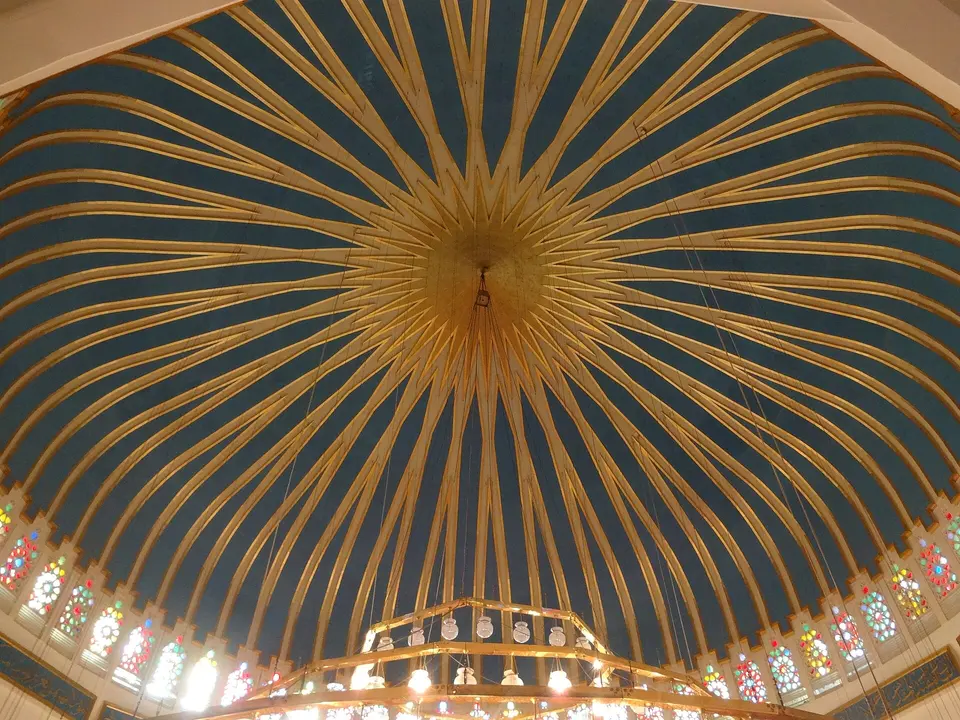
The mosque King Hussein built between 1982 and 1989 in memory of his grandfather, with a 35-metre dome of blue mosaic over an octagonal hall for 3,000 and a courtyard for 6,000 more, is the one mosque in the capital that is arranged for non-Muslim visitors, with an entrance on the north side, robes lent to women at the door, a small Islamic museum of the king's belongings and old Qur'ans, and a view of the dome against the sky that is the picture of the city; it is open to visitors in the mornings from Saturday to Thursday for a small fee and closed to them on Fridays. Across the road is the Coptic church and behind it the towers of the new Abdali district.
  • Plan about 45 min
  • Visitors Sat–Thu about 8:00–14:00, not Fridays or prayer times; about 2 JOD; modest dress, robes provided
Taxi 10 minutes up Jabal al-Qal'a, or a 30-minute walk; the gate is on the north side
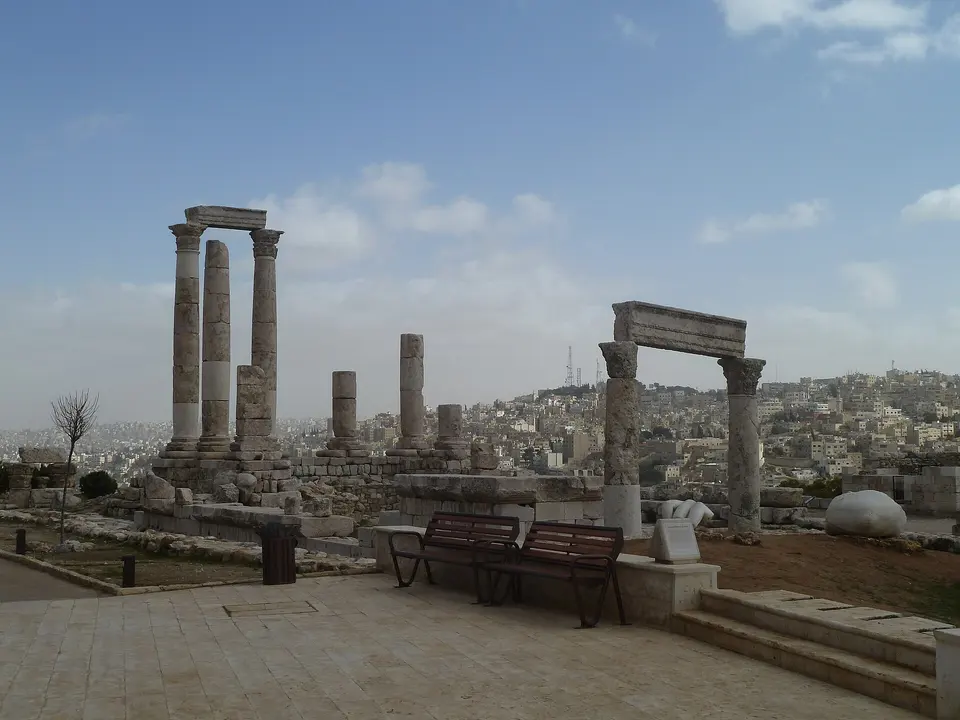
Amman Citadel
Photo: Deror_avi, CC BY-SA 3.0
2Archaeological site

Amman Citadel

Jabal al-Qal'a, the hill in the middle of the city inhabited since the Bronze Age, carries the ruins of the Ammonite, Roman, Byzantine and Umayyad capitals on its flat top: the three standing columns of the Temple of Hercules of AD 162, with a giant marble hand and elbow from a statue that stood 13 metres high, a Byzantine church, and the Umayyad palace of 730, whose domed audience hall was restored in the 1990s and whose colonnaded street and cistern are the best-preserved early Islamic complex in the region; the Jordan Archaeological Museum on the site, older and smaller than the Jordan Museum, keeps Dead Sea Scroll fragments and the Roman sarcophagi. The view over the theatre, the downtown and the hills of white houses is the point of the climb; go in the morning light or the last hour.

  • Plan about 2 h
  • Summer about 8:00–19:00, winter 8:00–16:00, later on Fridays; 3 JOD including the museum, on the Jordan Pass, free under 12

Midday

LunchLunch is downtown, in the streets behind the Husseini Mosque: Hashem, a courtyard restaurant that has fed the city falafel, hummus, fuul and mint tea since 1952 for a couple of dinars and has served every king, is the ritual; Habibah's kunafa, the cheese-and-syrup pastry, from the alley window opposite is the dessert; and the juice stalls and the Al-Quds falafel counter are the alternatives. Eat by 13:00 and take the tea at the mosque's café.

Afternoon

The stone stairs down from the citadel's south-east corner to the Hashemite Plaza, about 15 minutes on foot
Roman Theatre and the Hashemite Plaza
Photo: Bernard Gagnon, CC BY-SA 4.0
3Roman theatre

Roman Theatre and the Hashemite Plaza

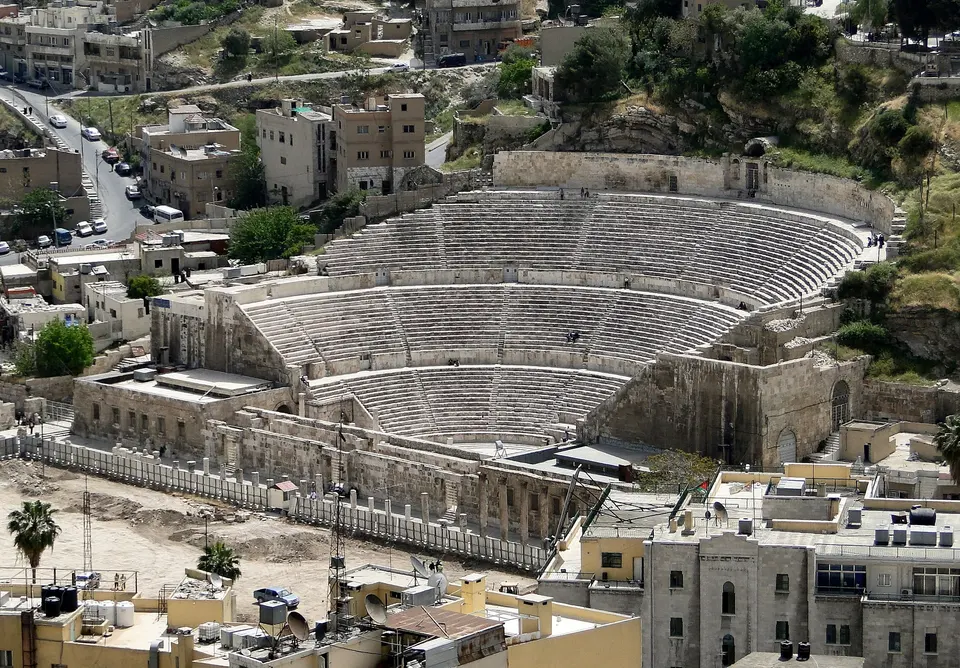
Cut into the north face of the hill below the citadel in the reign of Antoninus Pius, around AD 150, the theatre of Philadelphia seats 6,000 in three tiers of steep stone that are climbed to the top for the view and still used for concerts in summer, with the small Odeon of 500 seats beside it, the Nymphaeum fountain two streets away and the wide Hashemite Plaza in front where the city sits in the evening; the ticket includes the two small museums in the wings, of folklore and of popular traditions, with Bedouin dress and Madaba mosaics. It is the centre of downtown and the place to start the souks from.

  • Plan about 1 h
  • Summer about 8:00–20:00, winter 8:00–17:00; 2 JOD including the two museums, on the Jordan Pass
A 5-minute walk west along the plaza into the downtown souks
Al-Husseini Mosque and the downtown souks
Photo: Dosseman, CC BY-SA 4.0
4Mosque and market

Al-Husseini Mosque and the downtown souks

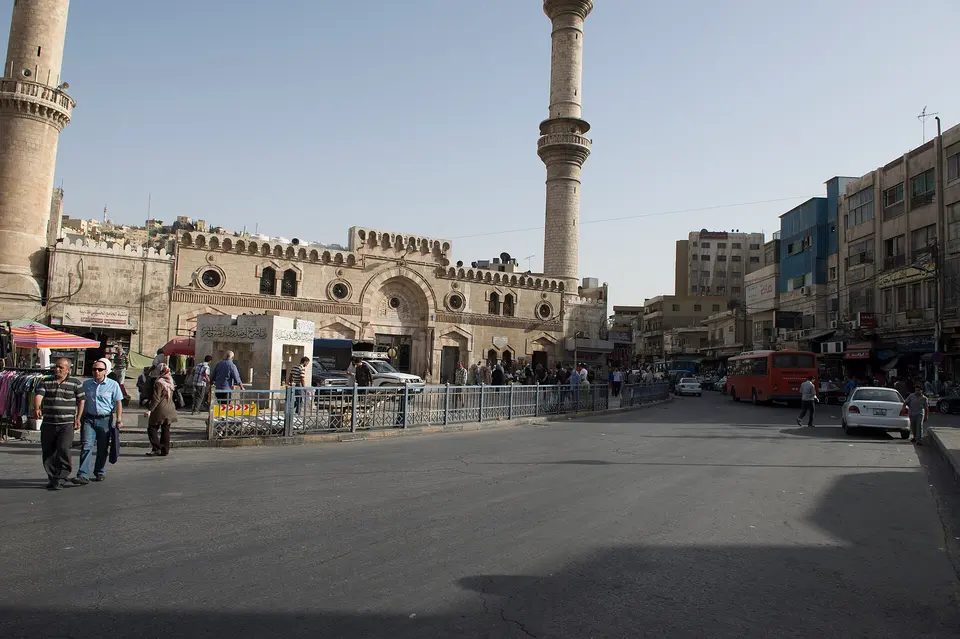
The pink-and-white striped mosque that King Abdullah I built in 1924 on the site of the Umayyad mosque of Philadelphia is the heart of Al-Balad, the downtown, and the streets around it are the city's old market: the gold souk of Jewellers' Street, the spice and coffee merchants, the vegetable market in the alleys, the fabric shops, the second-hand booksellers and the juice bars, with Hashem's falafel and Habibah's kunafa in the lanes beside it; the mosque itself is for worshippers, but the courtyard and the square are the place to sit with a tea and watch the city do its shopping. Friday afternoons and evenings are the busiest.

  • Plan about 1 h 30 min
  • Souks open daily from morning to evening, quieter Friday mornings; free; the mosque is not open to tourists inside
A 15-minute walk south-west through Ras al-Ain, or a 5-minute taxi
The Jordan Museum
Photo: Osama Shukir Muhammed Amin, CC BY-SA 4.0
5Museum

The Jordan Museum

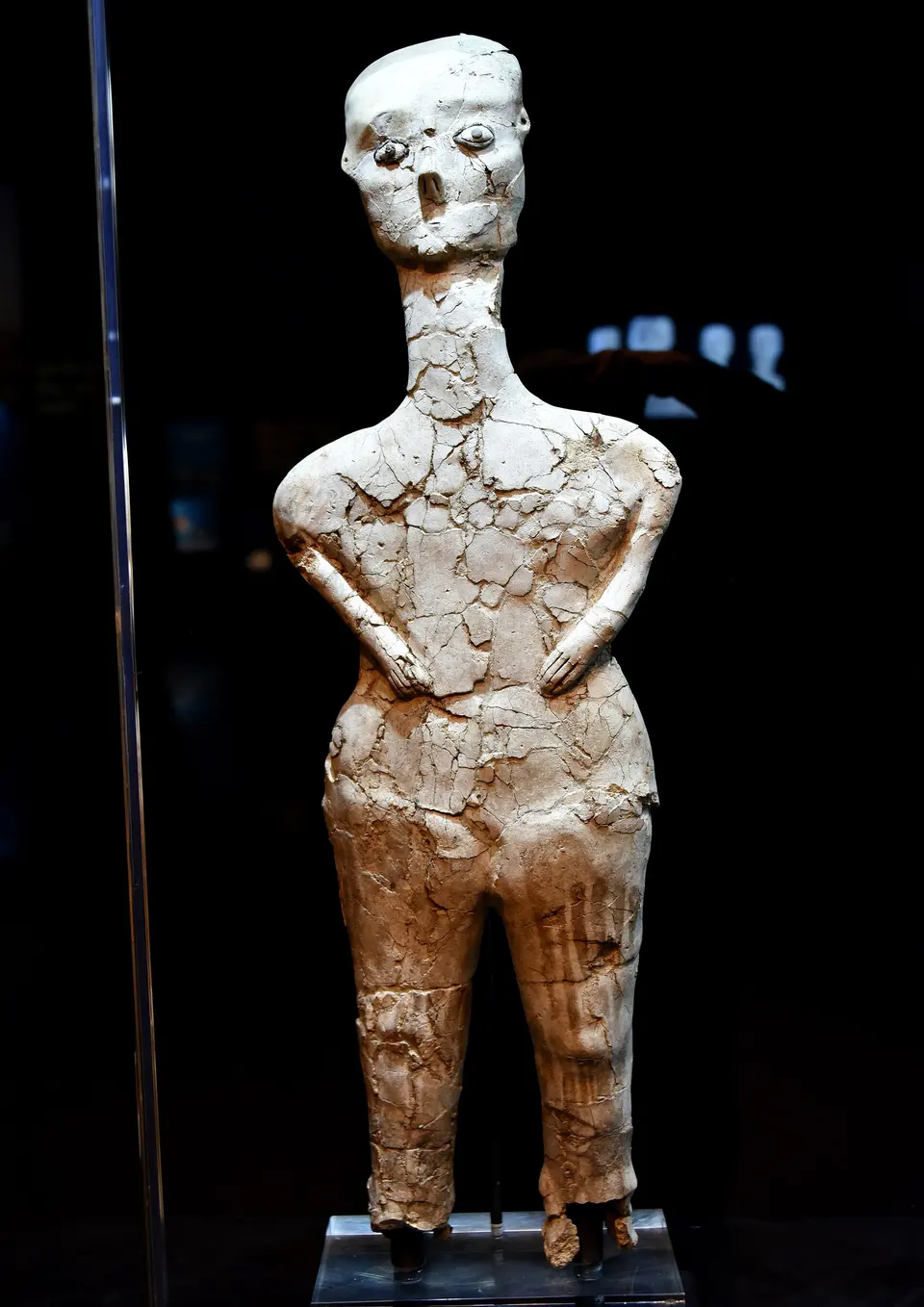
The national museum, opened in 2014 in Ras al-Ain below the downtown, is the one museum in the country that has to be seen: the Ain Ghazal statues, plaster figures with bitumen eyes made around 7500 BC on the outskirts of the city and the oldest large-scale human statues known anywhere; the Dead Sea Scrolls of copper and parchment from Qumran; the Nabataean and Roman finds from Petra and Jerash, the Umayyad frescoes, the Bronze Age and Iron Age galleries of the Ammonites and Moabites, and a modern floor of the kingdom's history, all well labelled in English. It is closed on Tuesdays, open only in the afternoon on Fridays, and not covered by the Jordan Pass.

  • Plan about 2 h
  • Sat–Mon and Wed–Thu about 9:00–16:00, Fri about 14:00–17:30, closed Tue; 5 JOD, not on the Jordan Pass

Evening

Taxi 5 minutes up Jabal Amman, or the 20-minute climb by the stairs from the downtown
Rainbow Street
Photo: miiika, CC BY-SA 4.0
6Street

Rainbow Street

The street along the ridge of Jabal Amman, above the downtown, is the city's evening: a kilometre of restored 1920s villas turned into cafés, restaurants, ice-cream shops and bars, the Books@Café rooftop, the Wild Jordan Center's terrace over the valley, the Friday Souk Jara street market in summer, the Al-Pasha Turkish bath below it, the shisha terraces where the city's young sit until midnight, and the stairs down to the theatre for anyone who wants to walk it; the First Circle at its western end is the taxi stop. It is neither ancient nor authentic and it is where everyone ends up.

  • Plan about 2 h
  • Free; cafés and restaurants until late; Souk Jara Fridays in summer; taxi to the First Circle

Day 2

North to the Roman city and the Ottoman hills: Jerash, Ajloun Castle and Salt, then the Boulevard

Drive an hour north to Jerash and walk the oval plaza and the colonnaded cardo of the best-preserved Roman city in the region before the heat, climb the hill of Ajloun for the castle Saladin's nephew built against the Crusaders, come back through the olive hills to the Ottoman stairway town of Salt, and end with a drink at the Abdali Boulevard.

  • 4 sights
  • Transport between sights
12345 kmN
Stops in order, straight-line distancesDriving route in Google Maps ↗

Morning

Jerash (Gerasa)
Photo: G41rn8, CC BY-SA 3.0
1Roman city

Jerash (Gerasa)

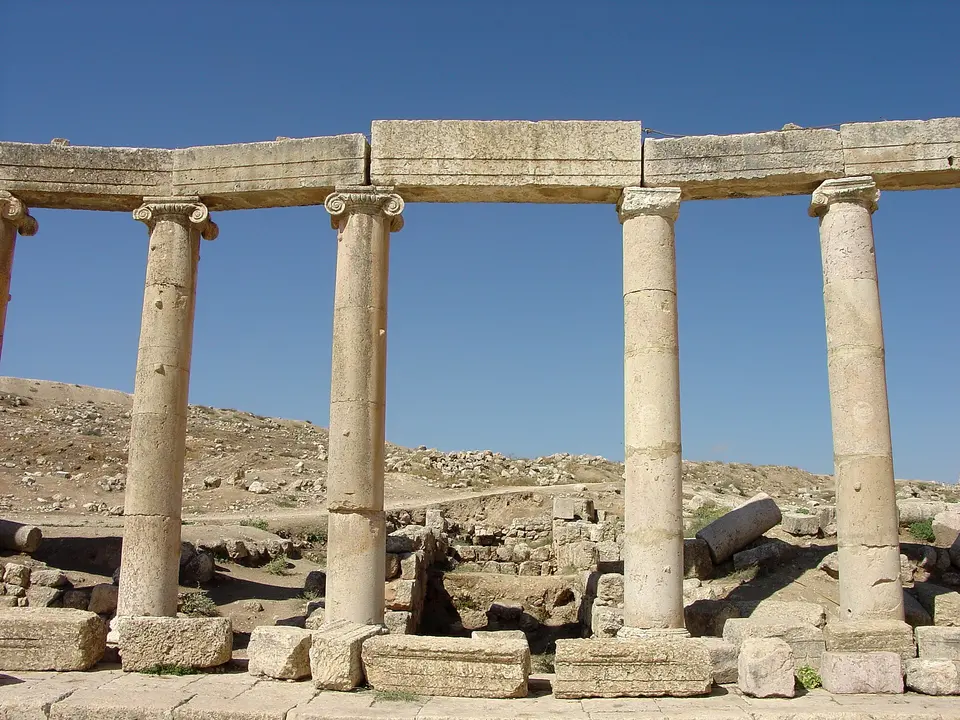
Gerasa, a city of the Decapolis that grew rich on the trade of the 2nd century and was buried by earthquakes and sand until the 1920s, is the best-preserved Roman provincial city in the Middle East: Hadrian's arch at the gate, the hippodrome, the oval plaza of 56 Ionic columns that is like nothing else in the Roman world, the 800-metre colonnaded cardo with its chariot ruts, the nymphaeum, the temple of Artemis on its stairs, two theatres, the south one with an acoustic that lets a bagpiper play to the top row, and a dozen Byzantine churches with mosaic floors; the walk from the arch to the north gate and back takes three hours in sun with almost no shade. Go at opening, before the tour buses from the Dead Sea resorts, and carry water.

  • Plan about 3 h
  • Summer about 8:00–19:00, winter 8:00–16:30; 10 JOD including the museum, on the Jordan Pass, free under 12
Car 30 minutes west of Jerash through the hills, then a short walk from the car park up to the gate
Ajloun Castle
Photo: High Contrast, CC BY 3.0 de
2Castle

Ajloun Castle

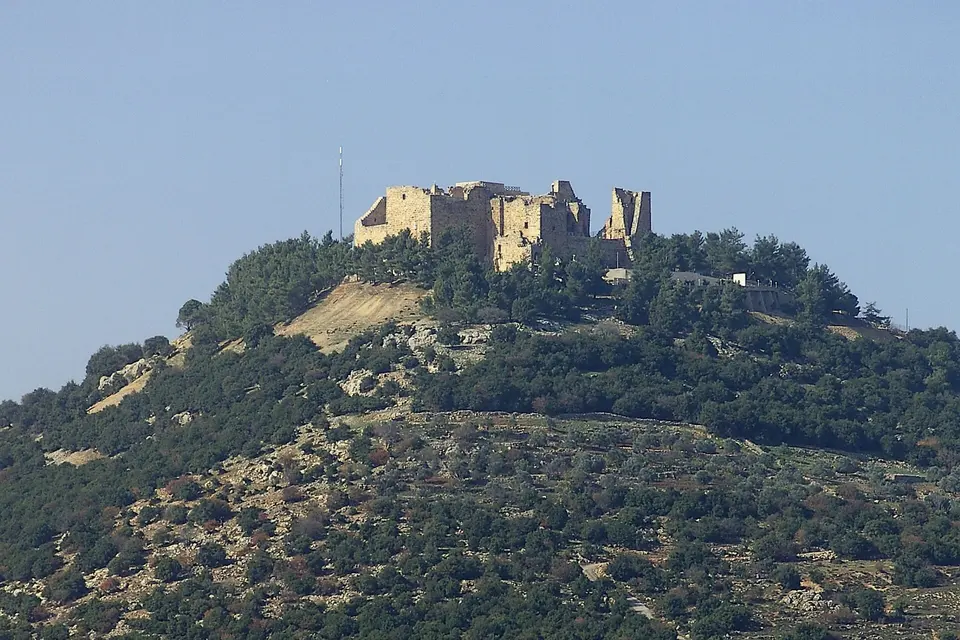
Qal'at ar-Rabad, built in 1184 by Izz al-Din Usama, a general and nephew of Saladin, on a hill of 1,250 metres above the town of Ajloun to hold the iron mines and to watch the Crusader castle of Belvoir across the Jordan valley, is one of the few castles of the Muslim side to survive, a compact block of towers, vaulted halls, a moat and arrow slits that was later a Mamluk pigeon-post station and then an earthquake ruin, restored with a small museum inside; from the roof the view runs over the olive hills of the north to the Jordan valley and, on a clear day, to Galilee. It is the green Jordan that the desert postcards leave out.

  • Plan about 1 h 15 min
  • Daily about 8:00–19:00 in summer, to 16:00 in winter; 3 JOD, on the Jordan Pass

Midday

LunchAjloun's restaurants along the road below the castle serve grilled meats, mansaf, the national dish of lamb in fermented yoghurt over rice, and salads with the view of the hills, and the Ajloun Forest Reserve's lodge does lunch by reservation; alternatively hold out for Salt, where the small restaurants of the Hammam street do falafel and shawarma and the bakeries do the town's own sweets. Eat by 14:00 to give Salt its late afternoon light.

Afternoon

Car about 1 hour south-west through Anjara and the Zarqa river valley; park below the old town and walk up
As-Salt
Photo: Freedom's Falcon, CC BY-SA 3.0
3Historic town

As-Salt

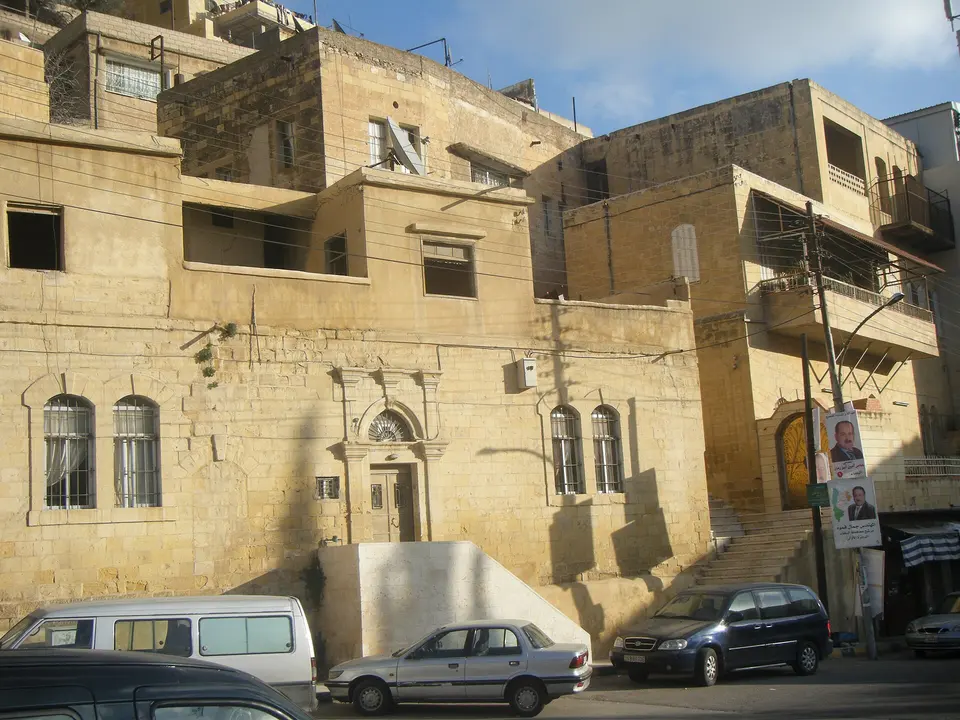
The Ottoman town on three hills 30 km north-west of Amman was the administrative and trading centre of the region before the capital was built, and its late-19th-century merchants' houses of yellow limestone with arched windows and painted ceilings, climbing the slopes on stairways instead of streets, were put on the World Heritage list in 2021 as a place of tolerance and urban hospitality, where mosques, churches and the houses of Muslim and Christian families share the same lanes; the Abu Jaber house is the museum, the Hammam street the market, the Great Mosque and the Latin church the neighbours, and the Harmony trail the city's own walking route between them. Late afternoon, when the stone turns gold and the town comes out, is the time.

  • Plan about 2 h
  • Streets free; Historic Old Salt Museum (Abu Jaber house) daily about 8:00–17:00, small fee; buses from Tabarbour

Evening

Car 40 minutes back to Amman; the Boulevard is in the Abdali district with underground parking
Abdali Boulevard
Photo: Malkawi99, CC BY-SA 3.0
4New district

Abdali Boulevard

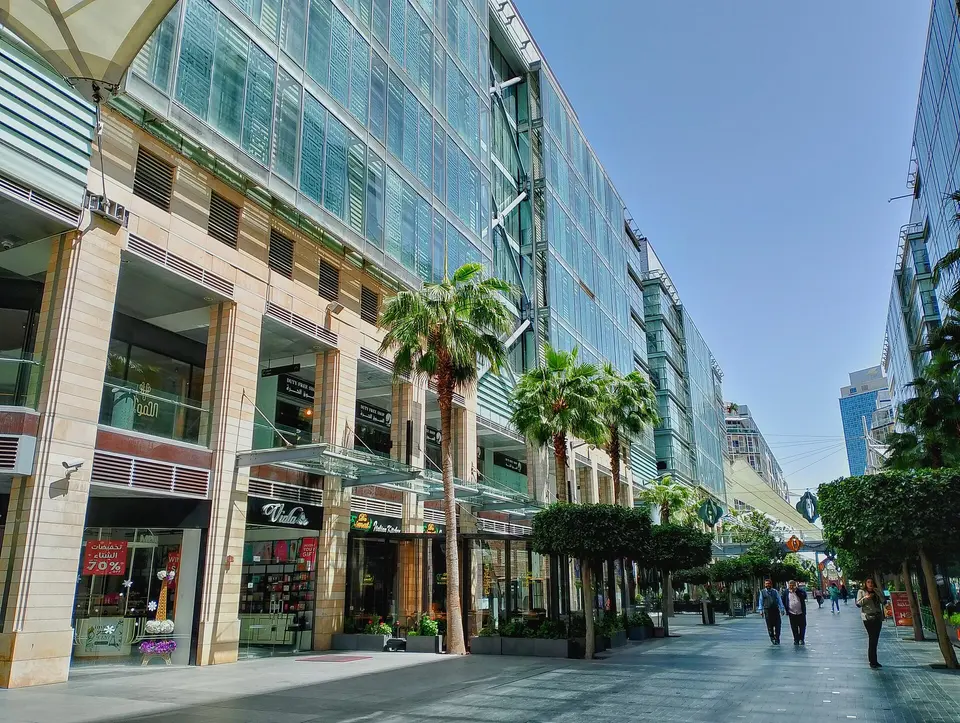
The new downtown, built since 2010 on the old army headquarters north of the King Abdullah Mosque, is a pedestrian boulevard of glass towers, a mall, the Rotana hotel, cafés and restaurants with terraces, fountains and a weekend market that is the capital's answer to the Gulf cities and the place its middle class goes in the evening, cleaner and calmer than Rainbow Street and with the country's only rooftop bars at height; the view back across the valley to the Citadel and the old hills from the terraces shows how far the city has come from the theatre in 60 years. It is a drink and a walk, not a monument.

  • Plan about 1 h 30 min
  • Free; restaurants and terraces open late; underground parking; taxi to Abdali

Day 3

Down to the Holy Land and the lowest place on earth: Madaba, Mount Nebo, the baptism site and the Dead Sea

Drive south-west to Madaba for the 6th-century mosaic map of the Holy Land on the church floor, up to Mount Nebo where Moses saw the promised land, down 1,200 metres to the baptism site of Jesus on the Jordan, and finish floating in the Dead Sea as the sun goes down behind the hills of Judea.

  • 4 sights
  • Transport between sights
12345 kmN
Stops in order, straight-line distancesDriving route in Google Maps ↗

Morning

Madaba and the mosaic map
Photo: Deror Avi, CC BY-SA 3.0
1Town and church

Madaba and the mosaic map

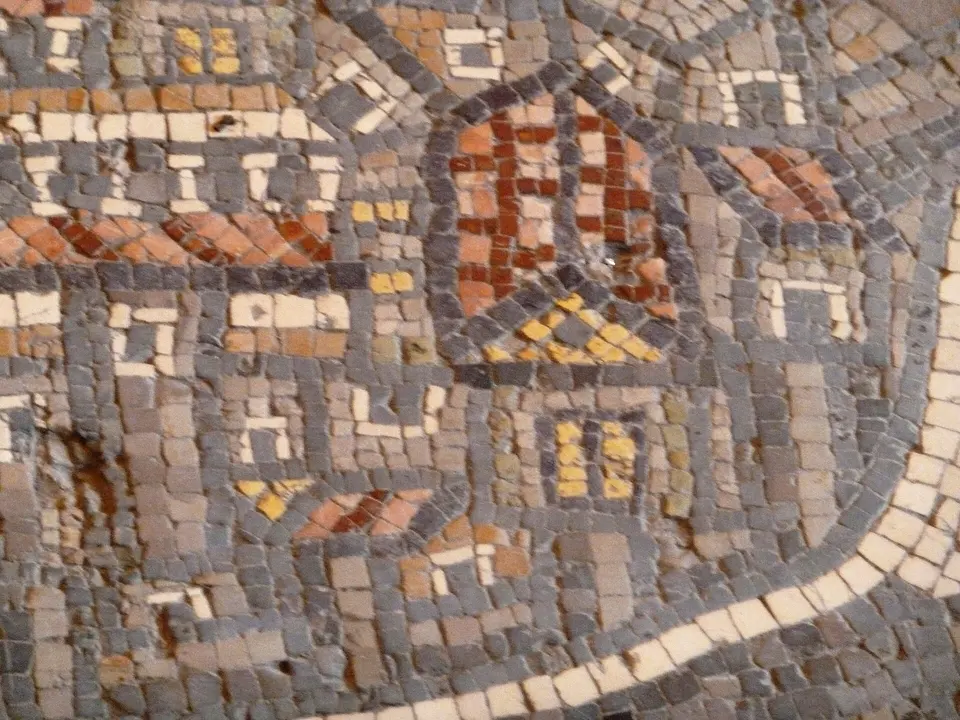
The City of Mosaics, a market town of 60,000 that is a third Christian, keeps on the floor of the Greek Orthodox church of St George the map of the Holy Land laid in the 6th century by Byzantine craftsmen, two million tesserae of which a quarter survive, showing Jerusalem with its colonnaded street and the Holy Sepulchre, the Jordan with fish turning back from the Dead Sea, Jericho's palms and the Nile delta, the oldest map of the region and the one that told the archaeologists where to dig; the archaeological park a few streets away has the mosaics of the Church of the Virgin and the Hippolytus hall, the Church of the Apostles its personification of the sea, and the town's workshops still make them. The church is open every day for a small fee; the park is on the Jordan Pass.

  • Plan about 2 h
  • St George's church daily about 8:00–18:00, small fee, not during Sunday services; archaeological park 3 JOD, on the Jordan Pass
Car 15 minutes west of Madaba on the King's Highway
Mount Nebo
Photo: Levi Clancy, CC0
2Biblical site

Mount Nebo

The 800-metre ridge west of Madaba where, in Deuteronomy, Moses looked at the promised land and died, has been a place of pilgrimage since the 4th century: the Franciscans excavated the Byzantine basilica of the monastery and reopened it in 2016 with its mosaic floors, hunting scenes and the memorial to Moses, and the terrace beside Fantoni's brazen-serpent cross looks down 1,200 metres over the Jordan valley, the Dead Sea and, in clear air, Jericho, the Mount of Olives and Bethlehem, which the sign helpfully labels; Pope John Paul II planted the olive tree in 2000. Morning has the clearest air; late afternoon the colour.

  • Plan about 1 h
  • Daily about 8:00–17:00 (later in summer); 3 JOD, on the Jordan Pass

Midday

LunchMadaba does the lunch: Haret Jdoudna, in a restored stone house near the church, serves mezze, grills and the town's mosaic-tiled courtyard, and the restaurants on the church square do simpler falafel and shawarma; the Mount Nebo road has a couple of buffet places for the tour buses that are best avoided. Eat before 13:00, since the baptism site's tours run to a timetable and the Dead Sea light goes at 17:00 in winter.

Afternoon

Car 40 minutes down the escarpment to the visitor centre at Bethany Beyond the Jordan; entry is only with the site's shuttle and guide, on set tour times
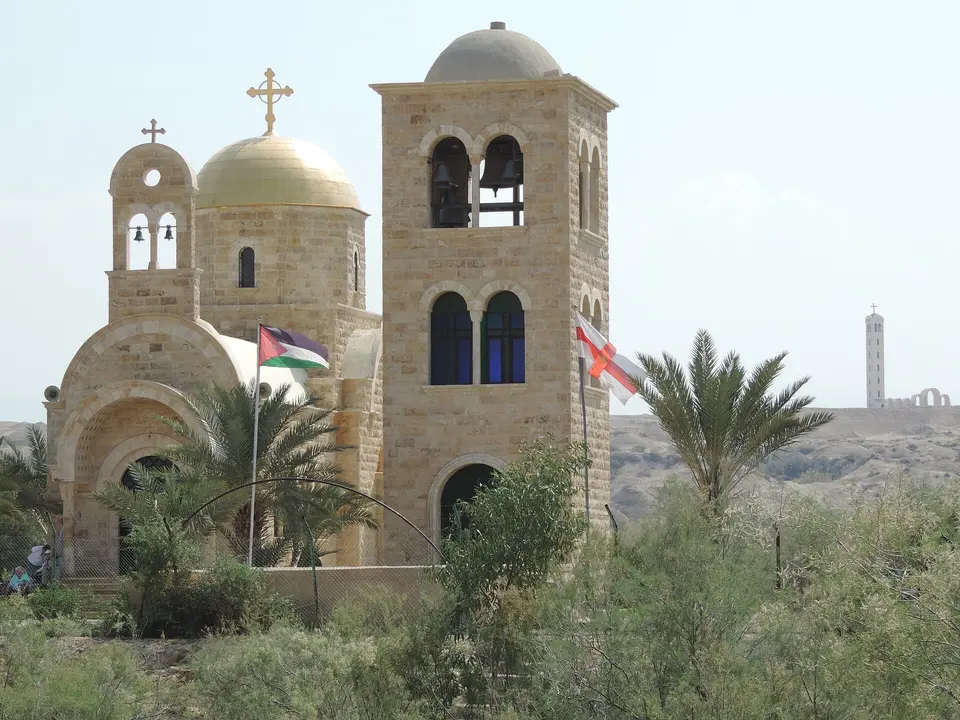
Baptism site (Bethany Beyond the Jordan)
Photo: Oyoyoy, CC BY-SA 4.0
3Archaeological and pilgrimage site

Baptism site (Bethany Beyond the Jordan)

Al-Maghtas, on the east bank of the Jordan 9 km north of the Dead Sea, is the place that the churches and the archaeologists agree is where John baptised Jesus, a World Heritage site of the remains of Byzantine and early Islamic churches, chapels, baptismal pools and a hermits' cave along the Wadi Kharrar, excavated since 1996 after the border minefields were cleared; the visit is by the site's own shuttle bus and guide, on tours through the day, ending at the river itself, a few metres of green water with the West Bank's baptism steps opposite, where pilgrims wade in white robes. Popes have come; so should the hat and the passport.

  • Plan about 2 h
  • Daily, guided tours only, about 8:00–16:00 in winter and to 18:00 in summer; 12 JOD, on the Jordan Pass; passport needed
Car 20 minutes south along the shore road to Amman Beach or a resort day pass; the drive back to Amman is about an hour
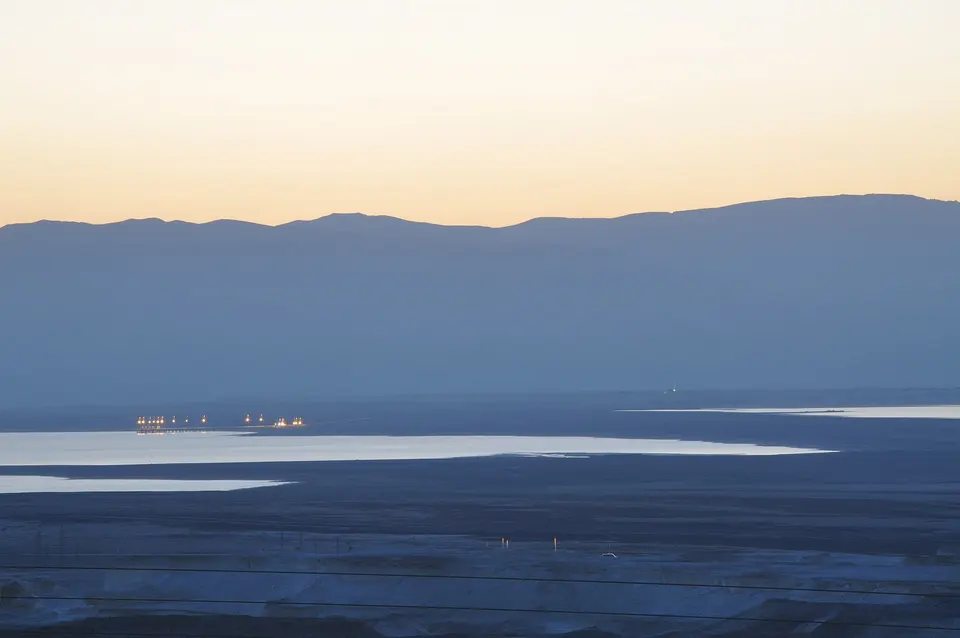
Dead Sea (Amman Beach)
Photo: Jorge Láscar, CC BY 2.0
4Salt lake

Dead Sea (Amman Beach)

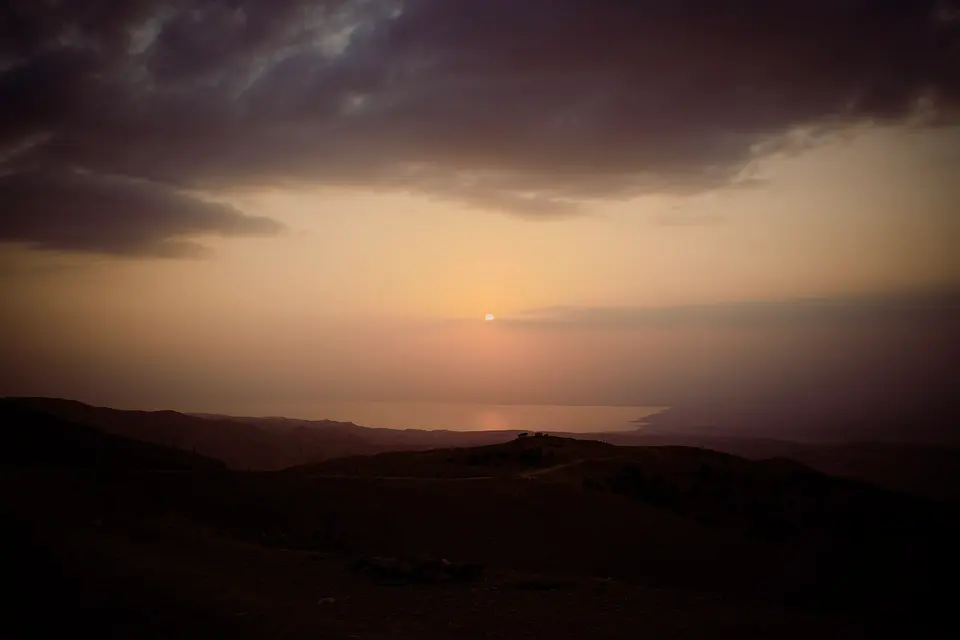
The lowest place on earth, 430 metres below sea level and falling a metre a year, is 50 km from the capital by a road that drops through the desert to a shore of salt crusts and mud, where the water is so dense with minerals that a body floats on it like cork and the far shore is the West Bank's hills turning pink at sunset; the public Amman Beach has showers, pools and a restaurant for a day fee, and the resorts along the northern shore sell day passes with their pools, spas and beach access, which is the comfortable way, since the sun is fierce and the fresh-water showers are the thing you will want most. Float for ten minutes, cover yourself in the mud, rinse, and drive back up in the dark.

  • Plan about 2 h 30 min
  • Amman Beach daily until sunset, about 25 JOD; resort day passes more; showers essential, no swimming, keep the water out of your eyes

Evening

DinnerShower the salt off at the beach, watch the sun set behind the far shore, and drive back up to Amman for dinner, an hour on the Dead Sea highway; the restaurants of Jabal al-Weibdeh and Rainbow Street serve until late, and the Wild Jordan Center's terrace over the downtown is the place for a last look at the lights on the hills.

Good to know in Amman

Tickets and opening days

  • The Jordan Pass costs 70 JOD (Jordan Wanderer, one day at Petra), 75 JOD (Jordan Explorer, two consecutive days at Petra) or 80 JOD (Jordan Expert, three consecutive days); all three give free entry to more than 40 attractions in Jordan and waive the tourist visa fee if the pass is bought before arrival and the stay is a minimum of two nights (three days).Source: Jordan Pass, prices · checked Sep 2026
  • The Jordan Pass's included attractions list the Amman Citadel, the Roman Theatre Amman, Jerash, Ajloun Castle and Umm Qays with hours of 8:00 to 17:00, the Jordan Archaeological Museum on the Citadel with 8:00 to 17:15, and the Madaba Archaeological Museum, Madaba Archaeological Park, Church of the Apostles and Burnt Palace among the Madaba sites.Source: Jordan Pass, included attractions · checked Sep 2026
  • The Jordan Tourism Board's entrance-fee list for non-Jordanian visitors gives 3 JOD for the Amman Citadel, 2 JOD for the Roman Theatre (with the Museum of Popular Life), 10 JOD for Jerash, 3 JOD for Ajloun Castle, 5 JOD for Umm Qais, 3 JOD for the Madaba Archaeological Park, 3 JOD for Mount Nebo, 12 JOD for Bethany (the Baptism Site) and 5 JOD for the Jordan Museum.Source: Jordan Tourism Board, entrance fees · checked Sep 2026

3 days in Amman: quick answers

Is 3 days enough for Amman?

Three days cover the city and the two classic day trips, north to the Roman and Ottoman hills and south-west to the biblical sites and the Dead Sea. Petra is the fourth day and the fifth, three hours south and worth a night; Wadi Rum is beyond it. From Amman itself, the Umayyad desert castles of Qasr Amra and Kharana to the east, the ruins of Umm Qais over the Sea of Galilee, the Hellenistic palace of Iraq al-Amir, the Royal Automobile Museum and the galleries of Jabal al-Weibdeh, Darat al Funun above all, fill any spare half day.

Which days should I plan around?

The Citadel is open about 8:00 to 19:00 in summer and 8:00 to 16:00 in winter, opening later on Fridays; the Roman theatre 8:00 to 20:00 in summer and to 17:00 in winter. The Jordan Museum is open on weekdays and Saturdays about 9:00 to 16:00, only in the afternoon on Fridays, and closed on Tuesdays. The King Abdullah Mosque admits visitors Saturday to Thursday mornings until early afternoon, not on Fridays. Jerash and the other ministry sites open at 8:00 and close around 19:00 in summer and 16:30 in winter. The baptism site runs guided tours from morning to late afternoon. Friday is the holy day and the souks are slow until noon; Ramadan changes hours everywhere.

How much do the tickets cost?

For non-Jordanians the Citadel with its archaeological museum is 3 JOD, the Roman Theatre with the folklore museums 2 JOD, Jerash 10 JOD, Ajloun Castle 3 JOD, Madaba's archaeological park 3 JOD, Mount Nebo 3 JOD, the baptism site 12 JOD and Umm Qais 5 JOD; the Jordan Museum is 5 JOD, the King Abdullah Mosque about 2 JOD, and St George's church in Madaba a small fee. The Jordan Pass, 70 JOD with one day at Petra, 75 with two and 80 with three, covers all of the ministry's sites above and waives the 40 JOD tourist visa if you buy it before arriving and stay at least three nights; it does not cover the Jordan Museum or the mosque. The Dead Sea's Amman Beach charges around 25 JOD and the resort day passes more.

How do I get around?

In the city by taxi, metered and cheap, or the Careem and Uber apps, since the hills defeat walking between districts; the Amman Bus and the new BRT lines help on the main roads. For the day trips, a hired car from the airport is the flexible choice, the roads are good and signed in English, and a taxi for the day is negotiated at about 60 to 90 JOD; public buses from the Tabarbour (North) station reach Jerash and Salt, and from the South station Madaba, but not Ajloun's castle, Nebo, the baptism site or the beach in any useful way. The airport is 35 km south, 45 minutes by the Sariyah airport bus or taxi.

What should I know about the Dead Sea and the baptism site?

The Dead Sea is 430 metres below sea level and ten times saltier than the ocean: you float without trying, you do not swim, you keep the water out of your eyes and off any cut, you stay in for ten minutes at a time, and you rinse in the fresh-water showers that the beach and the resorts provide, which is why a resort day pass with pools is worth the money over the public beach; the mud is free. The baptism site, Bethany Beyond the Jordan, is a military border zone visited only on the site's own shuttle with a guide, on tours through the day, to the excavated churches and the river itself, where the far bank is the West Bank; dress modestly and carry your passport.

How much walking is this itinerary?

About 6 km on day one, most of it downhill from the citadel through the downtown, with the stairs up to Rainbow Street at the end; about 6 km on day two, with 3 km inside Jerash on Roman paving and the climbs of Ajloun's castle and Salt's stairways; and about 3 km on day three across the mosaic sites and the baptism trail, with the driving doing the rest. The sun is strong at every site and the shade is rare, so a hat and water matter more than the distances.

Other Amman itineraries

Keep exploring

Where this connects

THE TRIPWOA APP

Go somewhere.
Make it yours.

Build days around what you love. Follow your route, find your next stop and keep the moments along the way.

Get it on Google PlayAvailable for Android
Free to start
Tripwoa home with a Paris trip and nearby places to explore
Tripwoa day plan for New York with a route map and Times Square stop

A day that feels like you.

Sources and method

Places and coordinates: Wikidata and Tripwoa's open-data place catalog (Overture Maps Foundation, © OpenStreetMap contributors). Photos: Wikimedia Commons, credited on each image. Practical rules: the official sources linked in each note, checked in September 2026.

How this plan was made: Tripwoa's planner drafted the day order from real coordinates and typical visit times. Each stop was then reviewed, reordered where needed and rewritten with AI assistance. Walking distances are straight-line estimates, so allow a little extra time on real streets.