3-day itinerary · India

3 Days in Bengaluru

A plan that walks the government quarter and its park on the first day, starts the second before dawn at the wholesale flower market, and gives the third to the hill north of the city. Official 2026 hours and ticket rules are in the stops.

  • 3days
  • 14sights
  • 0.0 kmon foot between sights

Updated 13 September 2026 · 1 official sources checked · report an error

Nandi Hills
Photo: Sri chakra pranav, CC BY-SA 4.0

Cubbon Park and the granite legislature, then the Pete and Lalbagh, then sunrise at Nandi Hills

Bengaluru is the capital of Karnataka and a metropolitan area of well over thirteen million, sitting at about 920 metres on the Deccan plateau, which is the reason its climate is mild enough that the British moved their cantonment here in 1809 and never entirely left. Kempe Gowda I founded it in 1537 as a walled market town of parallel streets, the Pete, and that grid is still legible south-west of the centre. Hyder Ali and Tipu Sultan rebuilt the fort and laid out the gardens; the Wodeyars of Mysore built the palace; and from the mid-1980s, when Texas Instruments opened an office and Infosys and Wipro grew up around it, the city became the centre of India's software industry and doubled, then doubled again. The result is a place of enormous energy and genuinely bad traffic where the old and the new sit a few kilometres apart and rarely mix.

At a glance

Ways to use these days

If it rains
5 of the stops are indoors — Visvesvaraya Industrial and Technological Museum · Tipu Sultan's Summer Palace · Bull Temple (Dodda Basavana Gudi)
Outdoors
Cubbon Park · Lalbagh Botanical Garden · Sankey Tank
Lightest day on foot
Day 1 — 1.3 km between stops
Most walking
Day 3 — 52.3 km

Day 1

The government quarter and Cubbon Park: granite, red brick and six thousand trees

Start with the two buildings that argue with each other across a road, walk the old park between them, spend the middle of the day in the science museum standing inside it, and finish on a terrace above Vittal Mallya Road.

  • 5 sights
  • Transport between sights
12345250 mN
Stops in order, straight-line distancesWalking route in Google Maps ↗

Morning

Vidhana Soudha
Photo: DeepanjanGhosh, CC BY-SA 4.0
1Legislative building

Vidhana Soudha

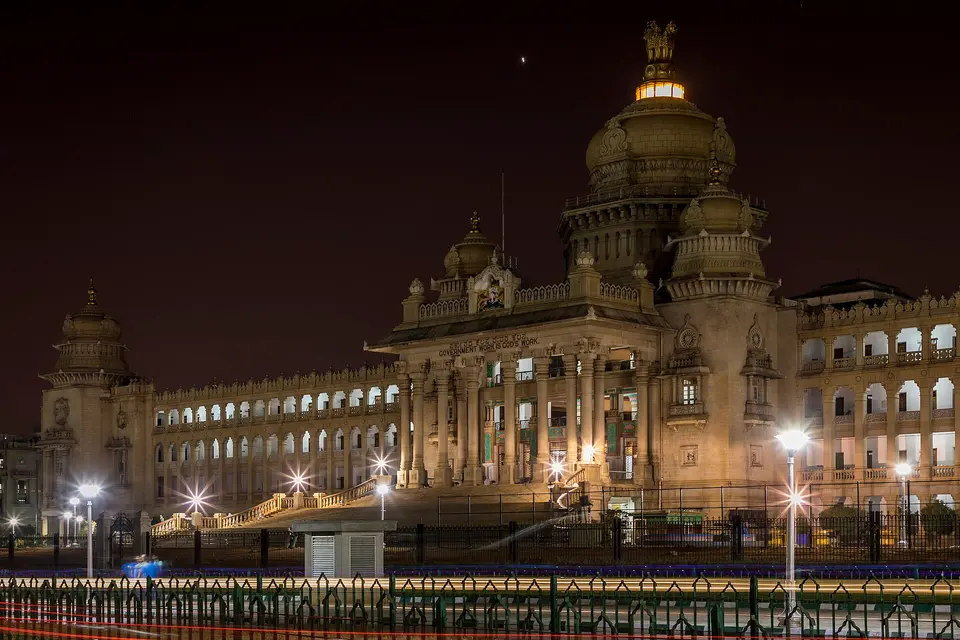
Karnataka's legislature and secretariat, and the largest state legislative building in India: 210 metres long, four storeys, entirely faced in Bangalore granite, and built between 1951 and 1956 on the insistence of Chief Minister Kengal Hanumanthaiah, who wanted something that looked Indian rather than colonial after a European tour left him unimpressed. The style has been called Neo-Dravidian: temple cornices, carved pillars and a central dome on a stepped base, all at a scale that makes the British-era buildings across the road look like outbuildings. Over the entrance a line reads Government Work is God's Work. The interior is not generally open to visitors.
  • Plan about 45 min
  • Seen from the outside; entering requires official permission and the building is closed to casual visitors. It is usually floodlit on Sunday evenings and public holidays, which is when most people come to photograph it
250 m south, three minutes on foot across the road
Attara Kacheri (Karnataka High Court)
Photo: Rehman Abubakr, CC BY-SA 4.0
2Historic building

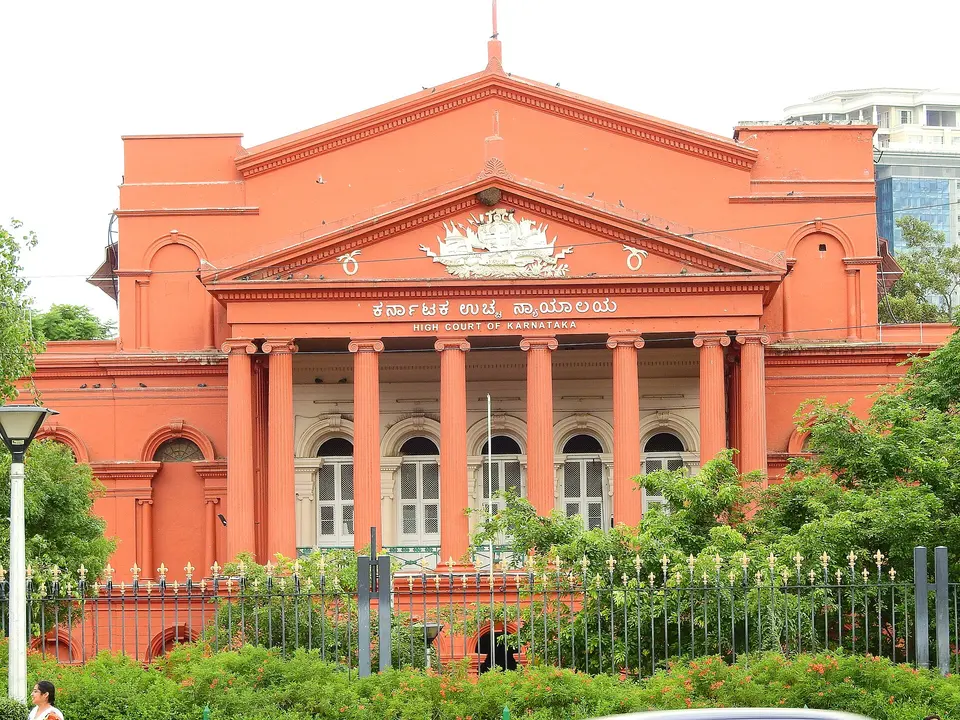
Attara Kacheri (Karnataka High Court)

A two-storey neoclassical block of the 1860s painted a deep brick red, with Tuscan and Corinthian colonnades running the length of both floors, facing the Vidhana Soudha across a road that separates two ideas of what a public building should be. The name means eighteen offices, from the departments of the old Mysore government that moved in. It has housed the High Court of Karnataka since 1956. In the early 1980s it was scheduled for demolition to make way for an extension of the Vidhana Soudha, and survived after a public campaign and court proceedings — an early and unusual win for heritage conservation in an Indian city.

  • Plan about 30 min
  • An operating court, so the interior is not a visitor attraction; the facade is best from the Cubbon Park side in the morning light. The park path passes directly in front of it
Immediately behind the court; the park path starts at the building
Cubbon Park
Photo: N. Vivekananthamoorthy, CC BY 4.0
3Park

Cubbon Park

About 120 hectares of old trees in the middle of the city, laid out in 1870 by Richard Sankey and officially named Sri Chamarajendra Park since 1927, though nobody calls it that. Around 6,000 trees, many of them planted in the nineteenth century, stand over lawns and a bandstand; the State Central Library occupies the red Seshadri Iyer Memorial Hall; the Attara Kacheri, the Government Museum and the technological museum all sit inside the boundary. On Sundays and public holidays the internal roads are usually closed to traffic and the park fills with runners, dog walkers, chess players and groups practising everything from tai chi to theatre.

  • Plan about 1 h 15 min
  • Free and open daily; the park is closed to vehicles on Sundays and public holidays, which is the best time to walk it. The Cubbon Park and Dr. B. R. Ambedkar metro stations are at either end

Midday

LunchBengaluru's proper breakfast is a South Indian one and the city takes it seriously: crisp masala dosa, idli, vada and a tumbler of filter coffee at places that have been doing the same four things since the 1920s. MTR near Lalbagh and Vidyarthi Bhavan in Gandhi Bazaar are the famous ones and both have queues; Airlines Hotel on Lavelle Road serves the same under trees in a car park. For lunch nearer the park, the Andhra meals houses on Residency Road serve unlimited rice, and they mean unlimited.

Afternoon

600 m east inside the park, about eight minutes on foot
Visvesvaraya Industrial and Technological Museum
Photo: Gpkp, CC BY-SA 4.0
4Science museum

Visvesvaraya Industrial and Technological Museum

Opened by Nehru in 1962 in memory of Sir M. Visvesvaraya, the engineer who built the Krishnarajasagar dam and served as Diwan of Mysore, and now run by the National Council of Science Museums under the Ministry of Culture. It is a hands-on museum of the old school and better for it: an engine hall with working cutaways, the Electrotechnic gallery that opened in 1965, a space technology floor, a dinosaur enclave, a full-size replica of the Wright brothers' aeroplane, and a Fun Science gallery of levers, mirrors and pulleys that children queue for. Standing inside Cubbon Park, it is a natural pairing with the walk.

  • Plan about 2 h
  • Open daily 09:30 to 18:00, and closed only on Deepavali and Ganesha Chaturthi; the museum warns that online tickets are sold exclusively through its own website, so book there or pay at the gate

Evening

1.2 km south-west, about fifteen minutes on foot or five by auto
UB City
Photo: Gpkp, CC BY-SA 4.0
5Shopping and dining complex

UB City

Four towers on Vittal Mallya Road built on the old United Breweries headquarters and opened in 2008 as the city's first luxury mall, which tells you a good deal about how quickly Bengaluru's money arrived. The Collection on the lower floors holds the international brands; the fourth-floor terrace is a run of restaurants and bars with tables outdoors under the towers, and it is one of the few places in central Bengaluru where you can sit high up in the open air with a view. It is not a monument and does not pretend to be. It is a reasonable place to end a day of walking, and the people-watching is the point.

  • Plan about 1 h 15 min
  • Free to enter, with the shops open roughly 11:00 to 21:00 and the restaurants later; the terrace level is the reason to come and is busiest from about 19:00 on Fridays and Saturdays

Day 2

The old Pete: a flower market before dawn, a teak palace and a granite bull

Get up early for the wholesale flower market, walk to what is left of the fort and to Tipu Sultan's summer palace beside it, then head south to the Nandi bull at Basavanagudi and end the day in Lalbagh.

  • 5 sights
  • Transport between sights
123451 kmN
Stops in order, straight-line distancesRoute in Google Maps ↗

Morning

Krishna Rajendra Market
Photo: Heather Cowper, CC BY 2.0
1Market

Krishna Rajendra Market

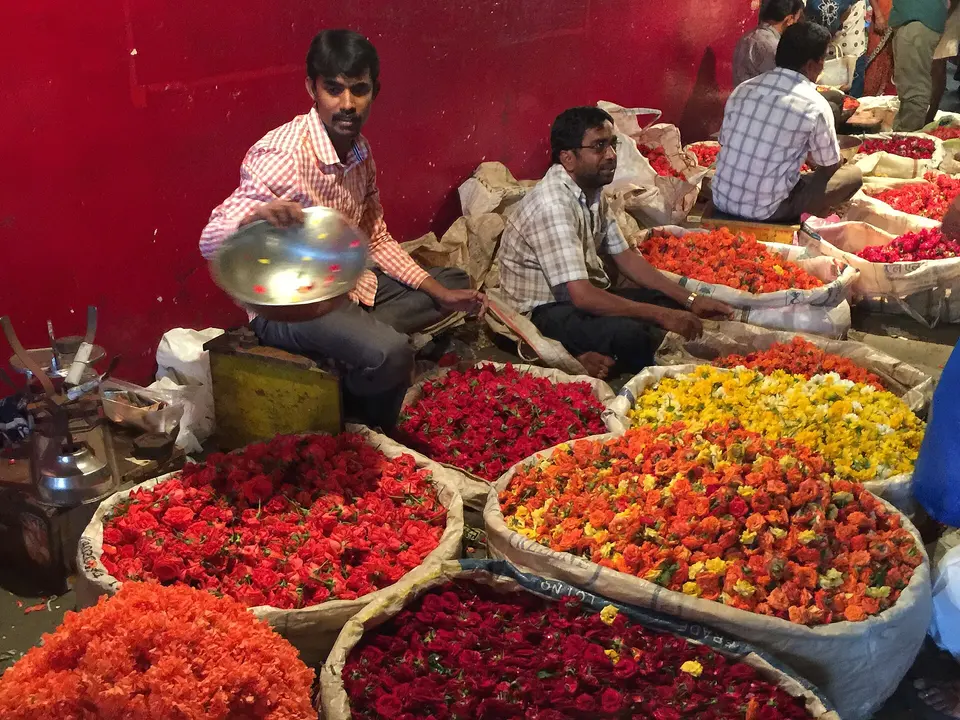
The city's wholesale market, on ground that was the battlefield when Lord Cornwallis stormed Bangalore in 1791, and by several accounts the largest flower market in Asia. What that means in practice: before dawn, lorries of roses, marigolds, jasmine and tuberose arrive from Hosur and Chikkaballapur, and by six o'clock a couple of thousand people are sitting in the basement and along the pavements stringing garlands at extraordinary speed. Above them the market runs on four levels: vegetables and fruit below, dry goods on the ground floor, tools and machine parts above. A concrete building of the 1990s covers most of it, with fragments of the British-era market hall still standing at the back.

  • Plan about 1 h 15 min
  • Free; go between 06:00 and 09:00, when the flower trade is at full pitch and the heat has not arrived. It is crowded, wet underfoot and genuinely busy — wear shoes you do not mind and watch for handcarts
400 m south, five minutes on foot
Bangalore Fort
Photo: Pavithrah, CC BY-SA 3.0
2Fort

Bangalore Fort

Kempe Gowda I built a mud fort here in 1537 and it is the reason the city stands where it does. Hyder Ali rebuilt it in stone around 1761 with an oval plan and a dozen gates, and on 21 March 1791 Lord Cornwallis breached it in the Third Anglo-Mysore War after a fight that cost both sides heavily. Almost all of it has since been built over: what survives is the Delhi Gate, two bastions and a stretch of wall with the original Islamic-era arches and a small Ganapathi temple inside, standing behind a hospital in a working part of the old city. It is protected by the Archaeological Survey of India and it takes half an hour.

  • Plan about 45 min
  • A ticketed Archaeological Survey of India monument, generally open daily from around 08:30 to 17:30; it is a two-minute walk from Tipu Sultan's Summer Palace and the two are always visited together
200 m further south, two minutes on foot
Tipu Sultan's Summer Palace
Photo: Pinakpani, CC BY-SA 4.0
3Palace

Tipu Sultan's Summer Palace

Begun by Hyder Ali and finished by his son in 1791, a two-storey pavilion built almost entirely of teak, with fluted columns, cusped arches, balconies on three sides and floral paintwork in the recesses of the ceilings — the same vocabulary as the Daria Daulat Bagh at Srirangapatna, on a smaller scale. Tipu Sultan called it Rashk-e-Jannat, the envy of heaven, and used it as a summer residence. After his death at Srirangapatna in 1799 the British ran their administration out of it until 1868, which is the reason it survived. A small museum on the ground floor covers Tipu, his rockets and the wars with the East India Company.

  • Plan about 45 min
  • A ticketed Archaeological Survey of India monument, generally open daily from around 08:30 to 17:30, with separate rates for Indian and foreign visitors; the light inside is best in the morning

Midday

LunchThis is the right part of the city for a military hotel — the old Bengaluru name for a non-vegetarian eating house — and for donne biryani served in a stitched dry-leaf bowl. In Gandhi Bazaar and VV Puram, five minutes from the Bull Temple, the evening version is Thindi Beedi, a street of stalls doing holige, akki roti, dosas and congress kadalekai until late; it is one of the better street-food runs in India and costs almost nothing.

Afternoon

2.5 km south, about ten minutes by auto
Bull Temple (Dodda Basavana Gudi)
Photo: Smuconlaw, CC BY-SA 3.0
4Temple

Bull Temple (Dodda Basavana Gudi)

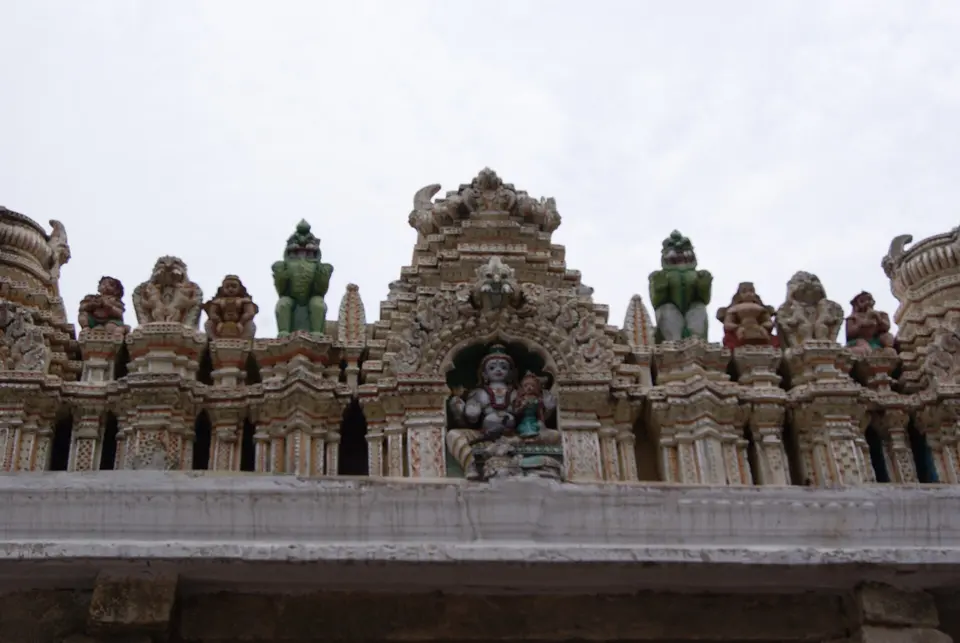
A single granite boulder carved into a Nandi bull about 4.6 metres tall and 6 metres long, sitting in a low Vijayanagara-style shrine that Kempe Gowda I is said to have built in the sixteenth century. The stone is darkened and oiled from centuries of offerings and the scale of it in a small dim chamber is the surprise. The story locals tell is that a bull was raiding the groundnut fields until the farmers built the shrine, and that the Kadlekai Parishe — the groundnut fair held on the streets around the temple each November or December — is the bargain being kept. Bugle Rock park with its Kempe Gowda watchtower is next door.

  • Plan about 45 min
  • Free, open through the day with a midday break at many Hindu temples, and shoes come off at the door; the neighbouring Dodda Ganapathi temple and Bugle Rock are both a two-minute walk and worth adding

Evening

2.5 km east, about ten minutes by auto; the west gate at Basavanagudi is the nearest entrance
Lalbagh Botanical Garden
Photo: Chidambara, CC BY-SA 4.0
5Botanical garden

Lalbagh Botanical Garden

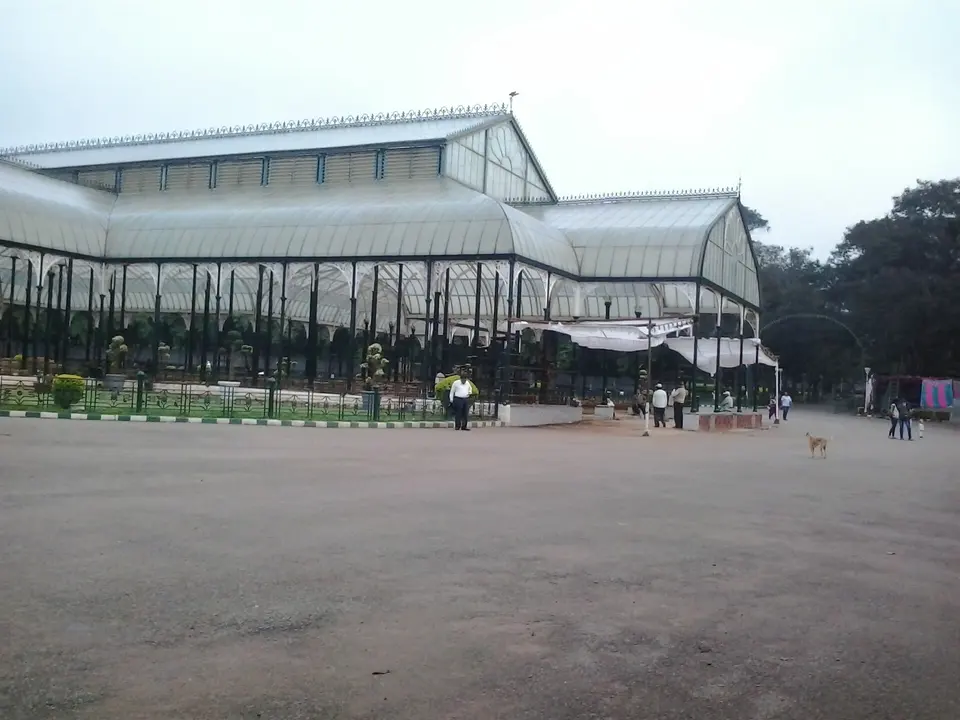
Hyder Ali laid out a Mughal-style garden here around 1760 and Tipu Sultan sent for plants from as far as Persia and Mauritius to fill it; the British turned it into a botanical garden and it now covers about 97 hectares with something like 1,800 species. The Glass House at the centre, modelled on the Crystal Palace and built in 1889 for a visit by Prince Albert Victor, holds a flower show every Republic Day and Independence Day that draws enormous crowds. On the rock outcrop in the south-east corner stands one of Kempe Gowda's four watchtowers; the rock itself is peninsular gneiss of about 3,000 million years and a declared national geological monument.

  • Plan about 2 h
  • A small entry fee, open daily from early morning to around 19:00, with free entry usually in the first and last hours for walkers; the flower shows in late January and mid-August are worth planning around or avoiding, depending on your tolerance for crowds

Day 3

North to the hills at dawn, then a temple, a palace and a reservoir at dusk

Leave the city in the dark for the sunrise above the clouds at Nandi Hills, come back through Rajajinagar to one of the largest Krishna temples in the world, and spend the afternoon in a Tudor Revival palace before walking a lake at sunset.

  • 4 sights
  • Transport between sights
12345 kmN
Stops in order, straight-line distancesDriving route in Google Maps ↗

Morning

Nandi Hills
Photo: Sri chakra pranav, CC BY-SA 4.0
1Hill station

Nandi Hills

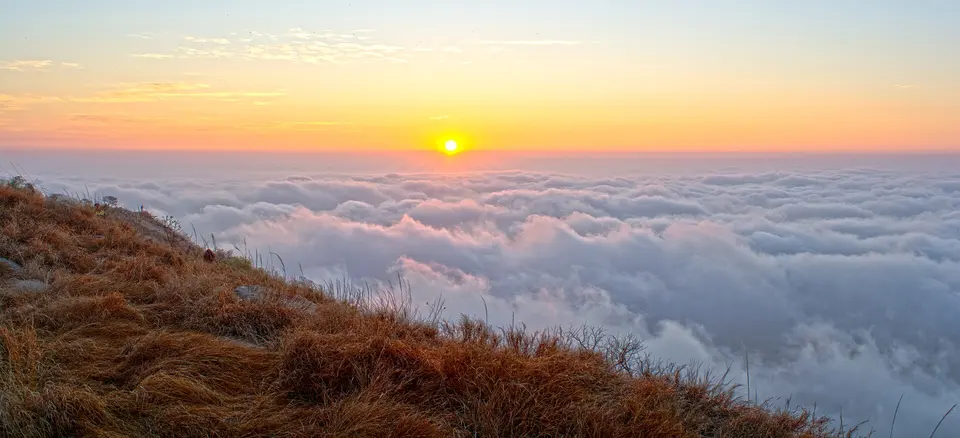
A granite hill about 60 km north of the city rising to roughly 1,480 metres, reached by a road of around forty hairpin bends, and the standard Bengaluru answer to the question of where to watch a sunrise. On a clear winter morning the valley below fills with cloud and the hill stands out of it. Tipu Sultan used the fort on top as a summer retreat and there is a sheer drop on the western side that everyone still calls Tipu's Drop; the ninth-century Bhoga Nandeeshwara temple at the foot of the hill is older than anything in the city and worth the extra twenty minutes. Amrita Sarovar, a small tank near the summit, is said never to run dry.

  • Plan about 3 h 30 min
  • Gates open before dawn, around 06:00, with a small entry charge and a separate vehicle fee; leave the city by 04:30 for the sunrise, go on a weekday if you can, and expect the car park to be full by 06:30 at weekends

Midday

LunchNandi Hills has a canteen and not much else, so eat properly back in the city. Malleswaram, between the temple and Sankey Tank, is the place: CTR on Margosa Road for the benne masala dosa, Halli Mane for a Karnataka thali, and the Eighth Cross market for everything else. If you would rather have a beer, Bengaluru is India's craft brewing capital and the taprooms cluster on Church Street and in Indiranagar, both a short drive away.

Afternoon

50 km south back into the city, about 1 hour 15 minutes by car to Rajajinagar
ISKCON Sri Radha Krishna Temple
Photo: Svpdasa, CC BY 3.0
2Temple

ISKCON Sri Radha Krishna Temple

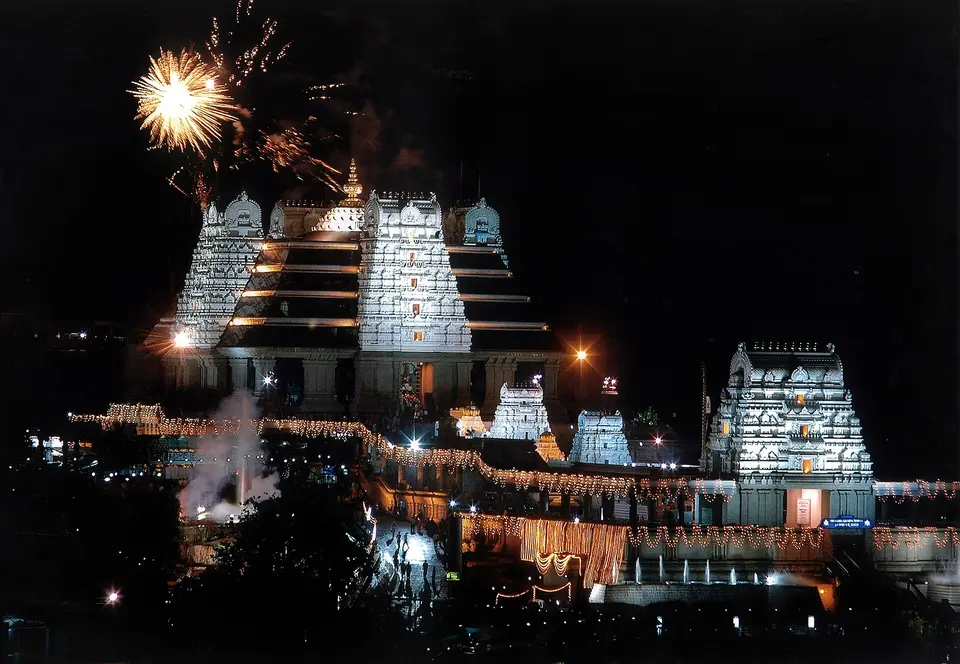
Opened in 1997 on a rocky outcrop in Rajajinagar that the temple calls Hare Krishna Hill, and one of the largest Krishna temples anywhere: a glass-and-steel shell over a traditional granite sanctum, with a gold-plated flag mast and gopuram and a long ramped approach that climbs past shops and shrines before it delivers you into the main hall. Whatever you make of the architecture, the operation behind it is remarkable — the Akshaya Patra Foundation, which grew out of this temple in 2000, now cooks and delivers free midday meals to well over a million schoolchildren a day from industrial kitchens across India.

  • Plan about 1 h 15 min
  • Free, open in the morning and again from late afternoon into the evening with a long midday closure at the sanctum; shoes and bags are left at a free counter, phones are usually not allowed inside, and the evening aarti is the time to come
5 km south-east, about 20 minutes by car in traffic
Bangalore Palace
Photo: Basavaraj M, CC BY-SA 4.0
3Palace

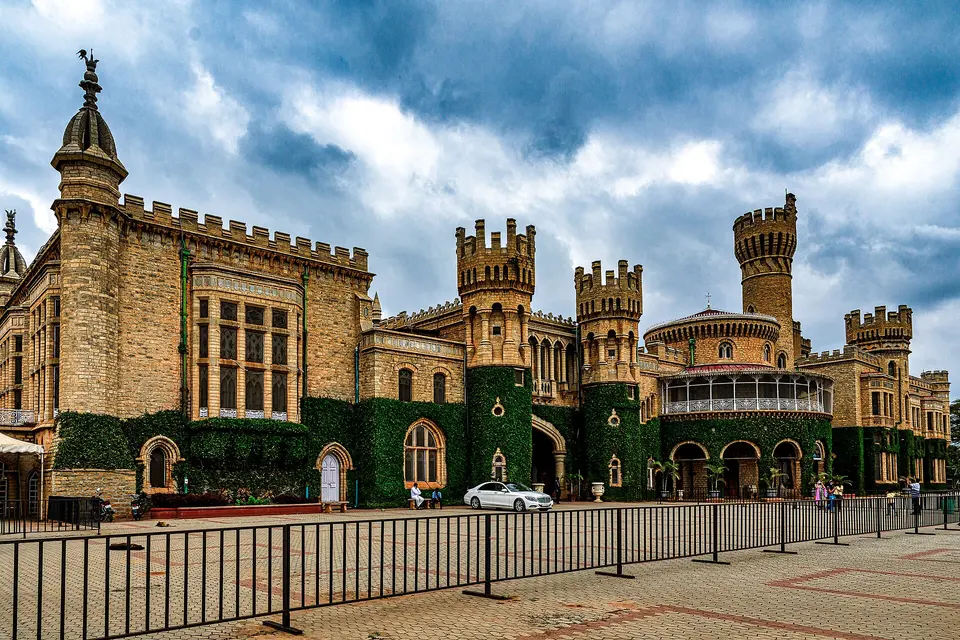
Bangalore Palace

Built in 1878 by the Reverend Garrett, principal of the Central High School, and bought soon after by the Wodeyar rulers of Mysore, who lived in it and whose descendants still own it. The model was Windsor Castle and the result is Tudor Revival taken seriously: fortified towers, battlements, turrets, and inside a ballroom with a sprung floor, Gothic windows in coloured glass, carved wood, portraits and hunting trophies and a great deal of Victorian and Edwardian furniture. The grounds, the Palace Grounds, are the city's main venue for concerts and weddings, which means the palace itself can be surrounded by scaffolding and stage trucks.

  • Plan about 1 h 30 min
  • Ticketed, generally open daily 10:00 to 17:30, with a separate and not small charge for taking photographs; the price is markedly higher for foreign visitors and an audio guide is included

Evening

3 km west, about 15 minutes by car through Malleswaram
Sankey Tank
Photo: Naphisharity Syiem, CC BY-SA 4.0
4Lake

Sankey Tank

Colonel Richard Sankey, then chief engineer of Mysore, had this reservoir dug in 1882 to supply a city that had outgrown its older tanks, and it is the same man who laid out Cubbon Park twelve years earlier. About fifteen hectares of water between Malleswaram and Sadashivanagar, with a walking path around the edge, a small island with trees, boating in the afternoons and a swimming pool at one end. It is not spectacular, and that is rather the point: it is where the neighbourhood walks at dusk, and after a day that started at Nandi Hills it is the right last stop before dinner in Malleswaram.

  • Plan about 1 h
  • Free and open daily from early morning to around 20:00; the west side catches the sunset, and Malleswaram's old restaurants and the eighth-cross market are a ten-minute drive away

Good to know in Bengaluru

Bengaluru: hours and tickets

3 days in Bengaluru: quick answers

Is 3 days enough for Bengaluru?

Three days covers the city's monuments, its markets and one trip out of it, which is about right. Bengaluru is not a city of unmissable sights — its pleasures are a park at seven in the morning, a dosa queue, a brewery at nine at night — and it rewards a slower pace more than a longer list. What three days will not reach is Mysore and Srirangapatna, three hours south and the natural extension if Tipu Sultan interests you, or Hampi, which is an overnight train away and deserves two days of its own.

What is the best time of year to visit Bengaluru?

October to February. At 920 metres the city is mild all year — daytime highs sit between 27°C and 34°C, and the reason everyone calls it pleasant is the evenings — but the winter months are dry, clear and cool enough for a jacket after dark, and they are also when Nandi Hills gives the cloud inversion at sunrise. The monsoon runs June to September and brings heavy evening downpours that flood the roads, and March to May is the hot stretch, though still nothing like the plains.

How do you get around Bengaluru?

Traffic is the city's defining problem and a five-kilometre journey can take an hour at the wrong time. Namma Metro is the way to beat it where it goes: the Purple and Green lines cross at Majestic and between them reach Cubbon Park, Vidhana Soudha, KR Market, MG Road and Indiranagar. Autorickshaws are everywhere and the apps are easier than negotiating. What works best is planning geographically, as these three days do, so that you move between neighbourhoods once or twice a day rather than criss-crossing the city.

How much does Bengaluru cost per day?

Less than almost any city of its size. A hostel bed runs 600 to 1,200 rupees, a good mid-range hotel 4,000 to 8,000, and the international business hotels a great deal more. Breakfast at a classic dosa house is under 200 rupees and a full South Indian meal rarely passes 400; a craft-beer evening in Indiranagar will cost more than either. Entry fees are small — the technological museum charges 100 rupees for general visitors — with the exception of Bangalore Palace, which is priced for tourists and charges extra for a camera.

Is Nandi Hills worth the early start?

On a clear morning between November and February, yes, and it is the single best thing you can do with a day here. The hill rises to about 1,480 metres and on the right day the valley below it fills with cloud that the sun comes up through. It needs commitment: a 04:30 departure, a car or taxi rather than public transport, and a weekday if you want space at the viewpoint. If the forecast is poor, swap it for Bannerghatta National Park to the south or a day in Mysore.

Do you need to dress a certain way for the temples?

Shoulders and knees covered is the standard expectation at the Bull Temple, the ISKCON temple and the smaller shrines in the old Pete, and shoes come off at the door of all of them, so slip-ons save time. The ISKCON temple runs a free shoe and bag counter and usually does not allow phones or cameras inside the sanctum. None of this applies to the parks, museums or the palace, and Bengaluru is otherwise the most relaxed of India's big cities about how visitors dress.

Other Bengaluru itineraries

Keep exploring

Where this connects

THE TRIPWOA APP

Go somewhere.
Make it yours.

Build days around what you love. Follow your route, find your next stop and keep the moments along the way.

Get it on Google PlayAvailable for Android
Free to start
Tripwoa home with a Paris trip and nearby places to explore
Tripwoa day plan for New York with a route map and Times Square stop

A day that feels like you.

Sources and method

Places and coordinates: Wikidata and Tripwoa's open-data place catalog (Overture Maps Foundation, © OpenStreetMap contributors). Photos: Wikimedia Commons, credited on each image. Practical rules: the official sources linked in each note, checked in September 2026.

How this plan was made: Tripwoa's planner drafted the day order from real coordinates and typical visit times. Each stop was then reviewed, reordered where needed and rewritten with AI assistance. Walking distances are straight-line estimates, so allow a little extra time on real streets.