3-day itinerary · Egypt

3 Days in Cairo

A realistic first-timer plan that spends day one at Giza, on the plateau early and in the Grand Egyptian Museum after lunch, with the Cairo Tower at sunset; day two in Islamic Cairo, from the Citadel down to Sultan Hassan, across to Al-Azhar Park and the mosque, and along Al-Muizz Street to the lanes of Khan el-Khalili; and day three in Coptic Cairo, the royal mummies at the National Museum of Egyptian Civilization and the old Egyptian Museum on Tahrir Square. Every stop comes with the distances, and the prices and hours the Ministry of Tourism and Antiquities publishes for 2026.

  • 3days
  • 16sights
  • 2.7 kmon foot between sights

Updated 12 September 2026 · 9 official sources checked · report an error

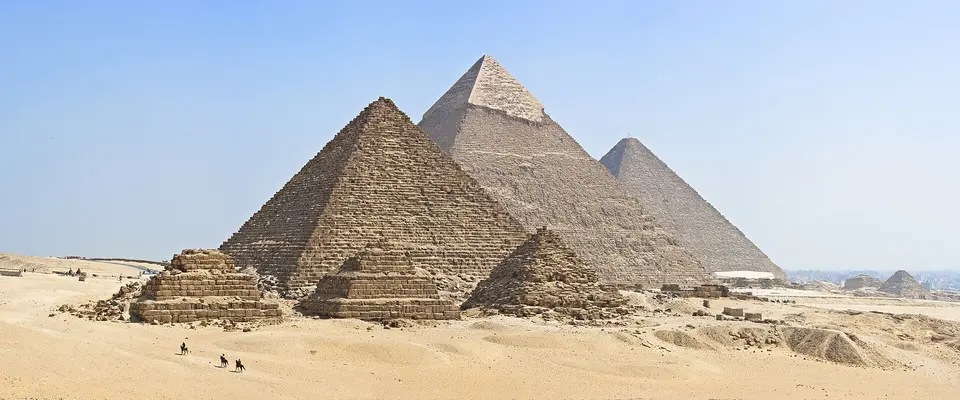
Pyramids of Giza
Photo: KennyOMG, CC BY-SA 4.0

Giza, then Islamic Cairo, then Coptic Cairo and the museums

Cairo's sights are far apart and its traffic is slow, so each day stays on one side of the city. Day one is Giza: the pyramids and the Sphinx at 8:00 before the heat and the buses, then the Grand Egyptian Museum, two kilometres away, for the afternoon, and the Cairo Tower for the sunset over the Nile. Day two is medieval Cairo on foot: the Citadel and the Muhammad Ali Mosque, the great Sultan Hassan mosque below it, the gardens of Al-Azhar Park, then Al-Azhar Mosque, Al-Muizz Street and dinner in Khan el-Khalili. Day three takes the metro to the churches of Coptic Cairo, sees the 22 royal mummies at the NMEC and finishes in the Egyptian Museum on Tahrir, with the Nile bridges at dusk. Everything is open daily; the timed tickets are for the Grand Egyptian Museum.

At a glance

Ways to use these days

If it rains
4 of the stops are indoors — Grand Egyptian Museum · Coptic Museum · National Museum of Egyptian Civilization
For the view
Cairo Tower
Lightest day on foot
Day 2 — 2.9 km between stops
Most walking
Day 1 — 14.8 km

Day 1

Giza: the pyramids, the Sphinx and the Grand Egyptian Museum

Be on the plateau when the gates open, walk from the Great Pyramid to the panorama point and down to the Sphinx, spend the afternoon with Tutankhamun's treasures in the Grand Egyptian Museum, and cross the city to the Cairo Tower for sunset over the Nile.

  • 4 sights
  • 480 m on foot
  • Longest walk 480 m
12342 kmN
Stops in order, straight-line distancesDriving route in Google Maps ↗

Morning

Pyramids of Giza
Photo: KennyOMG, CC BY-SA 4.0
1Archaeological site

Pyramids of Giza

The Great Pyramid of Khufu, 146 metres when it was finished around 2560 BC and the tallest building on earth for nearly four thousand years, stands with the pyramids of his son Khafre, which keeps its limestone casing at the summit, and his grandson Menkaure on the plateau at the western edge of the city. Enter by the Mena House gate at 8:00, walk round Khufu's base, take the road out to the panorama point where all three line up, and come down past Khafre's causeway to the Sphinx; the interior of the Great Pyramid is a separate, limited ticket. Camel touts are part of the landscape and take no for an answer.
  • Plan about 2 h 30 min
  • 8:00–16:00; 700 EGP plateau ticket, pyramid interiors extra; cards at the machines
480 m · about 8 min on foot
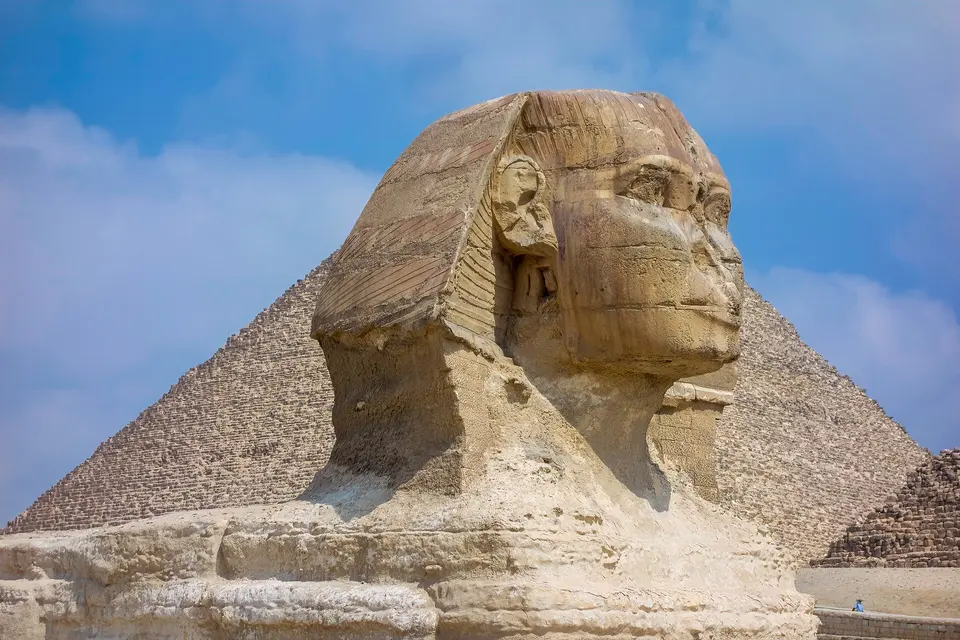
Great Sphinx of Giza
Photo: Petar Milošević, CC BY-SA 4.0
2Monument

Great Sphinx of Giza

Carved from the bedrock of the plateau in the reign of Khafre, 73 metres long and 20 metres high, the lion with a king's head guards the causeway to his pyramid; the granite valley temple beside it is where you walk in, and the viewing terrace in front is where the classic photograph with Khafre's pyramid behind is taken. The morning sun is on its face; by noon it is in shadow and in crowds.

  • Plan about 40 min
  • On the plateau ticket; exit through the Sphinx gate for the taxis to the museum

Midday

LunchThe restaurants along the Sphinx side of the plateau and the terraces of the Mena House hotel look straight at the pyramids; the Grand Egyptian Museum's own cafés and food hall are the quicker choice if you want to be inside by 13:00.

Afternoon

Taxi or ride-hailing from the Sphinx gate, about 10 minutes
Grand Egyptian Museum
Photo: Amr F.Nagy, Public domain
3Museum

Grand Egyptian Museum

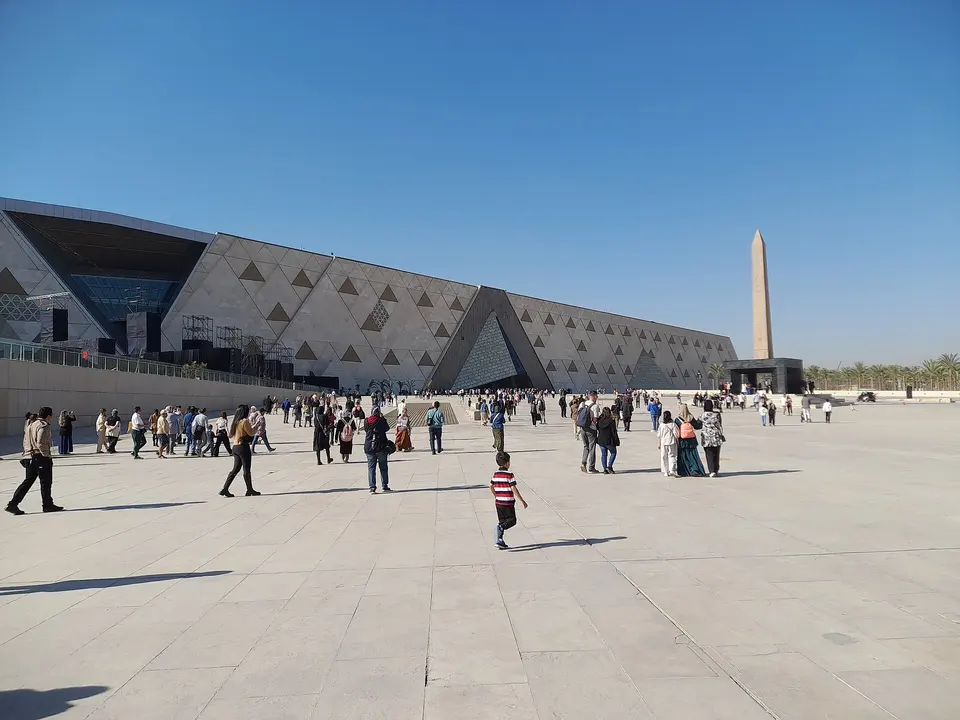
Opened in full in November 2025 on the edge of the plateau, the largest archaeological museum in the world puts the 11-metre colossus of Ramses II in its atrium, a grand staircase of statues climbing towards a window framing the pyramids, and, for the first time in one place, the entire treasure of Tutankhamun, more than five thousand objects including the gold mask and the three coffins. Khufu's 4,500-year-old cedar boats have their own hall. Book a timed slot, come after lunch when the morning groups have left, and allow three hours.

  • Plan about 3 h 30 min
  • Galleries 9:00–18:00, to 21:00 Wed and Sat; last entry an hour before; timed tickets at tickets.gem.eg

Evening

Taxi from Giza to Zamalek, 40–60 minutes in the afternoon traffic
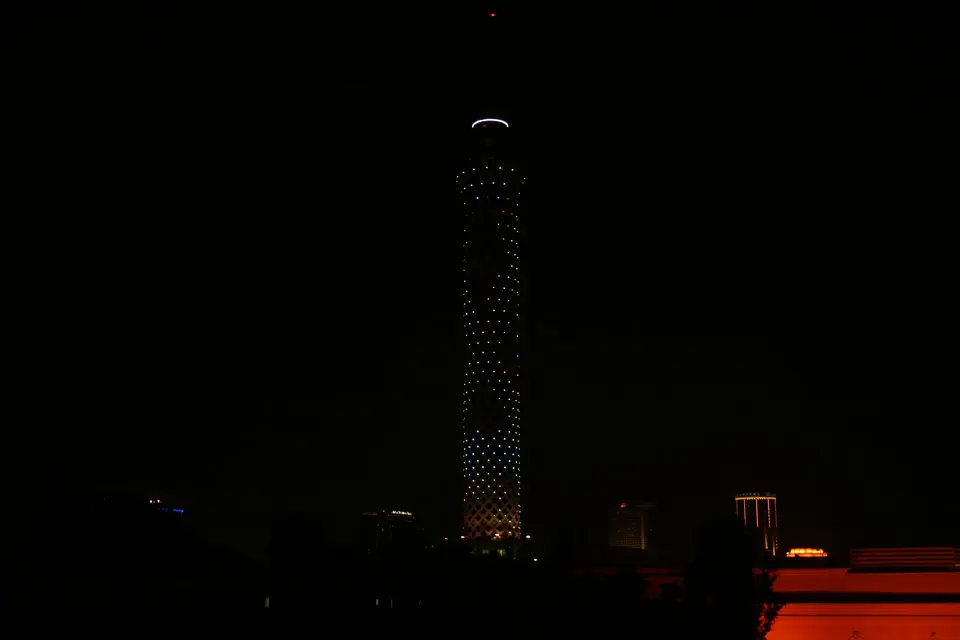
Cairo Tower
Photo: Diego Delso, CC BY-SA 3.0
4Observation tower

Cairo Tower

The 187-metre lattice tower of 1961, built to look like a lotus in bud, stands on Gezira island in the middle of the Nile and is the one place to see the whole city at once: the river and its bridges below, the downtown domes, the Citadel and the Muqattam cliffs to the east and, in clear weather, the pyramids on the western horizon. Time it for sunset, when the haze turns gold and the lights come on along the corniche.

  • Plan about 1 h
  • 350 EGP for foreign visitors; open into the night

Day 2

Islamic Cairo: the Citadel, Al-Azhar and Khan el-Khalili

Start on the Citadel's terrace in the Muhammad Ali Mosque, walk down to the Sultan Hassan mosque, cross to Al-Azhar Park for lunch with the view, then Al-Azhar Mosque, the Fatimid street of Al-Muizz and the bazaar of Khan el-Khalili after dark.

  • 6 sights
  • 1.7 km on foot
  • Longest walk 610 m
123456500 mN
Stops in order, straight-line distancesRoute in Google Maps ↗

Morning

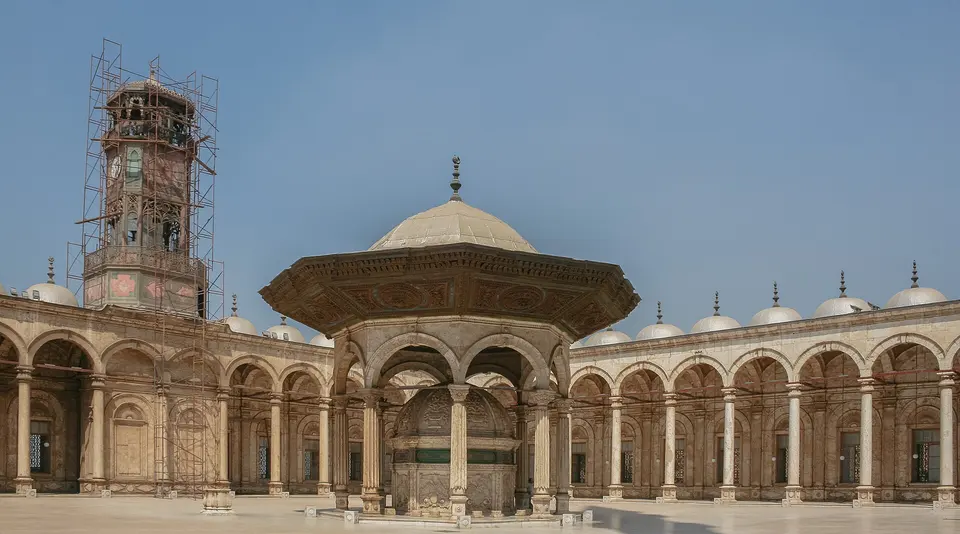
Citadel of Saladin and the Muhammad Ali Mosque
Photo: Diego Delso, CC BY-SA 3.0
1Fortress and mosque

Citadel of Saladin and the Muhammad Ali Mosque

Saladin began the fortress on the Muqattam spur in 1176 and Egypt was ruled from it for seven hundred years; what crowns it now is the Muhammad Ali Mosque of 1830–48, an Istanbul-style dome and two pencil minarets faced in alabaster, with a courtyard clock given by France in exchange for the Luxor obelisk. The terrace beside it looks over the whole medieval city to the pyramids. The ticket also covers the 1318 mosque of al-Nasir Muhammad, the Sulayman Pasha mosque and the police and military museums.

  • Plan about 2 h
  • 8:00–17:00 daily; 550 EGP, one ticket for everything inside the walls
530 m · about 8 min on foot
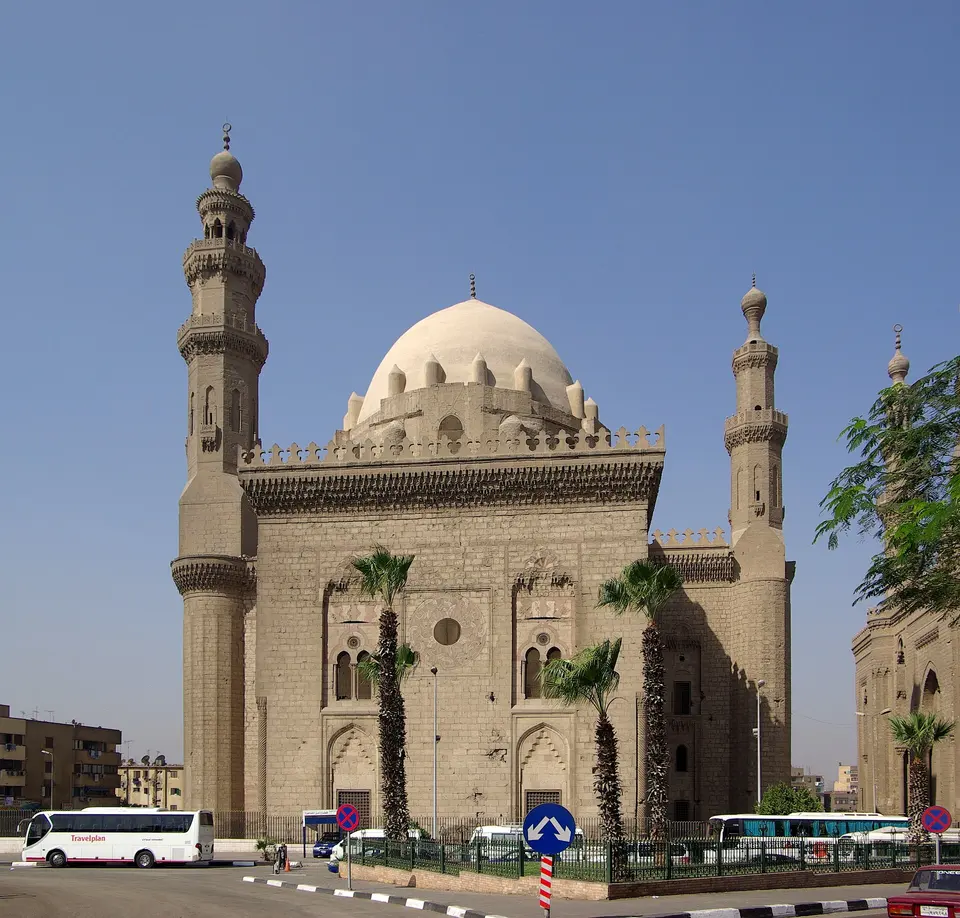
Mosque-Madrasa of Sultan Hassan
Photo: Berthold Werner, CC BY 3.0
2Mamluk mosque

Mosque-Madrasa of Sultan Hassan

Below the Citadel, across the square, stands the greatest building of Mamluk Cairo: the mosque and madrasa of Sultan Hassan, built between 1356 and 1363 with a 37-metre entrance portal, a courtyard open to the sky and four vast vaulted iwans, one for each school of Islamic law, all in bare, monumental stone. Facing it across a narrow street, the Al-Rifa'i Mosque of 1912 holds the tombs of Egypt's last kings and of the last Shah of Iran; both are visited on one ticket, sold at the door, and both ask for modest dress and bare feet.

  • Plan about 1 h
  • Walk down from the Citadel through Salah al-Din Square; ticket at the door

Midday

LunchAl-Azhar Park has the two best-placed restaurants in the city: the Citadel View on the hilltop terrace, with the Citadel and the domes of the old city in front of you, and the lakeside café below for a cheaper plate of grills and mezze.

Afternoon

Taxi about 10 minutes along Salah Salem Road; there is no comfortable walking route
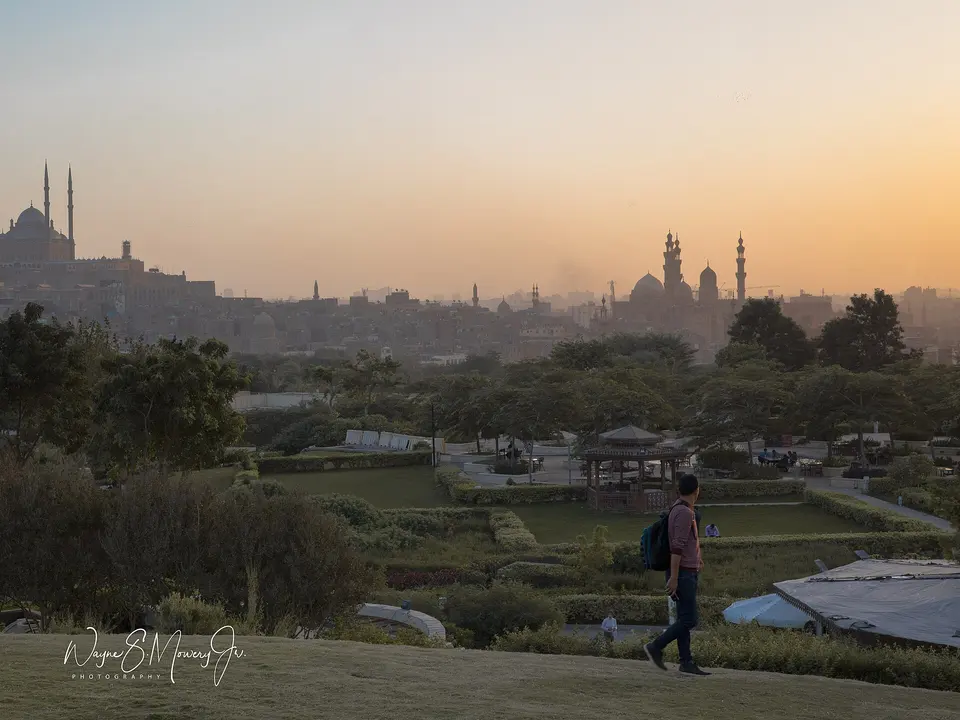
Al-Azhar Park
Photo: Waynemowery, CC BY-SA 4.0
3Park and viewpoint

Al-Azhar Park

Thirty hectares of lawns, palm avenues, fountains and a lake were laid out on five centuries of rubbish heaps by the Aga Khan Trust for Culture and opened in 2005; from the hilltop the view runs west over the domes and minarets of the Fatimid city to the Citadel, with the restored Ayyubid wall of the 12th century along the park's western edge. It is where Cairo comes to breathe, and the right place for lunch between the Citadel and the mosques.

  • Plan about 1 h 15 min
  • Small entrance fee at the gate on Salah Salem Road; open into the night
610 m · about 10 min on foot
Al-Azhar Mosque
Photo: Daniel Mayer, CC BY-SA 4.0
4Mosque and university

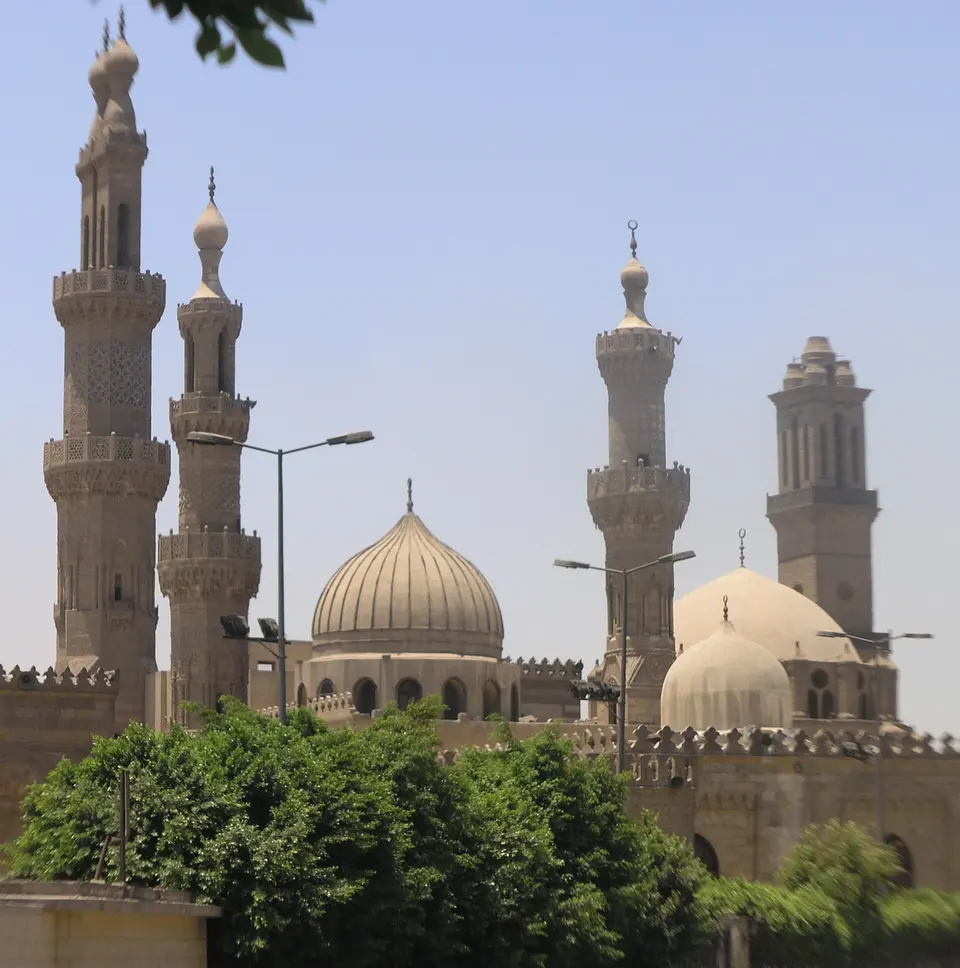
Al-Azhar Mosque

Founded in 970 as the congregational mosque of the new Fatimid capital and teaching since 988, Al-Azhar is one of the oldest universities in the world and still the centre of Sunni scholarship; five minarets from five centuries rise over a white marble courtyard, and the prayer hall behind it is a forest of columns. Non-Muslim visitors are welcome outside prayer times, with shoes off and shoulders and knees covered; women are given a wrap at the door.

  • Plan about 45 min
  • Free; closed to visitors during prayers and at Friday noon; modest dress
280 m · about 4 min on foot
Al-Muizz Street
Photo: Vyacheslav Argenberg, CC BY 4.0
5Historic street

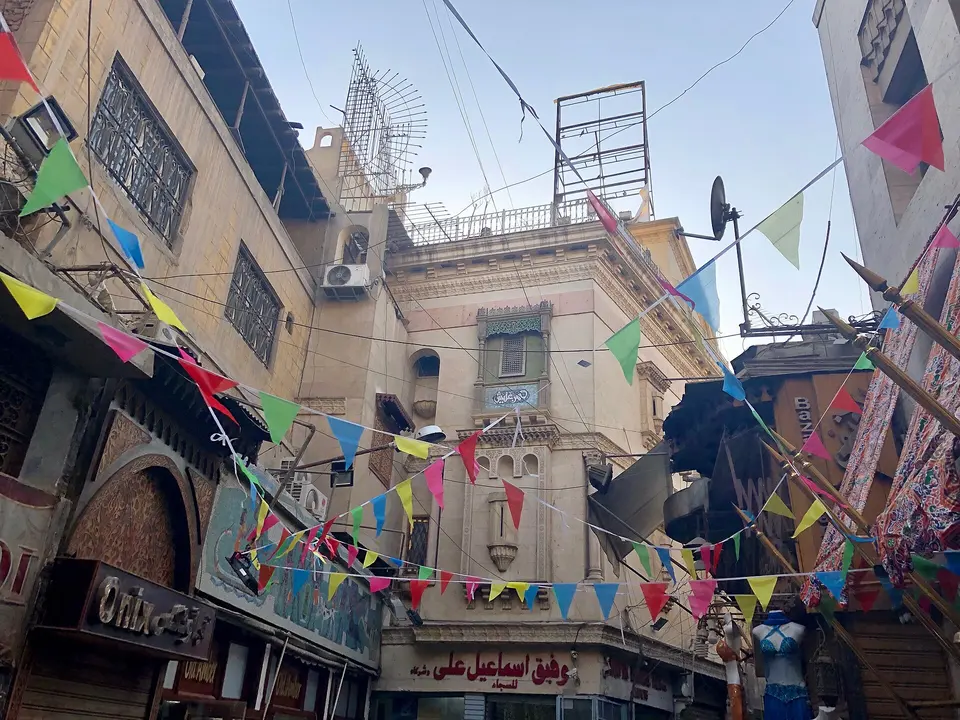
Al-Muizz Street

The main street of the Fatimid city, pedestrianised and lit, runs a kilometre north from Al-Azhar to the gate of Bab al-Futuh past the densest run of medieval monuments in the Islamic world: the complex of Sultan Qalawun of 1285 with its hospital and mausoleum, the madrasa of al-Nasir Muhammad, the mosque of Barquq, the carved wooden sabil-kuttab of Abd al-Rahman Katkhuda at the fork, and the 17th-century merchant's house of Bayt al-Suhaymi in a side lane. Walk it in the late afternoon, when the light is low and the coppersmiths are still working.

  • Plan about 1 h 30 min

Evening

230 m · about 4 min on foot
Khan el-Khalili
Photo: Warren LeMay, CC0
6Bazaar

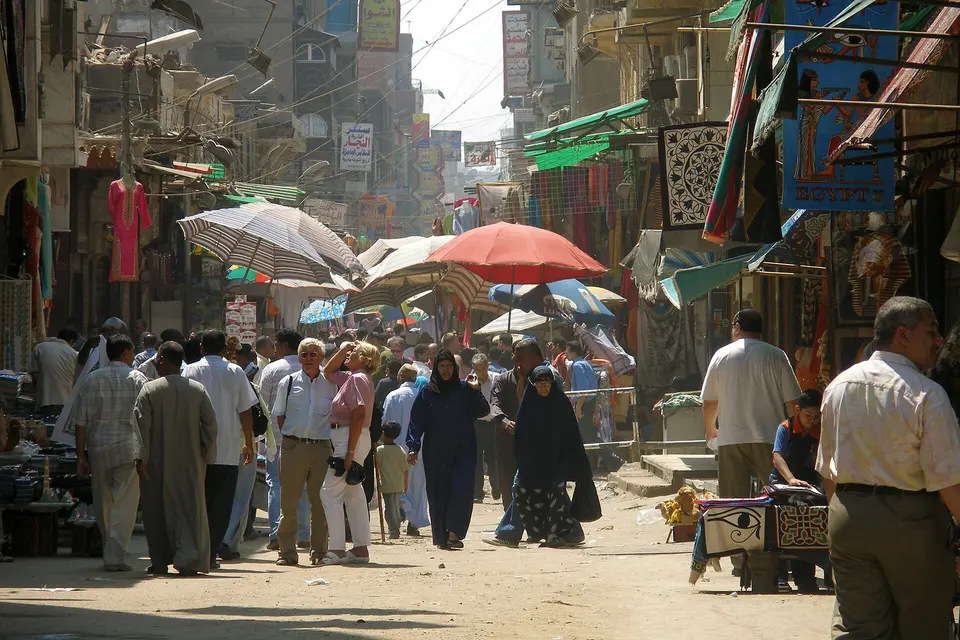
Khan el-Khalili

The bazaar has traded on this spot since the emir Jaharkas al-Khalili built his caravanserai in 1382: lanes of brass lamps, inlaid boxes, spices, perfume bottles, silver and tourist tat under stone arches, with the goldsmiths' and coppersmiths' alleys off to the sides. Bargain hard, then sit down: Fishawi's café has served mint tea and shisha in the same alley since 1773, and the square of the Al-Hussein mosque outside is the city's evening living room.

  • Plan about 2 h
  • Liveliest after dark; most shops close by midnight

Day 3

Coptic Cairo, the royal mummies and the Egyptian Museum

Take the metro to the churches, museum and synagogue inside the Roman fortress of Coptic Cairo, see the royal mummies at the National Museum of Egyptian Civilization, spend the afternoon in the Egyptian Museum on Tahrir, and end on the Qasr al-Nil bridge over the Nile.

  • 6 sights
  • 560 m on foot
  • Longest walk 440 m
1234562 kmN
Stops in order, straight-line distancesRoute in Google Maps ↗

Morning

Hanging Church
Photo: Diego Delso, CC BY-SA 3.0
1Coptic church

Hanging Church

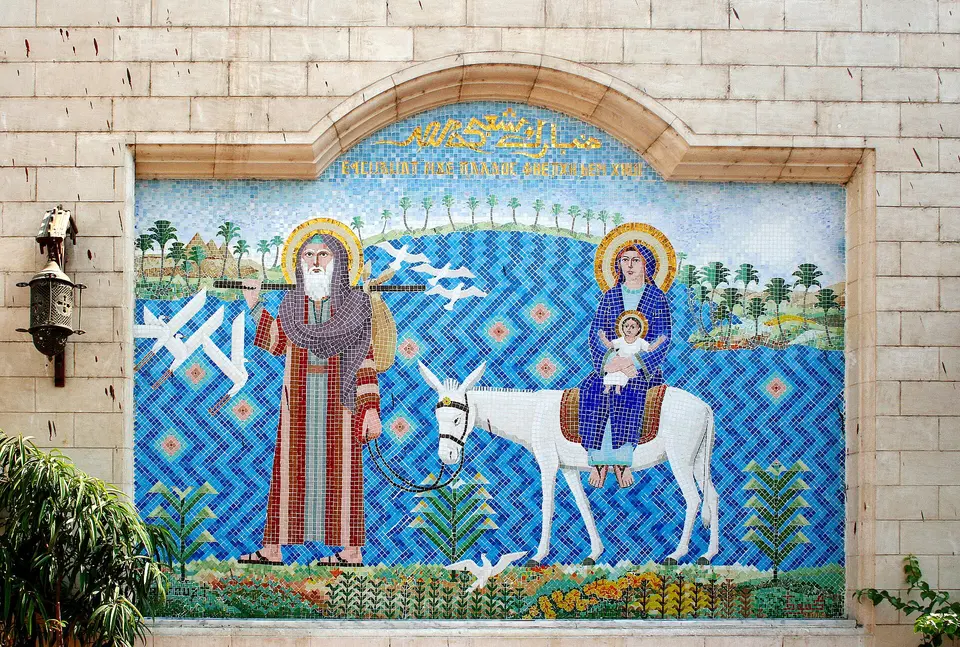
The church of the Virgin Mary is 'hanging' because it was built, perhaps as early as the 3rd century, on top of the gate towers of the Roman fortress of Babylon, whose stones show through a glass floor inside; 29 steps lead up to a courtyard, then a basilica with a cedar and ivory screen, a marble pulpit on thirteen columns and more than a hundred icons, some of them a thousand years old. It is the entrance to Coptic Cairo, a walled enclave of churches and lanes a step from the Mar Girgis metro station.

  • Plan about 40 min
  • 9:00–16:00; free
Right next door
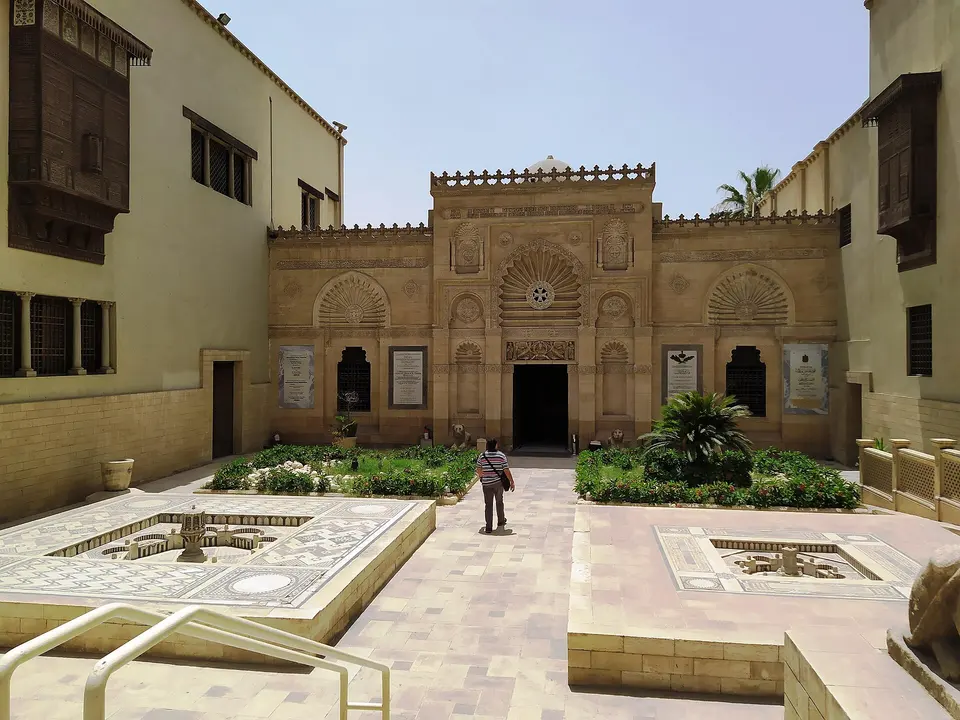
Coptic Museum
Photo: Radosław Botev, CC BY 3.0 pl
2Museum

Coptic Museum

Founded in 1910 inside the fortress walls, the museum holds the world's largest collection of Christian Egyptian art in a series of carved-wood and mashrabiya rooms: 4th-century tapestries, painted monastery chapels lifted whole from the desert, Coptic manuscripts and the Nag Hammadi codices, the Gnostic gospels found in 1945. It is small enough for an hour and the cool, quiet counterpart to the crowds outside.

  • Plan about 1 h 15 min
  • 9:00–17:00 daily; 280 EGP
Right next door
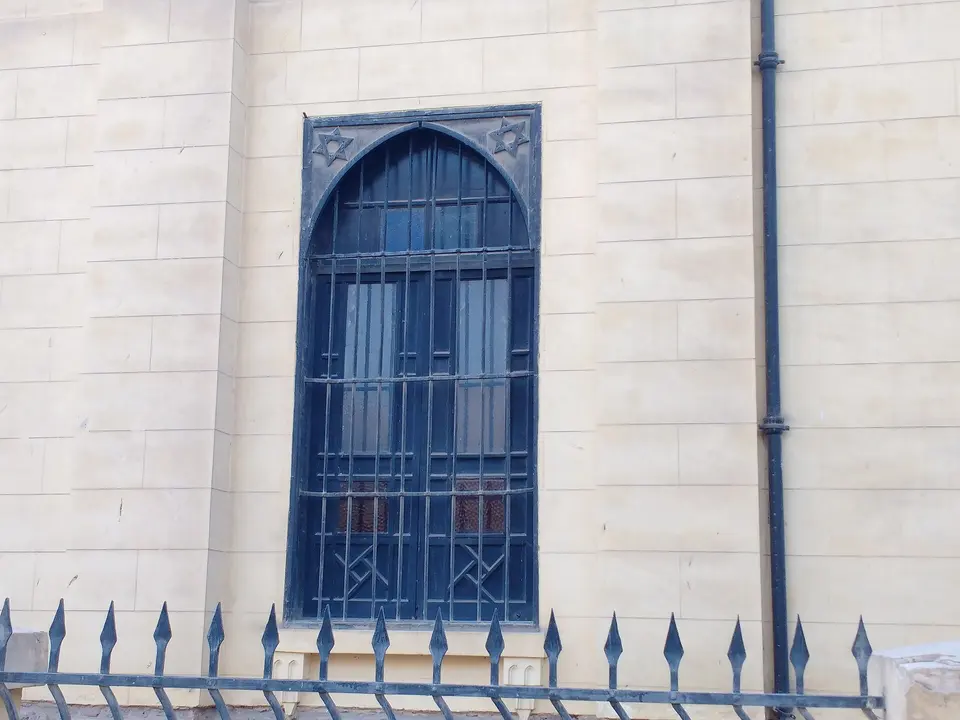
Ben Ezra Synagogue
Photo: zeevveez, CC BY 2.0
3Historic synagogue

Ben Ezra Synagogue

At the far end of the Coptic Cairo lane, past the churches of St Sergius and St Barbara, the synagogue stands where tradition says the pharaoh's daughter found Moses in the reeds; the present building is a rebuilding of 1892, its interior of marble columns and painted ceilings restored. Its fame is the Cairo Geniza, the store room in which three hundred thousand medieval manuscripts were found in 1896 and which rewrote the history of the Mediterranean; the synagogue is no longer in use for services and is visited as a museum.

  • Plan about 30 min

Midday

LunchThe NMEC has a café on its lake terrace; otherwise eat downtown after the museum, where the Tahrir side streets have koshari houses, Felfela for Egyptian classics and the old cafés of Talaat Harb Street.

Afternoon

Taxi about 10 minutes; it is 2 km along the edge of Fustat with no pleasant walk
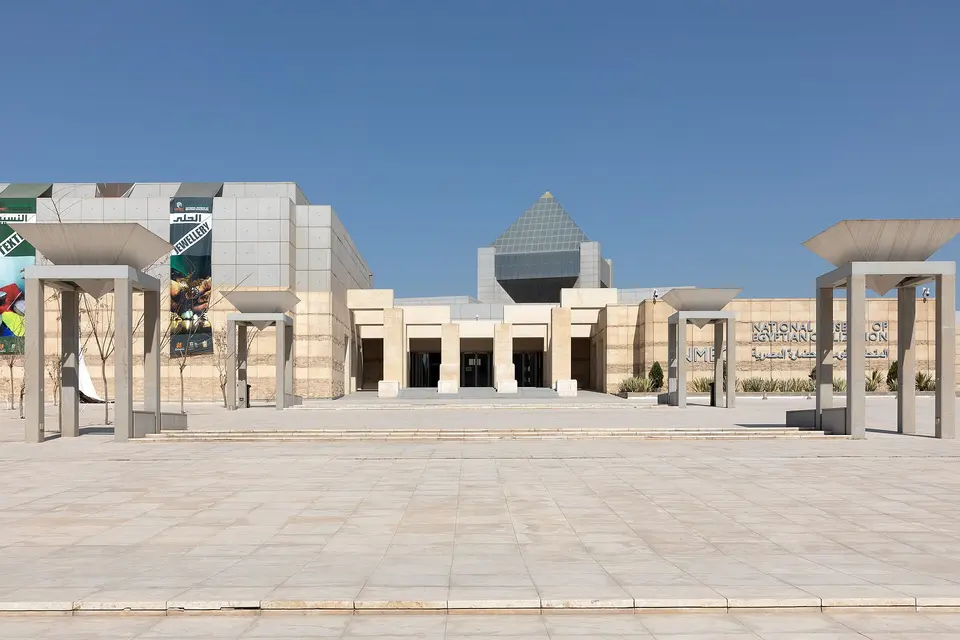
National Museum of Egyptian Civilization
Photo: Roland Unger, CC BY-SA 4.0
4Museum

National Museum of Egyptian Civilization

On the lake of Ain al-Sira in Fustat, the NMEC tells Egypt's story from prehistory to the present in one long hall, but what people come for is downstairs: the Royal Mummies Hall, where the 22 kings and queens moved here in the Pharaohs' Golden Parade of 2021, among them Ramses II, Seti I and Hatshepsut, lie in dimmed, tomb-like galleries with the scans and the stories of each. Allow two hours, the mummies last.

  • Plan about 2 h
  • 9:00–17:00, last ticket 16:00; Fridays also 18:00–21:00; 550 EGP
Taxi about 25 minutes to Tahrir Square, or taxi back to Mar Girgis and metro line 1 to Sadat station, about 30 minutes in all
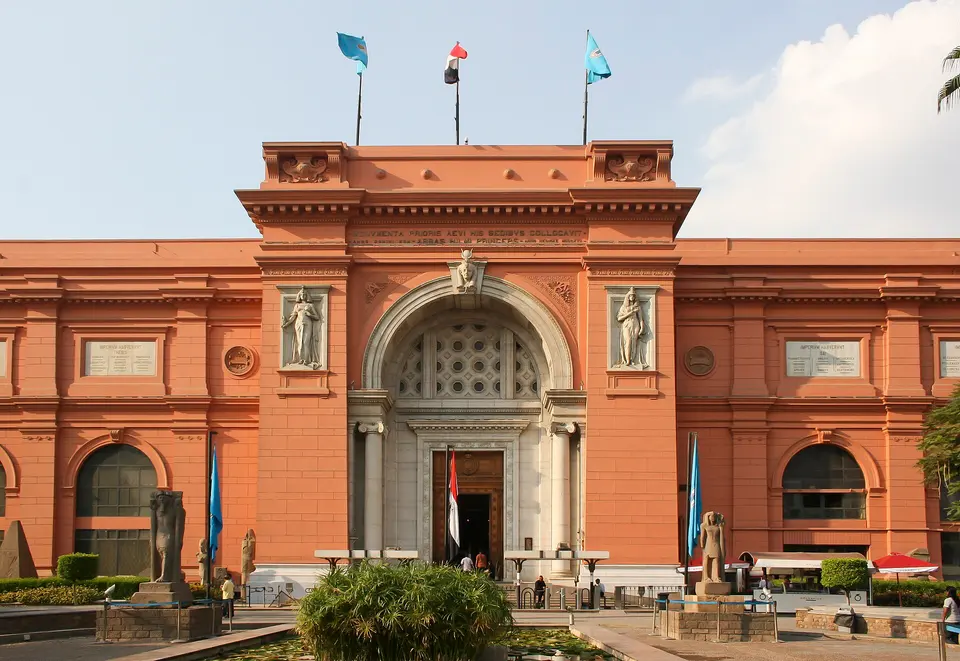
Egyptian Museum
Photo: Diego Delso, CC BY-SA 3.0
5Museum

Egyptian Museum

The pink neoclassical building of 1902 on Tahrir Square was the world's great Egyptian collection for a century, and though Tutankhamun has gone to Giza and the mummies to Fustat, it is still the place for the Old Kingdom: the Narmer Palette, the diorite Khafre, the painted seated scribe, Rahotep and Nofret with their inlaid eyes, the Meidum geese, the Amarna colossi of Akhenaten and the treasure of Yuya and Tjuyu. It is a museum of the old kind, crowded with objects and light on labels; the audio guide is worth its 75 EGP.

  • Plan about 2 h 30 min
  • 9:00–17:00 daily, ticket window closes 16:00; 550 EGP

Evening

440 m · about 7 min on foot
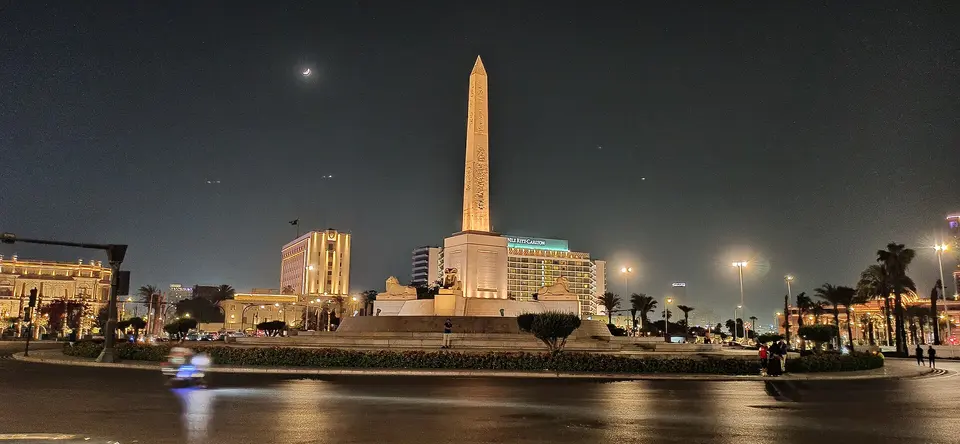
Tahrir Square and the Qasr al-Nil Bridge
Photo: Waelmansoory, CC BY-SA 4.0
6Square and Nile bridge

Tahrir Square and the Qasr al-Nil Bridge

The square of the 2011 revolution has been remade around a 19-metre obelisk of Ramses II ringed by four ram-headed sphinxes from Luxor; from its western side, Qasr al-Nil Street leads onto the 1933 bridge with the four bronze lions, the classic evening walk across the Nile to Gezira with the river, the Cairo Tower and the lit hotels of the corniche on either hand. Feluccas take passengers from the landing stages below the bridge for a half-hour sail; the price is agreed on the bank.

  • Plan about 1 h

Good to know in Cairo

Tickets and opening hours

  • The Giza Plateau is open 8:00–16:00 every day. Area entry for foreign visitors is 700 EGP (students 350 EGP); this ticket does not cover the interiors of the Great Pyramid, the Pyramid of Khafre, the Pyramid of Menkaure, the Tomb of Meresankh III or the Workers' Cemetery, which are ticketed separately.Source: Ministry of Tourism and Antiquities, Discover Egypt's Monuments · checked Sep 2026
  • Giza Plateau tickets can be bought at four self-service machines that take bank cards, at the ticket outlets on the site, and online through the ministry's official site egymonuments.com.Source: Ministry of Tourism and Antiquities, Discover Egypt's Monuments · checked Sep 2026
  • The Grand Egyptian Museum complex opens 8:30–19:00 with the galleries 9:00–18:00 on Sunday, Monday, Tuesday, Thursday and Friday, and until 22:00 (galleries to 21:00) on Wednesday and Saturday; last entry is an hour before the galleries close. Tickets are sold on the museum's only official ticketing site, with an entry time, and also at self-service machines and on-site counters.Source: Grand Egyptian Museum, official ticketing · checked Sep 2026
  • The Egyptian Museum in Tahrir is open 9:00–17:00 every day, with the ticket window closing at 16:00. Foreign adults pay 550 EGP, students 275 EGP; the audio tour is 75 EGP.Source: Ministry of Tourism and Antiquities, Discover Egypt's Monuments · checked Sep 2026
  • The National Museum of Egyptian Civilization is open Saturday to Thursday 9:00–17:00 with last ticket admission at 16:00, and on Fridays 9:00–17:00 and again 18:00–21:00 (last ticket 20:00). Foreign adults pay 550 EGP and students 300 EGP; during Ramadan the museum closes at 16:00.Source: NMEC / Ministry of Tourism and Antiquities · checked Sep 2026
  • The Cairo Citadel is open 8:00–17:00 daily; foreign adults pay 550 EGP and students 275 EGP for an area ticket that includes the Mosque of Muhammad Ali Pasha, the mosque of al-Nasir Muhammad, the Sulayman Pasha al-Khadim Mosque and the Police, Al-Jawhara Palace and Military museums.Source: Ministry of Tourism and Antiquities, Discover Egypt's Monuments · checked Sep 2026
  • The Coptic Museum is open 9:00–17:00 every day; foreign adults pay 280 EGP and students 140 EGP. The Hanging Church next to it is open 9:00–16:00.Source: Ministry of Tourism and Antiquities, Discover Egypt's Monuments · checked Sep 2026
  • Cairo Tower raised its entry ticket for foreign visitors to 350 EGP (from 250) on January 21, 2025; Egyptian citizens pay 100 EGP, or 150 EGP on official holidays.Source: Egypt Independent · checked Sep 2026

Getting around

  • Cairo Metro single tickets on lines 1, 2 and 3 cost 10 EGP for up to 9 stations, 12 EGP for up to 16, 15 EGP for up to 23 and 20 EGP for longer journeys, following the fare change of March 27, 2026. Mar Girgis on line 1 is the station for Coptic Cairo and Sadat the station for Tahrir Square.Source: Egypt Independent · checked Sep 2026

3 days in Cairo: quick answers

Is 3 days enough for Cairo?

Three days cover Giza and the Grand Egyptian Museum, the Citadel and the medieval city, Coptic Cairo, the royal mummies and the Egyptian Museum. A fourth day allows Saqqara's Step Pyramid and Memphis, the Mosque of Ibn Tulun and the Gayer-Anderson house, or a felucca on the Nile and the Museum of Islamic Art.

Which days should I plan around?

The main sites are open every day of the week: the Giza Plateau 8:00–16:00, the Grand Egyptian Museum's galleries 9:00–18:00 with late opening to 21:00 on Wednesdays and Saturdays, the Egyptian Museum, the Citadel and the Coptic Museum from 9:00 or 8:00 to 17:00. The NMEC also opens Friday evenings 18:00–21:00. Hours shorten during Ramadan; Al-Azhar Mosque is closed to visitors during prayers on Fridays.

How do I buy tickets?

The Giza Plateau sells tickets at self-service machines that take bank cards, at the outlets and online at egymonuments.com; the Grand Egyptian Museum sells timed tickets on its official site, tickets.gem.eg, and at its machines and counters. Everywhere else the ticket office at the gate is fine. Foreign tickets are priced separately: 700 EGP for the Giza Plateau, 550 EGP each for the Egyptian Museum, the NMEC and the Citadel, 280 EGP for the Coptic Museum.

How do I get around?

Ride-hailing apps and taxis are cheap and the only practical way to Giza, the Citadel and the NMEC; agree or meter the fare before you go. Metro line 1 is useful for Coptic Cairo (Mar Girgis station) and Tahrir (Sadat): single tickets cost 10–20 EGP depending on distance. The Islamic Cairo day and the walk from Tahrir to the river are on foot.

How much walking is this itinerary?

Day one is a couple of kilometres on the sand of the plateau plus the museum's long halls; day two about 2 km in a straight line from the Citadel to Khan el-Khalili plus one short taxi; day three under 1 km on foot with two taxis. Cairo's summer is hot: the plan puts the outdoor stops in the mornings.

Other Cairo itineraries

Keep exploring

Where this connects

THE TRIPWOA APP

Go somewhere.
Make it yours.

Build days around what you love. Follow your route, find your next stop and keep the moments along the way.

Get it on Google PlayAvailable for Android
Free to start
Tripwoa home with a Paris trip and nearby places to explore
Tripwoa day plan for New York with a route map and Times Square stop

A day that feels like you.

Sources and method

Places and coordinates: Wikidata and Tripwoa's open-data place catalog (Overture Maps Foundation, © OpenStreetMap contributors). Photos: Wikimedia Commons, credited on each image. Practical rules: the official sources linked in each note, checked in September 2026.

How this plan was made: Tripwoa's planner drafted the day order from real coordinates and typical visit times. Each stop was then reviewed, reordered where needed and rewritten with AI assistance. Walking distances are straight-line estimates, so allow a little extra time on real streets.