3-day itinerary · Canada

3 Days in Calgary

A plan that walks the downtown core on the first day, follows the two rivers on the second, and gives the third to Banff, where the gondola ticket covers the shuttle and the car is better left in town. Official 2026 hours, closed days and the park pass rule are in the stops.

  • 3days
  • 14sights
  • 0.0 kmon foot between sights

Updated 13 September 2026 · 3 official sources checked · report an error

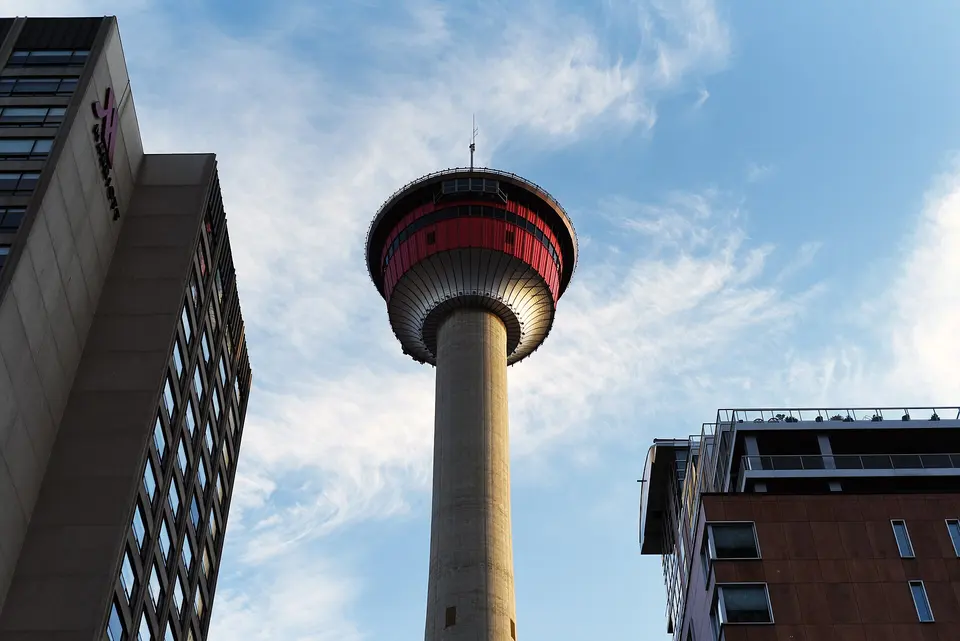
Calgary Tower
Photo: Milan Suvajac, CC BY-SA 4.0

The tower and the library, then the confluence and Heritage Park, then Banff and Lake Minnewanka

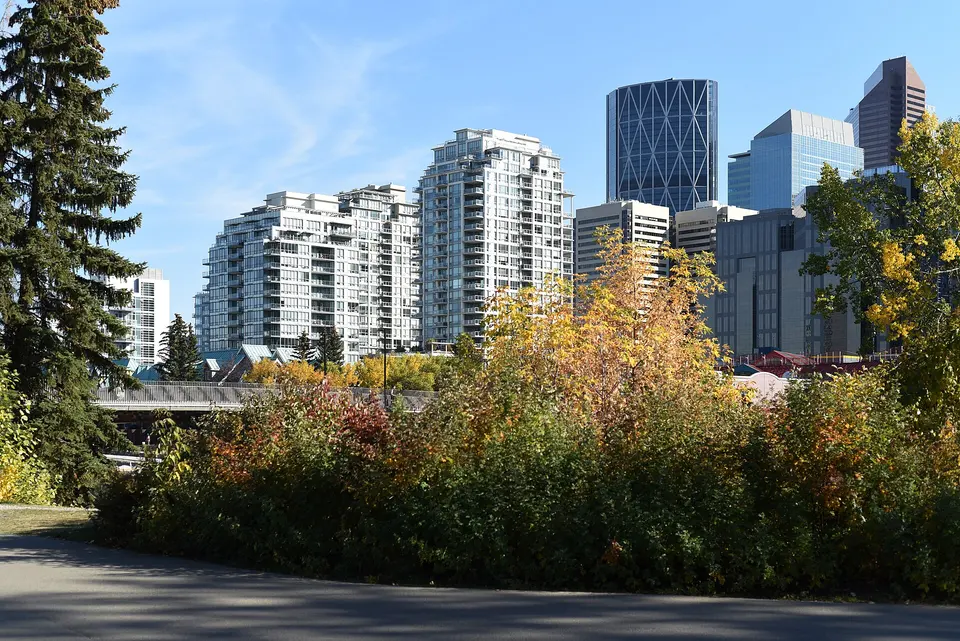
Calgary is a city of about 1.3 million on the high prairie of southern Alberta, at 1,045 metres and at the point where the Bow and Elbow rivers meet. The North-West Mounted Police built a post there in 1875 and the Canadian Pacific Railway arrived in 1883; oil at Turner Valley in 1914 and Leduc in 1947 turned it into the head office of the Canadian energy industry, which is why a prairie city of this size has a downtown of glass towers. The 1988 Winter Olympics left it a ski jump, a speed skating oval and a self-image. What most visitors are really here for stands along the western horizon: the Rocky Mountain Front Range begins about eighty kilometres out and Banff National Park is ninety minutes by road.

At a glance

Ways to use these days

If it rains
3 of the stops are indoors — Glenbow Museum · Studio Bell, National Music Centre · Calgary Central Library
For the view
Calgary Tower · Sulphur Mountain and the Banff Gondola
Outdoors
Prince's Island Park · Lake Minnewanka
Lightest day on foot
Day 1 — 2.5 km between stops
Most walking
Day 3 — 27.5 km

Day 1

Downtown: a tower with the Rockies on the horizon, a museum of the West and a library on an arch

Start 160 metres up with the whole Front Range along the western skyline, work east through the largest museum in western Canada and a music centre where the instruments can be played, look inside a library built over a moving train, and finish on the island in the Bow.

  • 5 sights
  • Transport between sights
12345500 mN
Stops in order, straight-line distancesWalking route in Google Maps ↗

Morning

Calgary Tower
Photo: Milan Suvajac, CC BY-SA 4.0
1Observation tower

Calgary Tower

Built for Canada's centennial in 1968 as the Husky Tower and 191 metres tall, which made it the tallest structure in the country for about a year until Toronto started building. The observation deck at 160 metres has a glass floor section added in 2005 that people approach carefully and then jump on, a revolving restaurant one level up, and a view that is the reason to come: the Rockies stand along the entire western horizon about 80 km away, clear enough on most days to pick out individual peaks, with the prairie running flat in every other direction and the Bow River curving through the middle of it. A natural gas flame burns at the top for the Stampede, Canada Day and a handful of other occasions.
  • Plan about 1 h
  • Open daily with hours that lengthen in summer, generally 09:00 or 10:00 to 21:00; tickets are cheaper booked online and the deck is quietest in the first hour; the flame is lit for the Stampede in July and on Canada Day
150 m north-east, two minutes on foot through the +15 walkway
Glenbow Museum
Photo: User:Thivierr, CC BY-SA 3.0
2Museum

Glenbow Museum

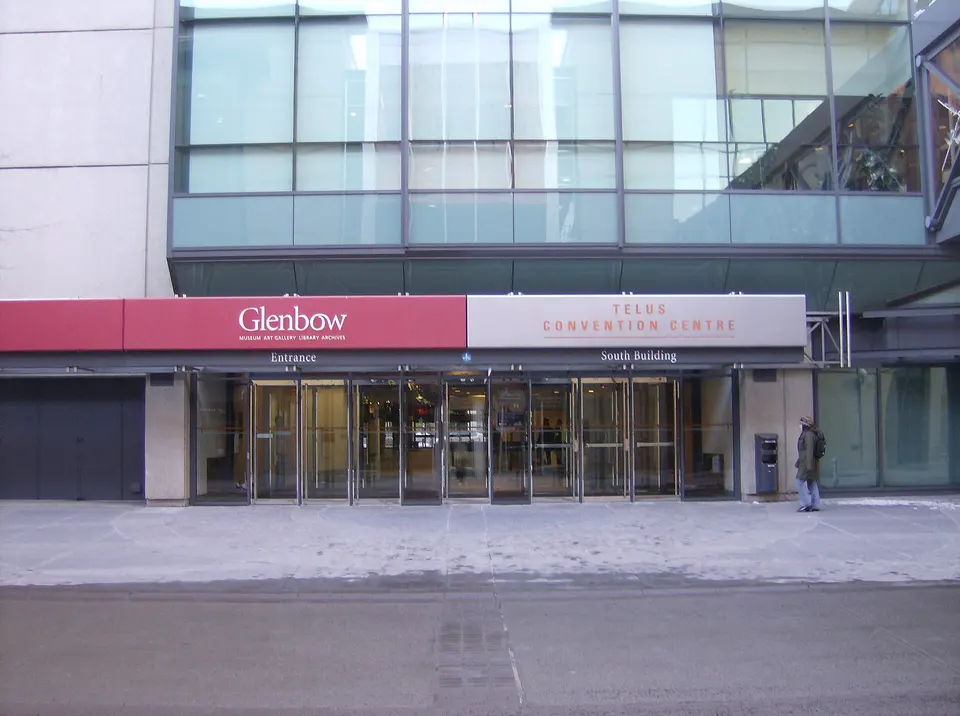
Eric Harvie made a fortune when oil was found under land he owned at Leduc in 1947 and spent much of it collecting, then gave the whole thing to the province in 1966. The result is the largest museum in western Canada: a Blackfoot and Siksika collection developed in partnership with the nations themselves, including a gallery co-curated with Blackfoot elders; the history of the Canadian West from the fur trade through the North-West Mounted Police to the oil booms; a serious art collection of western Canadian and international work; and a mineralogy hall. The building has been through a long and expensive rebuild by Toronto architects, so check what is open before you go.

  • Plan about 2 h
  • Open Wednesday to Sunday, generally 10:00 to 17:00 and closed Monday and Tuesday; the museum has been in phased reopening after a major renovation, so confirm which galleries are accessible before buying a ticket

Midday

LunchCalgary is a beef town and the steakhouses are genuinely good, but lunch is better in Inglewood or on Stephen Avenue, the pedestrianised stretch of 8 Avenue where the sandstone bank buildings are. Alberta beef, bison, and in winter a bowl of something hot; the city also has a strong Vietnamese and Filipino food scene in the north-east that almost no visitor finds. In summer the +15 skywalk network is a curiosity; in January it is the reason downtown functions.

Afternoon

700 m east into East Village, about 9 minutes on foot
Studio Bell, National Music Centre
Photo: Michael Benz, CC0
3Museum

Studio Bell, National Music Centre

Nine interlocking towers of glazed terracotta by Allied Works, opened in 2016, straddling a street in East Village and incorporating the 1905 King Edward Hotel, the blues bar that everyone in Calgary has a story about. Inside are five floors holding the Canadian Music Hall of Fame, the Canadian Country Music Hall of Fame, and an instrument collection of more than two thousand pieces that ranges from a 1560s clavichord to the TONTO synthesiser that Stevie Wonder used on four albums. Most of it can be played: there are practice rooms, a recording studio you can watch through glass, and staff who will let you sit at something extraordinary if you ask.

  • Plan about 2 h
  • Open Wednesday to Sunday, roughly 10:00 to 17:00, closed Monday and Tuesday; ticketed; the live sessions in the King Eddy and the staff-led instrument demonstrations are what make the visit
300 m north, four minutes on foot
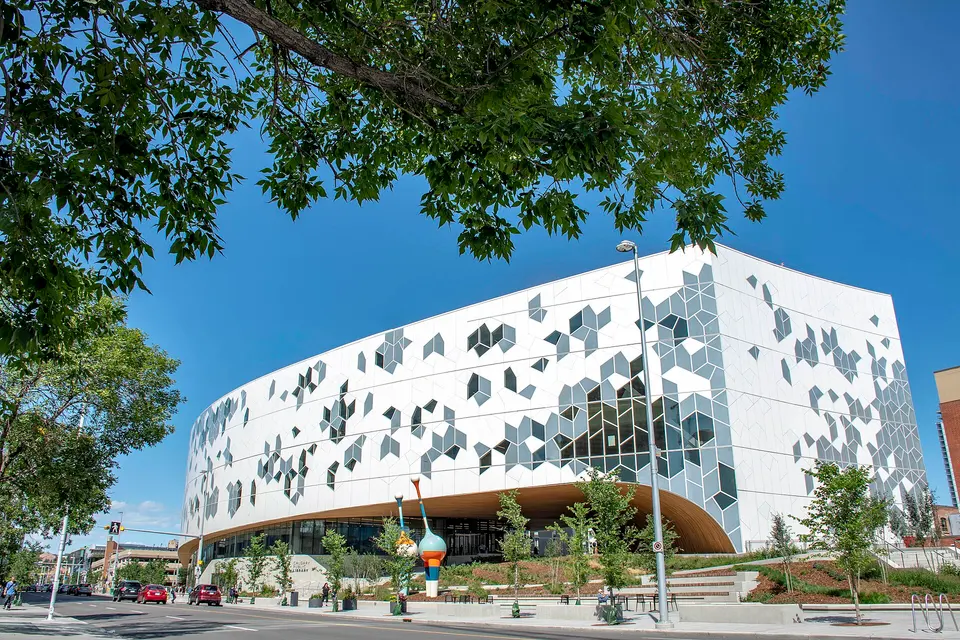
Calgary Central Library
Photo: Calgary Public Library, CC0
4Library

Calgary Central Library

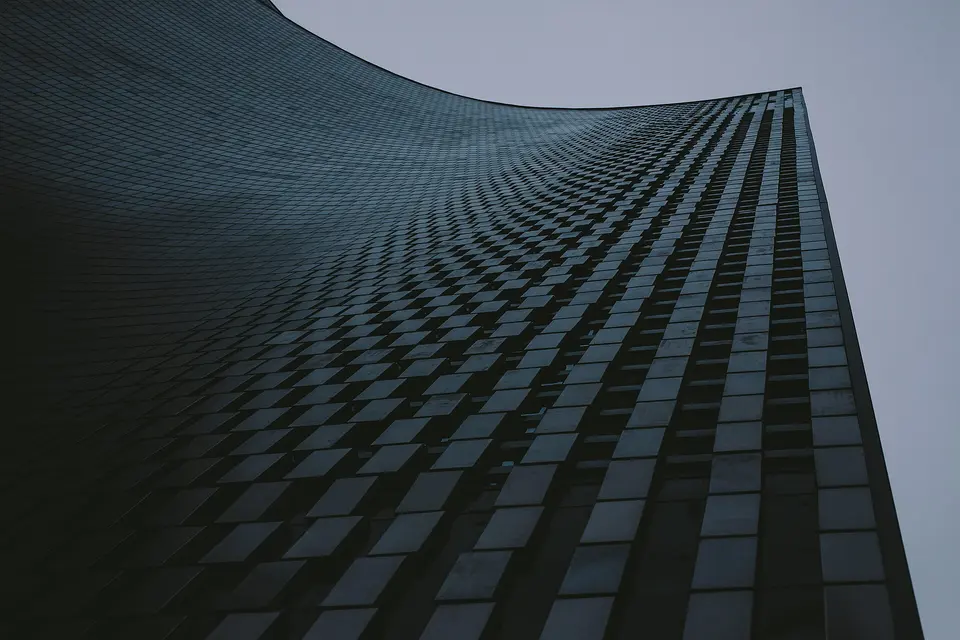
Snøhetta and DIALOG built this over a working light rail line in 2018, which is why the building appears to float on a concrete arch with the trains running underneath it. The skin is a hexagonal pattern of aluminium and fritted glass modelled on chinook cloud formations, the entrance is a wooden arch cut through the middle of the block, and the inside is a spiral of oak-lined reading terraces rising around an atrium to a top-floor room with a view of the Rockies. It cost $245 million and it is used: about a hundred rooms are bookable free, including recording studios and a children's floor with a performance space. Anyone may walk in.

  • Plan about 1 h
  • Free and open daily, with long weekday hours and shorter Sunday ones; no ticket, no booking, just walk in; the top-floor Great Reading Room and the oak spiral are the reason to go up

Evening

1.4 km north-west along the river, about 18 minutes on foot
Prince's Island Park
Photo: Milan Suvajac, CC BY-SA 4.0
5Park

Prince's Island Park

A 20-hectare island in the Bow River immediately north of downtown, reached by four footbridges and effectively the city's front garden. It was made an island on purpose in the 1880s when a lumber company cut a channel to drive logs, and became a park in 1950. The Bow River pathway runs through it as part of a network of more than 900 km of paths, which is the largest urban pathway system in North America. The Calgary Folk Music Festival takes it over in July and Shakespeare in the Park runs all summer on the ATB Mainstage. A lagoon, a lot of poplars and the downtown towers standing up directly behind them.

  • Plan about 1 h 15 min
  • Free and open at all hours; the Peace Bridge, Santiago Calatrava's red steel helix, crosses the river at the western end and is a two-minute detour; cycle hire is available along the pathway

Day 2

The confluence, the zoo island and the village they moved here building by building

Spend the day on the rivers and their edges: the police post that started the city, an island zoo with a dinosaur park on it, a science centre on the hill above, and a living history village on a reservoir twelve kilometres south.

  • 5 sights
  • Transport between sights
123452 kmN
Stops in order, straight-line distancesDriving route in Google Maps ↗

Morning

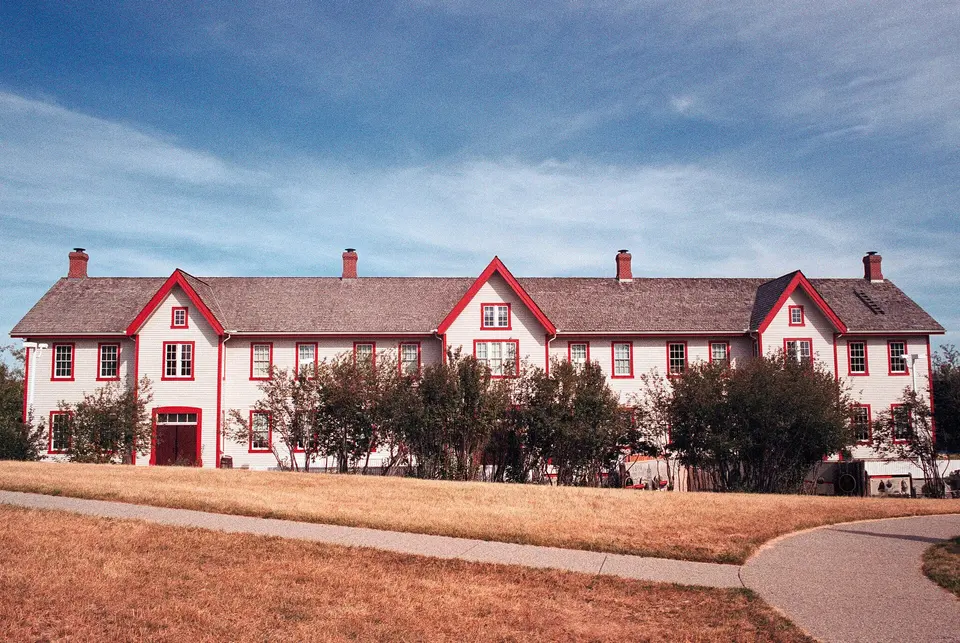
Fort Calgary
Photo: Crystalpepsi21, CC BY-SA 4.0
1Historic site

Fort Calgary

The North-West Mounted Police built a post at the confluence of the Bow and Elbow rivers in 1875 to stop the whisky trade coming north from Montana, and the settlement that grew around it is the reason Calgary exists. The site is 16 hectares at the meeting of the two rivers, with a reconstructed 1875 barracks, the 1906 Deane House across the river, and an interpretive centre that has been rebuilt and renamed The Confluence, with programming developed with Treaty 7 nations and the Métis so that the story is not only the police version. It sits on the pathway network, so it is an easy walk or cycle from downtown.

  • Plan about 1 h 30 min
  • Open Wednesday to Sunday, generally 10:00 to 17:00, with a modest ticket; the grounds and riverside paths are free and open; the Deane House across the bridge is a restaurant in a 1906 police superintendent's home
1 km east across the bridge to St. George's Island, about 12 minutes on foot; the CTrain Blue Line stops at Zoo station
Wilder Institute / Calgary Zoo
Photo: Daniel from Glasgow, United Kingdom, CC BY 2.0
2Zoo

Wilder Institute / Calgary Zoo

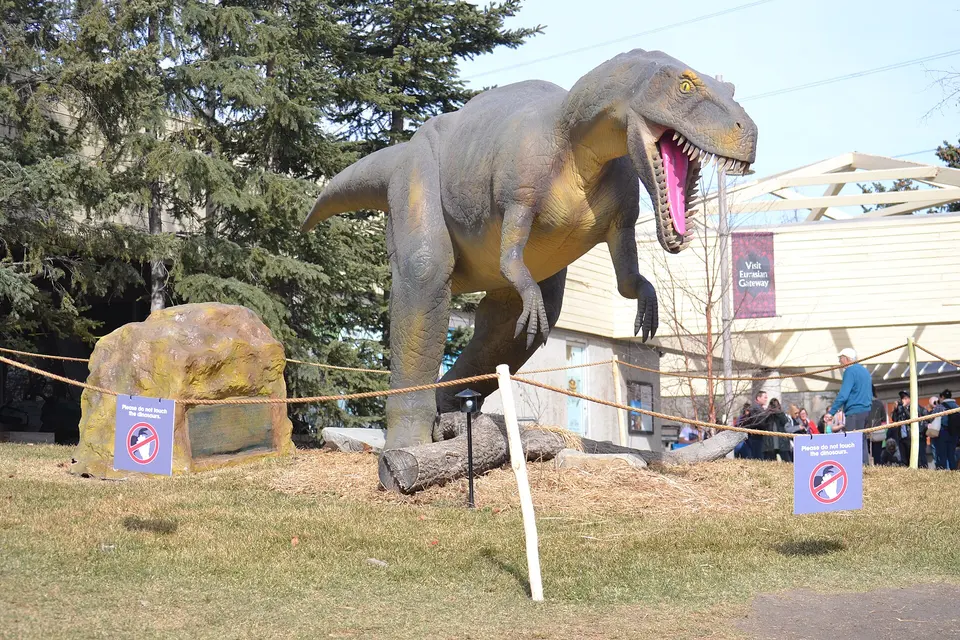
On St. George's Island in the Bow River since 1929, and one of the more serious conservation organisations in Canada: the Wilder Institute runs reintroduction programmes for the whooping crane, the burrowing owl, the Vancouver Island marmot and the greater sage-grouse, several of which have brought species back from double-digit wild populations. For visitors there is a Canadian Wilds section with grizzlies, wolves and a hot spring for Japanese macaques, a Land of Lemurs walkthrough, a Eurasia section with snow leopards and Amur tigers, and Prehistoric Park, a dozen hectares of full-size dinosaur models in a reconstructed badlands landscape that children treat as the main event.

  • Plan about 3 h
  • Open daily 09:00 to 17:30 with last entry at 16:30, closed 25 December; tickets are cheaper the further ahead you book; the zoo's West Gate is closed for the 2026 season, so use the main entrance off Memorial Drive

Midday

LunchThe zoo has cafés and the Deane House beside Fort Calgary is a considerably better lunch in a 1906 house, though it books up. Inglewood, the oldest neighbourhood in the city and five minutes from both, has a dense run of independent restaurants, coffee roasters and a very good bookshop along 9 Avenue SE, and is the right stop if you would rather eat like a local than a visitor.

Afternoon

1.5 km north-east up the hill, about 5 minutes by car
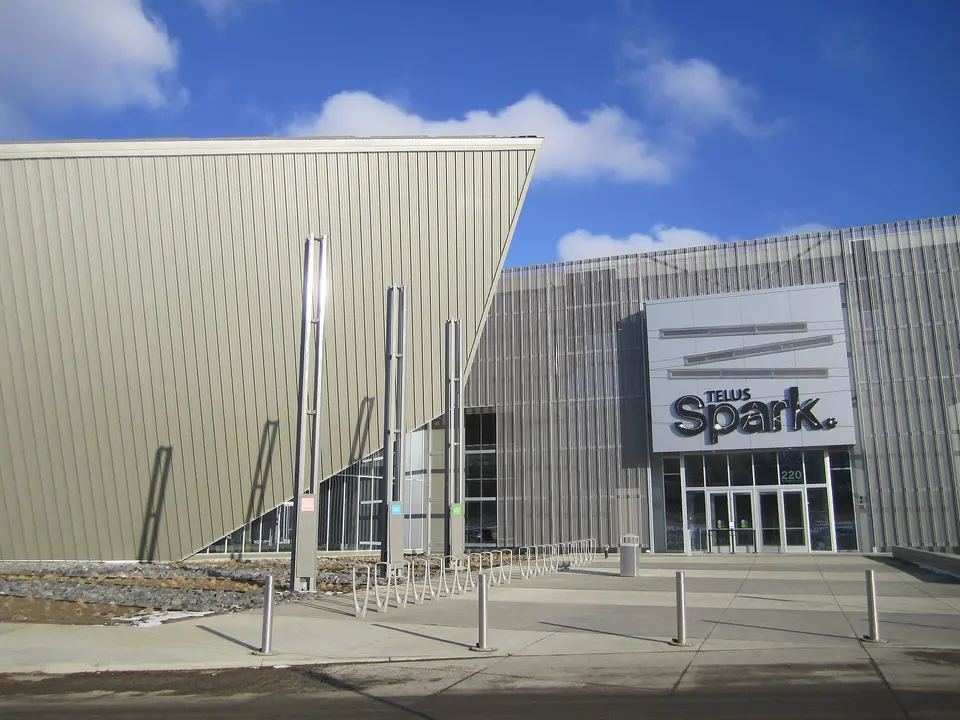
TELUS Spark Science Centre
Photo: Mack Male, CC BY-SA 2.0
3Science centre

TELUS Spark Science Centre

Canada's first purpose-built science centre of the twenty-first century, opened in 2011 on a hill above the zoo with a titanium skin and a dome theatre. The galleries are hands-on rather than explanatory: an open studio where you can use a laser cutter and a 3D printer, an energy and innovation hall that treats Alberta's oil economy as a subject rather than a sponsor, a creative kids museum, and an outdoor Brainasium of climbing structures and a giant seesaw. The Adults Only Night on the third Thursday of the month hands the whole building to people over eighteen with a bar, which is the version most visiting adults enjoy more.

  • Plan about 2 h
  • Open Wednesday to Sunday, generally 10:00 to 16:00 and longer in school holidays; ticketed, with the dome theatre included; it is 3 km east of downtown and the bus or a short drive is easier than the walk
3 km south-west, about 10 minutes by car or the CTrain to Erlton/Stampede
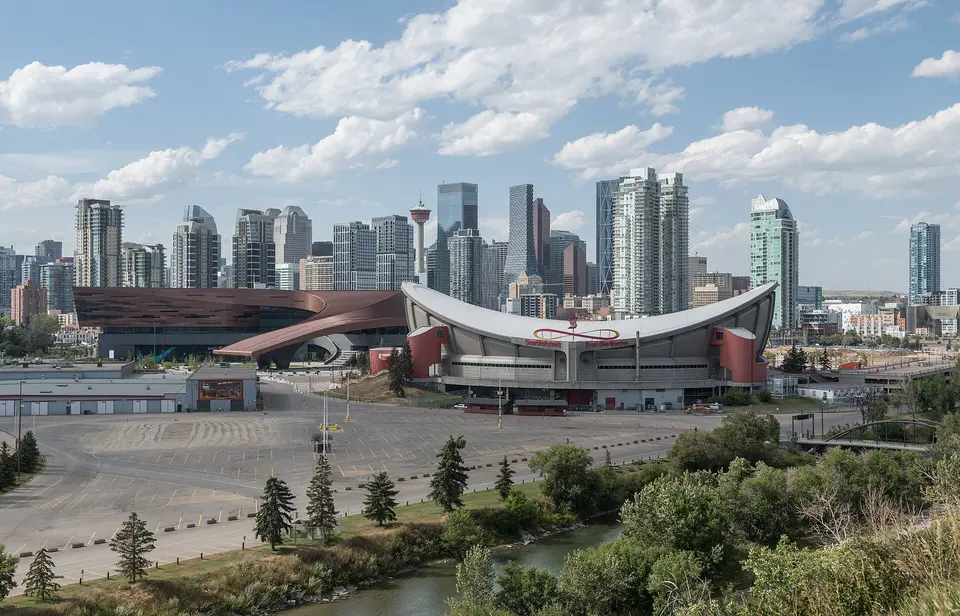
Stampede Park
Photo: DXR, CC BY-SA 4.0
4Fairground

Stampede Park

For ten days every July this ground south of downtown holds the Calgary Stampede, which calls itself the greatest outdoor show on earth and draws well over a million people: rodeo, chuckwagon racing, an agricultural fair, a midway and a city that puts on a cowboy hat and serves free pancake breakfasts from car parks. The rest of the year the park is the Saddledome, home of the Calgary Flames and shaped like a hyperbolic paraboloid saddle; the BMO Centre, western Canada's largest convention space after a 2024 expansion; and a year-round Elbow River Camp where the Treaty 7 nations host visitors. The chuckwagon racing has drawn sustained criticism over horse deaths.

  • Plan about 1 h 15 min
  • Free to walk through outside event days; the Stampede runs for ten days in early July and tickets for the rodeo and the evening grandstand show sell out months ahead; the Saddledome hosts hockey from October to April

Evening

12 km south-west to the Glenmore Reservoir, about 20 minutes by car
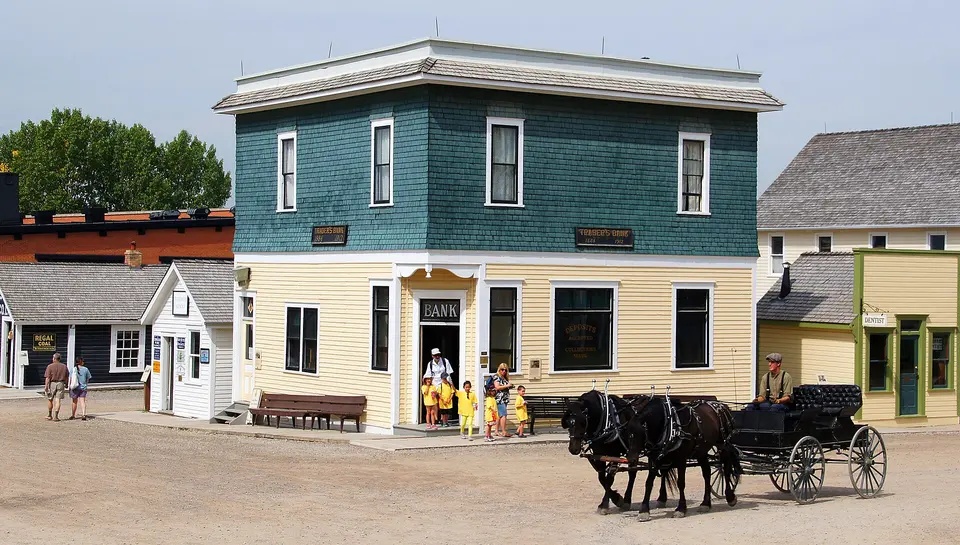
Heritage Park Historical Village
Photo: Bernard Spragg. NZ, CC0
5Open-air museum

Heritage Park Historical Village

Sixty-four hectares on a peninsula in the Glenmore Reservoir holding the largest living history museum in Canada: about 180 buildings brought here or reconstructed, laid out as four periods from a pre-1860 First Nations encampment and fur trading fort, through an 1880s prairie settlement, to a 1910 railway town with a working steam locomotive and a paddle steamer on the reservoir. Staff in period dress work the bakery, the blacksmith's forge and the printing press, and the antique midway runs. It is unapologetically aimed at families and does the job better than most; adults come out knowing considerably more about how the prairies were settled.

  • Plan about 3 h
  • The historical village opens for its season Tuesdays to Sundays and holiday Mondays, roughly 10:00 to 16:00, and closes for the winter apart from ticketed special events, while the Gasoline Alley museum and the shops at the entrance stay open year-round; it is 12 km south-west of downtown

Day 3

The day in Banff: a gondola to 2,281 metres, a waterfall and a drowned village

Drive ninety minutes west into the first national park Canada ever made, ride to a summit ridge where six ranges are visible, stand beside the falls below the railway hotel, and finish on a reservoir with a village underneath it.

  • 4 sights
  • Transport between sights
12345 kmN
Stops in order, straight-line distancesDriving route in Google Maps ↗

Morning

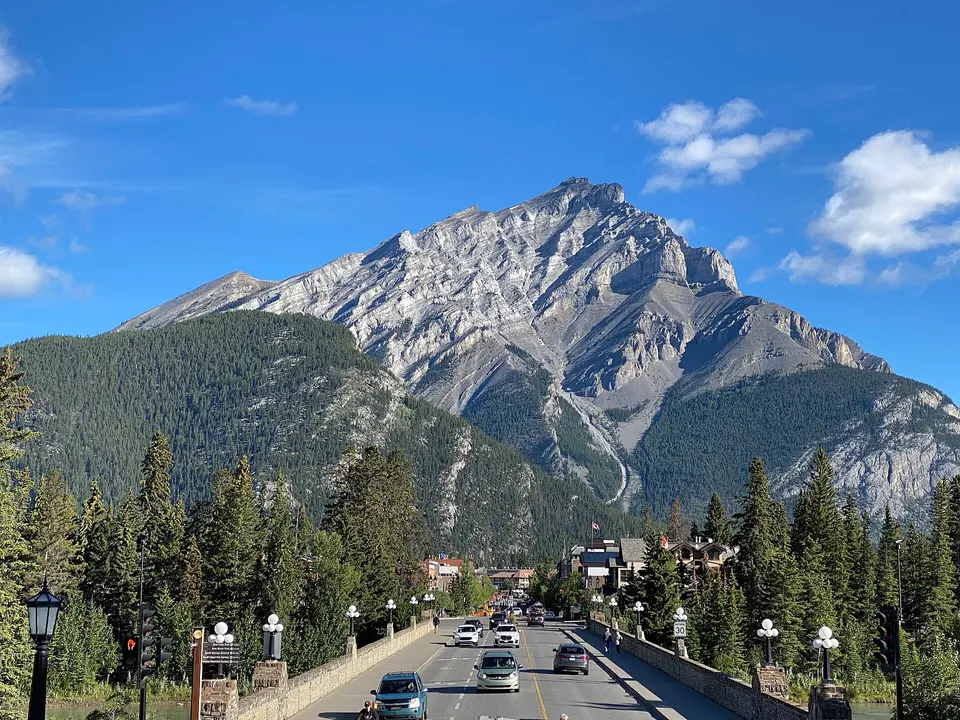
Banff
Photo: Adam Bishop, CC BY-SA 4.0
1Town

Banff

A town of about nine thousand at 1,400 metres inside a national park, which means every building needs federal permission and the population is legally capped by a need-to-reside rule. Banff Avenue runs straight at Cascade Mountain, which stands 2,998 metres directly at the end of it and makes the most photographed street view in Canada. The town exists because the Canadian Pacific Railway found hot springs here in 1883 and built a hotel to sell them, which created Canada's first national park in 1885 and the whole national park system after it. There are galleries, the Whyte Museum, the Banff Park Museum of 1903 with its original Victorian taxidermy, and an enormous number of outdoor shops.

  • Plan about 2 h 30 min
  • Free to walk; a Parks Canada pass is required for everyone in the park, bought at the gate or online, and is checked; parking in town is difficult from mid-morning in summer, so use the free Roam transit or the park-and-ride
4 km south of Banff town, about 8 minutes by car; the gondola ticket includes the shuttle so leaving the car in town is easier
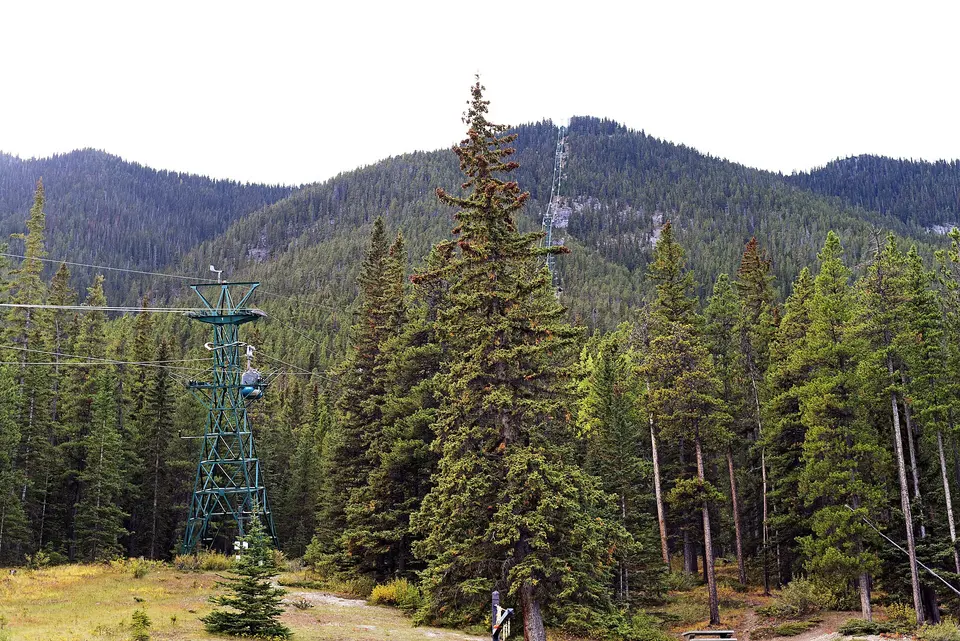
Sulphur Mountain and the Banff Gondola
Photo: Milan Suvajac, CC BY-SA 4.0
2Mountain

Sulphur Mountain and the Banff Gondola

An eight-minute gondola ride lifts you 700 metres to a ridge at 2,281 metres, and what is up there justifies the price: a boardwalk of about a kilometre runs along the summit ridge to Sanson's Peak, where a stone weather observatory was manned from 1903 to 1931 by Norman Sanson, who walked up more than a thousand times to read the instruments. From the ridge six mountain ranges are visible and the Bow Valley runs out below with the town in the middle of it. The upper terminal has an interpretive centre and a restaurant. Fit walkers can climb the 5.5 km switchback trail instead and ride down free, or the reverse.

  • Plan about 2 h 30 min
  • Open year-round with seasonal hours, generally 09:00 to 20:00 or later in summer and shorter in winter; one child goes free with each paying adult for the first two hours of the day; the ticket includes the shuttle and Roam transit fare, so leave the car in town

Midday

LunchBanff Avenue is a tourist high street and priced as one, but it feeds everybody: elk and bison on the menus, poutine, and a row of places doing a decent lunch. The Sky Bistro at the top of the gondola has the best view of any restaurant in the Rockies and charges accordingly. If you want the local version, Canmore twenty minutes east has the breweries and the restaurants that Banff staff drive to on their day off.

Afternoon

4 km back north-east below the Banff Springs Hotel, about 8 minutes by car or a 20-minute riverside walk from town
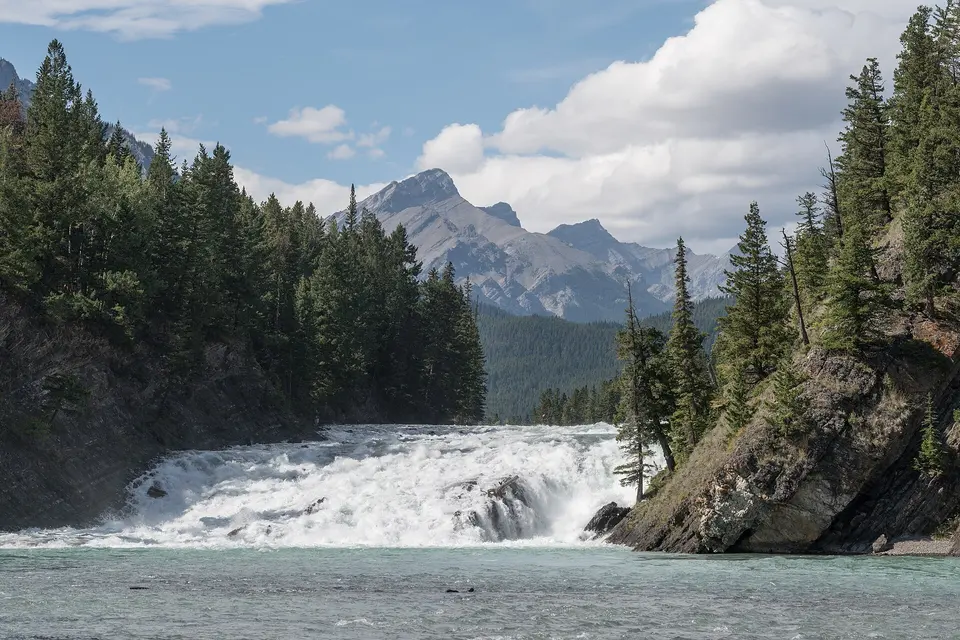
Bow Falls
Photo: DXR, CC BY-SA 4.0
3Waterfall

Bow Falls

Not a high waterfall, about nine metres, but a wide and very loud one where the Bow River turns hard and drops over a limestone ledge below the Banff Springs Hotel. In spring melt it is a wall of brown water; by late summer it runs clear and green. The viewpoint is a two-minute walk from the car park and the trail along the river bank from town takes twenty minutes on the flat. Marilyn Monroe filmed River of No Return here in 1953 and sprained her ankle doing it, which the town has not forgotten. The Fairmont Banff Springs above it is a 1888 railway hotel rebuilt in stone as a Scottish baronial castle and worth walking up to.

  • Plan about 45 min
  • Free and always accessible, with a car park at the falls and a level riverside path from Banff town; the Surprise Corner viewpoint on Tunnel Mountain Drive gives the classic shot of the hotel above the river

Evening

12 km north-east on the Lake Minnewanka Loop, about 20 minutes by car
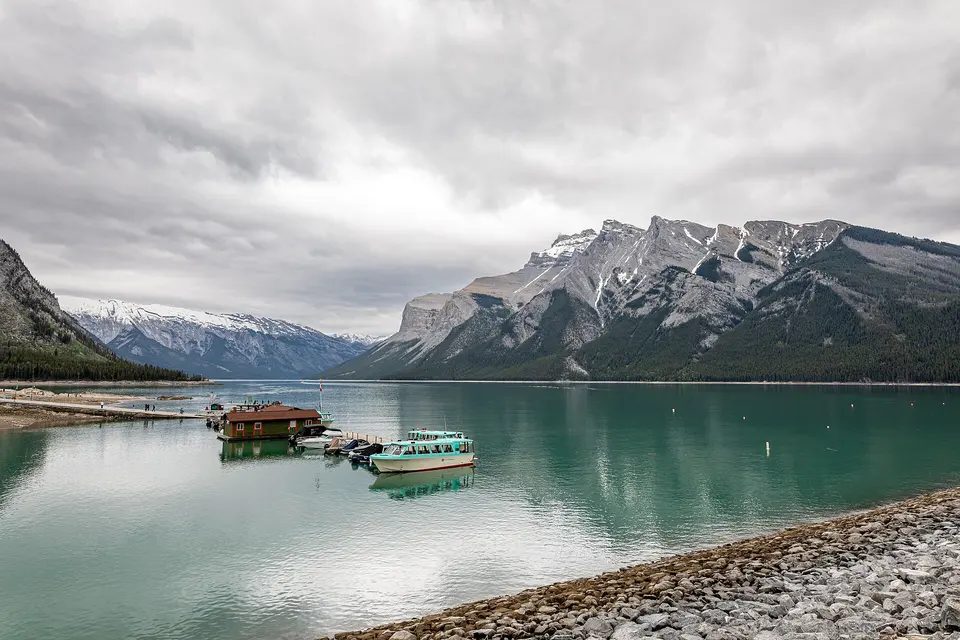
Lake Minnewanka
Photo: Dietmar Rabich, CC BY-SA 4.0
4Lake

Lake Minnewanka

The largest lake in Banff National Park at 21 km long, and the only one where motorboats are allowed, which means there is a cruise. The Stoney Nakoda called it the water of the spirits and avoided camping on it. It is a reservoir: a dam raised the level in 1912 and again in 1941, drowning the resort village of Minnewanka Landing, whose foundations, bridge pilings and cellars are still down there and are dived by people willing to get into water that never rises above 10°C. On the surface it is a long grey-green fjord between mountains with bighorn sheep on the road and a lakeside trail that runs 30 km to the far end.

  • Plan about 2 h 30 min
  • Free, with a Parks Canada pass required; the road loop from Banff takes 20 minutes and also passes Two Jack Lake and Johnson Lake; the 90-minute interpretive boat cruise runs from May to October and should be booked ahead in July and August

Good to know in Calgary

Calgary: hours and tickets

  • The Wilder Institute / Calgary Zoo is open daily from 09:00 to 17:30, with the last entry at 16:30, and closes on 25 December. The zoo says tickets are cheaper the further in advance they are bought, and its West Gate off Zoo Road NE is closed for the 2026 season, so visitors should use the main entrance.Source: Wilder Institute / Calgary Zoo — Plan Your Visit · checked Sep 2026
  • Heritage Park's Historical Village opens for its season Tuesday to Sunday and on holiday Mondays from 10:00 to 16:00, and closes outside the season apart from ticketed special events; the Gasoline Alley Museum and the shops at the entrance stay open year-round.Source: Heritage Park Historical Village — Plan Your Visit · checked Sep 2026

Banff: the gondola and the park pass

  • The Banff Gondola gives one free child admission for each paying adult, available daily during the first two hours of the day. A same-day pre-purchased gondola ticket includes the shuttle service and the Roam Transit fare and removes the Parks Canada parking fee, so the operator advises leaving the car in Banff town rather than driving to the base station.Source: Pursuit — Banff Gondola · checked Sep 2026

3 days in Calgary: quick answers

Is 3 days enough for Calgary?

Three days covers the city in two and gets you into the mountains for one, which is the balance most visitors want. What three days will not do is the rest of Banff National Park: Lake Louise and Moraine Lake are another 60 km beyond Banff town and both now require a shuttle reservation in summer, and the Icefields Parkway to Jasper is a full day on its own. If the mountains are the reason you are coming, give them two days and sleep in Banff or Canmore for one night.

What is the best time of year to visit Calgary?

June to September for the mountains, and July if you want the Stampede, which runs for ten days in early July and doubles hotel prices across the city. Summer highs are around 23°C with very low humidity and long evenings; the mountains hold snow into June at altitude. Winter is cold, down to minus 15°C and colder, but Calgary gets the chinook, a warm Pacific wind that can lift the temperature 20 degrees in a few hours and melt a snowfall in an afternoon. Ski season at Banff and Lake Louise runs November to May.

Do you need a car in Calgary?

In the city, not really: the CTrain is free through the downtown core along 7 Avenue and reaches the zoo, Stampede Park and the university, and the pathway network covers the rivers. For Heritage Park a bus or a short drive is easier. For Banff you either hire a car or take one of the frequent coach services, which run several times a day from the airport and downtown and drop at Banff hotels; given parking in Banff is genuinely difficult in summer, the bus is not the poor option.

How much does Calgary cost per day?

Alberta has no provincial sales tax, only the 5 per cent federal GST, which makes everything visibly cheaper than in the rest of Canada. A hostel bed runs CAD 45 to 65, a mid-range hotel CAD 180 to 280, and both spike during Stampede week. The city's attractions run CAD 20 to 35 each. The mountain day is the expense: a Parks Canada day pass is about CAD 11 a person, the Banff Gondola around CAD 70, and a coach from Calgary CAD 70 return. Eating is CAD 20 to 25 for lunch and CAD 60 to 90 for a good dinner.

Is the Calgary Stampede worth planning a trip around?

If you want to see a city change character for ten days, yes. Rodeo, chuckwagon racing, an agricultural fair and a midway fill Stampede Park, offices hold free pancake breakfasts, and almost everyone wears a hat. It is also crowded, expensive and hard to get a hotel room for, and the chuckwagon racing has drawn sustained criticism over horse deaths, which is worth knowing before you buy a grandstand ticket. Outside those ten days the park is a stadium and a convention centre.

Can you see the Rocky Mountains from Calgary?

Yes, on most clear days. The Front Range stands along the entire western horizon about 80 km away and is visible from the Calgary Tower, from Scotsman's Hill, from Nose Hill Park and from any high point downtown; on a sharp winter morning after a chinook the detail is startling. Getting to them is 90 minutes by road to Banff, or about an hour to Kananaskis Country, which is the range Calgarians actually use at weekends and which has no park gate fee.

Other Calgary itineraries

Keep exploring

Where this connects

THE TRIPWOA APP

Go somewhere.
Make it yours.

Build days around what you love. Follow your route, find your next stop and keep the moments along the way.

Get it on Google PlayAvailable for Android
Free to start
Tripwoa home with a Paris trip and nearby places to explore
Tripwoa day plan for New York with a route map and Times Square stop

A day that feels like you.

Sources and method

Places and coordinates: Wikidata and Tripwoa's open-data place catalog (Overture Maps Foundation, © OpenStreetMap contributors). Photos: Wikimedia Commons, credited on each image. Practical rules: the official sources linked in each note, checked in September 2026.

How this plan was made: Tripwoa's planner drafted the day order from real coordinates and typical visit times. Each stop was then reviewed, reordered where needed and rewritten with AI assistance. Walking distances are straight-line estimates, so allow a little extra time on real streets.