3-day itinerary · United States

3 Days in New Orleans

A realistic first-timer plan that spends day one entirely in the French Quarter, from Jackson Square and St. Louis Cathedral to beignets at the French Market, the antique shops of Royal Street, a set at Preservation Hall and the clubs of Frenchmen Street; day two on the city's older and quieter sides, the tombs of St. Louis Cemetery No. 1, Congo Square and the Backstreet Cultural Museum in Tremé, then the streetcar to the mansions of the Garden District and Magazine Street; and day three at the National WWII Museum, the New Orleans Museum of Art in City Park and a last night on Bourbon Street. Every stop comes with walking distances and the rules that matter in 2026.

  • 3days
  • 14sights
  • 3.2 kmon foot between sights

Updated 12 September 2026 · 10 official sources checked · report an error

Jackson Square
Photo: Diego Delso, CC BY-SA 3.0

The French Quarter on foot, then Tremé and the Garden District, then the museums

The French Quarter is thirteen blocks by six and flat, so day one never needs a vehicle: Jackson Square when the artists set up, the cathedral, the French Market for coffee and beignets, Royal Street for the antique shops and the Historic New Orleans Collection, and the two music streets after dark. Day two starts across Rampart Street in Tremé, the oldest Black neighbourhood in the country, with the cemetery tour that is the only way in, and rides the St. Charles streetcar to the Garden District in the afternoon. Day three is the WWII Museum in the morning, the art museum and sculpture garden in City Park by the Canal streetcar, and Bourbon Street to finish. Buy a Jazzy Pass for the streetcars; St. Louis Cemetery No. 1 is entered only with the licensed tour, and Lafayette Cemetery in the Garden District is closed.

At a glance

Ways to use these days

If it rains
3 of the stops are indoors — St. Louis Cathedral · Backstreet Cultural Museum · The National WWII Museum
Lightest day on foot
Day 1 — 2.1 km between stops
Most walking
Day 3 — 9.4 km

Day 1

The French Quarter: Jackson Square, the cathedral, the market, Royal Street and the music

Start on Jackson Square under the cathedral spires, go inside St. Louis Cathedral, walk the levee to the French Market for beignets and lunch, spend the afternoon on Royal Street and in the Historic New Orleans Collection, catch an early set at Preservation Hall and end on Frenchmen Street.

  • 6 sights
  • 2.1 km on foot
  • Longest walk 1.2 km
123456250 mN
Stops in order, straight-line distancesRoute in Google Maps ↗

Morning

Jackson Square
Photo: Diego Delso, CC BY-SA 3.0
1Historic square

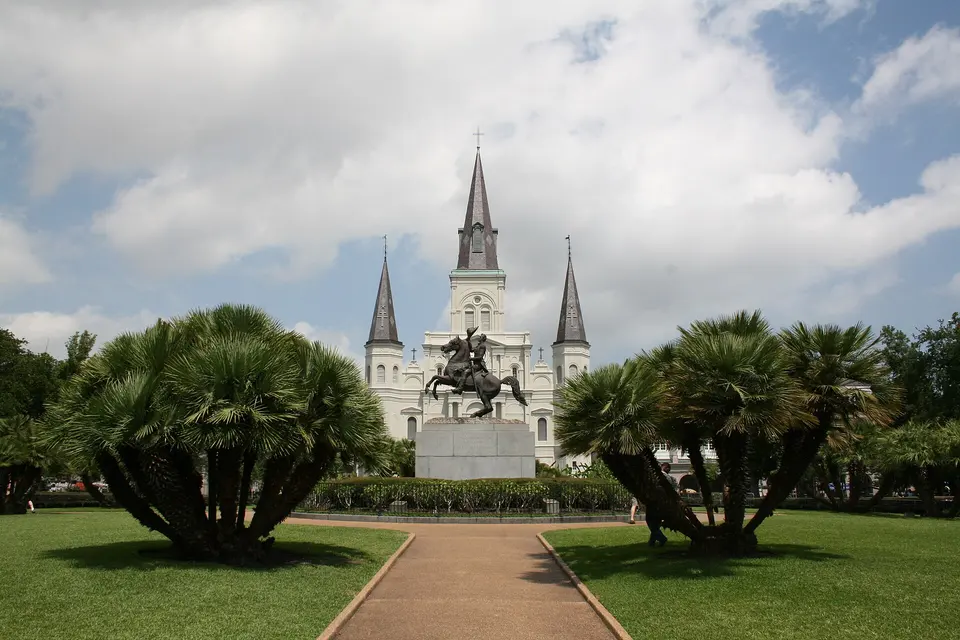
Jackson Square

The Place d'Armes of the 1721 French grid, renamed for Andrew Jackson after the Battle of New Orleans and given his equestrian statue in 1856, is the centre of everything: the cathedral in the middle of its north side, the Cabildo, where the Louisiana Purchase was signed, and the Presbytère either side of it, the Pontalba apartments of 1850 with their iron galleries on the long sides, and painters, tarot readers and brass bands on the railings. Come at 9:00, before the crowds, and climb the levee steps opposite for the river.

  • Plan about 45 min
Right next door
St. Louis Cathedral
Photo: Michael Gaylard, CC BY 2.0
2Cathedral

St. Louis Cathedral

The oldest cathedral in continuous use in the United States stands on the site of the parish church of 1718; the present building of 1789 to 1794, remodelled with its three slate spires in 1850, has a painted ceiling, a flags-of-history gallery and a garden behind it, the St. Anthony's Garden, where the Touchdown Jesus statue throws its shadow on the back wall at night. Entry is free and the self-guided brochure costs a dollar; Mass is daily.

  • Plan about 30 min
  • Open daily 9:30–16:00, last entry 15:45; free; closed to visitors during Mass and weddings

Midday

330 m · about 5 min on foot
French Market and Café du Monde
Photo: Infrogmation of New Orleans, CC BY-SA 3.0
3Market

French Market and Café du Monde

Six blocks of open-sided halls along the river from Jackson Square, on a trading site older than the city, hold the farmers' market, the flea market and food stalls; at the upriver end is Café du Monde, open around the clock since 1862 for one thing, chicory café au lait and beignets under powdered sugar. Have those first, then lunch from the stalls in the market, a muffuletta from Central Grocery across Decatur Street or oysters at the counters on the way.

  • Plan about 1 h 15 min

Afternoon

300 m · about 5 min on foot
Royal Street and the Historic New Orleans Collection
Photo: Infrogmation of New Orleans, CC BY-SA 4.0
4Street and museum

Royal Street and the Historic New Orleans Collection

One block from Bourbon and its opposite: Royal Street is the Quarter's street of antique dealers, galleries, ironwork balconies and street musicians, closed to traffic in the afternoons, with the 1850s Gallier House and the Historic New Orleans Collection at 520 Royal, a free museum of the city's history in a set of restored townhouses with a courtyard, exhibitions and a research library. Walk it from Canal Street towards Esplanade, and look into the courtyards.

  • Plan about 2 h
  • Historic New Orleans Collection: Tue–Sat 9:30–16:30, Sun 10:30–16:30; free; closed Mondays

Evening

240 m · about 4 min on foot
Preservation Hall
Photo: Cory Doctorow, CC BY-SA 2.0
5Jazz venue

Preservation Hall

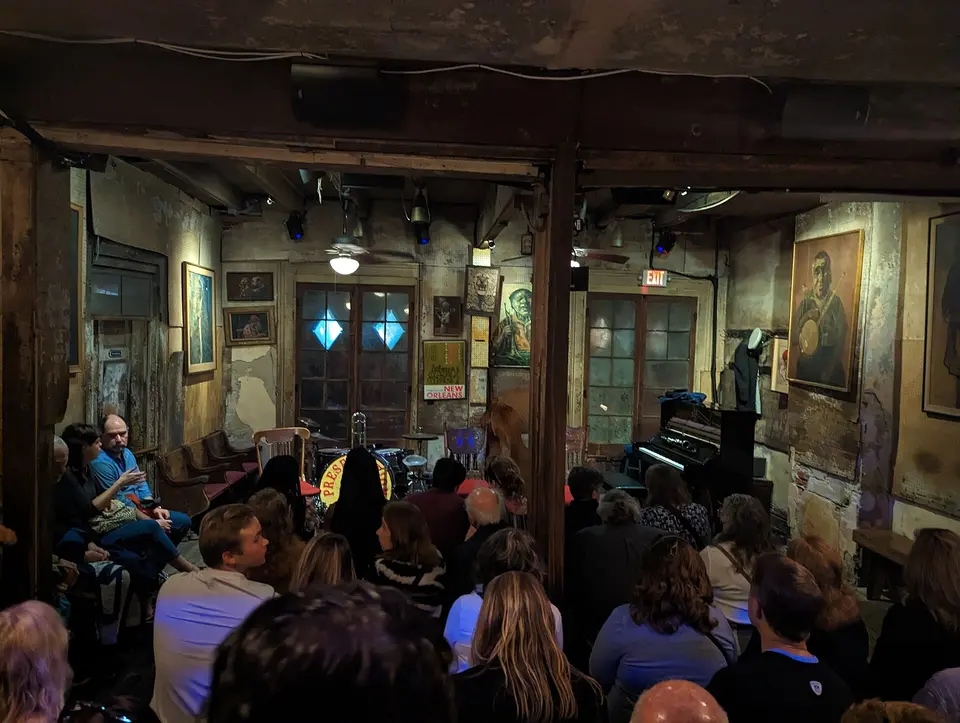
In a bare, unrenovated 1750s carriage house on St. Peter Street, with no bar, no air conditioning and benches on the floor, the hall has presented traditional New Orleans jazz every night since 1961, in 45-minute sets by the resident bands. Everyone of every age is welcome; tickets go on sale about two weeks ahead and sell out, and the standing-room queue forms on the pavement. Take the early set and walk to Frenchmen afterwards.

  • Plan about 1 h 15 min
  • Nightly 45-minute sets, all ages; tickets released about two weeks ahead on preservationhall.com, or queue for standing room
1.2 km · about 19 min on foot
Frenchmen Street, Faubourg Marigny
Photo: Jeremy Thompson, CC BY 4.0
6Music street

Frenchmen Street, Faubourg Marigny

Three blocks of Frenchmen Street just past Esplanade, in the Creole suburb of the Marigny, are where the city goes to hear music: the Spotted Cat, d.b.a., Snug Harbor for modern jazz, the Blue Nile, the Maison and a dozen more, with brass bands on the corner and the Frenchmen Art Market open in the courtyard at night. Most rooms have no cover or a small one; walk in, stay for a set, move on. Dinner is on the same street.

  • Plan about 2 h 30 min

Day 2

Tremé and the Garden District: the cemetery, Congo Square, the streetcar and Magazine Street

Take the licensed tour of St. Louis Cemetery No. 1, cross into Tremé for Congo Square in Louis Armstrong Park and the Mardi Gras Indian suits of the Backstreet Cultural Museum, eat Creole in the neighbourhood, then ride the St. Charles streetcar to the Garden District for its mansions and finish on Magazine Street.

  • 5 sights
  • 1.0 km on foot
  • Longest walk 530 m
123452 kmN
Stops in order, straight-line distancesRoute in Google Maps ↗

Morning

St. Louis Cemetery No. 1
Photo: JasonParis, CC BY 2.0
1Historic cemetery

St. Louis Cemetery No. 1

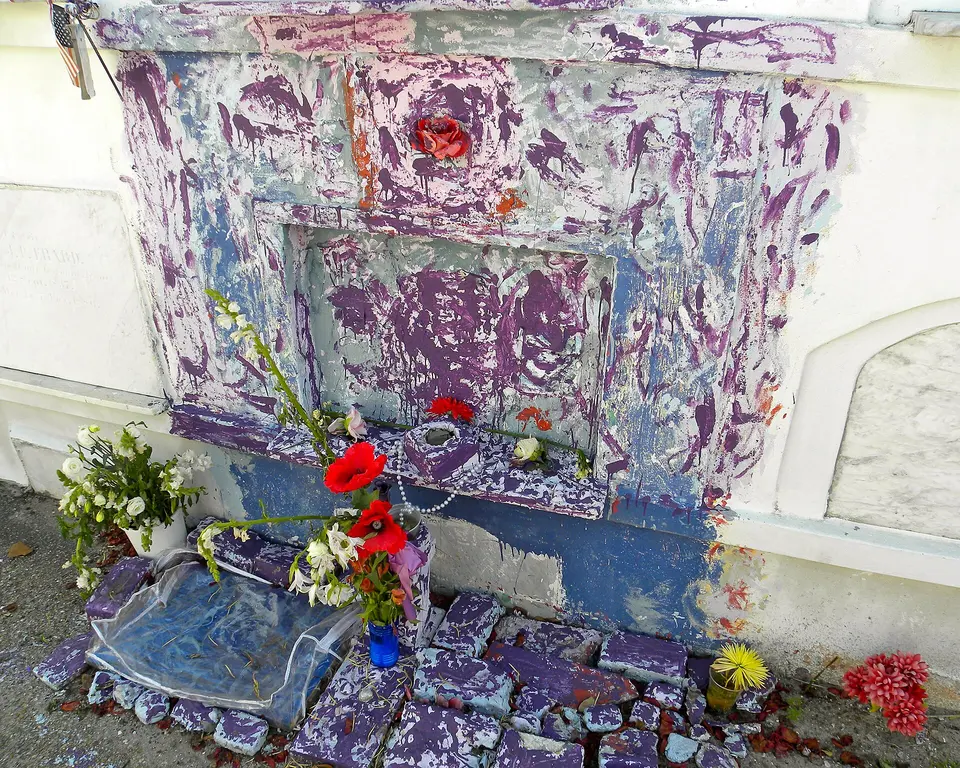
The oldest surviving cemetery in the city, opened in 1789 just outside the old walls, is a single block of crumbling above-ground tombs, family vaults and wall ovens, among them the tomb of the voodoo priestess Marie Laveau, the future pyramid of Nicolas Cage and the Italian mutual-aid society's mausoleum from the film Easy Rider. After years of vandalism the archdiocese admits visitors only with its own licensed guides, on tours that leave through the day from Basin Street.

  • Plan about 1 h
  • Entry only with the official tour: daily 9:00–16:00, about 55 minutes, from USD 29 adults and USD 22 children
530 m · about 8 min on foot
Louis Armstrong Park and Congo Square
Photo: Jason Riedy, CC BY 2.0
2Park

Louis Armstrong Park and Congo Square

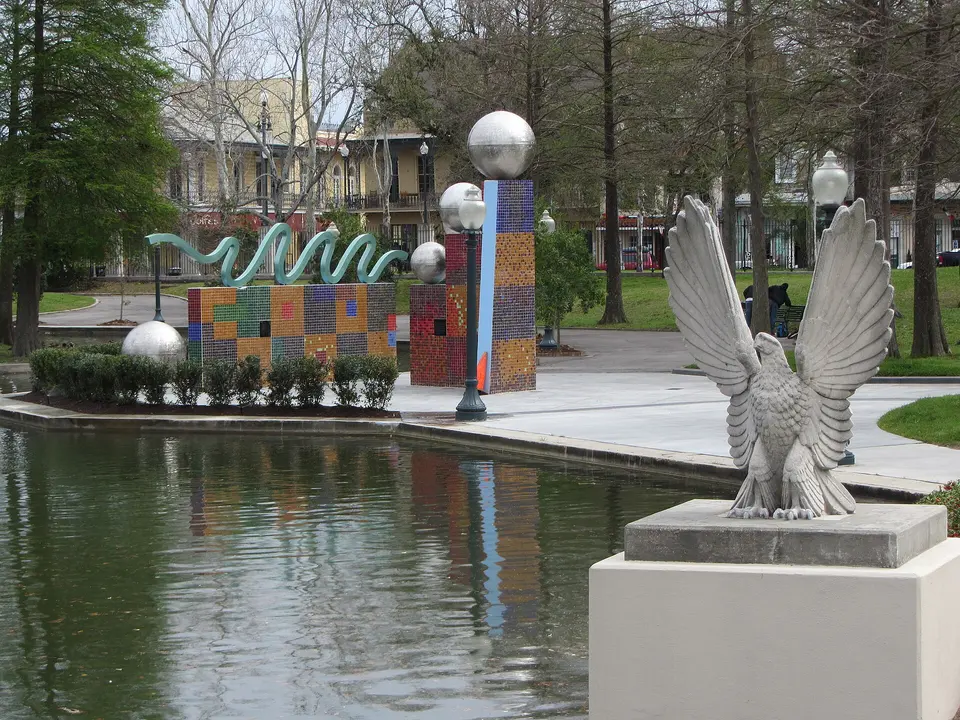
Behind the white arch on Rampart Street, the park holds Congo Square, where enslaved and free Africans gathered on Sunday afternoons in the 18th and 19th centuries to trade, drum and dance, one of the roots of jazz and of the city's music altogether; Sunday drum circles still meet there. Around the lagoons are statues of Armstrong, Sidney Bechet and the Mardi Gras Indian chief Tootie Montana, and the Mahalia Jackson Theater. Walk through it from the cemetery into Tremé.

  • Plan about 45 min
490 m · about 8 min on foot
Backstreet Cultural Museum
Photo: Infrogmation, CC BY 2.5
3Museum

Backstreet Cultural Museum

Sylvester Francis's collection, kept for decades in a former funeral home in Tremé and now on Henriette Delille Street, is the city's own museum of its street culture: the beaded and feathered suits of the Mardi Gras Indians, each sewn by hand over a year, the sashes and umbrellas of the social aid and pleasure clubs, jazz funerals and second lines, with the museum's own films and, often, the family running it to tell the stories. It is small, personal and the best hour in Tremé.

  • Plan about 1 h
  • Small museum with limited hours; check backstreetmuseum.org before going, and call ahead in summer

Midday

LunchTremé has two of the most important restaurants in the city: Dooky Chase's, where Leah Chase fed the civil-rights movement and still serves gumbo and fried chicken at lunch, and Willie Mae's Scotch House, whose fried chicken has a queue by noon. Li'l Dizzy's Café on Esplanade is the neighbourhood's own lunch room.

Afternoon

St. Charles streetcar from Canal Street to Washington Avenue, about 25 minutes; USD 1.25 or a Jazzy Pass
Garden District
Photo: Infrogmation of New Orleans, CC BY-SA 4.0
4Historic neighbourhood

Garden District

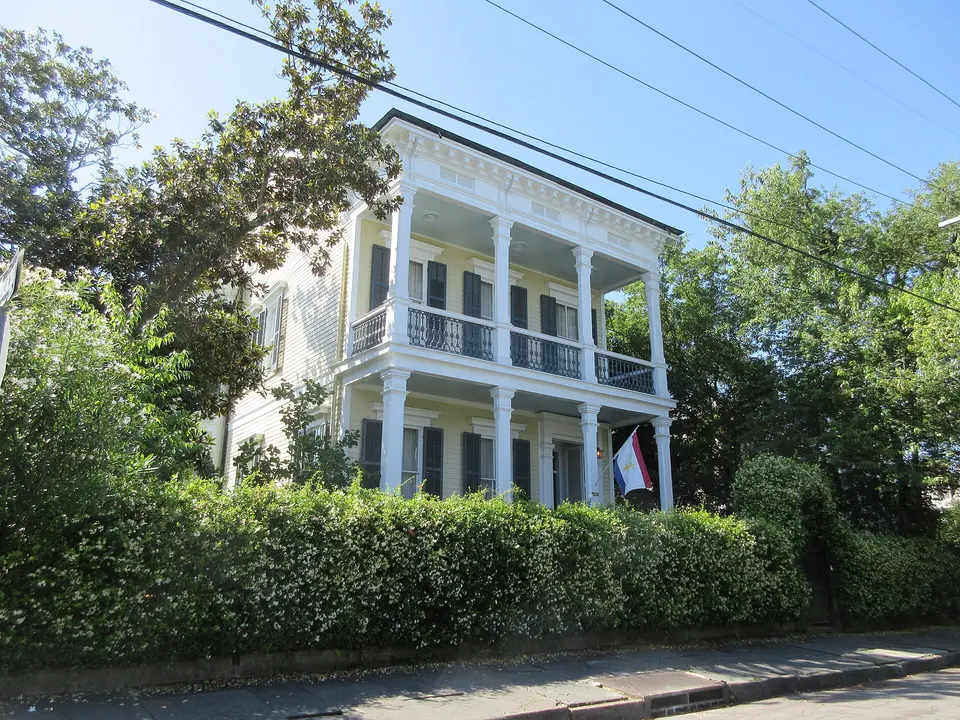
The American answer to the Creole Quarter, laid out in the 1830s upriver for the cotton and sugar merchants who were not welcome downtown, is a grid of Greek Revival and Italianate mansions in gardens of magnolias and live oaks, with iron fences cast in the shape of cornstalks and the tombs of Lafayette Cemetery No. 1 behind their wall on Washington Avenue. Walk Prytania, First and Coliseum streets from the streetcar; the cemetery itself has been closed to the public for restoration since 2020.

  • Plan about 1 h 30 min
  • Free to walk; Lafayette Cemetery No. 1 is closed to the public, with no reopening date announced
A 10-minute walk south from the Garden District's Prytania Street
Magazine Street
Photo: Infrogmation, CC BY-SA 4.0
5Shopping street

Magazine Street

Six miles of low shopfronts running parallel to St. Charles Avenue from the Warehouse District to Audubon Park, Magazine is the city's independent shopping street: antiques, vintage clothes, bookshops, galleries, coffee and a restaurant every block, at its best between Jackson Avenue and Napoleon Avenue behind the Garden District. Walk a stretch of it in the late afternoon and choose dinner there.

  • Plan about 1 h 30 min

Evening

DinnerEat on Magazine Street or the Garden District's edge: Commander's Palace on Washington Avenue is the grand Creole institution, with a jacket suggested and 25-cent martinis at lunch; the lower stretch of Magazine has casual Creole, Vietnamese and oyster bars. The streetcar runs back to Canal Street until after midnight.

Day 3

The WWII Museum, City Park and Bourbon Street

Give the morning to the National WWII Museum in the Warehouse District, lunch nearby, ride the Canal streetcar out to City Park for the New Orleans Museum of Art and its sculpture garden under the oaks, and end the trip on Bourbon Street.

  • 3 sights
  • Transport between sights
1232 kmN
Stops in order, straight-line distancesRoute in Google Maps ↗

Morning

The National WWII Museum
Photo: ironypoisoning, CC BY-SA 2.0
1Museum

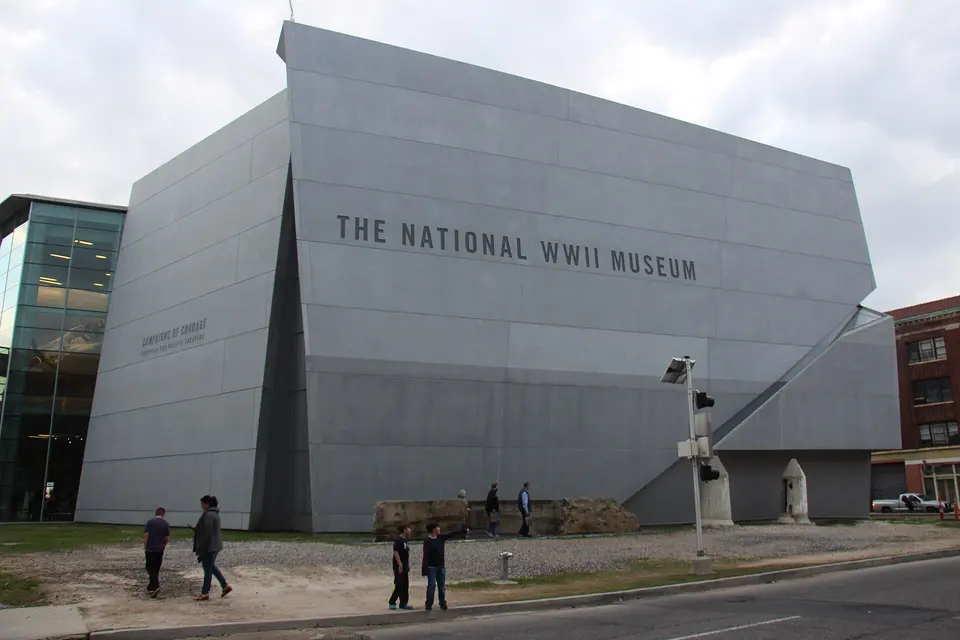
The National WWII Museum

Founded in 2000 as the D-Day Museum, because the Higgins landing boats were built in New Orleans, and designated the national museum of the war by Congress, the campus of six pavilions in the Warehouse District covers the American war from the home front through the campaigns in Europe and the Pacific, with restored aircraft hung in a glass hangar, an oral-history dog-tag system that follows one serviceman through the galleries and the 4D film Beyond All Boundaries. It is the most visited attraction in the city; allow three hours and book online.

  • Plan about 3 h
  • Daily 9:00–17:00; USD 37 adults, USD 34 seniors, USD 27 students and military, under-5s free; Beyond All Boundaries USD 9 extra

Midday

LunchThe Warehouse District around the museum is the city's modern restaurant row: Cochon for Cajun pork and boudin, Pêche for wood-grilled fish, the museum's own American Sector diner, or a po'boy from any corner counter. Book the sit-down ones a day ahead.

Afternoon

Canal streetcar (City Park/Museum branch) from Canal Street to the end of the line at the park entrance, about 35 minutes; a taxi takes 15
New Orleans Museum of Art and Besthoff Sculpture Garden
Photo: Infrogmation, CC BY-SA 4.0
2Art museum and park

New Orleans Museum of Art and Besthoff Sculpture Garden

At the end of the Canal streetcar line, in the 1,300 acres of City Park under some of the oldest live oaks in the country, the neoclassical museum of 1911 holds French and American painting, African and Japanese art, photography and Louisiana decorative arts, and beside it the free Sydney and Walda Besthoff Sculpture Garden spreads more than ninety works by Louise Bourgeois, Anish Kapoor, Yayoi Kusama and others across eleven acres of lagoons, bridges and oaks. Add the café at Morning Call for beignets in the park.

  • Plan about 2 h 30 min
  • Museum Sun and Tue–Sat 10:00–17:00, Wed 12:00–19:00, closed Mondays; USD 23 for out-of-state adults, under-19s free; sculpture garden free

Evening

Canal streetcar back to the French Quarter, or a 15-minute taxi
Bourbon Street
Photo: Infrogmation, CC BY-SA 4.0
3Nightlife street

Bourbon Street

The Quarter's loudest street, named for the French royal house rather than the whiskey, is eight blocks of neon, balconies, daiquiri windows, cover bands, strip clubs and drinks carried in the open, which is legal here; it is not where locals go, but it is a rite. See it once after dark, with a Hurricane from Pat O'Brien's courtyard and a look into the 1722 Lafitte's Blacksmith Shop bar at the quiet far end, and then turn down a side street for the dinner you actually want.

  • Plan about 2 h

Good to know in New Orleans

Tickets and opening days

  • The National WWII Museum is open daily 9:00–17:00, closed on Mardi Gras Day, Thanksgiving, Christmas Eve and Christmas Day; general admission is USD 37 for adults, USD 34 for seniors (65+), USD 27 for students, military and K–12 educators, free for children under 5, with the film Beyond All Boundaries USD 9 extra.Source: The National WWII Museum, plan your visit · checked Sep 2026
  • St. Louis Cemetery No. 1 can only be entered with the archdiocese's official guided tour, which runs daily from 9:00 to 16:00, lasts about 55 minutes and costs from USD 29 for adults and USD 22 for children; no other tour company is permitted inside.Source: Cemetery Tours of New Orleans (New Orleans Catholic Cemeteries) · checked Sep 2026
  • Lafayette Cemetery No. 1 in the Garden District is closed to the public for restoration and no reopening date has been set.Source: Lafayette Cemetery No. 1 · checked Sep 2026
  • Preservation Hall presents traditional New Orleans jazz nightly in 45-minute sets; all ages are welcome, and the concert schedule and tickets are released about two weeks in advance.Source: Preservation Hall, FAQ · checked Sep 2026
  • The New Orleans Museum of Art is open Sunday, Tuesday, Thursday, Friday and Saturday 10:00–17:00 and Wednesday 12:00–19:00, closed Mondays; out-of-state visitors pay USD 23 for adults, USD 18 for seniors and USD 16 for students, and everyone 19 and under enters free. The Besthoff Sculpture Garden is free and open daily 10:00–18:00 from April to September and 10:00–17:00 from October to March.Source: New Orleans Museum of Art, visit · checked Sep 2026
  • The Historic New Orleans Collection at 520 Royal Street is open Tuesday to Saturday 9:30–16:30 and Sunday 10:30–16:30; admission is free.Source: The Historic New Orleans Collection, visit · checked Sep 2026
  • St. Louis Cathedral is open to visitors daily 9:30–16:00, with last entry at 15:45; entry is free and a self-guided tour brochure is available for USD 1. The cathedral closes to visitors during Mass, weddings and funerals.Source: St. Louis Cathedral, visit · checked Sep 2026
  • The French Market's flea market is open daily 10:00–16:00 and the farmers' market daily 10:00–18:00, at 1008 N. Peters Street.Source: French Market New Orleans · checked Sep 2026

Getting around

  • RTA streetcars and buses cost USD 1.25 a ride, paid with exact cash on board or through the Le Pass app; a Jazzy Pass gives unlimited rides for USD 3 a day, USD 8 for three days or USD 15 for seven days.Source: New Orleans RTA, fares · checked Sep 2026
  • The Steamboat Natchez, the last steam-powered sternwheeler on the Mississippi, sails from the Toulouse Street wharf behind Jackson Square: the two-hour jazz lunch cruise is USD 65 with lunch or USD 43.50 sightseeing only, the dinner jazz cruise USD 107.50, and a 75-minute sightseeing cruise USD 25.75.Source: Steamboat Natchez · checked Sep 2026

3 days in New Orleans: quick answers

Is 3 days enough for New Orleans?

Three days cover the French Quarter properly, the two historic neighbourhoods on either side of it, the best museum in the city and the music. A fourth day is the swamp: an airboat or kayak tour in the bayous of Jean Lafitte National Historical Park, or the plantations of the River Road, Whitney and Laura, which tell the story from the enslaved people's side.

Which days should I plan around?

The New Orleans Museum of Art is closed on Mondays, and the Historic New Orleans Collection on Mondays too. The WWII Museum is open daily except Mardi Gras, Thanksgiving, Christmas Eve and Christmas. St. Louis Cemetery No. 1 tours run daily. The French Market's flea and farmers' markets are open every day. Mardi Gras, Jazz Fest in late April and early May, and any Saints home game fill the hotels; the hurricane season peaks in August and September, and summer afternoons bring thunderstorms.

How much do the tickets cost?

The cathedral, the parks, the markets, the Historic New Orleans Collection and the streets themselves are free. The WWII Museum is USD 37 for adults, the cemetery tour from USD 29, the New Orleans Museum of Art USD 23 for out-of-state visitors with the sculpture garden free, and Preservation Hall sets are ticketed by the show. Streetcars are USD 1.25 a ride or USD 3 for a day pass.

How do I get around?

On foot in the French Quarter and by streetcar beyond it: the St. Charles line to the Garden District, the Canal line to City Park, the Riverfront line along the levee. Pay USD 1.25 in exact cash on board, or buy a Jazzy Pass for one, three or seven days in the Le Pass app. Taxis and ride-hailing apps are plentiful, and a bicycle is a good way to reach the Bywater and City Park.

How much walking is this itinerary?

About 2.5 km in a straight line on day one, all flat and all inside the French Quarter; about 2 km on day two plus the streetcar; and about 1 km on day three plus two streetcar rides. Summer heat and humidity are the real limit, so the mornings are outdoors and the afternoons indoors from June to September.

Other New Orleans itineraries

Keep exploring

Where this connects

THE TRIPWOA APP

Go somewhere.
Make it yours.

Build days around what you love. Follow your route, find your next stop and keep the moments along the way.

Get it on Google PlayAvailable for Android
Free to start
Tripwoa home with a Paris trip and nearby places to explore
Tripwoa day plan for New York with a route map and Times Square stop

A day that feels like you.

Sources and method

Places and coordinates: Wikidata and Tripwoa's open-data place catalog (Overture Maps Foundation, © OpenStreetMap contributors). Photos: Wikimedia Commons, credited on each image. Practical rules: the official sources linked in each note, checked in September 2026.

How this plan was made: Tripwoa's planner drafted the day order from real coordinates and typical visit times. Each stop was then reviewed, reordered where needed and rewritten with AI assistance. Walking distances are straight-line estimates, so allow a little extra time on real streets.