3-day itinerary · China

3 Days in Shanghai

A realistic first-timer plan that keeps each day on one side of the city: the Bund at its quietest in the morning, Nanjing Road, the Shanghai Museum and a Huangpu cruise after dark; the Ming garden and temple of the old town, then across the river to the top of the Shanghai Tower and the Lujiazui riverside; and a last day of shikumen houses in Xintiandi, the lanes of Tianzifang, the plane trees of Wukang Road and the gold roofs of Jing'an Temple. Every stop comes with walking distances and the rules that matter in 2026.

  • 3days
  • 12sights
  • 4.0 kmon foot between sights

Updated 12 September 2026 · 5 official sources checked · report an error

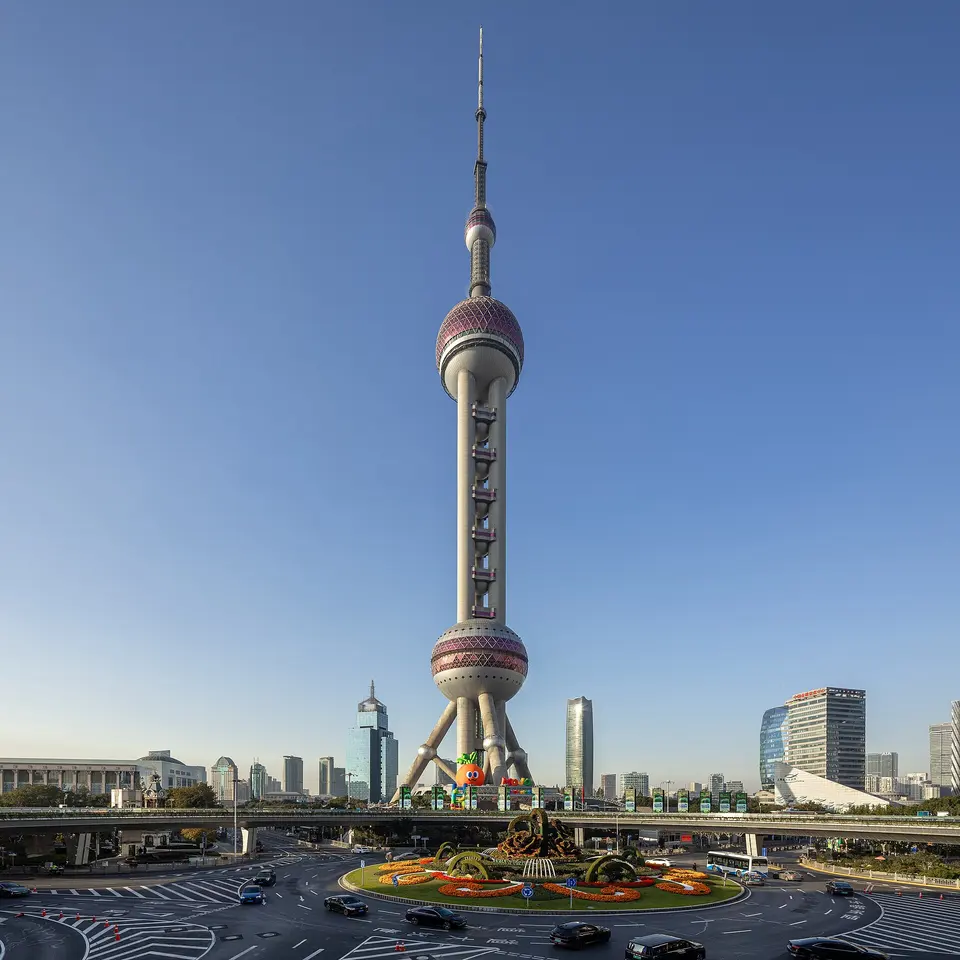
Lujiazui riverside and the Oriental Pearl Tower
Photo: Supanu, CC BY 4.0

The Bund and the river, then the old town and Pudong, then the French Concession

Shanghai rewards walking more than any other Chinese city, so the plan is built on three long walks with the metro in between. Day one starts on the Bund before the crowds, follows Nanjing Road to People's Square and the Shanghai Museum, and comes back to the river for a night cruise from Shiliupu. Day two is the old walled town, Yu Garden and the City God Temple in the morning, then the ferry or metro across to Pudong for the 118th-floor observatory of the Shanghai Tower and the riverside view back at the Bund. Day three is the former French Concession from Xintiandi to Tianzifang and Wukang Road, ending at the Jing'an Temple. Yu Garden and the Shanghai Museum keep Monday closures, so put day two on any other day.

At a glance

Ways to use these days

Lightest day on foot
Day 2 — 2.2 km between stops
Most walking
Day 3 — 6.6 km

Day 1

The Bund, Nanjing Road and the river at night

Walk the Bund's 1920s waterfront when it is empty, follow the shoppers up Nanjing Road to People's Square, spend the afternoon in the Shanghai Museum, and come back to the river for a Huangpu cruise under the lit towers of Pudong.

  • 4 sights
  • 1.8 km on foot
  • Longest walk 1.2 km
1234500 mN
Stops in order, straight-line distancesRoute in Google Maps ↗

Morning

The Bund
Photo: Bohao Zhao, CC BY 3.0
1Historic waterfront

The Bund

A kilometre and a half of banks, hotels and trading houses from the 1900s to the 1930s stands along the Huangpu, from the steel Waibaidu Bridge of 1908 over Suzhou Creek to the Customs House with its 1927 clock tower and the domed former HSBC building; the raised promenade opposite looks straight across the river at the Oriental Pearl Tower and the three supertall towers of Lujiazui. Walk it at 8:00, when the only company is people doing tai chi and flying kites, and come back after dark, when both banks are lit.
  • Plan about 1 h 15 min
1.2 km · about 18 min on foot
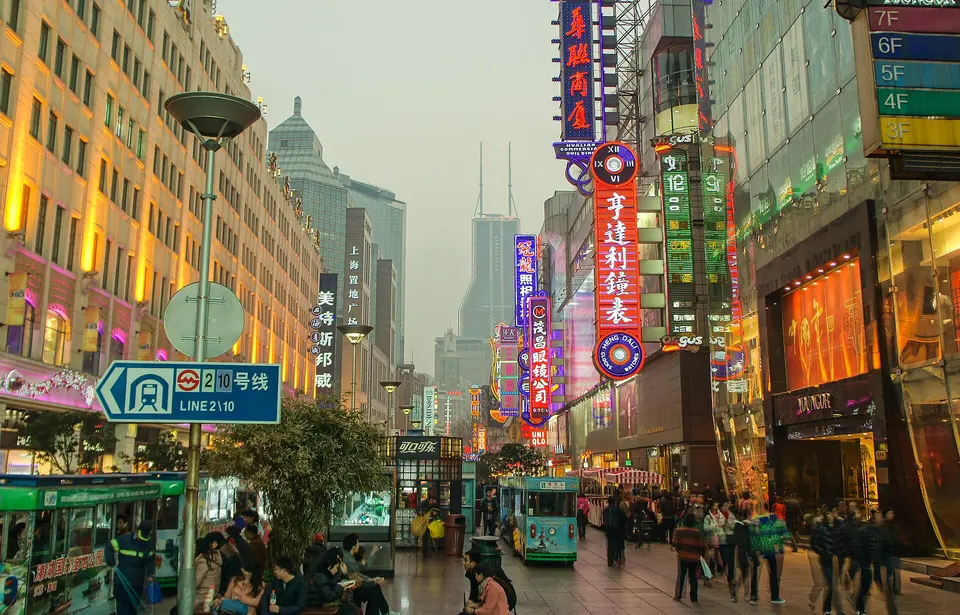
Nanjing Road East
Photo: HeroicLife, CC BY 2.0
2Pedestrian shopping street

Nanjing Road East

China's most famous shopping street runs a kilometre and a half west from the Bund to People's Square, pedestrian since 1999, lined with the department stores of the 1930s, Wing On and Sincere and the Sun, and their neon successors; a little electric train runs its length for those who would rather not walk. It is loudest and brightest after dark, but in the morning it is the direct road to the museum.

  • Plan about 1 h

Midday

LunchThe side streets off East Nanjing Road have the old-style Shanghai canteens: Wu Fang Zhai for rice dumplings, Shen Da Cheng for sweets, and the food courts of the department stores; the malls around People's Square cover everything else.

Afternoon

620 m · about 10 min on foot
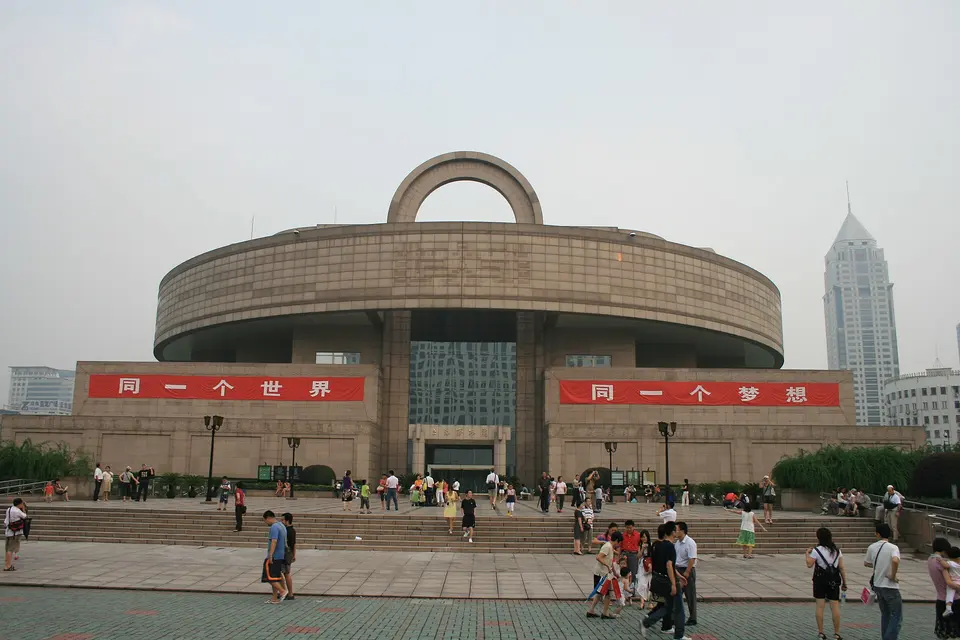
Shanghai Museum (People's Square)
Photo: Gary Todd, CC0
3Museum

Shanghai Museum (People's Square)

The 1996 building on People's Square, shaped like an ancient bronze ding cooking vessel, was for thirty years the home of China's finest collection of bronzes, ceramics, calligraphy and painting; those galleries have moved to the new Shanghai Museum East in Pudong, and the People's Square halls now stage one big exhibition at a time, the ancient civilizations of the Americas until late 2027. Individual visitors walk in with an ID through the south gate, no reservation needed since September 2025; the square outside was the racecourse of the old International Settlement.

  • Plan about 2 h
  • 9:00–17:00, last entry 16:00; closed Mondays; walk in with ID, reservations only in holiday periods

Evening

Metro line 10 from People's Square to Yuyuan Garden, one stop, then a 10-minute walk to Shiliupu wharf; or a 30-minute walk back down East Nanjing Road and south along the Bund
Huangpu River night cruise from Shiliupu
Photo: shankar s., CC BY 2.0
4River cruise

Huangpu River night cruise from Shiliupu

The classic Shanghai evening is a boat from Shiliupu, the old steamer wharf at the south end of the Bund, up the river past the lit façades of the Bund on one side and the Oriental Pearl, the Jin Mao Tower, the World Financial Center and the Shanghai Tower on the other, and back, a loop of about an hour with departures through the evening. Tickets are real-name: buy them at the wharf windows with a passport or in the Huangpu River Cruise WeChat mini-program, and go on the open upper deck.

  • Plan about 1 h 15 min
  • Shiliupu wharf, 481 Zhongshan East 2nd Road; tickets at the windows or the WeChat mini-program; passport

Day 2

The old town and the top of Pudong

See Yu Garden and the City God Temple before the bazaar fills up, eat soup dumplings in the old town, cross the river to the Shanghai Tower's observatory, and walk the Lujiazui riverside as the Bund lights up opposite.

  • 4 sights
  • 680 m on foot
  • Longest walk 520 m
1234500 mN
Stops in order, straight-line distancesRoute in Google Maps ↗

Morning

Yu Garden
Photo: Stefan Fussan, CC BY-SA 3.0
1Classical garden

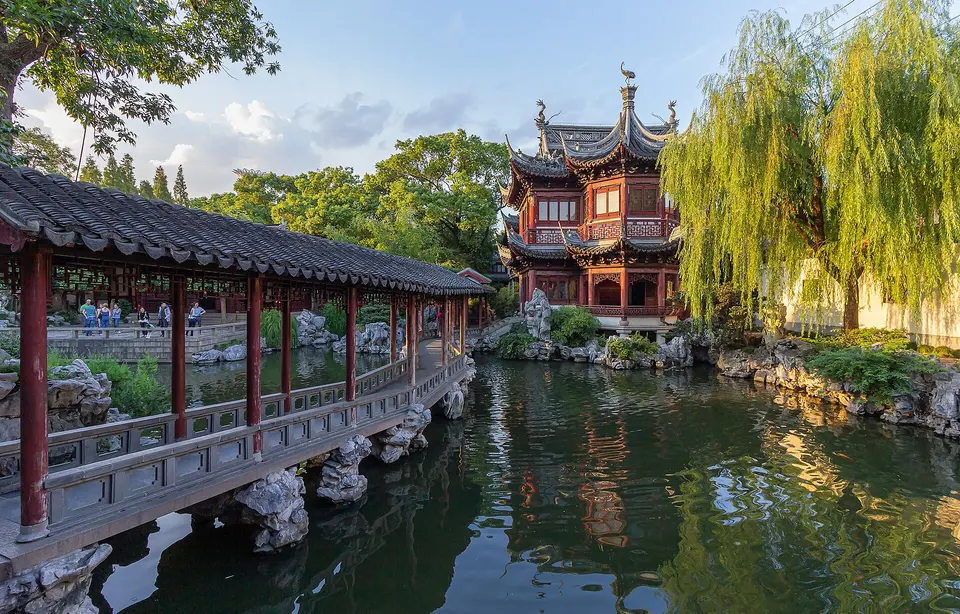
Yu Garden

A Ming official built this two-hectare garden between 1559 and 1577 for his aged father, and it is the finest classical garden in the city: pavilions, halls and covered walkways around ponds, rockeries of yellow stone, walls that end in dragons' heads, and the Exquisite Jade Rock, a porous boulder said to have been meant for the Song emperor's garden. Be at the gate at 9:00; by mid-morning the bazaar outside, with the Huxinting teahouse on its zigzag bridge, has filled up.

  • Plan about 1 h 30 min
  • 9:00–17:00 in high season, 9:00–16:30 in low; keep the visit off a Monday
160 m · about 3 min on foot
City God Temple and the Yuyuan Bazaar
Photo: Chainwit., CC BY 4.0
2Taoist temple and bazaar

City God Temple and the Yuyuan Bazaar

The Taoist temple of Shanghai's protecting deity was founded in 1403 in the walled Chinese town, and the market that grew around it became the Yuyuan Bazaar: a maze of lanes of Ming-style shops rebuilt in the 1990s, selling tea, chopsticks, pearls, folk crafts and the snacks that keep the crowds moving. Step into the temple's incense-filled halls, then take the lane south to Shanghai Old Street, the last stretch of the old town with shophouses still in use.

  • Plan about 1 h

Midday

LunchNanxiang Steamed Bun Restaurant by the zigzag bridge has queued for its xiaolongbao since 1900; the lanes of the Yuyuan Bazaar and Shanghai Old Street have every other Shanghai snack, from scallion pancakes to crab-roe buns.

Afternoon

Metro line 14 from Yuyuan Garden to Lujiazui, two stops, about 10 minutes; or a 10-minute walk to the Fuxing Road ferry pier, a five-minute crossing to Dongchang Road and a 15-minute walk
Shanghai Tower
Photo: GG001213, CC0
3Observation deck

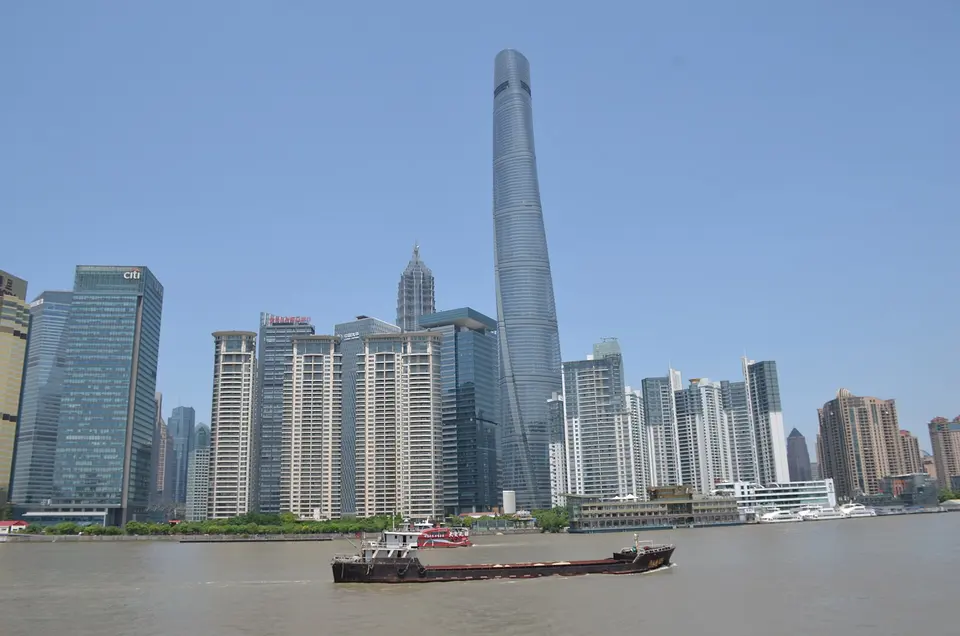
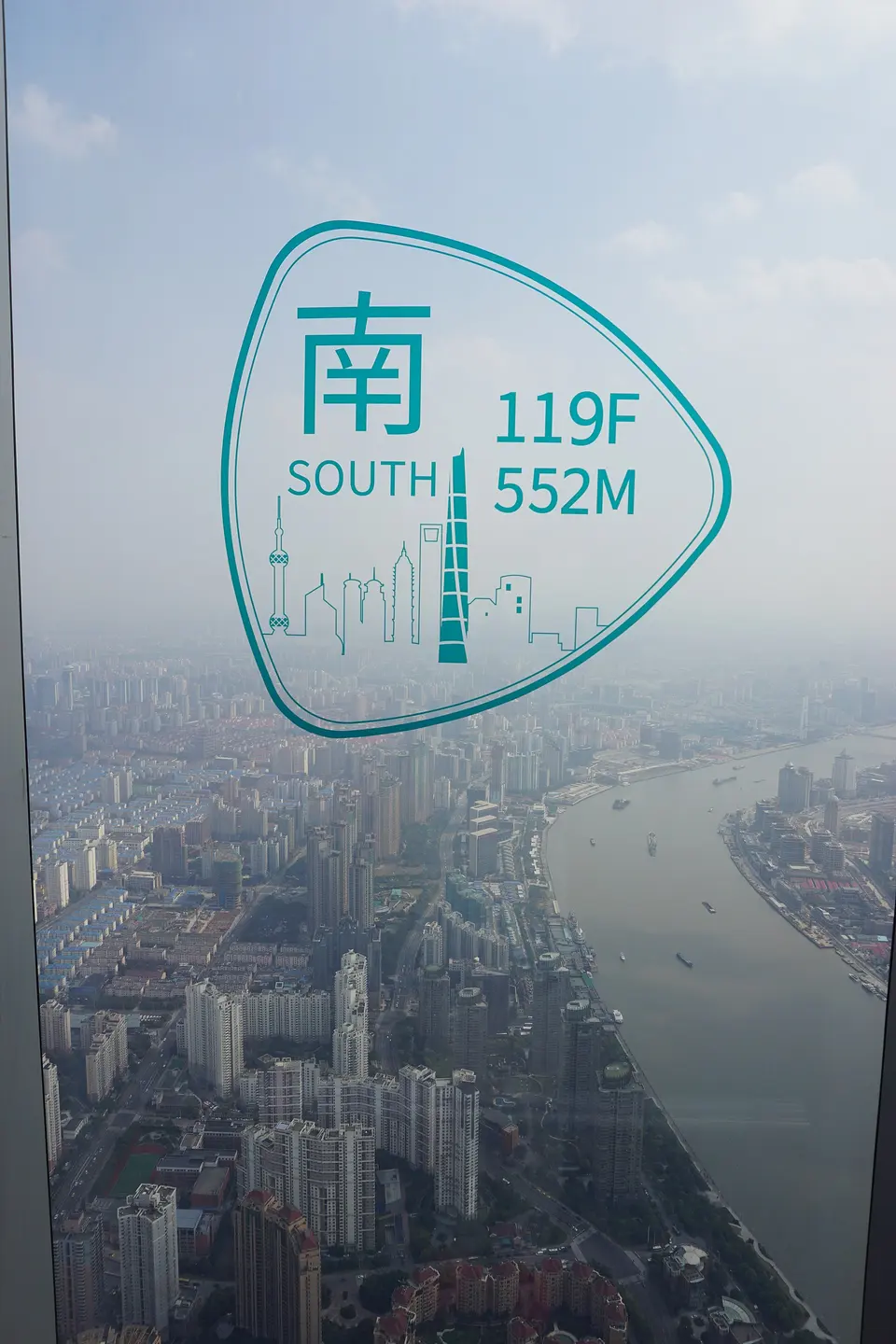
Shanghai Tower

The 632-metre twisting tower, the tallest in China and the third tallest in the world when it opened in 2015, carries the Top of Shanghai observatory on its 118th floor at 546 metres, reached by lifts that were the world's fastest at 20.5 metres a second; the view takes in the whole bend of the river, the Bund at your feet and, on a clear day, the sea. Tickets are tied to an ID, so bring your passport; the 125th floor, with the 1,000-tonne damper that steadies the building in typhoons, is on the dearer ticket.

  • Plan about 1 h 30 min
  • Real-name ticket, passport needed; go in the late afternoon and stay for the lights

Evening

520 m · about 8 min on foot
Lujiazui riverside and the Oriental Pearl Tower
Photo: Supanu, CC BY 4.0
4Skyline district

Lujiazui riverside and the Oriental Pearl Tower

The financial district on the Pudong bank was farmland in 1990; now the 468-metre Oriental Pearl TV Tower of 1994, the pagoda-like Jin Mao Tower of 1999 and the bottle-opener silhouette of the World Financial Center stand around the Shanghai Tower, linked by a raised circular footbridge above the traffic. Walk down to Binjiang Avenue, the riverside promenade below the towers, for the view every postcard shows in reverse: the whole curve of the Bund, floodlit, across the water.

  • Plan about 1 h 15 min

Day 3

The French Concession: Xintiandi, Tianzifang and Wukang Road

Start among the restored stone-gate houses of Xintiandi, browse the lane-house workshops of Tianzifang, walk the plane-tree avenues of the former French Concession to the Wukang Mansion, and end under the golden roofs of Jing'an Temple.

  • 4 sights
  • 1.5 km on foot
  • Longest walk 1.5 km
12341 kmN
Stops in order, straight-line distancesRoute in Google Maps ↗

Morning

Xintiandi
Photo: Can Pac Swire, CC BY-SA 2.0
1Restored shikumen district

Xintiandi

Two blocks of 1920s shikumen, the stone-gated brick lane houses that once housed most of Shanghai, were gutted and rebuilt in 2001 as an open-air quarter of cafés, restaurants and boutiques, the model for every redevelopment since; a shikumen museum shows what the houses were like inside. On the corner, the house where the Chinese Communist Party held its first congress in July 1921 is now a memorial museum, free with a passport.

  • Plan about 1 h
1.5 km · about 23 min on foot
Tianzifang
Photo: 钉钉, CC BY-SA 4.0
2Lane-house arts quarter

Tianzifang

Where Xintiandi is polished, Tianzifang is lived in: a warren of 1930s lilong lanes off Taikang Road where washing still hangs above the doors, filled since the early 2000s with artists' studios, craft shops, tea sellers, cafés and small bars. Go in at Lane 210 and let yourself get lost; the alleys are narrow, the shops tiny and the best of it is upstairs and around corners.

  • Plan about 1 h 15 min

Midday

LunchTianzifang's lanes are lined with cafés and small restaurants, from Shanghainese home cooking to Thai and Japanese; Xintiandi's courtyards are the smarter, pricier option on the way.

Afternoon

Taxi about 10 minutes, or a 35-minute walk west along Fuxing Middle Road through the plane-tree streets
Wukang Road and the Wukang Mansion
Photo: N509FZ, CC BY-SA 4.0
3Historic street

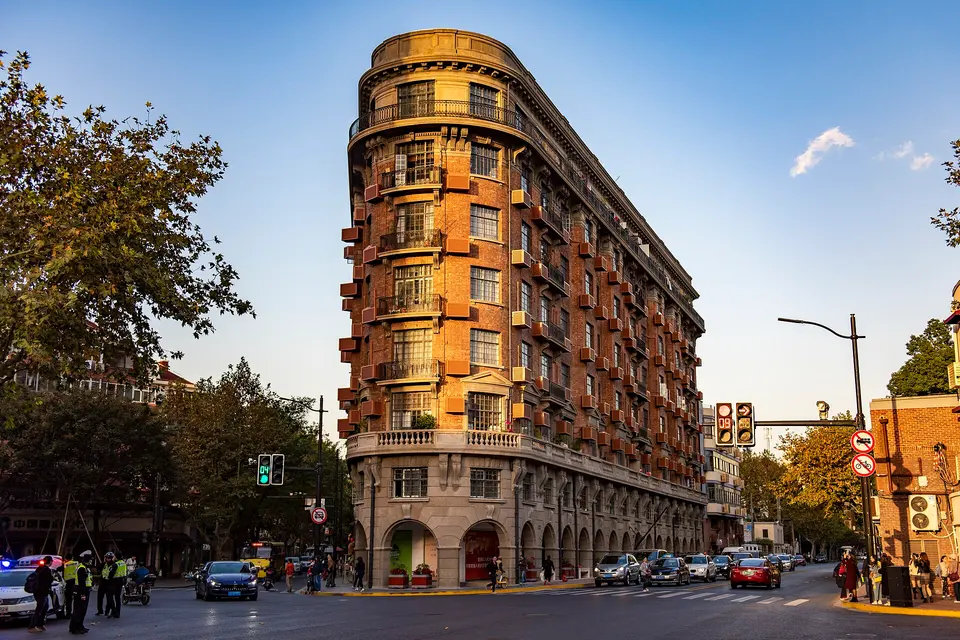
Wukang Road and the Wukang Mansion

The former French Concession is a grid of plane-tree avenues of villas, garden apartments and consulates, and Wukang Road is its finest kilometre: at the southern end the wedge-shaped Wukang Mansion, the Normandie Apartments designed by László Hudec in 1924, has become the most photographed building in the city. Walk the road north past the plaques on the old houses, with detours into Anfu Road and Ferguson Lane for the cafés and bookshops.

  • Plan about 1 h 15 min

Evening

A 30-minute walk north up Wukang Road and Huashan Road, or metro line 7 from Changshu Road to Jing'an Temple, one stop
Jing'an Temple
Photo: kallerna, CC BY-SA 4.0
4Buddhist temple

Jing'an Temple

A temple has stood on West Nanjing Road since 1216, and its origins go back to 247, but the present halls were rebuilt in the 2000s in Song style with camphor-wood columns and gilded copper roofs that glow between the malls and towers of the Jing'an business district; the main hall holds a silver Buddha, and the courtyard fills with incense from the morning on. It is the right end for the day: the temple is lit at dusk, and the restaurants of West Nanjing Road and the Jing'an Kerry Centre are across the street.

  • Plan about 1 h

Good to know in Shanghai

Tickets and opening days

  • From September 1, 2025 the Shanghai Museum on People's Square no longer requires reservations for individual visitors: enter through the south gate with valid identification, 9:00–17:00 with last entry at 16:00; closed on Mondays except national holidays. Advance booking still applies in national holidays, summer and winter school breaks and for popular special exhibitions.Source: Shanghai Municipal Government · checked Sep 2026
  • The People's Square building is showing the exhibition On Top of the World Tree: Ancient Civilizations of the Americas through November 2027 and hosts no other exhibitions during that time; overseas visitors who want a timed ticket can book through the museum's WeChat mini-program or trip.com.Source: Shanghai Museum · checked Sep 2026
  • Yuyuan Garden (No. 168 Fuyou Road) is listed as open daily 9:00–17:00 in peak season and 9:00–16:30 in the off season.Source: Meet in Shanghai, the official Shanghai travel site · checked Sep 2026
  • Huangpu River cruises leave most often from Shiliupu Tourist Quay at 481 Zhongshan Road East 2, close to the Bund and Yuyuan Garden, with other departures from the North Bund cruise terminal, Qinhuangdao Road and Jinling Road East quays. Tickets are sold in the Shanghai Huangpu River Cruise WeChat mini-program, the cruise companies' WeChat accounts, the SH MaaS app, third-party platforms and the ticket windows.Source: Meet in Shanghai, the official Shanghai travel site · checked Sep 2026

Getting around

  • Since June 28, 2025 the whole Shanghai Metro network accepts tap-to-ride with contactless UnionPay, Visa, Mastercard, American Express and JCB cards and e-CNY hard wallets. Passengers must enable their card's small-amount password-free payment feature; cards with Type-B chips or without the ODA function are excluded.Source: Shanghai Municipal Government · checked Sep 2026

3 days in Shanghai: quick answers

Is 3 days enough for Shanghai?

Three days cover the Bund and the river, the old town, the Pudong skyline from the top, the museum and the best of the former French Concession. A fourth day allows the permanent collection at Shanghai Museum East in Pudong, the water town of Zhujiajiao, the Jade Buddha Temple and the M50 galleries, or Shanghai Disneyland.

Which days should I plan around?

The Shanghai Museum is closed on Mondays. Yu Garden's official listing gives 9:00–17:00 in high season, and visitor guides consistently report a Monday closure, so keep day two off a Monday as well. The Bund, the towers, the cruise and the temples are open every day.

Do I need a reservation for anything?

Since September 2025 individual visitors walk into the Shanghai Museum at People's Square with an ID and no booking, except in national holidays and school breaks. The Shanghai Tower observatory and the river cruise sell real-name tickets, so carry your passport; the cruise can be bought at the wharf windows or in the Huangpu River Cruise WeChat mini-program.

How do I pay for the metro?

Since June 2025 the whole Shanghai Metro takes contactless Visa, Mastercard, American Express, JCB and UnionPay cards tapped at the gate, as long as the card's small-amount no-PIN payment is switched on; Alipay and WeChat ride codes linked to a foreign card work too. Taxis are cheap and take cards or Alipay.

How much walking is this itinerary?

About 4 km in a straight line between sights on day one, under 1 km plus the ferry or metro on day two, and about 2 km plus two short rides on day three; the Bund, Nanjing Road and Wukang Road are all flat, pedestrian walks.

Other Shanghai itineraries

Keep exploring

Where this connects

THE TRIPWOA APP

Go somewhere.
Make it yours.

Build days around what you love. Follow your route, find your next stop and keep the moments along the way.

Get it on Google PlayAvailable for Android
Free to start
Tripwoa home with a Paris trip and nearby places to explore
Tripwoa day plan for New York with a route map and Times Square stop

A day that feels like you.

Sources and method

Places and coordinates: Wikidata and Tripwoa's open-data place catalog (Overture Maps Foundation, © OpenStreetMap contributors). Photos: Wikimedia Commons, credited on each image. Practical rules: the official sources linked in each note, checked in September 2026.

How this plan was made: Tripwoa's planner drafted the day order from real coordinates and typical visit times. Each stop was then reviewed, reordered where needed and rewritten with AI assistance. Walking distances are straight-line estimates, so allow a little extra time on real streets.