Notre-Dame de Paris
The Gothic cathedral on the Île de la Cité reopened in December 2024 after the 2019 fire, with a rebuilt spire and freshly cleaned stone. Look at the three carved portals of the west front before you go in.
Multi-city itinerary · first-timers
Three nights in Paris, three in Brussels, three in Amsterdam. One area per day, real walking distances, official ticket rules. Two Eurostar mornings — day 4 and day 7 — so you never burn a full day on a train.
3 Paris · 3 Brussels · 3 Amsterdam · trains and tickets checked September 2026

The trip at a glance
Open a day for the stops, the walk and the ticket that belongs to it. Each city day has a full map on its own page.
Day 1 · Paris
Begin at Notre-Dame and Sainte-Chapelle on the Île de la Cité, cross the Pont Neuf for lunch, then spend the afternoon in the Louvre before walking through the Tuileries to Place de la Concorde.

Morning

The Gothic cathedral on the Île de la Cité reopened in December 2024 after the 2019 fire, with a rebuilt spire and freshly cleaned stone. Look at the three carved portals of the west front before you go in.

Built in the 1240s for Louis IX to hold relics of the Passion, its upper chapel is walled almost entirely with stained glass, much of it from the 13th century. It stands inside the Palais de Justice, so every visit starts with a security check.

Despite its name, the 'New Bridge' is the oldest standing bridge across the Seine in Paris, finished in 1607. It crosses the western tip of the Île de la Cité, where steps lead down to the Square du Vert-Galant at the water's edge.
Midday
Afternoon

A royal palace turned into the world's most visited museum, home to the Mona Lisa, the Venus de Milo and the Winged Victory of Samothrace. Pick two or three wings instead of trying to see everything; the galleries hold tens of thousands of works.

André Le Nôtre redesigned this formal garden in the 17th century, and it still runs in a straight line from the Louvre to Place de la Concorde, with ponds, statues and green metal chairs. The Musée de l'Orangerie, home to Monet's Water Lilies, sits at its far end.

The largest square in Paris, where Louis XVI and Marie Antoinette were guillotined during the Revolution. At its centre stands the Luxor Obelisk, more than 3,000 years old, and the view runs up the Champs-Élysées to the Arc de Triomphe.
Evening
Louvre timed slot. Closed Tuesdays — swap with day 2 if you land on one. Sainte-Chapelle is a timed ticket.
Day 2 · Paris
Impressionists at the Musée d'Orsay in the morning and Napoleon's tomb at the Invalides, then the Eiffel Tower, the classic view from the Trocadéro and sunset from the Arc de Triomphe.

Morning

A Beaux-Arts railway station built for the 1900 World's Fair now holds the world's largest collection of Impressionist and Post-Impressionist paintings, from Monet and Renoir to Van Gogh. Start on the top floor, where you can look out over the Seine through the giant station clock.

Louis XIV built this complex as a home for wounded soldiers. It now houses the Army Museum, and under its golden dome lies the tomb of Napoleon.
Midday
Afternoon

Built by Gustave Eiffel's company for the 1889 World's Fair and meant to stand for only 20 years, it became the symbol of Paris. Lifts and stairs go up to the second floor, and a separate lift continues to the summit.

Across the river from the tower, the terrace between the curved wings of the Palais de Chaillot, built for the 1937 exhibition, gives the classic head-on view of the Eiffel Tower. The Trocadéro gardens and fountains step down from it toward the Seine.

Napoleon ordered the arch in 1806 to honour his armies; beneath it lies the Tomb of the Unknown Soldier, where the flame is rekindled every evening. Reach it through the underground passage rather than across the traffic circle, then climb to the roof for the view down twelve avenues.
Evening

The avenue runs almost two kilometres from the Arc de Triomphe down to Place de la Concorde, lined with flagship stores, cinemas and cafés. Walk its upper stretch at dusk, when the lights come on all the way down.
Eiffel Tower timed ticket. Musée d'Orsay is closed on Mondays.
Day 3 · Paris
Climb to Sacré-Cœur while the hill is still quiet, walk down to the Palais Garnier and the Palais-Royal gardens, then ride the metro east and end the day in the Marais.

Morning

The white basilica at the top of Montmartre was completed in 1914 and consecrated in 1919. The steps in front of it, or the funicular beside them, give one of the widest views across Paris.

The little square behind the basilica has been Montmartre's artists' corner since painters such as Picasso and Utrillo lived on the hill. Portrait painters still set up their easels under the trees.
Midday
Afternoon

Charles Garnier's opera house opened in 1875, a showpiece of gilded foyers and a grand marble staircase. The ceiling of its auditorium was painted by Marc Chagall in 1964.

Built for Cardinal Richelieu, the palace now houses France's Council of State and the Ministry of Culture, but its arcaded garden is open to everyone. Daniel Buren's black-and-white striped columns fill the courtyard beside it.

Inaugurated in 1612 as the Place Royale, it is the oldest planned square in Paris, framed by matching red-brick houses over stone arcades. Victor Hugo lived at number 6, now a museum.
Evening
A neighbourhood walking day. Palais Garnier is the interior that needs a ticket if you go in.
Day 4 · Brussels
Leave Paris Gare du Nord after breakfast. Direct Eurostar trains take 1 hour 22 minutes to Bruxelles-Midi, city centre to city centre. Eurostar asks you to be at the station 20 minutes before departure. That puts you in Brussels in time to keep Grand-Place, Manneken Pis and the Comic Art Museum as a full first day.

Direct Eurostar in 1 hour 22 minutes. Be at Gare du Nord 20 minutes before departure.
Source: Eurostar · checked Sep 2026. Fares change with the date — buy on the operator site.Morning

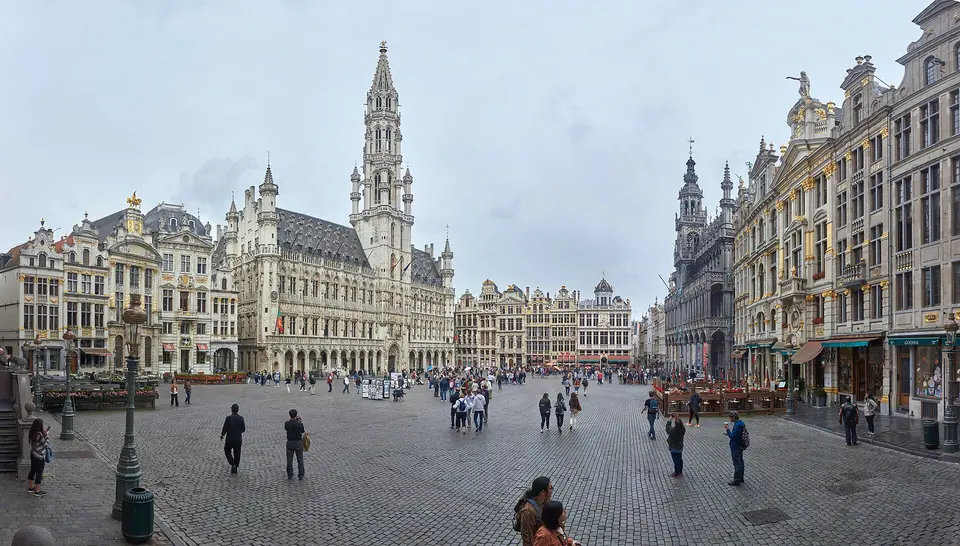
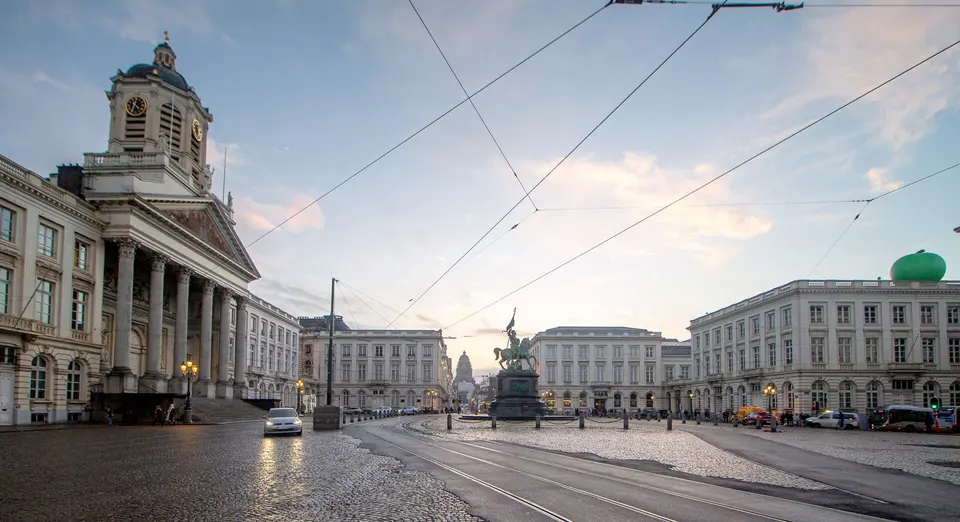
Guildhall façades and the Town Hall surround a remarkably enclosed civic square. Walk a slow circuit to see the buildings from different angles; the individual façades belong to this one outdoor stop.

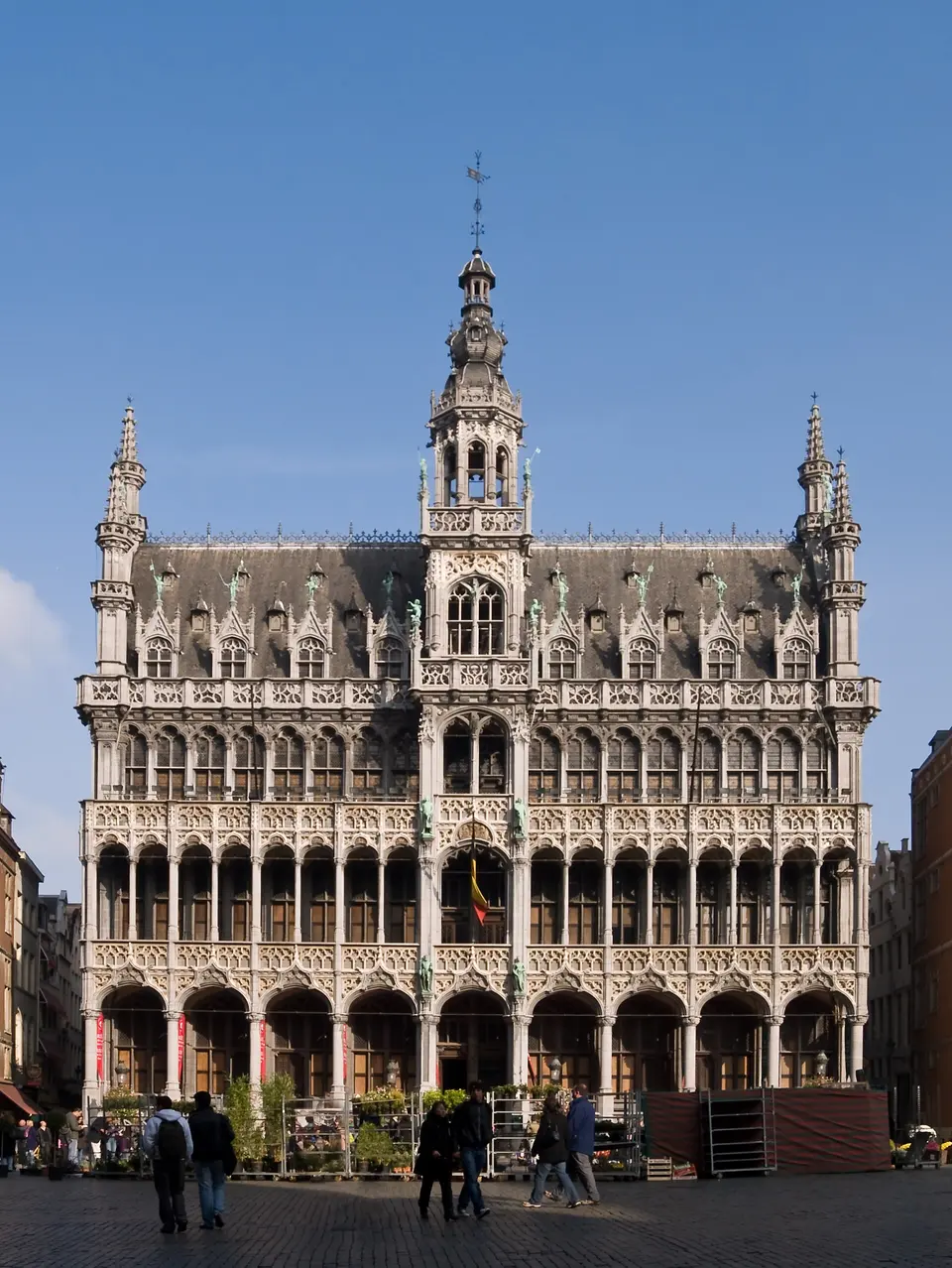
The museum in the King’s House uses objects, art and city history to explain the square and the streets around it. Give a selection of displays enough attention before returning outside.

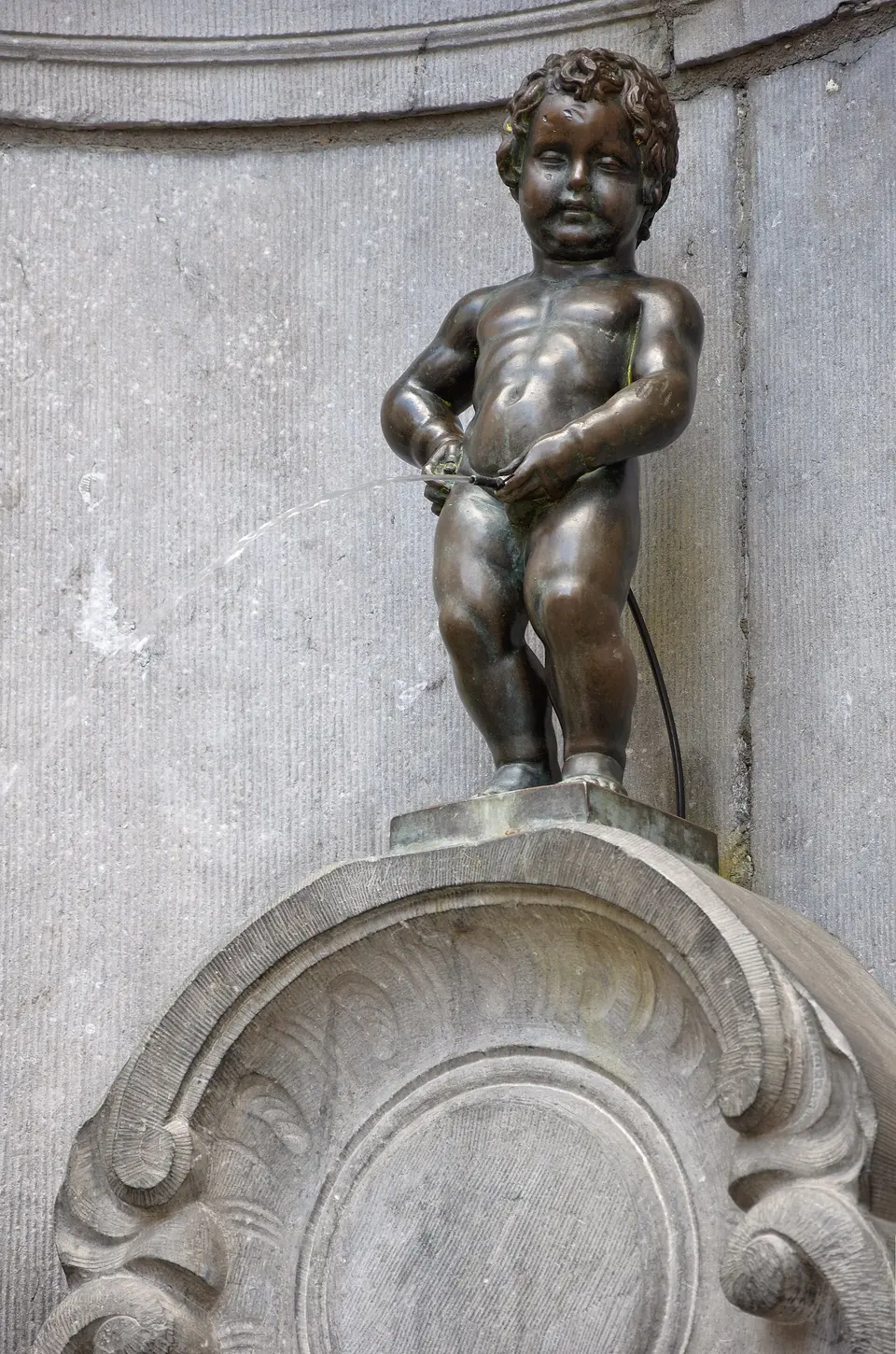
The small fountain is a brief detour through the old centre. See the figure in its street setting, then move on; a dedicated costume-museum visit is not part of this stop.
Midday
Afternoon

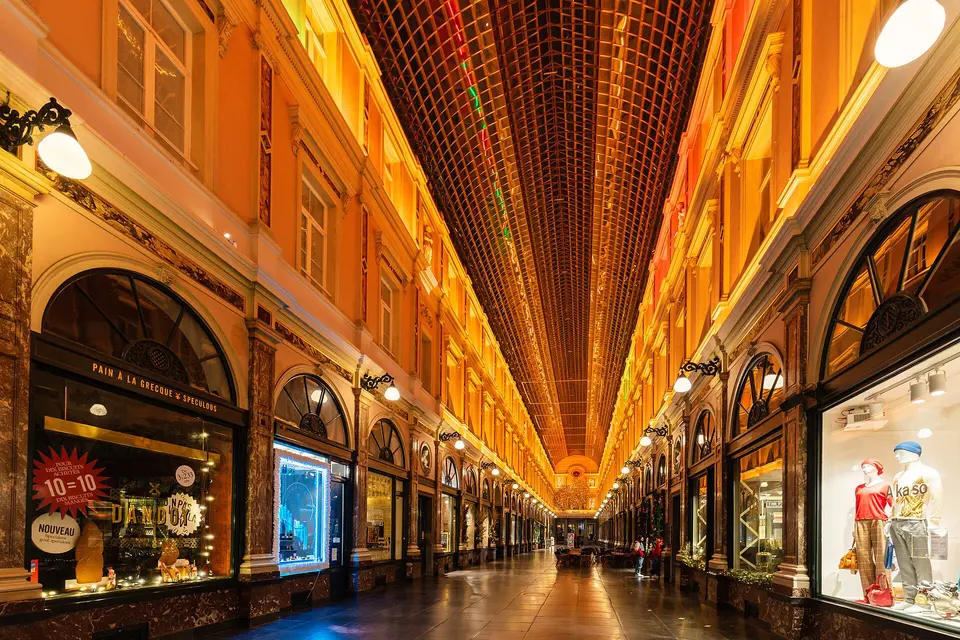
A covered passage of shopfronts, cafés and glass roofing provides a pleasant walk through central Brussels. Enjoy the architecture without needing to turn the visit into a shopping session.

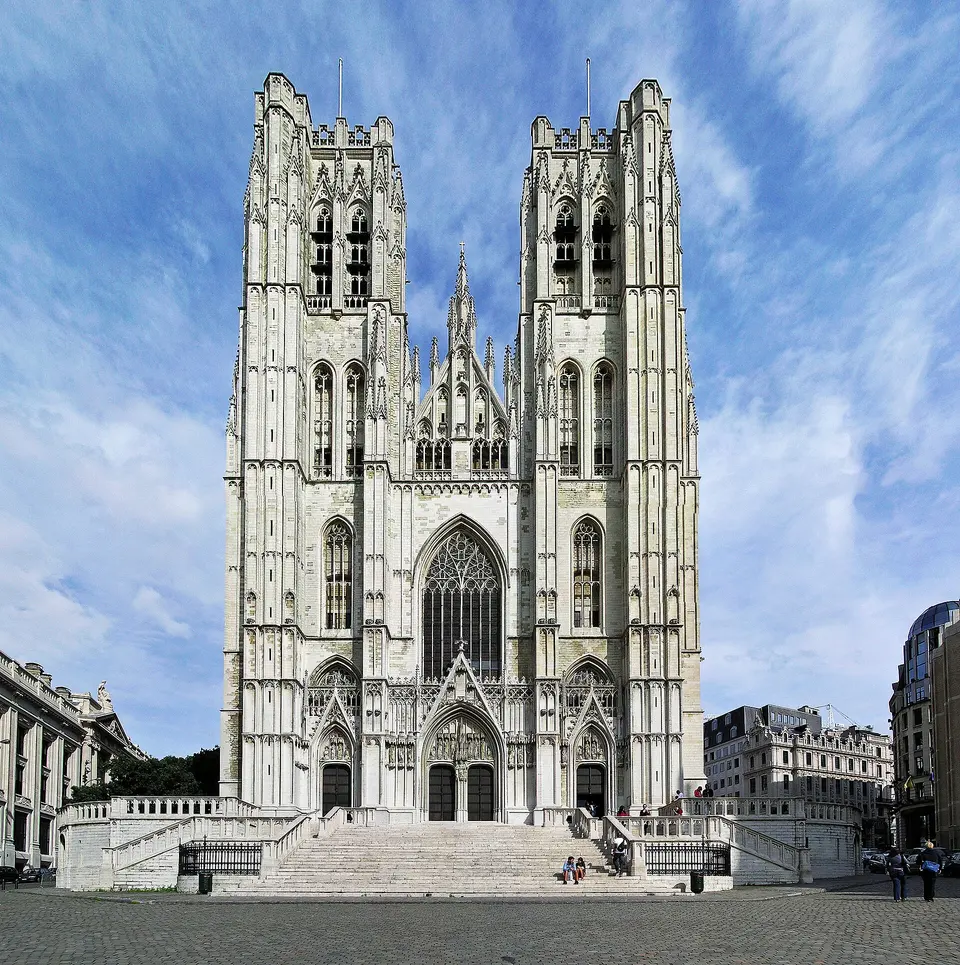
The twin-towered cathedral rises above the lower town. Visit the main church when sightseeing access permits; specialist areas and concerts may have separate arrangements.

Original artwork and displays explore the language and history of comics inside a striking former department store. Choose a few sections that interest you and leave time to appreciate the building.
Evening
Grand-Place is a walk. The City Museum and the Comic Art Museum are the interiors that need a ticket if you go in.
Day 5 · Brussels
Walk through Mont des Arts to the Magritte Museum and Place Royale. After lunch, give the instruments museum a focused visit before finishing around the Sablon.

Morning

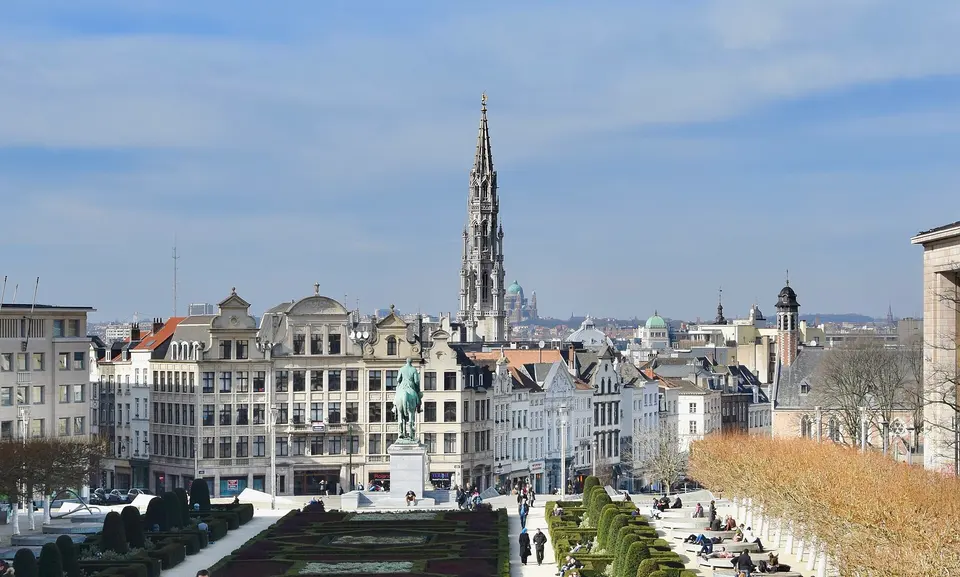
Terraces and gardens frame a view back toward the historic centre. Start the upper-town day here before moving into the museums near Place Royale.

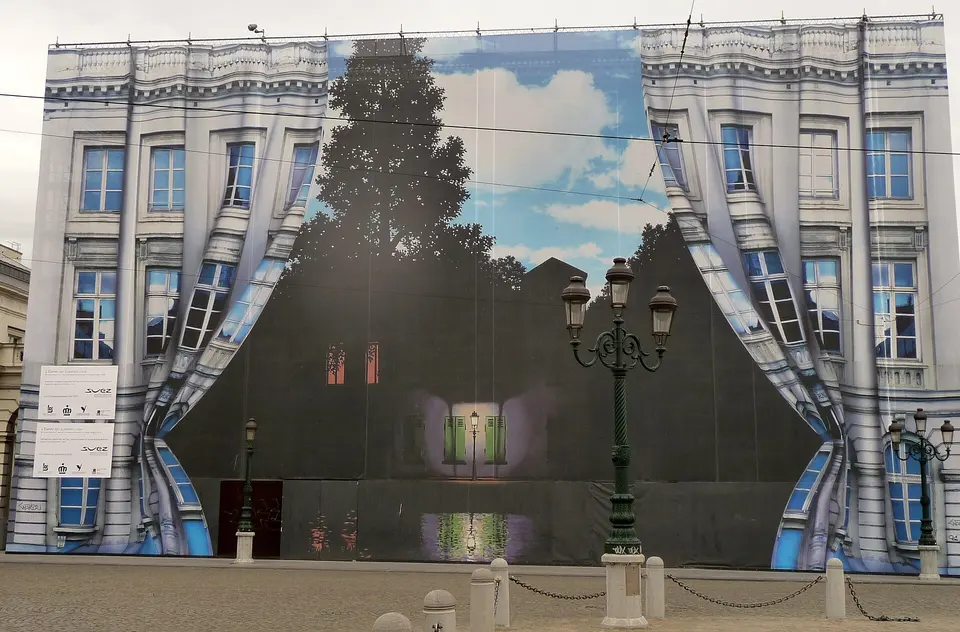
Paintings, drawings and documents explore René Magritte’s world of unexpected images. Plan a focused visit to this collection rather than adding all the neighbouring fine-art museums.

The formal square ties together the museums and surrounding royal quarter. Use it as a short outdoor pause; the façades do not require separate sightseeing appointments.
Midday
Afternoon

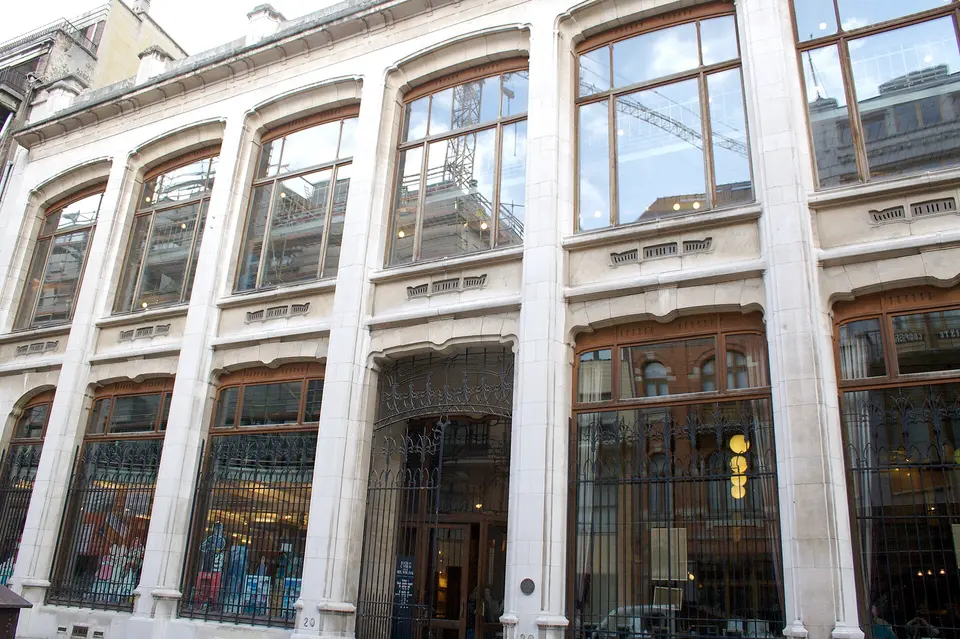
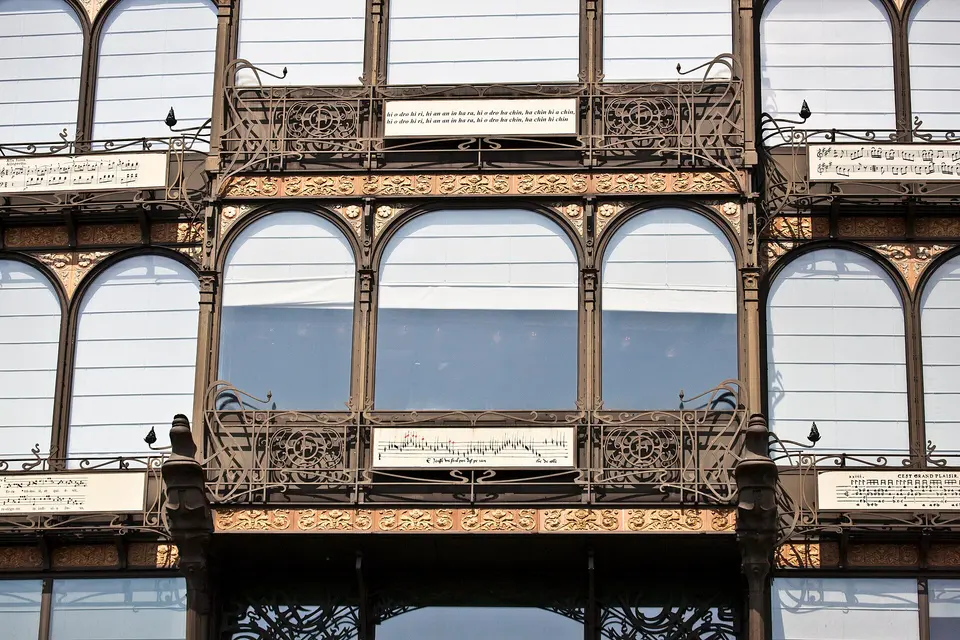
Instruments from different places and periods fill the galleries of the Old England building. Choose a manageable route through the collection and enjoy the Art Nouveau exterior as part of the same visit.

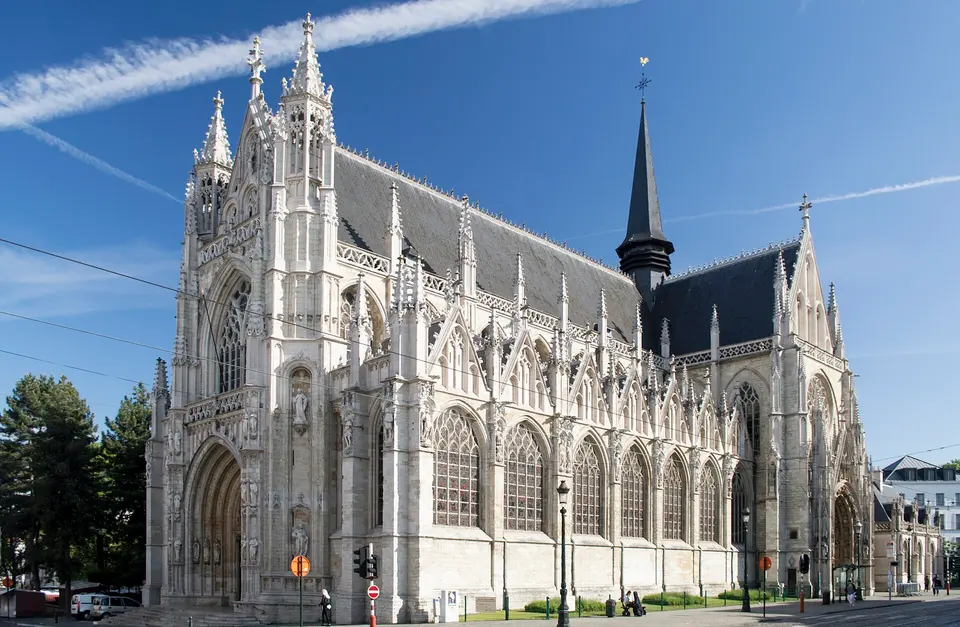
A Gothic church anchors a district of small shops and squares. Visit the church when open, then give the surrounding streets a short walk before dinner.
Evening
Magritte Museum morning. The Musical Instruments Museum is the afternoon interior. Check both calendars before you lock the day.
Day 6 · Brussels
Give the Atomium a full morning visit. After lunch, travel across the city to Cinquantenaire for a park walk and Autoworld. Check the connection and museum closing time before setting out.

Morning

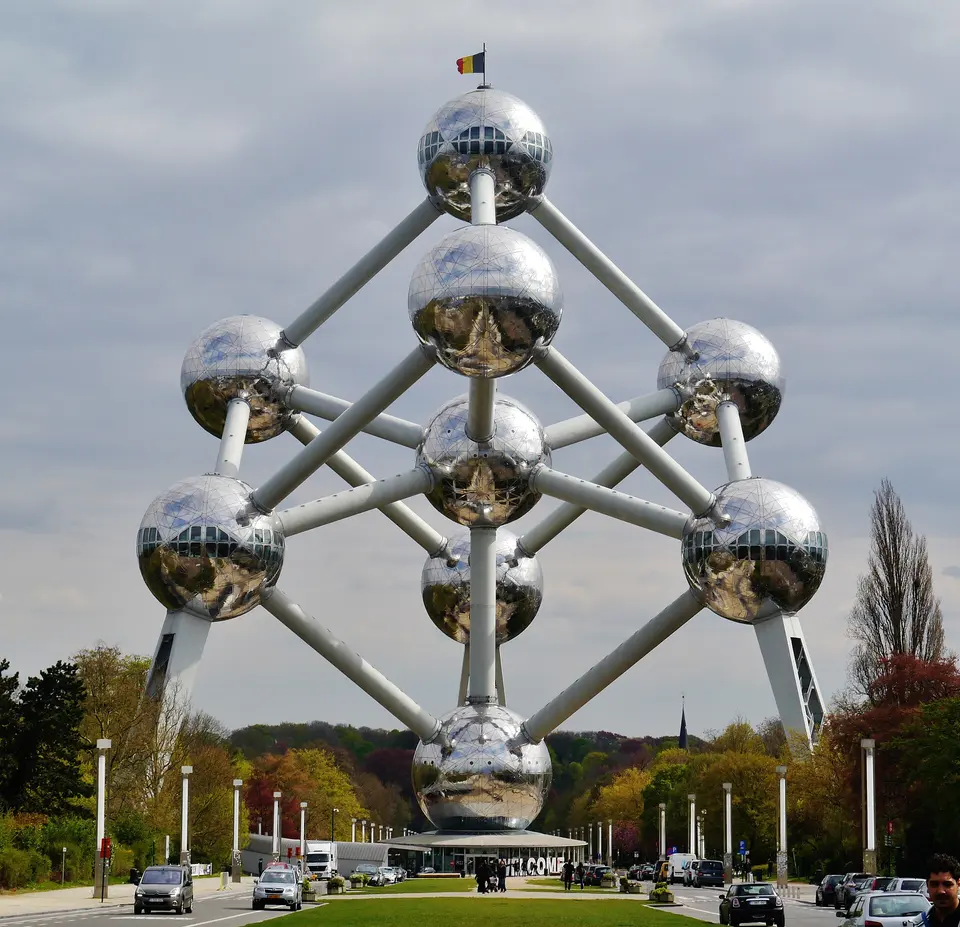
The connected spheres combine panoramic views with exhibition spaces. Allow time for the lift queue and the internal route instead of treating the structure as a quick photo stop.
Midday
Afternoon

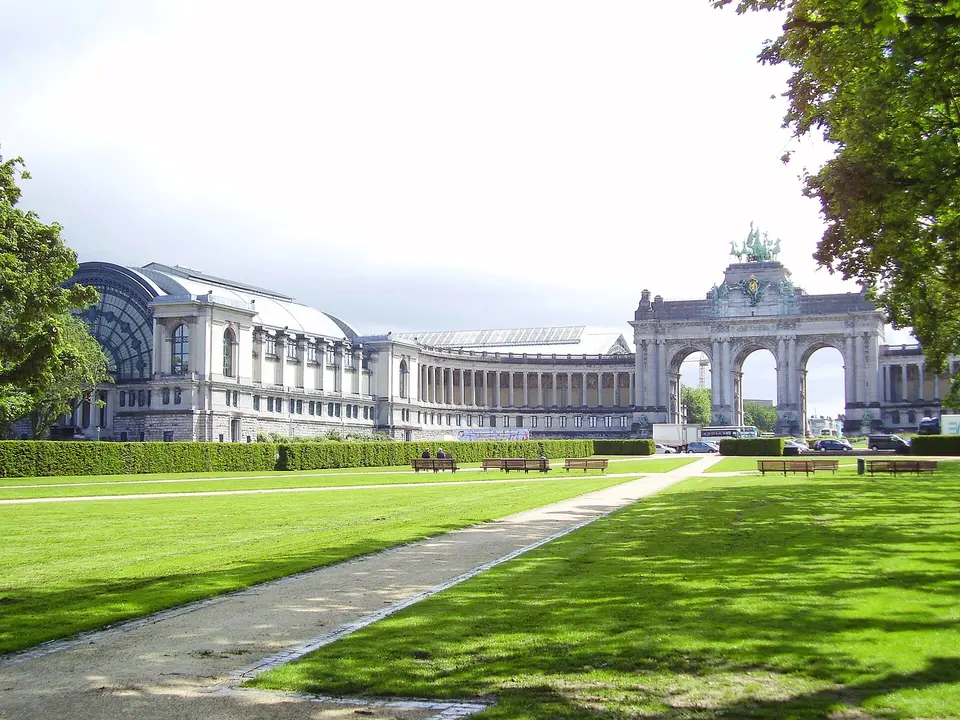
Broad lawns and the monumental arches form a spacious setting for several museums. Take a selected park circuit and enjoy the exterior architecture before the final collection.

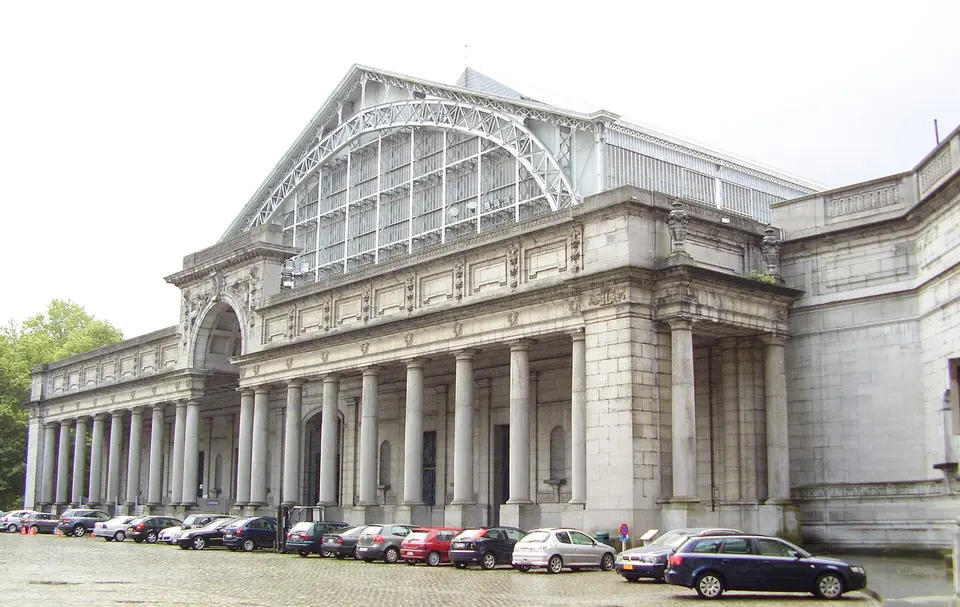
A historic exhibition hall houses a broad vehicle collection. Follow the changing design and technology of transport at an unhurried pace, with time for a few favourites.
Evening
Atomium morning, then transport across the city to Cinquantenaire. This is not a continuous walking day.
Day 7 · Amsterdam
Direct Eurostar trains from Bruxelles-Midi to Amsterdam Centraal take 1 hour 52 minutes. Be at Midi 20 minutes before departure. Book the Anne Frank House for the afternoon so the morning can be the train — tickets are sold only online and are released six weeks ahead.

Direct Eurostar in 1 hour 52 minutes. Be at Midi 20 minutes before departure.
Source: Eurostar · checked Sep 2026. Fares change with the date — buy on the operator site.Morning

Anne Frank and her family hid from the Nazis for more than two years in the secret annex behind this canal house, where she wrote her diary. The visit takes you through the rooms of the hiding place; it is quiet and moving, and takes about an hour.

Next door to the Anne Frank House, the 17th-century Westerkerk has the tallest church tower in Amsterdam, and Anne Frank wrote about hearing its bells from the annex. Rembrandt was buried here in an unmarked grave.

Once a working-class district of small workshops, the Jordaan is now a web of narrow canals, hidden courtyard almshouses and brown cafés. Wander north from the Prinsengracht toward the Brouwersgracht, one of the city's prettiest canals.
Midday
Afternoon

Built in the 17th century as Amsterdam's city hall, at the height of the Dutch Golden Age, it became a royal palace under Louis Napoleon. The Dutch royal family still uses it for state visits, and it opens to visitors when no royal events are on.

The flower market on the Singel canal dates back to the 1860s, and its stalls still stand on houseboats along the water. Today it sells as many souvenirs as flowers, but it is a colourful stop between the Dam and the canal ring.
Evening
Anne Frank House afternoon slot. Confirm the Eurostar on eurostar.com.
Day 8 · Amsterdam
Rembrandt and Vermeer at the Rijksmuseum in the morning, a market lunch on the Albert Cuyp in De Pijp, then the Van Gogh Museum and an evening walk in the Vondelpark.

Morning

The national museum of the Netherlands holds Rembrandt's Night Watch, Vermeer's Milkmaid and centuries of Dutch art and history in Pierre Cuypers' 19th-century building. A cycle path runs straight through its central passage.
Midday

Amsterdam's busiest street market fills the Albert Cuypstraat in De Pijp with stalls selling cheese, fish, fabric, flowers and snacks. It is the place to try a stroopwafel pressed fresh while you wait.
Afternoon

The world's largest collection of Vincent van Gogh's work, with around 200 paintings and 500 drawings, including Sunflowers and The Bedroom. The galleries follow his life from the Dutch years to Paris, Arles and Auvers.

Amsterdam's best-known park stretches for about a kilometre and a half from the museum quarter into Oud-West, with ponds, lawns and an open-air theatre. Keep to the footpaths: the wide lanes belong to cyclists.
Evening
Rijksmuseum morning. Van Gogh Museum for the afternoon. Albert Cuyp Market is closed on Sundays.
Day 9 · Amsterdam
A slower last day by the Amstel: the Skinny Bridge, the Portuguese Synagogue and the Jewish Museum, Rembrandt's house, and a drink on Nieuwmarkt as the evening starts.

Morning

The 'Skinny Bridge' is a white wooden drawbridge over the Amstel, rebuilt in its current form in 1934 and outlined with hundreds of lights after dark. Watch from the riverbank as it opens for passing boats.

Consecrated in 1675, the vast Portuguese Synagogue is still lit by candles and keeps its original wooden benches and sand-strewn floor. Across the street, the Jewish Museum tells the story of Jewish life in the Netherlands inside four former synagogues; one Jewish Cultural Quarter ticket covers both.
Midday
Afternoon

Rembrandt lived and worked in this house from 1639 until money troubles forced him out. The rooms are furnished as they might have been in his day, with his studio and his cabinet of curiosities, and there are regular etching demonstrations.

Built between 1603 and 1611, the Zuiderkerk was the first church in Amsterdam built for Protestant worship. Its tower rises over the rooftops of the old Jewish Quarter, and Claude Monet painted it during a visit to the city.
Evening

The square is built around De Waag, a 15th-century city gate that later became a weigh house, and is lined with café terraces. It sits at the edge of the old centre, a few streets from the canals of De Wallen.
A slower old-centre day. Portuguese Synagogue and the Rembrandt House have their own tickets if you go in.
Day 10 · Amsterdam
The first nine days stay in Paris, Brussels and Amsterdam. Day 10 is for lingering in Vondelpark, for a museum you skipped, or for Haarlem or Zaanse Schans — Amsterdam's own plan already names those as a fourth-day choice. Keep the morning unhurried if you fly that evening.

Only if you leave the city: book the actual day trip, not a generic city ticket.
Before you fly
Questions
Yes for a first trip at a walking pace: three clustered days in each city, with two Eurostar mornings between them. It does not include Versailles, Bruges or Rotterdam. Add those as a second trip, or use the tenth day to fly home.
Louvre, Sainte-Chapelle, Eiffel Tower, and the Anne Frank House (released six weeks ahead). Then the Rijksmuseum and Van Gogh Museum. Buy both Eurostar legs: Paris Gare du Nord–Bruxelles-Midi (1 hour 22 minutes) and Bruxelles-Midi–Amsterdam Centraal (1 hour 52 minutes). Be at the station 20 minutes before departure.
Paris: between the Louvre and the Marais, or Saint-Germain. Brussels: the historic centre or Sablon for the first two mornings. Amsterdam: the canal ring, the Jordaan or De Pijp.
Yes. That is the 7-day Paris and Amsterdam trip, on the same Eurostar from Gare du Nord to Amsterdam Centraal in 3 hours 20 minutes.
THE TRIPWOA APP
Build days around what you love. Follow your route, find your next stop and keep the moments along the way.


A day that feels like you.
Ticket, train and opening notes name an official source and the month we checked it. Hours and fares change — open that source before you buy.
Places and coordinates: Wikidata and Tripwoa's open-data place catalog (Overture Maps Foundation, © OpenStreetMap contributors). Photos: Wikimedia Commons, credited on each image. Checked September 2026.