Guides · Japan
Getting around Fukuoka
How to move around Fukuoka on a 3-day walking trip: metro, tickets and the notes that matter.
Checked September 2026 against official sources
Fukuoka
Transit and walking
Follow the official link before you buy. Full walking days: Fukuoka itinerary.
Getting around
- The Fukuoka City Subway one-day pass costs ¥640 for adults and ¥320 for children and allows unlimited rides on all three lines for one calendar day.Source: Fukuoka City Subway, one-day pass · checked Sep 2026
- The Fukuoka Tourist City Pass gives one-day unlimited rides on buses, trains, subways and ferries in the city for ¥2,500 (children ¥1,250), or ¥2,800 (¥1,400) including Dazaifu, plus reduced admission at Fukuoka Tower, the City Museum, the Art Museum, the Hakata Machiya Folk Museum and other sights; it is not valid on the Dazaifu Liner bus Tabito.Source: Fukuoka City official tourist guide, Fukuoka Tourist City Pass · checked Sep 2026
Questions
Quick answers
How much do the tickets cost?
Almost everything is cheap: Kushida Shrine, Tōchō-ji, Dazaifu Tenmangū, Ōhori Park and the castle ruins are free; the City Museum and Art Museum are ¥200, the Japanese garden ¥250, the Kyushu National Museum ¥700, Nanzō-in ¥300 with ¥500 more to go inside the Buddha, Uminonakamichi ¥450 and Fukuoka Tower ¥1,000. A subway day pass is ¥640 and the Fukuoka Tourist City Pass, which also covers buses and the Dazaifu train, is ¥2,800.
How do I get around?
The subway's Kūkō line runs from the airport through Hakata, Nakasu, Tenjin and Ōhori Park to the seaside in a straight line, ¥210 and up per ride or ¥640 for the day; Nishitetsu trains from Tenjin go to Dazaifu and JR from Hakata to Nanzō-in and Uminonakamichi. The Fukuoka Tourist City Pass covers all of them for a day and knocks a few hundred yen off the museums. The old Hakata quarter and Tenjin are walkable, and the city's 100-yen loop bus links them.
How much walking is this itinerary?
About 3 km on day one, flat, on the streets of Hakata and around the Ōhori lake; about 2 km on day two plus the gentle approach to Dazaifu and the steps of Nanzō-in; and about 3 km on day three, most of it in the seaside park. Summer is humid and the yatai evenings are the reward; October and November are the best months.
The days these rules belong to
3 days in Fukuoka
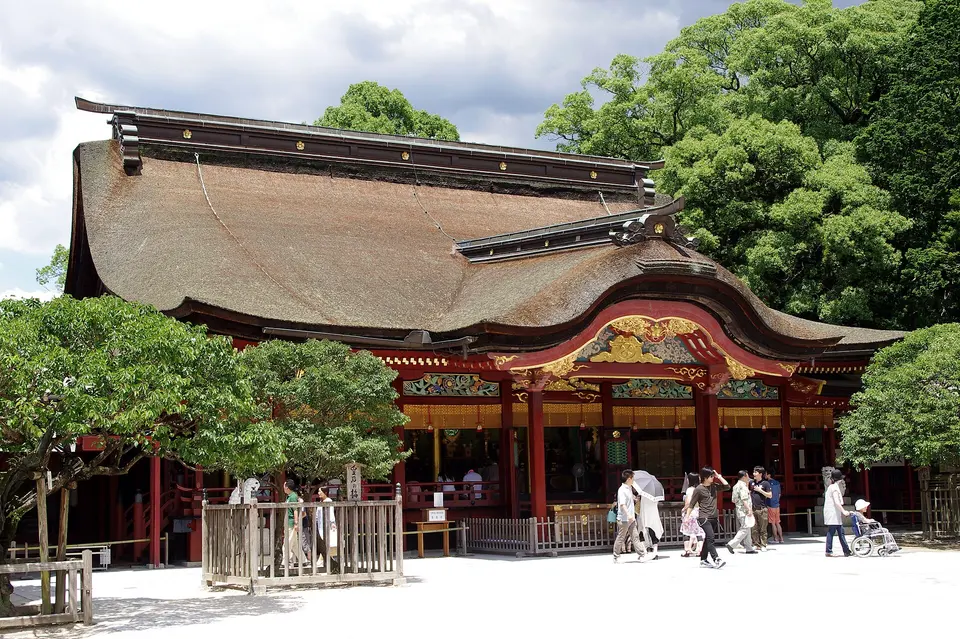
Fukuoka is compact and the subway is three lines, so day one is walkable with one subway hop from Hakata to Ōhori Park. Day two uses the Nishitetsu train from Tenjin to Dazaifu, about 30 minutes, and the JR Sasaguri line from Hakata to Nanzō-in, about 25 minutes. Day three follows the Momochi seafront and the ferry to Uminonakamichi. The museums close on Mondays, Dazaifu's main hall reopens in 2027 after its renovation with Sou Fujimoto's forest-roofed temporary hall in front of it until then, and Nanzō-in enforces a dress code with no shorts, no bare shoulders and no visible tattoos. A one-day subway pass is ¥640 and the Fukuoka Tourist City Pass covers the buses and trains too.