3-day itinerary · Japan

3 Days in Fukuoka

A realistic first-timer plan that spends day one in old Hakata and the city centre, from Kushida Shrine and the Great Buddha of Tōchō-ji to the Hakata Machiya folk museum, a bowl of tonkotsu ramen, the lake of Ōhori Park and the castle ruins, and the yatai stalls of Nakasu after dark; day two out of town, at the plum trees and the temporary shrine of Dazaifu Tenmangū, the Kyushu National Museum and the 41-metre reclining Buddha of Nanzō-in, with the evening in the bars of Tenjin; and day three on the bay, up Fukuoka Tower, into the City Museum for the gold seal, across the water to the flower park of Uminonakamichi and back to the fountains of Canal City. Every stop comes with walking distances, train fares and the rules that matter in 2026.

  • 3days
  • 14sights
  • 1.8 kmon foot between sights

Updated 12 September 2026 · 8 official sources checked · report an error

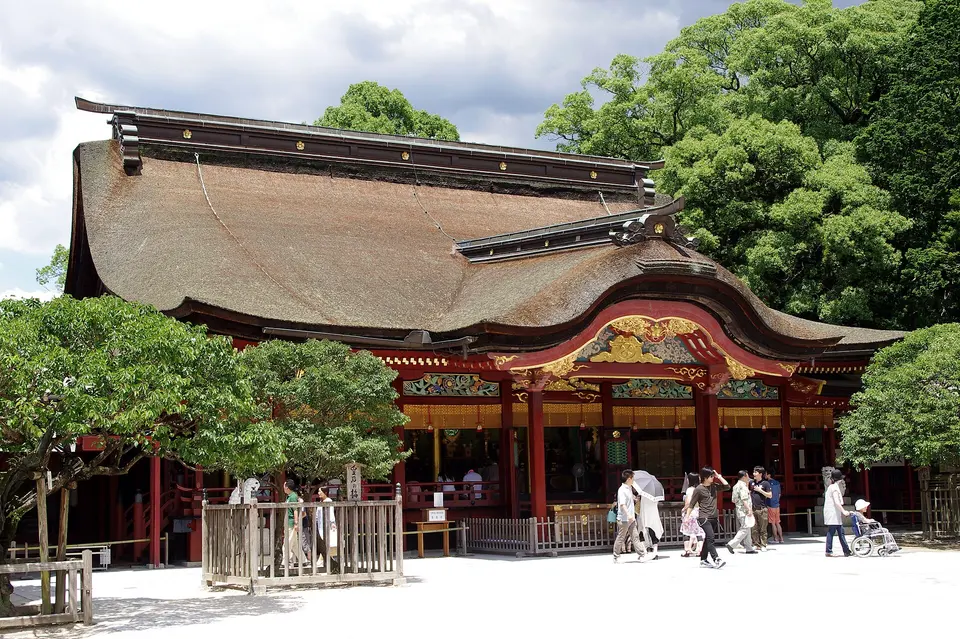
Dazaifu Tenmangū
Photo: Jakub Hałun, CC BY-SA 4.0

Hakata and the centre on foot, then Dazaifu and the Buddha, then the bay

Fukuoka is compact and the subway is three lines, so day one is walkable with one subway hop from Hakata to Ōhori Park. Day two uses the Nishitetsu train from Tenjin to Dazaifu, about 30 minutes, and the JR Sasaguri line from Hakata to Nanzō-in, about 25 minutes. Day three follows the Momochi seafront and the ferry to Uminonakamichi. The museums close on Mondays, Dazaifu's main hall reopens in 2027 after its renovation with Sou Fujimoto's forest-roofed temporary hall in front of it until then, and Nanzō-in enforces a dress code with no shorts, no bare shoulders and no visible tattoos. A one-day subway pass is ¥640 and the Fukuoka Tourist City Pass covers the buses and trains too.

At a glance

Ways to use these days

If it rains
3 of the stops are indoors — Hakata Machiya Folk Museum · Kyushu National Museum · Fukuoka City Museum
For the view
Fukuoka Tower and Momochi beach
Outdoors
Ōhori Park and the Japanese Garden · Uminonakamichi Seaside Park
Lightest day on foot
Day 1 — 7.1 km between stops
Most walking
Day 2 — 28.6 km

Day 1

Hakata and the centre: Kushida, Tōchō-ji, the Machiya museum, Ōhori Park and the yatai

Walk old Hakata from Kushida Shrine to the Great Buddha of Tōchō-ji and the Hakata Machiya folk museum, eat tonkotsu ramen, take the subway to Ōhori Park for the lake and the Japanese garden and the castle ruins next door, and come back to the river for dinner at the yatai stalls of Nakasu.

  • 6 sights
  • 1.3 km on foot
  • Longest walk 660 m
1234561 kmN
Stops in order, straight-line distancesRoute in Google Maps ↗

Morning

Kushida Shrine
Photo: Hirho, CC BY-SA 4.0
1Shinto shrine

Kushida Shrine

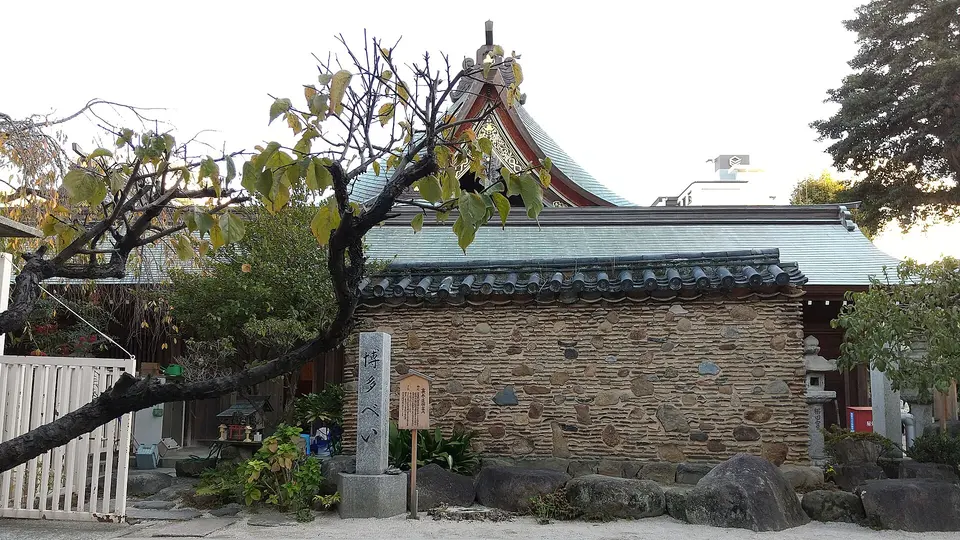
Hakata's guardian shrine, founded in 757, is the home of the Gion Yamakasa festival, whose one-tonne floats are raced through the streets at dawn on July 15 and one of which stands on display in the courtyard all year; there are a thousand-year-old ginkgo, a well of eternal youth, an anchor stone from the Mongol invasion fleet and, on the wall, the Hakata-bei made from the rubble of the 16th-century wars. Free, open from dawn, and the right first stop.
  • Plan about 45 min
  • Free; the grounds are open from early morning; a Yamakasa float is on display except during the July festival
380 m · about 6 min on foot
Tōchō-ji
Photo: そらみみ, CC BY-SA 4.0
2Buddhist temple

Tōchō-ji

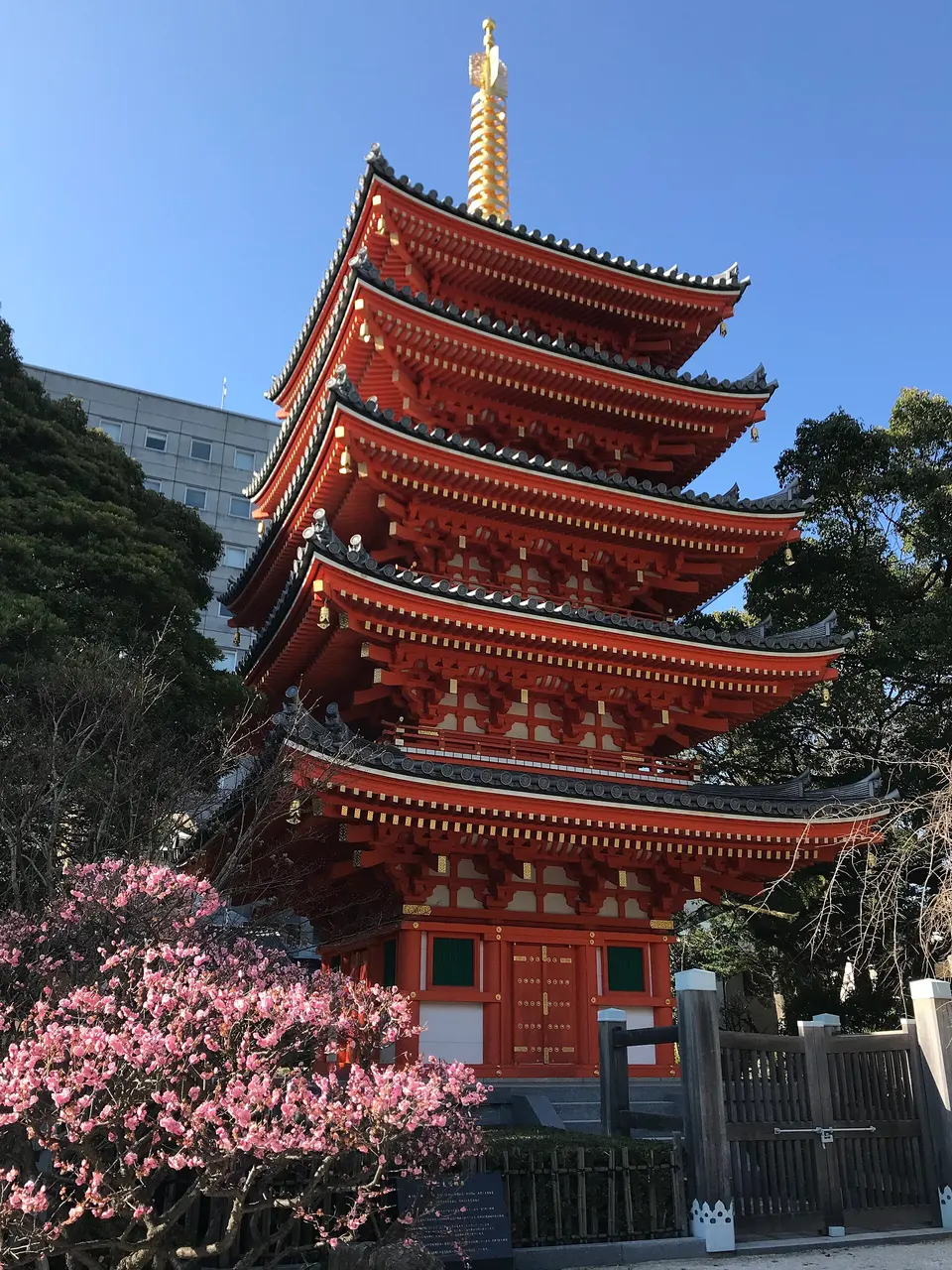
The oldest Shingon temple in Japan, founded by the monk Kūkai on his return from China in 806, keeps the Fukuoka Great Buddha, a seated wooden figure 10.8 metres tall carved in the 1990s, the largest of its kind in the country, in a hall you can walk behind through a pitch-dark passage of hell and paradise; outside is a five-storey vermilion pagoda of 2011 and the graves of the Kuroda lords of Fukuoka. Shōfuku-ji, the first Zen temple in Japan, is five minutes away for anyone who wants a quiet garden.

  • Plan about 45 min
  • Free; the Great Buddha hall is open about 9:00–17:00
300 m · about 5 min on foot
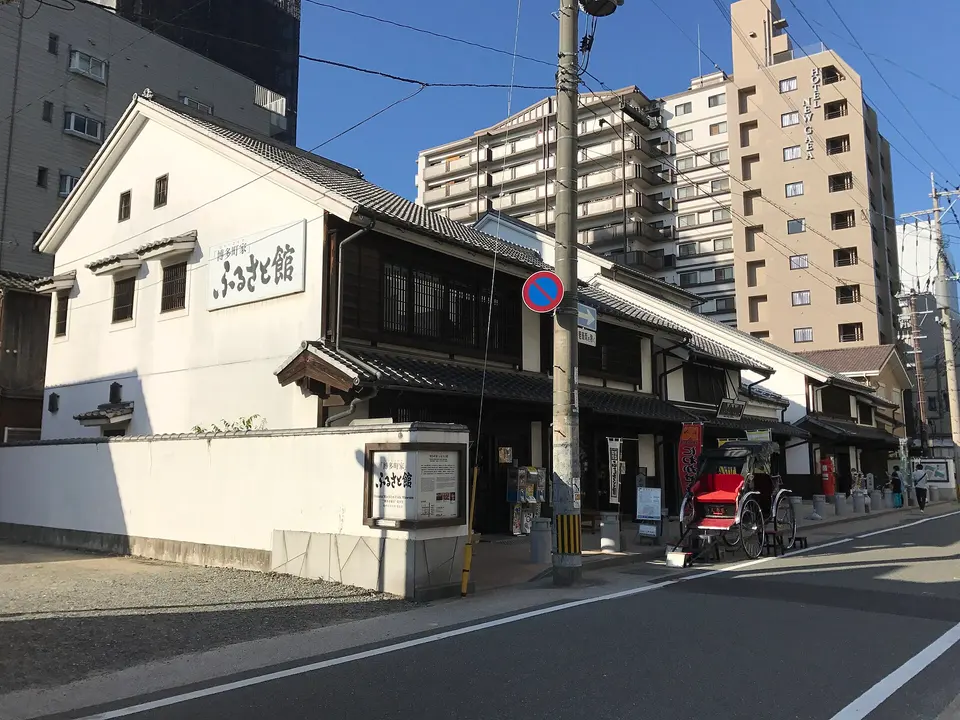
Hakata Machiya Folk Museum
Photo: そらみみ, CC BY-SA 4.0
3Museum

Hakata Machiya Folk Museum

Opposite Kushida Shrine, a restored Meiji-era weaver's townhouse and two exhibition buildings show how the merchants of Hakata lived and worked: the loom for Hakata-ori silk obi, working, the Hakata dolls, the wooden spinning tops, a film of the Yamakasa festival and, in the shop, the crafts to buy. Small, cheap and the context for the neighbourhood; the Kawabata shopping arcade behind it is the old covered street of the quarter.

  • Plan about 45 min
  • Open daily 10:00–18:00, closed December 29–31; ¥200 adults, free for junior high school and under

Midday

LunchTonkotsu ramen is Hakata's gift to the world and lunch is the time: Shin-Shin near Tenjin or Hakata Station, Ichiran's original shop in Nakasu with its solo booths, or the ramen stalls of the Kawabata arcade; order kaedama, a second helping of noodles, when the first runs out. Mentaiko, spicy cod roe, on rice is the other local thing.

Afternoon

Subway Kūkō line from Nakasu-Kawabata to Ōhori-kōen, 7 minutes
Ōhori Park and the Japanese Garden
Photo: そらみみ, CC BY-SA 4.0
4Park

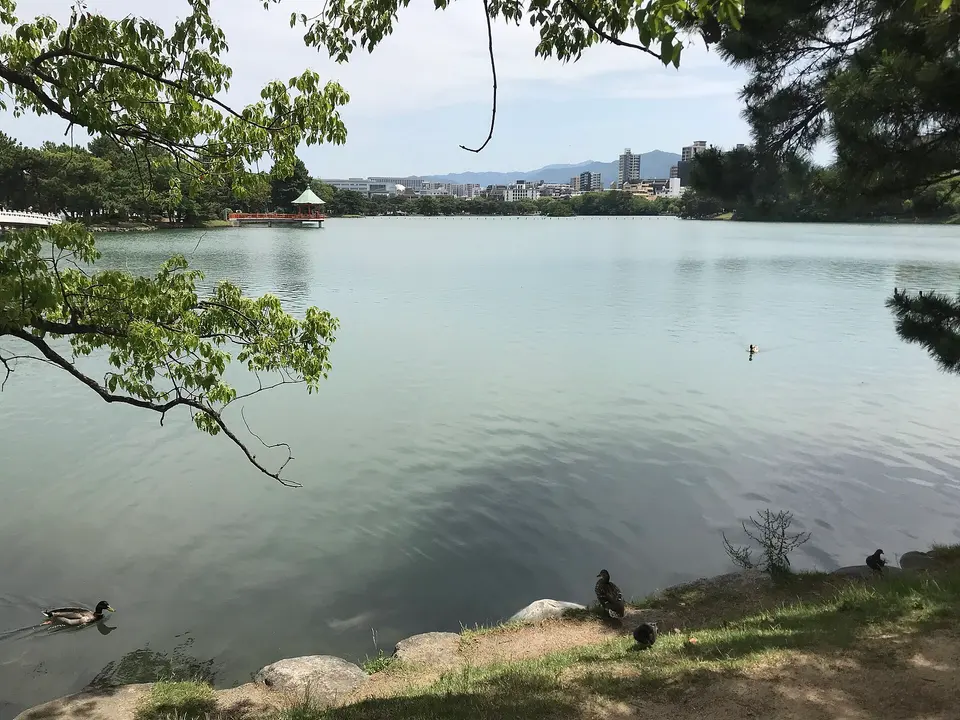
Ōhori Park and the Japanese Garden

The outer moat of the castle was made into a lake in 1929 on the model of the West Lake at Hangzhou, with islands joined by stone bridges and a 2-kilometre path around it where the city jogs; on its banks are the Fukuoka Art Museum, with Dalí and Warhol and Buddhist sculpture, a Starbucks on the water, a Noh theatre and, in the southeast corner, the walled Japanese Garden of 1984, a stroll garden of ponds, waterfalls and a tea house. Walk the lake, then the garden.

  • Plan about 1 h 30 min
  • Park free; Japanese Garden ¥250, 9:00–17:00 (to 18:00 June–August), closed Mondays; Art Museum ¥200, closed Mondays
660 m · about 10 min on foot
Fukuoka Castle ruins and Maizuru Park
Photo: STA3816, CC BY-SA 3.0
5Castle ruins

Fukuoka Castle ruins and Maizuru Park

Kuroda Nagamasa built the largest castle in Kyushu on the hill next to the lake in 1607, and though the keep was never rebuilt, the stone walls, the gates, the Tamon turret and the great foundation platform survive in Maizuru Park, with the best view of the city from the top; the park is Fukuoka's cherry-blossom ground in late March, lit at night, and the Kōrokan ruins at the entrance are the 7th-century guesthouse where envoys from China and Korea were received. Free and open all the time.

  • Plan about 1 h
  • Free; the keep platform is the viewpoint; cherry blossoms late March to early April

Evening

Subway from Ōhori-kōen back to Nakasu-Kawabata, 7 minutes
Nakasu yatai
Photo: Yoshikazu TAKADA, CC BY 2.0
6Food stalls

Nakasu yatai

Fukuoka is the last city in Japan where the yatai, the mobile food stalls, survive in numbers, and the row along the Naka river on the island of Nakasu is the famous one: a hundred stalls set up at dusk, each with eight stools, a counter, a pot of ramen or oden, yakitori on the grill, beer and sake, and a cook who talks. Pick one with locals on the stools, order a little, and move to the next; the Tenjin stalls along Watanabe-dōri are the alternative. They close around midnight and stay home in heavy rain.

  • Plan about 2 h 30 min

Day 2

Dazaifu, the Kyushu National Museum, Nanzō-in and Tenjin

Take the Nishitetsu train to Dazaifu Tenmangū, the shrine of the god of learning, and the Kyushu National Museum on the hill behind it, eat umegae mochi on the approach street, ride the JR line to the reclining Buddha of Nanzō-in in Sasaguri, and spend the evening in the bars and department stores of Tenjin.

  • 4 sights
  • Transport between sights
12345 kmN
Stops in order, straight-line distancesDriving route in Google Maps ↗

Morning

Dazaifu Tenmangū
Photo: Jakub Hałun, CC BY-SA 4.0
1Shinto shrine

Dazaifu Tenmangū

The shrine built in 919 over the grave of Sugawara no Michizane, the exiled scholar-statesman who became Tenjin, the god of learning, draws ten million visitors a year, most of them students praying for exams: a bridge over a pond shaped like the character for heart, the flying plum tree that is said to have followed Michizane from Kyoto, 6,000 plum trees in flower in February, and the main hall of 1591, under a three-year restoration for the 1,125th anniversary in 2027, with a temporary hall designed by Sou Fujimoto in front of it whose roof is planted with a small forest. Free, open from dawn, and the approach street of shops is part of it.

  • Plan about 2 h
  • Free; open from about 6:30 (6:00 in the longest days) until 18:30 in winter, 19:00 in spring and autumn and 19:30 in summer; main hall in restoration until 2027, temporary hall open
A 10-minute walk from the shrine through the tunnel with its moving walkway and escalators
Kyushu National Museum
Photo: Nick-D, CC BY-SA 4.0
2Museum

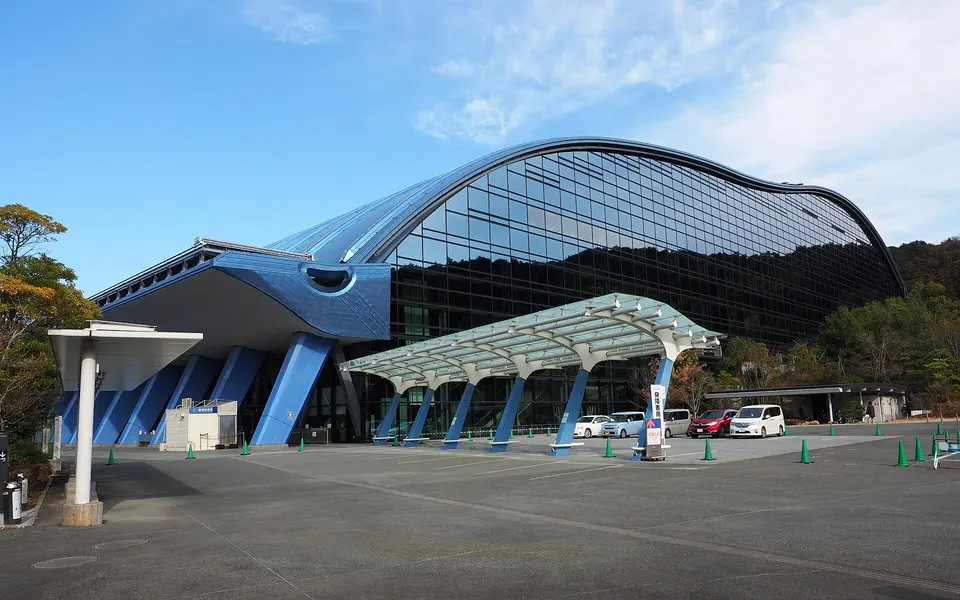
Kyushu National Museum

Japan's fourth national museum, opened in 2005 in a wave of blue glass on the wooded hill behind the shrine, tells the story of Japan's exchanges with Asia through Kyushu, the gateway: Jōmon pottery, the mirrors and swords of the Yayoi, the Mongol invasion, the Nanban trade with the Portuguese and Dutch, in a single large gallery that rotates its treasures, plus a hands-on Asian culture hall that is free. The moving walkway through the tunnel from the shrine is the way in.

  • Plan about 1 h 30 min
  • Tue–Sun 9:30–17:00, last entry 16:30, Saturdays to 19:00 during special exhibitions; closed Mondays; ¥700 adults, ¥350 university students, under-18s free

Midday

LunchDazaifu's approach street is lined with shops grilling umegae mochi, rice cakes stamped with a plum blossom and filled with red bean, to eat hot; the Starbucks designed by Kengo Kuma in a lattice of cedar is on the same street, and the noodle and tempura restaurants around the station do a proper lunch.

Afternoon

Train back to Tenjin and subway to Hakata, then JR Sasaguri line to Kido-Nanzōin-mae, about 25 minutes from Hakata; the temple is 3 minutes from the station
Nanzō-in
Photo: そらみみ, CC BY-SA 4.0
3Buddhist temple

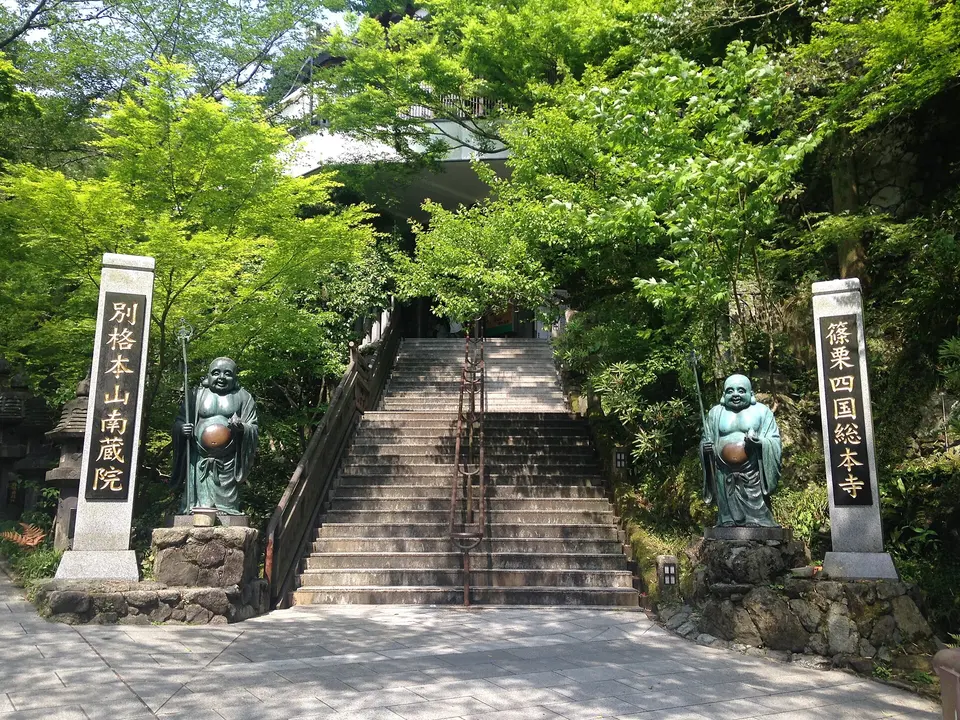
Nanzō-in

In the hills of Sasaguri, the head temple of a pilgrimage of 88 temples that copies Shikoku's holds the largest bronze reclining Buddha in the world, 41 metres long and 11 high, cast in 1995 to house relics given by Myanmar; the temple grounds climb a wooded valley of shrines, waterfalls, a tunnel of Buddhas and a pedestrian bridge to the statue, and a chamber inside the Buddha can be entered for an extra fee. The temple is strict: no shorts, sleeveless tops or visible tattoos, no loud groups, and a small entrance fee since 2025.

  • Plan about 1 h 30 min
  • Open 9:00–17:00, reclining Buddha reception 9:30–16:00; ¥300, under-18s free, ¥500 extra to enter the Buddha; dress code enforced, tattoos must be covered

Evening

JR Sasaguri line back to Hakata, 25 minutes, and subway to Tenjin, 5 minutes
Tenjin
Photo: そらみみ, CC BY-SA 4.0
4City centre district

Tenjin

The commercial heart of the city west of the river is department stores and the underground mall by day and, after dark, the bars and izakaya of the Daimyō and Imaizumi lanes behind them: yakitori counters, mizutaki chicken hot pot, motsunabe offal stew, which Fukuoka claims as its own, and the second row of yatai along Watanabe-dōri. Kego Park and Kego Shrine are the meeting point; the Tenjin Big Bang rebuilding has filled the district with new towers.

  • Plan about 2 h 30 min

Day 3

The bay: Fukuoka Tower, the City Museum, Uminonakamichi and Canal City

Ride to the top of Fukuoka Tower on the Momochi seafront, see the gold seal of the King of Na in the City Museum next door, eat on the beach, cross the bay by ferry to the flower fields and the aquarium of Uminonakamichi Seaside Park, and end at the fountain shows and the ramen stadium of Canal City Hakata.

  • 4 sights
  • 420 m on foot
  • Longest walk 420 m
12342 kmN
Stops in order, straight-line distancesDriving route in Google Maps ↗

Morning

Fukuoka Tower and Momochi beach
Photo: Hirho, CC BY-SA 4.0
1Observation tower

Fukuoka Tower and Momochi beach

The 234-metre tower of 8,000 mirrored panels on the reclaimed seafront of Momochi, built for the 1989 exposition, has an observation floor at 123 metres with the bay, the islands and the mountains behind the city; below it, Momochi Seaside Park is a kilometre of artificial beach with the Marizon pier and its wedding chapel, restaurants and the ferry to Uminonakamichi. Go up in the morning when the air is clearest, and come back at dusk if the evening is free.

  • Plan about 1 h 15 min
  • Daily 9:30–22:00, last entry 21:30; ¥1,000 adults, ¥500 elementary and junior high, ¥200 small children
420 m · about 7 min on foot
Fukuoka City Museum
Photo: Nkmr844, CC BY-SA 4.0
2Museum

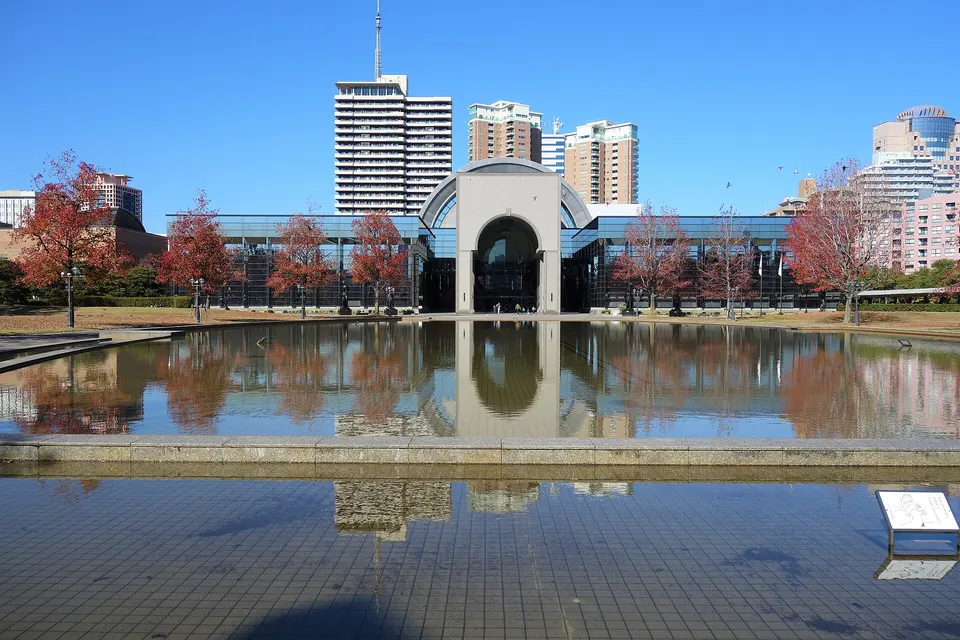
Fukuoka City Museum

The city museum on the Momochi waterfront exists for one object: the gold seal inscribed King of Na of Wa, vassal of Han, sent by the Chinese emperor in 57 AD and dug up by a farmer on Shikanoshima island in 1784, the oldest written record of Japan, in a dark room of its own. Around it the permanent gallery tells the city's story as the port to the continent, from the Mongol invasions to the Kuroda lords and the Yamakasa festival. Cheap and an hour.

  • Plan about 1 h
  • 9:30–17:30, last entry 17:00; closed Mondays and December 28–January 4; ¥200 adults, ¥150 students, free for junior high and under

Midday

LunchThe Marizon complex on the pier below the tower has seafood and Italian restaurants over the water, and the beach cafés of Momochi do burgers and shaved ice in summer; otherwise buy a bento at the Nishijin shopping street on the way.

Afternoon

Ferry from the Momochi Marizon pier to Uminonakamichi, about 20 minutes, in season; otherwise JR Kashii line from Hakata to Uminonakamichi station, about 40 minutes
Uminonakamichi Seaside Park
Photo: KimonBerlin, CC BY-SA 2.0
3Park

Uminonakamichi Seaside Park

On the sandbar that closes Hakata Bay, the national park of 300 hectares is flower fields by the season, nemophila blue in April, tulips, sunflowers and cosmos, with rental bicycles to cover the distance, a small zoo, a water park in summer, a Ferris wheel and, at its western end, the Marine World aquarium with its dolphin shows and a tank of Kyushu's seas. The ferry from Momochi across the bay is the pleasant way in; the JR line from Hakata is the reliable one.

  • Plan about 2 h 30 min
  • Open 9:30–17:30 (to 17:00 November–February); ¥450 adults, ¥210 seniors, under-15s free; Marine World aquarium separate

Evening

Ferry or train back to Hakata and a 10-minute walk, or subway to Nakasu-Kawabata
Canal City Hakata
Photo: OKJaguar, CC BY-SA 4.0
4Shopping and dining complex

Canal City Hakata

The curving, coloured mall of 1996 built around an artificial canal between Hakata and Nakasu stages a fountain show set to music every half hour, with a light-and-water projection after dark, and holds the Ramen Stadium on the fifth floor, eight ramen shops from around Japan under one roof, plus a theatre, cinemas and the shops. It is the easy last evening, five minutes from the yatai if the first night's stalls are calling again.

  • Plan about 2 h

Good to know in Fukuoka

Tickets and opening days

  • The Kyushu National Museum is open 9:30–17:00 with last entry at 16:30, extended on Saturdays to 19:00 during special exhibitions, and closed on Mondays (or the following working day when Monday is a public holiday); the Cultural Exchange Exhibition costs ¥700 for adults and ¥350 for university students, and visitors under 18 enter free.Source: Kyushu National Museum, visit · checked Sep 2026
  • Dazaifu Tenmangū has no entrance fee; the grounds open by 6:30 (6:00 at the earliest times of year) and close at 18:30 from December to March, 19:30 from June to August and 19:00 in the other months, with last admission to the on-site museums at 16:00. From Tenjin the Nishitetsu train takes about 30 minutes, the direct bus from Hakata Bus Terminal about 40–45 minutes, and the shrine is a 5-minute walk from Dazaifu station.Source: Dazaifu Tenmangū, FAQ and access · checked Sep 2026
  • Nanzō-in Temple is open 9:00–17:00, with reception for the reclining Buddha 9:30–16:00; admission is ¥300 per person (free under 18) since May 7, 2025, with ¥500 charged separately to enter the inside of the Buddha. Exposed tattoos and revealing clothes such as shorts, mini-skirts and camisoles are prohibited; the temple is a 3-minute walk from Kido-Nanzōin-mae station on the JR Fukuhoku Yutaka line.Source: Visit Fukuoka, Fukuoka Prefecture official travel guide · checked Sep 2026
  • Fukuoka Tower is open 9:30–22:00 with last entry at 21:30; the observation deck is ¥1,000 for adults (high school and up), ¥500 for elementary and junior high school students and ¥200 for small children from age 4.Source: Fukuoka Tower, fees and hours · checked Sep 2026
  • The Fukuoka City Museum is open 9:30–17:30 with last admission at 17:00, closed on Mondays (or the following weekday) and December 28–January 4; the permanent exhibition costs ¥200 for adults and ¥150 for high school and university students, free for junior high and younger. The Fukuoka Art Museum has the same hours and the same ¥200 admission for its collection, with Friday and Saturday evenings to 20:00 from July to October, and is also closed on Mondays.Source: Fukuoka City Museum and Fukuoka Art Museum · checked Sep 2026
  • The Ōhori Park Japanese Garden is open 9:00–17:00 (last entry 16:45), and 9:00–18:00 from June to August, closed on Mondays (or the next day when Monday is a holiday) and December 29–January 3.Source: Fukuoka City official tourist guide · checked Sep 2026

Getting around

  • The Fukuoka City Subway one-day pass costs ¥640 for adults and ¥320 for children and allows unlimited rides on all three lines for one calendar day.Source: Fukuoka City Subway, one-day pass · checked Sep 2026
  • The Fukuoka Tourist City Pass gives one-day unlimited rides on buses, trains, subways and ferries in the city for ¥2,500 (children ¥1,250), or ¥2,800 (¥1,400) including Dazaifu, plus reduced admission at Fukuoka Tower, the City Museum, the Art Museum, the Hakata Machiya Folk Museum and other sights; it is not valid on the Dazaifu Liner bus Tabito.Source: Fukuoka City official tourist guide, Fukuoka Tourist City Pass · checked Sep 2026

3 days in Fukuoka: quick answers

Is 3 days enough for Fukuoka?

Three days cover Hakata, the centre, Dazaifu, the reclining Buddha and the bay, which is more than most visitors give the city. A fourth day is a train trip: Nagasaki in 80 minutes by the Kamome shinkansen, the pottery towns of Arita and Imari, the beaches and shrines of Itoshima west of the city, or Yanagawa's canal boats. Kumamoto Castle and Beppu's hot springs are also under two hours.

Which days should I plan around?

The Kyushu National Museum, the Fukuoka City Museum, the Fukuoka Art Museum and the Ōhori Park Japanese Garden all close on Mondays, or the next day when Monday is a holiday, so keep them off a Monday. Dazaifu Tenmangū is open every day from dawn and busiest on weekends; its main hall is under restoration with a temporary hall in front until 2027. Nanzō-in is open daily but refuses entry to anyone in shorts or with visible tattoos. The yatai set up every evening except in heavy rain, and the Hakata Gion Yamakasa festival fills the first two weeks of July.

How much do the tickets cost?

Almost everything is cheap: Kushida Shrine, Tōchō-ji, Dazaifu Tenmangū, Ōhori Park and the castle ruins are free; the City Museum and Art Museum are ¥200, the Japanese garden ¥250, the Kyushu National Museum ¥700, Nanzō-in ¥300 with ¥500 more to go inside the Buddha, Uminonakamichi ¥450 and Fukuoka Tower ¥1,000. A subway day pass is ¥640 and the Fukuoka Tourist City Pass, which also covers buses and the Dazaifu train, is ¥2,800.

How do I get around?

The subway's Kūkō line runs from the airport through Hakata, Nakasu, Tenjin and Ōhori Park to the seaside in a straight line, ¥210 and up per ride or ¥640 for the day; Nishitetsu trains from Tenjin go to Dazaifu and JR from Hakata to Nanzō-in and Uminonakamichi. The Fukuoka Tourist City Pass covers all of them for a day and knocks a few hundred yen off the museums. The old Hakata quarter and Tenjin are walkable, and the city's 100-yen loop bus links them.

How much walking is this itinerary?

About 3 km on day one, flat, on the streets of Hakata and around the Ōhori lake; about 2 km on day two plus the gentle approach to Dazaifu and the steps of Nanzō-in; and about 3 km on day three, most of it in the seaside park. Summer is humid and the yatai evenings are the reward; October and November are the best months.

Other Fukuoka itineraries

Keep exploring

Where this connects

THE TRIPWOA APP

Go somewhere.
Make it yours.

Build days around what you love. Follow your route, find your next stop and keep the moments along the way.

Get it on Google PlayAvailable for Android
Free to start
Tripwoa home with a Paris trip and nearby places to explore
Tripwoa day plan for New York with a route map and Times Square stop

A day that feels like you.

Sources and method

Places and coordinates: Wikidata and Tripwoa's open-data place catalog (Overture Maps Foundation, © OpenStreetMap contributors). Photos: Wikimedia Commons, credited on each image. Practical rules: the official sources linked in each note, checked in September 2026.

How this plan was made: Tripwoa's planner drafted the day order from real coordinates and typical visit times. Each stop was then reviewed, reordered where needed and rewritten with AI assistance. Walking distances are straight-line estimates, so allow a little extra time on real streets.