3-day itinerary · Turkey

3 Days in İzmir

A plan that treats İzmir as a city rather than an airport for Ephesus: one day in the bazaar and on the acropolis hill, one for Ephesus and Selçuk done properly rather than in a coach half-day, and one on the peninsula with the evening back on the Kordon. Official hours and realistic travel times are in the stops.

  • 3days
  • 14sights
  • 0.0 kmon foot between sights

Updated 12 September 2026 · 2 official sources checked · report an error

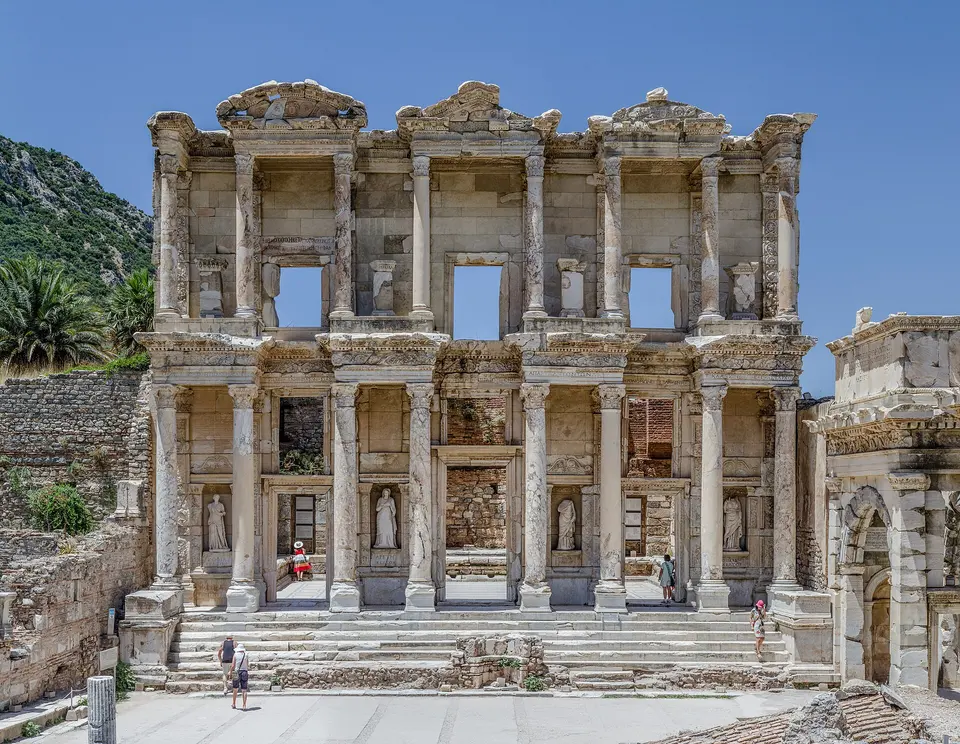
Ephesus
Photo: Benh LIEU SONG, CC BY-SA 3.0

Konak and Kemeraltı, then Ephesus and Selçuk, then Alaçatı, Çeşme and the Kordon

İzmir is a city of about three million on a long gulf of the Aegean, the third largest in Turkey and the one with the least in common with the rest of it. It has been here since the third millennium BC, was Greek Smyrna, then the most important Roman port on this coast, then for four Ottoman centuries a cosmopolitan trading city where Greeks, Armenians, Jews, Levantine Europeans and Turks lived in separate quarters around one bazaar. Almost all of that burnt in September 1922 at the end of the Greco-Turkish war, and the city that rebuilt itself is mostly modern, laid out along a waterfront promenade with the ancient layers surfacing in a few places: the Agora between the bazaar and the hill, the castle on the summit, the lanes of Kemeraltı that still follow a harbour filled in four hundred years ago. Ephesus, the best-preserved classical city in the Mediterranean, is an hour south. The airport has wide European and Gulf connections, and the metro, tram and ferries make the centre easy without a car.

At a glance

Ways to use these days

If it rains
4 of the stops are indoors — Kadifekale · İsa Bey Mosque · Ephesus Archaeological Museum
Lightest day on foot
Day 1 — 2.1 km between stops
Most walking
Day 3 — 83.3 km

Day 1

Konak, the bazaar and the two layers of Smyrna underneath it

Start at the clock tower every İzmirli uses as a meeting point, get lost on purpose in a working Ottoman market, drink coffee in the courtyard of a caravanserai, go down into the Roman basement under the old commercial square, and finish on the acropolis hill as the gulf turns gold.

  • 5 sights
  • Transport between sights
12345250 mN
Stops in order, straight-line distancesWalking route in Google Maps ↗

Morning

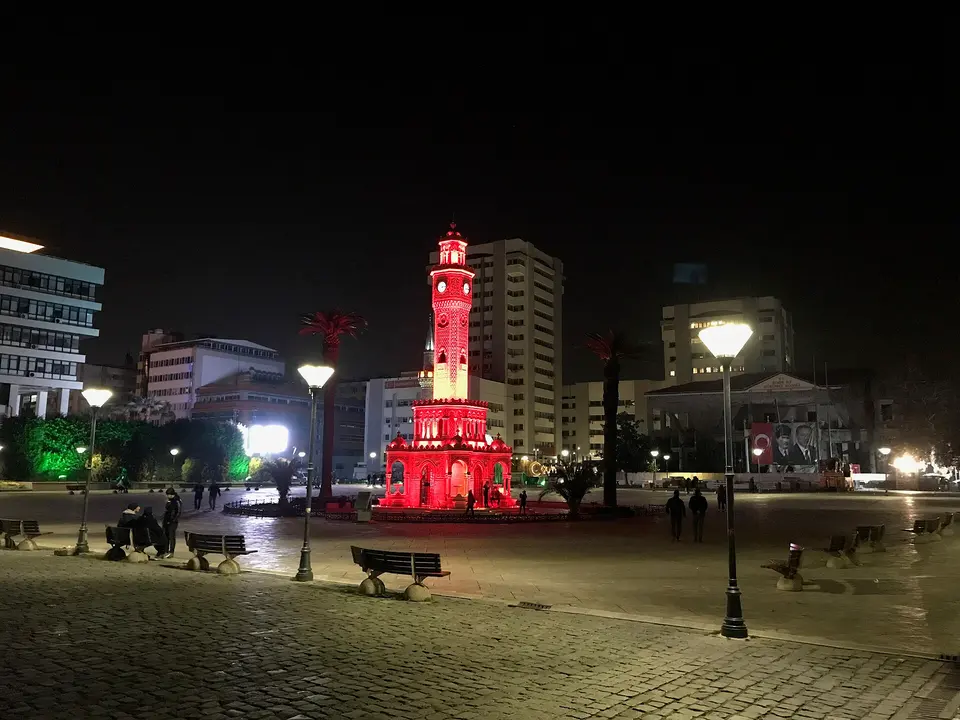
Konak Square and the Clock Tower
Photo: BSRF, CC BY-SA 4.0
1Square

Konak Square and the Clock Tower

Everything in İzmir is measured from this square, and the thing it is measured from is a twenty-five-metre clock tower of carved white marble built in 1901 to mark the twenty-fifth year of Abdülhamid II's reign. Raymond Charles Père, a Levantine architect from the city's French community, designed it in an Ottoman-Moorish manner with horseshoe arches and four fountains at its foot, and the clock itself was a present from Kaiser Wilhelm II. Beside it stands the small Konak Mosque of 1748, faced in Kütahya tiles, and behind that the ferry pier, the trams and the crowd. The tower survived the fire of 1922 that destroyed most of the city centre, which is part of why İzmir treats it as a survivor rather than an ornament.

  • Plan about 45 min
  • Open ground, free, always accessible; the ferries to Karşıyaka leave from the pier on the north side of the square and the crossing is the cheapest boat trip in Turkey
The bazaar starts on the east side of Konak Square, two minutes on foot
Kemeraltı Bazaar
Photo: Francisco Anzola, CC BY 2.0
2Bazaar

Kemeraltı Bazaar

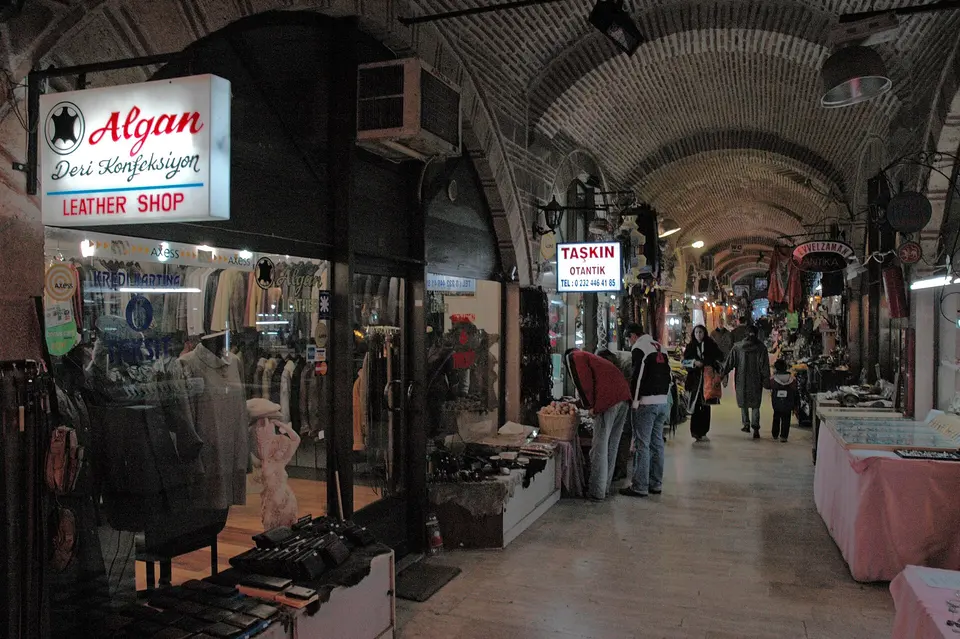
The bazaar follows the curve of an inner harbour that was filled in during the seventeenth century, which is why its main street bends: you are walking the shoreline of ancient Smyrna. What grew on top is a covered and half-covered market of several thousand shops running from Konak to the Agora, still organised by trade, with lanes of gold, lanes of cloth, lanes of tinsmiths hammering, herbalists selling dried figs and sumac, and coffee houses in the courtyards of Ottoman hans. Several synagogues of the old Sephardic quarter survive inside it, some restored and open, and the fifteenth-century Hisar Mosque sits in the middle of the noise. It is a working market rather than a tourist one, which is its whole charm and the reason prices are normal.

  • Plan about 2 h
  • Most shops open roughly 9:00 to 19:00 and close on Sunday; go in the morning when the tradesmen are working; the courtyard of a han is where you stop for Turkish coffee and the local boyoz pastry
400 m north through the bazaar lanes, about 8 minutes on foot
Kızlarağası Han
Photo: Dosseman, CC BY-SA 4.0
3Caravanserai

Kızlarağası Han

The chief black eunuch of the imperial harem, Hacı Beşir Ağa, endowed a caravanserai here in 1744 and the income from it paid for a mosque and a school. It is a two-storey courtyard building of stone and brick with arcades on both floors, camel stables below and merchants' rooms above, and after two centuries of decay it was restored in the 1990s into what it now is: a covered market of jewellers, carpet sellers, antique dealers and a good deal of tourist stock, with a café in the middle of the courtyard under a mulberry tree. The architecture is the reason to go and the coffee is the reason to stay. It is the largest surviving han in İzmir.

  • Plan about 45 min
  • Open through the day and free to walk into; the shops keep bazaar hours and close on Sunday; the upstairs gallery is the place to sit and look down at the courtyard

Midday

LunchLunch is in the bazaar and it should be. İzmir's own dishes are simple and Aegean: kumru, a sesame roll with cheese and sausage, sold from stalls; boyoz, a flaky Sephardic pastry eaten with a boiled egg at breakfast but sold all day; şambali, a semolina cake in syrup; and gevrek, which is what İzmir calls a simit and insists is different. For a sit-down meal the esnaf lokantası in the lanes behind Konak do pots of white beans, stuffed vegetables and lamb at prices set for shopkeepers.

Afternoon

700 m east through Kemeraltı and up Anafartalar Street, about 12 minutes on foot
Agora of Smyrna
Photo: 31774, CC0
4Archaeological site

Agora of Smyrna

The commercial heart of Roman Smyrna sits in a hollow between the bazaar and the hill, a rectangle the size of a football pitch surrounded by colonnades, rebuilt on Marcus Aurelius's money after the earthquake of 178 AD. The columns of the north stoa still stand; more impressive is what is underneath, a basement of three barrel-vaulted galleries carrying the weight of the square above, with a Roman water system still running through them and graffiti scratched on the walls by the people who worked there. Excavation is continuing and the site keeps growing as houses above it are bought and cleared. It is five minutes from Kemeraltı and almost always quiet.

  • Plan about 1 h
  • Open daily, roughly 8:30 to 17:30 in winter and later in summer; entry about ₺340, free with the Müzekart; go down into the vaulted basement, which is the part most visitors miss

Evening

2 km up the hill by taxi, about 10 minutes; the bus 33 also goes, the walk does not
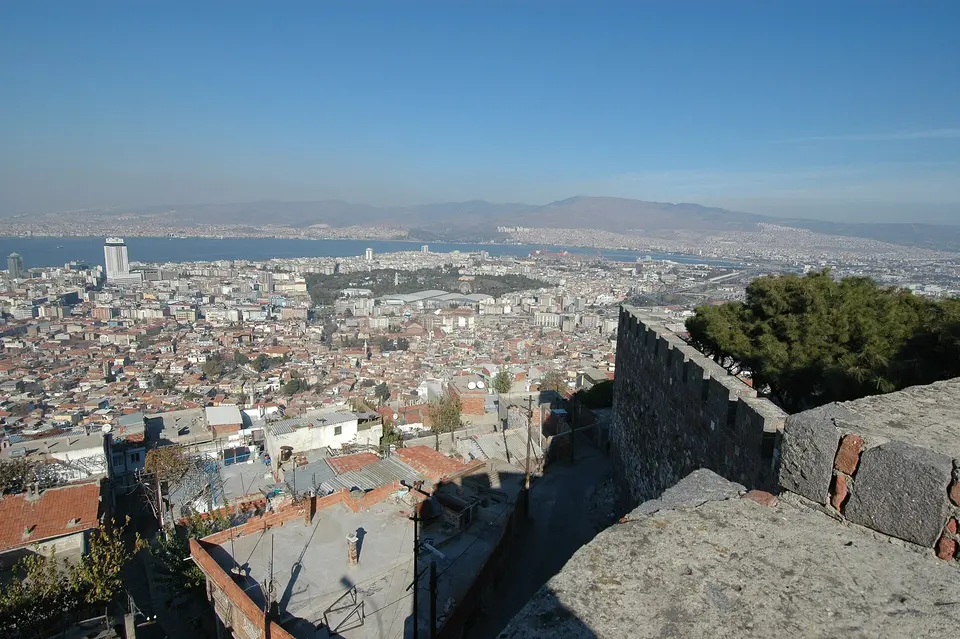
Kadifekale
Photo: Dosseman, CC BY-SA 4.0
5Castle

Kadifekale

Alexander the Great is said to have dreamt on this hill that he should refound Smyrna below it, and whether or not that is true, his general Lysimachus built the new city here around 300 BC and put a fortress on the summit. What stands now is mostly Byzantine and Ottoman rebuilding on Hellenistic foundations, with cisterns, a stretch of wall and a few towers, and none of it is the reason to come. The reason is the view: the whole gulf of İzmir laid out below, the bazaar, the ferries crossing to Karşıyaka, and the shape of the bay that made the city. Tea is served under the trees inside the walls. The neighbourhood on the slope is poor and the walk up is steep and unrewarding, so take a taxi.

  • Plan about 1 h 15 min
  • Free and open through the day; go for the late afternoon and sunset, when the gulf turns; take a taxi both ways rather than walking up through the hillside streets

Day 2

Ephesus and Selçuk: the marble city, the basilica, the museum and the village above

Be at the upper gate when Ephesus opens and walk the whole city downhill before the heat, then spend the afternoon on the Ayasuluk hill and in the museum that holds what came out of the ground, and end the day in a hill village with a view down the valley.

  • 5 sights
  • Transport between sights
123452 kmN
Stops in order, straight-line distancesDriving route in Google Maps ↗

Morning

Ephesus
Photo: Benh LIEU SONG, CC BY-SA 3.0
1Archaeological site

Ephesus

Ephesus was the capital of Roman Asia and a city of perhaps two hundred thousand people, and enough of it survives that you walk through streets rather than past ruins. From the upper gate the marble road drops past the Odeon where the council met, the Prytaneion with its eternal flame, the Temple of Hadrian and the terraced houses of the rich, down Curetes Street with its ruts worn by carts, to the Library of Celsus, a two-storey facade of columns and statues built in 117 AD over the tomb of the governor whose son paid for it and holding twelve thousand scrolls. Beyond it the Marble Road runs to the Great Theatre, cut into the hillside for twenty-five thousand spectators, where the silversmiths rioted against St Paul, and then the Arcadian Way heads west to a harbour that silted up and left the city stranded. The Terrace Houses are a separate ticket and worth it: six Roman apartments under a modern roof, with frescoes and mosaic floors intact.

  • Plan about 4 h
  • Open daily from 08:00 to 18:45 with the lower ticket window open 08:00 to 19:00 and the upper one 08:00 to 18:00; walk downhill from the upper gate and take a taxi back, allow four hours, and bring a hat because there is no shade

Midday

LunchSelçuk is where you eat, not the site, where the café is a captive one. The lanes around the bus station and the aqueduct with the storks nesting on it have çöp şiş grills, gözleme cooked to order and lokantas with the day's stews in trays; the town also does a Saturday market. If you would rather eat in Şirince later, keep lunch to a gözleme and a glass of tea, because the village restaurants serve a long Aegean meze lunch that will take two hours.

Afternoon

4 km from the lower gate into Selçuk and up the hill, about 10 minutes by taxi
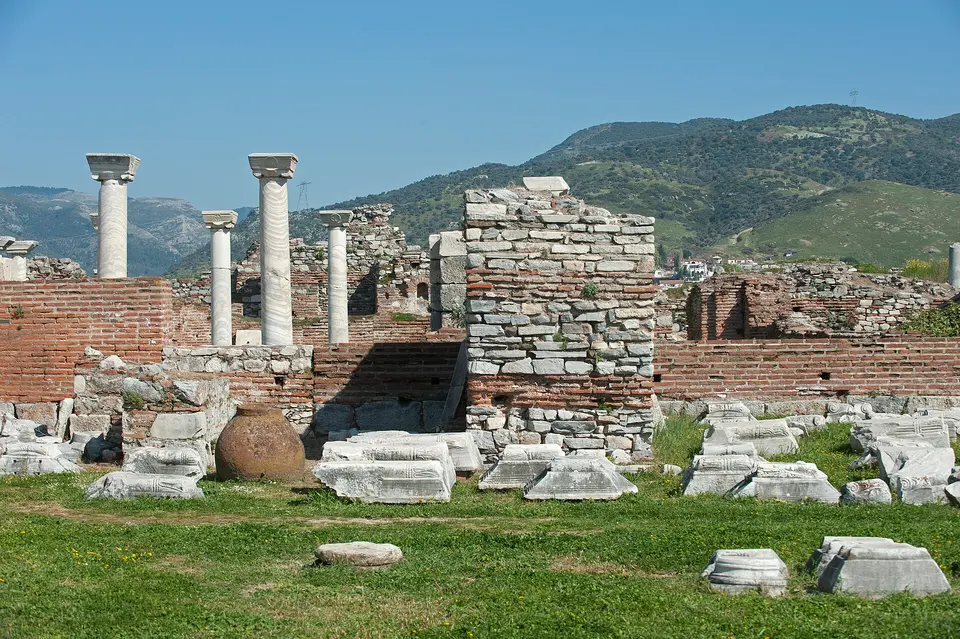
Basilica of St John
Photo: Dosseman, CC BY-SA 4.0
2Church ruins

Basilica of St John

Christian tradition holds that John the Evangelist spent his last years in Ephesus and was buried on the Ayasuluk hill, and a small shrine over the grave was replaced by Justinian in the sixth century with an enormous cruciform basilica, six domes on marble piers, one of the largest churches of its age. It fell in an earthquake and was quarried for centuries, but the plan is completely legible: you walk the nave, stand at the marble-paved tomb under what was the central dome, look into the baptistery with its cross-shaped font, and climb to the ramparts for the view down over Selçuk, the İsa Bey Mosque and the single re-erected column of the Temple of Artemis in the plain below.

  • Plan about 1 h
  • Open daily from about 08:30 to 18:30 in summer and shorter in winter; entry about ₺300, free with the Müzekart; it is a ten-minute walk uphill from the centre of Selçuk and half an hour is enough
200 m downhill from the basilica ticket office, three minutes on foot
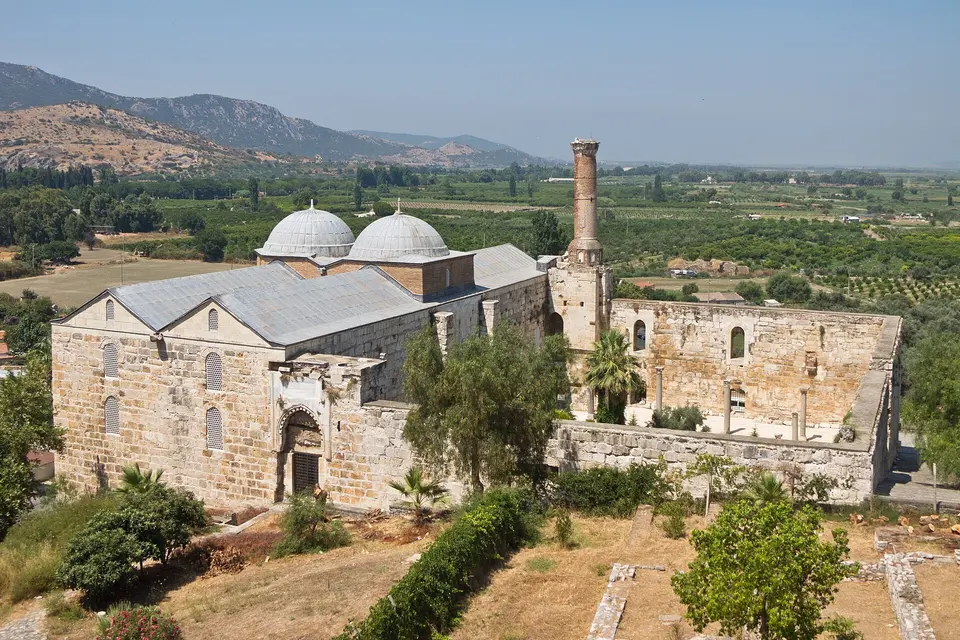
İsa Bey Mosque
Photo: Carlos Delgado, CC BY-SA 3.0
3Mosque

İsa Bey Mosque

Built in 1375 for the Aydınid emir İsa Bey by a Damascene architect, this is one of the most interesting mosques in Anatolia precisely because it comes before the Ottoman formula settled. The west facade is a wall of carved marble with an off-centre doorway; the courtyard is entered from the side; the prayer hall is divided by two ranks of granite columns carried straight off the ruins of Ephesus and the Roman harbour baths, capitals and all; and the two domes sit on a flat wooden roof rather than a single great vault. The tilework in the eastern dome is Seljuk. It stands at the foot of the Ayasuluk hill on the way down from the basilica.

  • Plan about 30 min
  • Free, open outside prayer times, shoes off and shoulders and heads covered; it is two minutes below the basilica ticket office, so combine them
500 m into the centre of Selçuk, about 8 minutes on foot
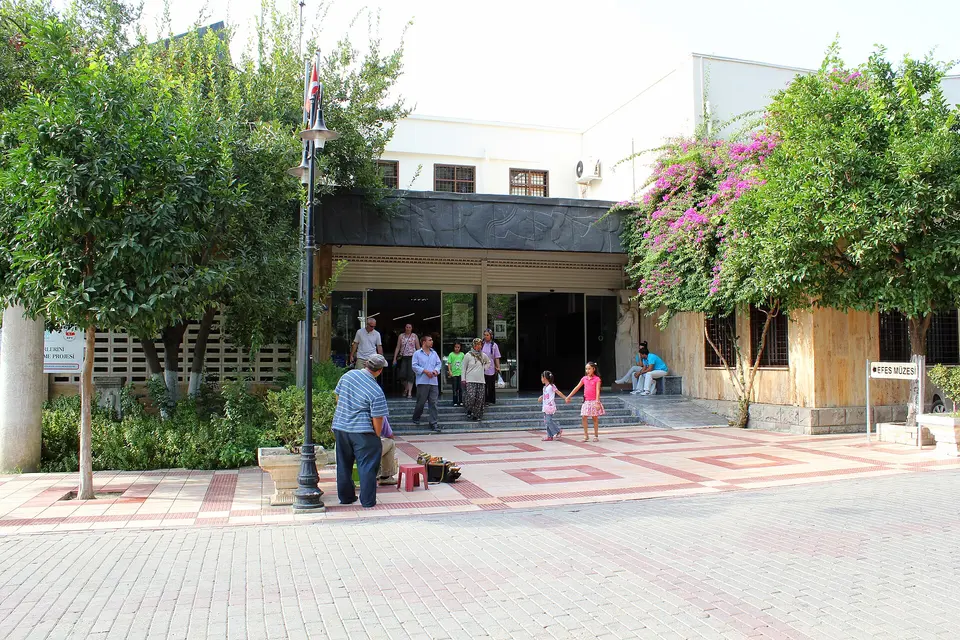
Ephesus Archaeological Museum
Photo: Klaus-Peter Simon, CC BY-SA 3.0
4Museum

Ephesus Archaeological Museum

Everything portable that came out of Ephesus is here, arranged by where it was found rather than by date, which makes the site legible in a way the site itself does not. The terrace-house room holds the frescoes, glass and bronzes of ordinary domestic life; the fountain room has the Roman statuary that stood in the public basins, including a famous small Priapus; and at the centre are the two great statues of Artemis of Ephesus, second-century marble covered from the waist up in rows of ovoid protuberances that have been read as breasts, bull testicles and eggs and are still argued about. There is also a room on the gladiators, whose cemetery was found nearby, and the reliefs from the Temple of Hadrian.

  • Plan about 1 h 15 min
  • Open daily except Monday, roughly 08:30 to 18:30 in summer; entry about ₺300, free with the Müzekart; it sits in the middle of Selçuk, five minutes from the bus station

Evening

8 km east up the valley, about 20 minutes by minibus from Selçuk bus station or by taxi
Şirince
Photo: Lastradadeisogni, CC BY-SA 4.0
5Village

Şirince

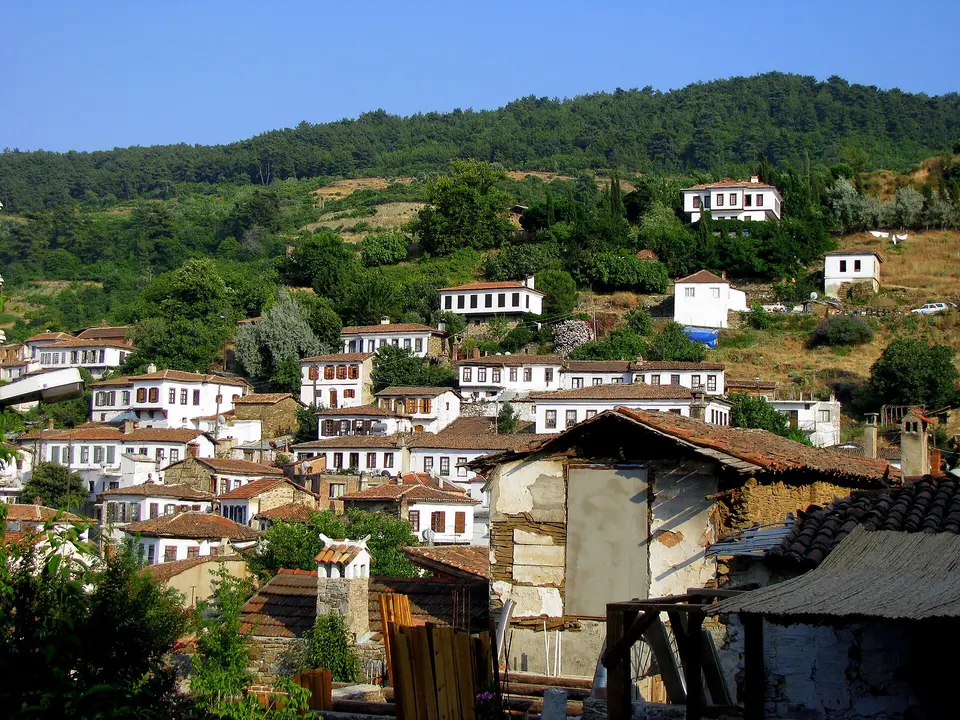
A village of white and ochre houses on a ridge of vineyards and olive groves eight kilometres above Selçuk, built by Greek Orthodox families who worked the land here until the population exchange of 1923 sent them to Greece and brought Muslim families from Thessaloniki in their place. The stone church of St John the Baptist of 1805 still stands at the top of the village and the smaller Church of the Virgin below it, both restored; the houses between them are the Aegean vernacular of stone ground floor and plastered timber above. Şirince is not undiscovered and the main lane is a long line of stalls selling fruit wine, olive oil soap and lace, but walk five minutes uphill and it is a village again, with a very good view down the valley.

  • Plan about 2 h
  • Free to wander; minibuses run from Selçuk bus station every half hour and take twenty minutes; come late in the afternoon when the coaches have gone, and treat the fruit wine as a souvenir rather than a drink

Day 3

The peninsula: Alaçatı's stone streets, Çeşme's castle, then the lift and the Kordon at home

Drive out along the peninsula for a morning in the prettiest stone town on the Turkish Aegean and an afternoon on a Bayezid fortress looking across at Chios, then come back for sunset from a 1907 lift and dinner in the streets where İzmir actually eats.

  • 4 sights
  • Transport between sights
12345 kmN
Stops in order, straight-line distancesDriving route in Google Maps ↗

Morning

Alaçatı
Photo: Satirdan kahraman, CC BY-SA 4.0
1Town

Alaçatı

Alaçatı was a Greek wine-growing town until 1923 and then a quiet farming village until windsurfers found the bay in the 1990s, and what saved it was that nobody knocked anything down in between. The old streets are cobbled and narrow, lined with two-storey houses of pale cut stone with blue or green shutters and bougainvillea over the doorways, and almost every one of them is now a boutique hotel, a café or a shop. The Saturday market fills several streets with produce from the peninsula; the stone windmills stand on the ridge above the town; and the bay five kilometres south has a constant cross-shore wind and shallow water that make it one of the best places in Europe to learn to windsurf. It is expensive by Turkish standards and very crowded in August.

  • Plan about 2 h 30 min
  • Free to walk; the market is on Saturday morning and is the best time to come; parking in the old town is almost impossible in summer, so use the car parks on the edge and walk in

Midday

LunchÇeşme marina is a row of fish restaurants and they are the reason to be there: sea bass, red mullet and octopus off the boats, with Aegean meze of samphire, sea fennel and wild greens dressed in olive oil and lemon. Alaçatı does the same thing at higher prices and with a longer wait. If you want the cheap version, the fish market in Çeşme will cook what you buy for a small charge at the stalls behind it.

Afternoon

9 km further west to Çeşme town, about 12 minutes; the castle is above the marina
Çeşme Castle
Photo: David Broad, CC BY 3.0
2Castle

Çeşme Castle

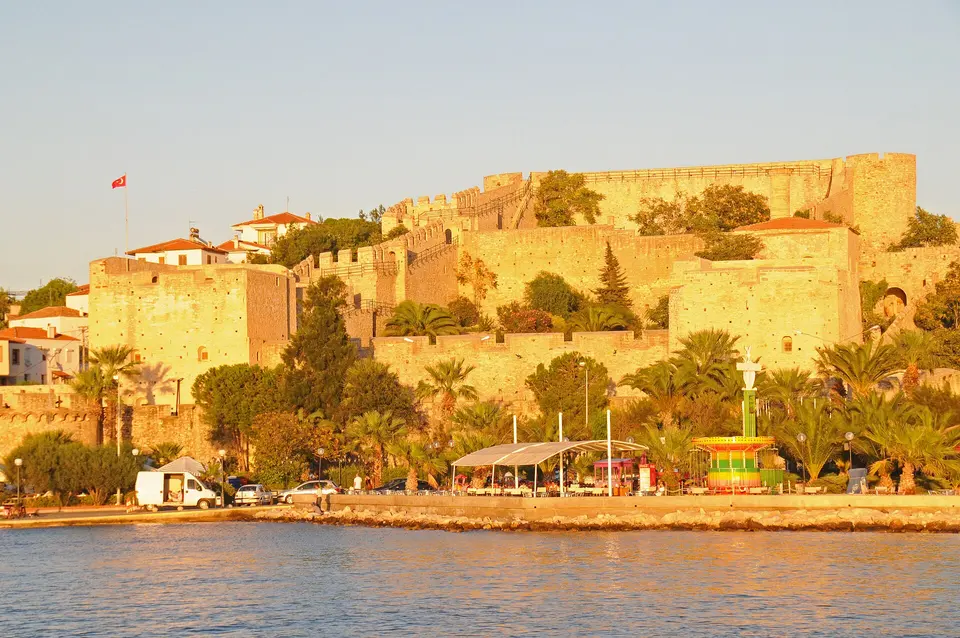
Sultan Bayezid II had this fortress built in 1508 on the site of an earlier Genoese one, to guard a harbour that looks across a narrow strait at the Greek island of Chios. It is a compact rectangle with six towers, a dry moat and walls you can walk, and inside it is a small archaeological museum with finds from Erythrai and a display on the naval battle of Çeşme of 1770, when a Russian fleet destroyed the Ottoman navy in the bay below. From the ramparts you look down on the marina, the caravanserai of 1528 that is now a hotel, and the ferries leaving for Chios. The statue on the square in front is of Cezayirli Hasan Pasha, who lost that battle and went on to rebuild the fleet.

  • Plan about 1 h 30 min
  • Open daily except Monday, roughly 08:30 to 17:30; entry about ₺120, free with the Müzekart; the fish restaurants along the marina below are the obvious lunch and the ferry to Chios goes from the same quay

Evening

85 km back to İzmir, about an hour and fifteen; the lift is in Karataş, 3 km south of Konak
Asansör
Photo: Yabancı, CC BY-SA 3.0
3Historic lift

Asansör

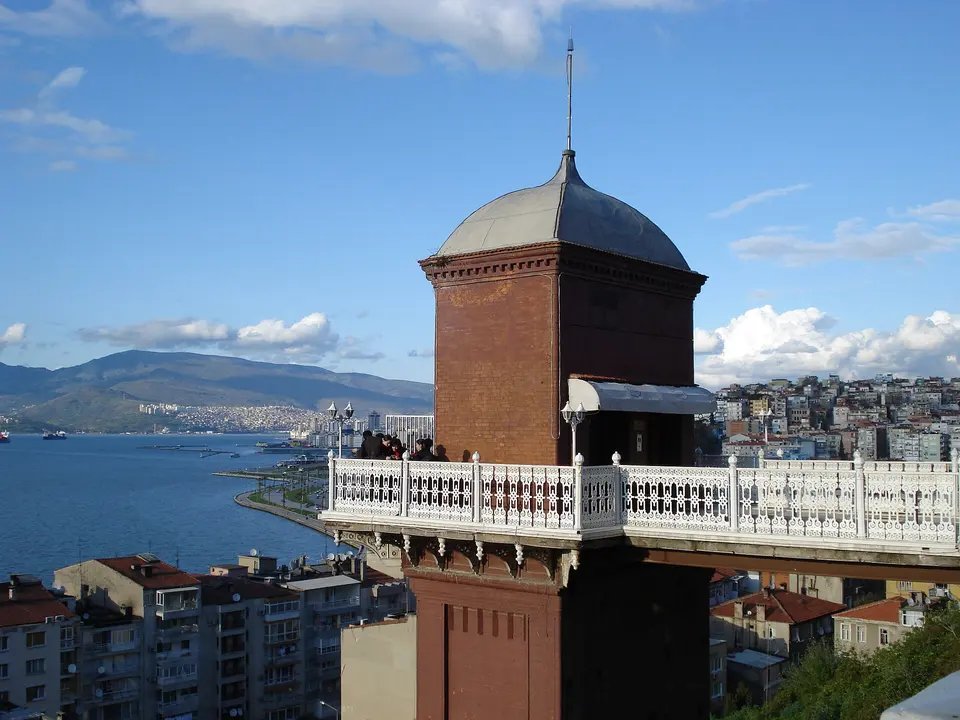
The Jewish quarter of Karataş is built on a shelf of rock and the fifty-one metres between the shore road and the houses above it were, until 1907, a flight of 155 steps. Nesim Levi Bayraklıoğlu, a local merchant, paid for a brick tower with a water-powered lift inside it so that his neighbours could get home, gave it to the city, and it has been running ever since, now on electricity and still free. The narrow street that leads to it was renamed Dario Moreno Street after the singer who grew up on it, and it is lined with restored Levantine houses. At the top there is a terrace, a restaurant and the best view of the gulf in the city, straight down the water towards Karşıyaka.

  • Plan about 1 h
  • The lift runs from about 08:00 until midnight and is free; go up for sunset and walk down Dario Moreno Street afterwards; the restaurant on the terrace charges for the view, the terrace itself does not
4 km north along the Kordon, about 15 minutes by taxi or 25 on foot along the water
Alsancak and the Kordon
Photo: Dosseman, CC BY-SA 4.0
4Waterfront quarter

Alsancak and the Kordon

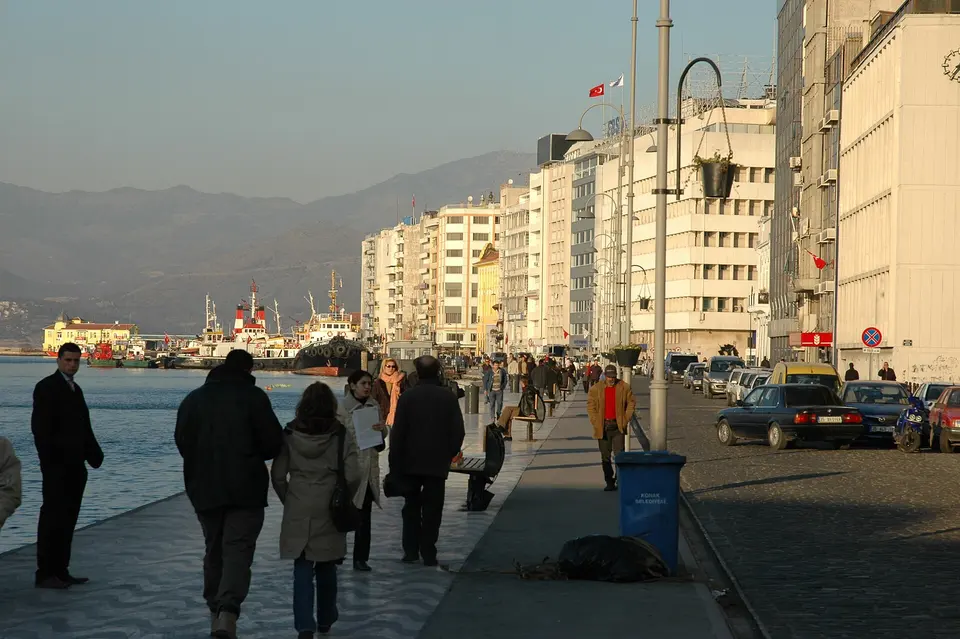
The Kordon is the seafront promenade that runs north from Konak along the gulf, a wide grass strip with a cycle path, horse carriages and a line of bars and restaurants facing the water, and on a summer evening most of İzmir is on it, sitting on the grass with beer and sunflower seeds watching the sun go down behind the mountains on the far shore. Behind it is Alsancak, the old Levantine and Greek quarter that survived the 1922 fire, a grid of narrow streets of nineteenth-century terraced houses in ochre and rose that are now meyhanes, coffee places and bookshops. Kibris Şehitleri Street is the spine of it. This is where the city eats and drinks, and it is the part of İzmir that explains why Turks call it the most relaxed city in the country.

  • Plan about 2 h
  • Free and at its best from about 18:00; the meyhanes on the side streets serve raki with Aegean meze and fill up after 21:00; the metro and the suburban train both stop at Alsancak

Good to know in İzmir

Ephesus: official opening hours

3 days in İzmir: quick answers

Is 3 days enough for İzmir?

Three days is the right length if Ephesus is part of the plan, which it should be. One day covers the city centre properly, one is needed for Ephesus and Selçuk because the site alone takes four hours, and the third gives you the Çeşme peninsula and an evening on the Kordon. Two days means choosing between Ephesus and the peninsula. A fourth day would buy you Pergamon at Bergama, 100 km north, with its acropolis on a cone of rock and the Asklepion healing sanctuary, or the smaller Ionian sites at Teos and Klazomenai with a day on the beach at Urla.

What is the best time of year to visit İzmir?

May, June, September and October. Spring is green and the wild flowers are out at Ephesus; September and October still have warm sea and no crowds. July and August regularly reach 35 to 38°C and Ephesus has no shade at all, which turns the site into an endurance test; the coast is also at its most expensive and most booked then. Winter is mild, about 12°C, and wet, and the peninsula largely shuts, but the city itself works fine and the museums and bazaar are unaffected.

How do you get from İzmir to Ephesus?

The cheapest way is the İZBAN suburban train or a regional train from Basmane station to Selçuk, which takes about 80 minutes and costs very little, then a taxi or a dolmuş for the last 3 km to the site. Intercity buses from İzmir Otogar also run to Selçuk. By car it is an hour on the motorway. If you are doing Ephesus, the basilica, the museum and Şirince in one day, hiring a car or a driver is the only way to fit them all in, because the minibuses do not connect neatly.

How much does İzmir cost per day?

İzmir is one of the cheaper large Turkish cities away from the peninsula. A hostel bed is roughly ₺600 to ₺900, a decent city hotel ₺2,000 to ₺4,000, and a boutique hotel in Alaçatı in summer several times that. Eating is inexpensive if you eat where locals do: a bazaar lunch is ₺250 to ₺400, a meyhane dinner with raki ₺1,000 to ₺1,500 a head, a fish dinner on the Çeşme marina more. Transport within the city is a few lira a ride on the İzmirim Kart. Ephesus is the big single expense, around ₺1,800 for foreign visitors, with the Terrace Houses extra.

Is the Müzekart worth buying for İzmir?

Only if you hold a Turkish identity number, because the standard Müzekart is for residents. Foreign visitors are sold a separate Müzekart+ pass covering most state museums and sites for a fixed period; whether it pays depends almost entirely on Ephesus, which alone costs about half of it. If your plan is Ephesus, the Terrace Houses, the basilica, the Ephesus museum, the Agora and Çeşme castle in three days, it works out cheaper than separate tickets. If you are only doing Ephesus, buy a single ticket.

Is İzmir a good base for the Aegean coast?

It is the best one. Ephesus and Selçuk are an hour south, Pergamon an hour and a half north, Çeşme and Alaçatı an hour and ten west, and Urla, Siğacık and Teos are closer than any of them. The airport has direct flights across Europe and the Gulf, the intercity bus station serves the whole coast, and the city itself is cheaper to sleep in than the resort towns. The one thing it is not good for is a beach holiday: the gulf inside the city is not for swimming, and you need to go out to the peninsula for that.

Other İzmir itineraries

Keep exploring

Where this connects

THE TRIPWOA APP

Go somewhere.
Make it yours.

Build days around what you love. Follow your route, find your next stop and keep the moments along the way.

Get it on Google PlayAvailable for Android
Free to start
Tripwoa home with a Paris trip and nearby places to explore
Tripwoa day plan for New York with a route map and Times Square stop

A day that feels like you.

Sources and method

Places and coordinates: Wikidata and Tripwoa's open-data place catalog (Overture Maps Foundation, © OpenStreetMap contributors). Photos: Wikimedia Commons, credited on each image. Practical rules: the official sources linked in each note, checked in September 2026.

How this plan was made: Tripwoa's planner drafted the day order from real coordinates and typical visit times. Each stop was then reviewed, reordered where needed and rewritten with AI assistance. Walking distances are straight-line estimates, so allow a little extra time on real streets.