3-day itinerary · Chile

3 Days in Santiago

A realistic first-timer plan that walks the historic centre on day one, from the Plaza de Armas and the presidential palace of La Moneda to lunch in the Mercado Central, the gardens of Cerro Santa Lucía, the Museo Nacional de Bellas Artes and an evening in Lastarria; climbs on day two, to Neruda's house of La Chascona, the funicular up Cerro San Cristóbal, the 300-metre view from Sky Costanera and the bars of Barrio Italia; and takes day three for the Museum of Memory and Human Rights, the Quinta Normal park, the Museo Chileno de Arte Precolombino and a last night in Bellavista. Every stop comes with walking distances and the rules that matter in 2026.

  • 3days
  • 14sights
  • 4.6 kmon foot between sights

Updated 12 September 2026 · 8 official sources checked · report an error

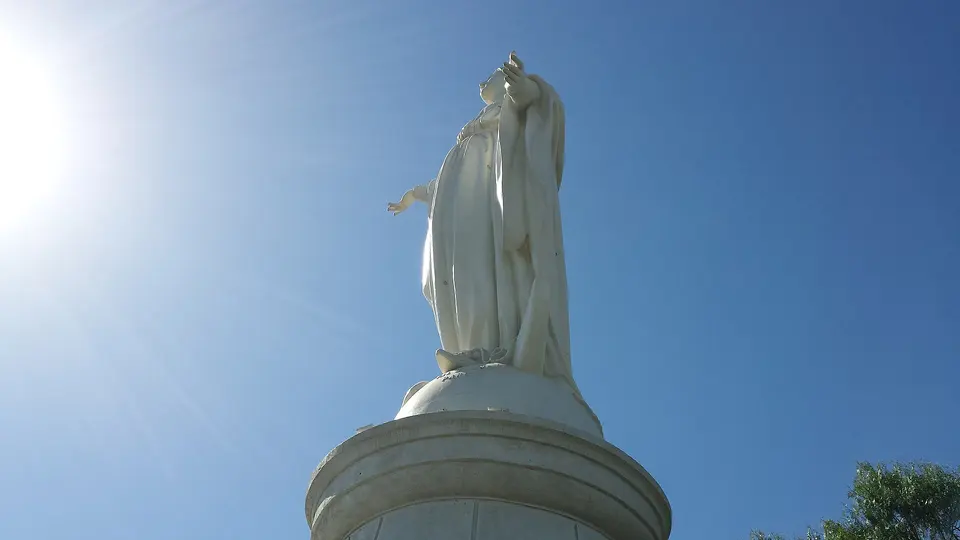
Cerro San Cristóbal
Photo: Mirka fernanda:), CC BY-SA 3.0

The centre on foot, then the hills and the tower, then the museums

Santiago's centre is compact and flat, and the metro is good, so the plan walks the first day and uses the metro and one taxi a day after that. Day one runs from the Plaza de Armas to La Moneda, back past the Mercado Central for lunch, up the terraces of Cerro Santa Lucía, through the Parque Forestal to the fine-arts museum and into Lastarria for dinner. Day two climbs: La Chascona at opening, the funicular to the Virgin on San Cristóbal, the cable car down to Providencia and the Sky Costanera observation deck, ending in Barrio Italia. Day three is the museums in the west, the Museum of Memory and the Quinta Normal park, then the Precolombino in the centre and the bars of Bellavista. La Moneda tours must be booked weeks ahead through the presidency's site, and the museums close on Mondays.

At a glance

Ways to use these days

If it rains
3 of the stops are indoors — Museo Nacional de Bellas Artes · Museo de la Memoria y los Derechos Humanos · Museo Chileno de Arte Precolombino
Lightest day on foot
Day 1 — 3.6 km between stops
Most walking
Day 2 — 7.0 km

Day 1

The centre: Plaza de Armas, La Moneda, the market and Santa Lucía

Start on the Plaza de Armas under the cathedral, walk to the presidential palace of La Moneda for the changing of the guard or a booked tour, eat fish in the Mercado Central, climb the fountains and terraces of Cerro Santa Lucía, cross the Parque Forestal to the Museo Nacional de Bellas Artes, and end in the cafés of Lastarria.

  • 6 sights
  • 3.6 km on foot
  • Longest walk 1.1 km
123456250 mN
Stops in order, straight-line distancesRoute in Google Maps ↗

Morning

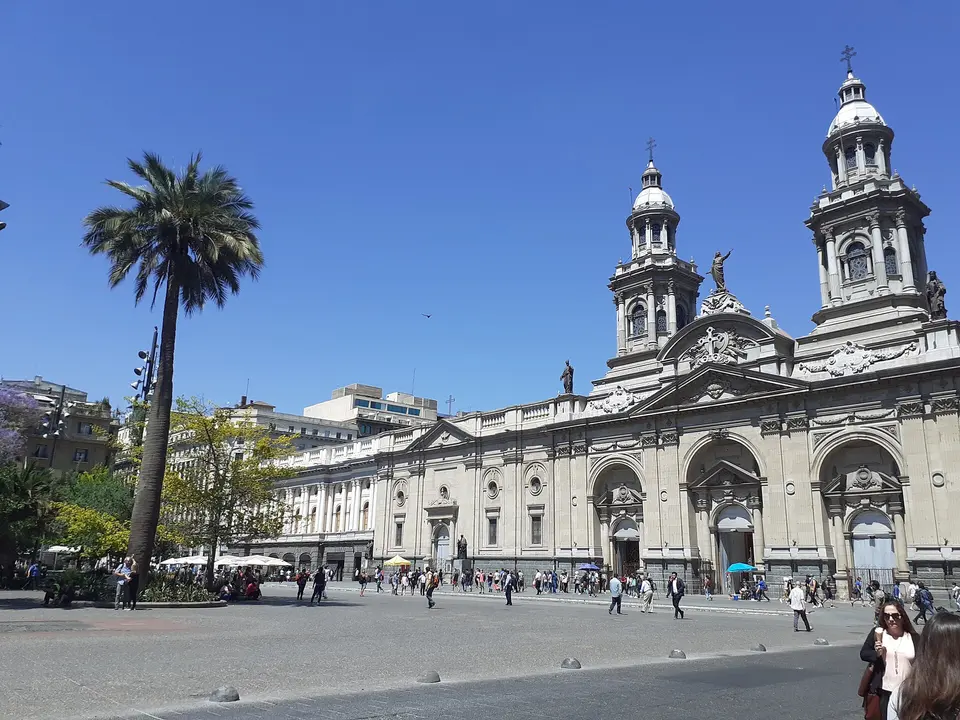
Plaza de Armas
Photo: Sfs90, CC BY-SA 4.0
1Main square

Plaza de Armas

Pedro de Valdivia laid out the square in 1541 and the city has been measured from it since: the Metropolitan Cathedral of 1748 on the west side, the Central Post Office and the National History Museum in the old governors' palace on the north, chess players under the palms, shoe-shiners and preachers in the middle. Start here at 9:00, look into the cathedral, and walk down Paseo Ahumada, the pedestrian shopping street, towards La Moneda.

  • Plan about 45 min
650 m · about 10 min on foot
Palacio de La Moneda
Photo: Rjcastillo, CC BY-SA 4.0
2Presidential palace

Palacio de La Moneda

The neoclassical palace of 1805 was built as the royal mint, became the seat of the presidents in 1845, and was bombed by the air force on 11 September 1973 while Salvador Allende died inside; restored, it is still where the president works. Free guided tours of the courtyards and state rooms are run by the presidency on weekdays and must be booked online weeks ahead; without one, watch the changing of the guard on the north side and go down into the Centro Cultural La Moneda, the arts centre under the plaza, for its exhibitions and craft shop.

  • Plan about 1 h
  • Free guided tours on weekdays, booked at visitaspatrimonio.presidencia.cl; ID for everyone over 16; arrive 15 minutes early

Midday

1.1 km · about 17 min on foot
Mercado Central
Photo: Carlos yo, CC BY-SA 4.0
3Market and restaurants

Mercado Central

The cast-iron market hall of 1872, shipped from Glasgow and assembled beside the Mapocho river, sells the fish and shellfish of the Pacific in the morning and cooks them for lunch: the big restaurants in the middle of the hall, Donde Augusto among them, are famous and touristy, the small counters around the edges cheaper and as good. Order a caldillo de congrio, the conger-eel soup Neruda wrote an ode to, or a plate of machas a la parmesana.

  • Plan about 1 h 15 min

Afternoon

970 m · about 15 min on foot
Cerro Santa Lucía
Photo: Rjcastillo, CC BY-SA 4.0
4Hill park

Cerro Santa Lucía

The rock where Valdivia founded the city was turned into a hill of terraces, fountains, stairways, turrets and gardens in the 1870s by the mayor Benjamín Vicuña Mackenna, and it is the centre's outdoor living room: the Neptune fountain and the yellow terrace at the bottom, the Caupolicán terrace halfway, and the little castle at the top, 70 metres up, with the first view of the Andes over the roofs. It is free, and a 15-minute climb.

  • Plan about 1 h
  • Free; the stairs are steep and the stone is slippery when wet
550 m · about 9 min on foot
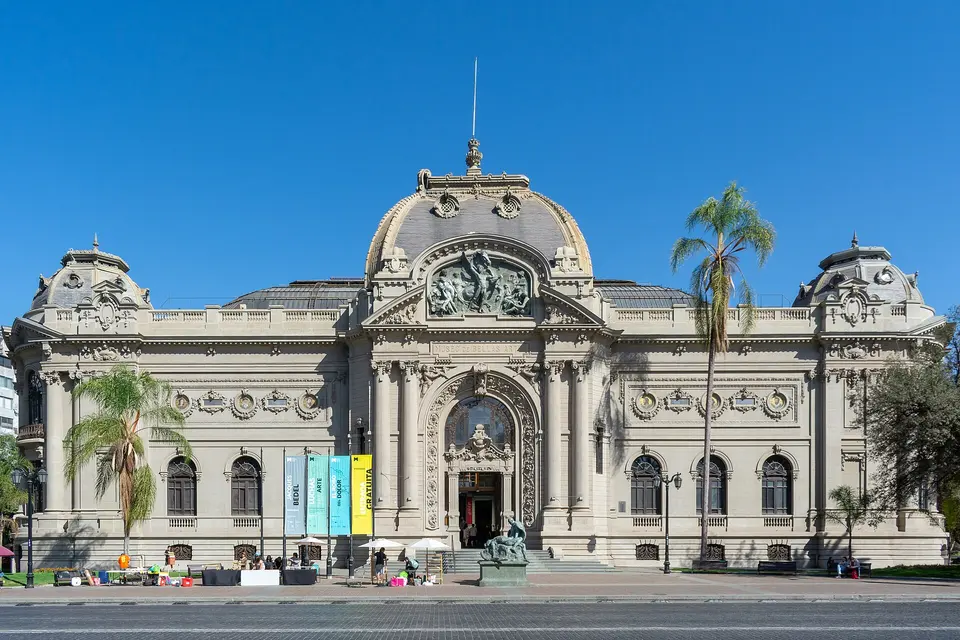
Museo Nacional de Bellas Artes
Photo: Carlos Figueroa Rojas, CC BY-SA 4.0
5Art museum

Museo Nacional de Bellas Artes

The beaux-arts palace of 1910 on the edge of the Parque Forestal, with its glass-roofed central hall, holds the national collection of Chilean painting and sculpture from the colonial period to the present, and shares the building with the Museum of Contemporary Art at the back; both are free. The park outside, a strip of plane trees along the river laid out for the centenary of 1910, is the walk into Lastarria.

  • Plan about 1 h
  • Tue–Sun 10:00–18:30, last entry 18:20; free; closed Mondays

Evening

380 m · about 6 min on foot
Barrio Lastarria
Photo: Cristian Coloma, CC BY-SA 4.0
6Neighbourhood

Barrio Lastarria

Between Santa Lucía and the park, the few streets of Lastarria are the centre's best evening: cafés and wine bars with tables on the pedestrian street, the Museo de Artes Visuales, the book and craft stalls on the paseo, the Cine El Biógrafo and, across the avenue, the GAM, the Gabriela Mistral cultural centre with its rusted-steel façade, exhibitions and free concerts. Eat here on the first night; the restaurants of José Victorino Lastarria street are the place.

  • Plan about 2 h

Day 2

The hills and the tower: La Chascona, San Cristóbal, Sky Costanera and Barrio Italia

See Neruda's house of La Chascona when it opens, ride the funicular up Cerro San Cristóbal to the Virgin and the view of the whole city against the Andes, take the cable car down to Providencia for Sky Costanera at the top of the Gran Torre, and finish among the antique shops and bars of Barrio Italia.

  • 4 sights
  • 660 m on foot
  • Longest walk 660 m
12341 kmN
Stops in order, straight-line distancesRoute in Google Maps ↗

Morning

La Chascona
Photo: Carlos yo, CC BY-SA 4.0
1House museum

La Chascona

Pablo Neruda built this house on the slope of San Cristóbal in 1953 for Matilde Urrutia, his secret lover and later wife, and named it after her tangled hair; it climbs the hill in a series of rooms and stairways, a ship's cabin of a dining room, a bar, his collections of glass, shells and paintings, and the garden. The Neruda Foundation runs it with an audio guide in six languages; come at 10:00, before the tour groups, and go on up the hill afterwards.

  • Plan about 1 h
  • Tue–Sun 10:00–18:00 (to 19:00 in January and February); CLP 11,000; no reservation, first come first served
660 m · about 10 min on foot
Cerro San Cristóbal
Photo: Mirka fernanda:), CC BY-SA 3.0
2Hill and viewpoint

Cerro San Cristóbal

The hill that rises 300 metres over Bellavista is the heart of the Parque Metropolitano, the largest urban park in the country, and the 1925 funicular from the foot of Pío Nono street takes seven minutes to the summit terrace, where the 14-metre white statue of the Virgin has looked over the city since 1908 and the whole of Santiago spreads to the wall of the Andes. Walk down through the Japanese garden or take the cable car from the summit over the park to Providencia; the terrace is the best place in the city for a sunset if you come back.

  • Plan about 2 h
  • Funicular Tue–Sun 10:00–18:45, Mon from 13:00, closed the first Monday of the month; CLP 1,580 one way; park free on foot

Midday

LunchThe cafés at the summit and the Tupahue station sell empanadas and mote con huesillo, the peach-and-wheat drink of the hill; the alternative is to come down to Pío Nono street in Bellavista, where the Patio Bellavista courtyard has twenty restaurants.

Afternoon

Cable car from the summit down to the Oasis station in Providencia, then a 20-minute walk along the river to Costanera Center; or metro line 1 from Baquedano to Tobalaba
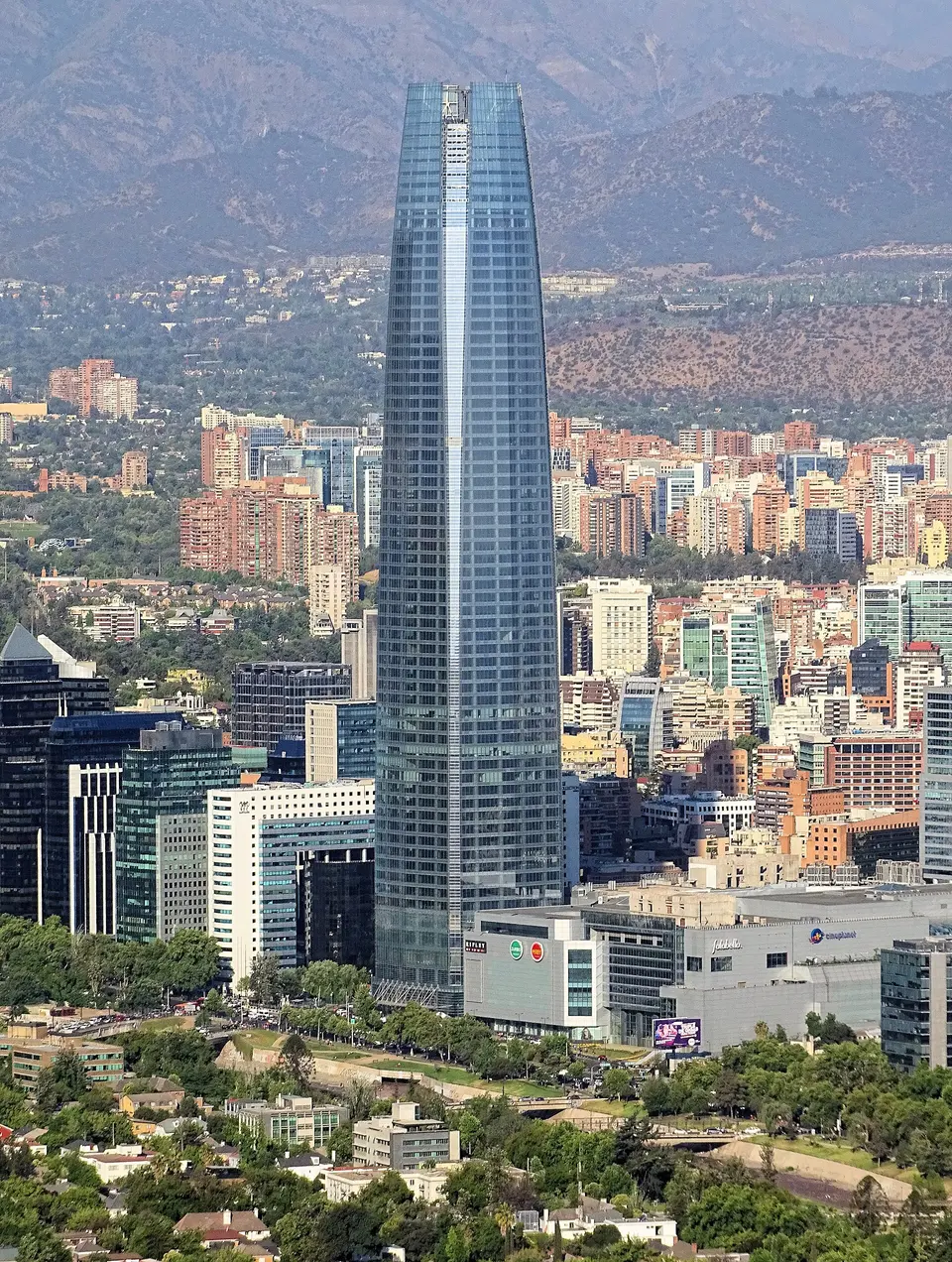
Sky Costanera
Photo: Bjørn Christian Tørrissen, CC BY-SA 4.0
3Observation deck

Sky Costanera

The Gran Torre Santiago, 300 metres and 62 floors above the Costanera Center mall, is the tallest building in South America, and its open-air observation deck on the top two floors turns through 360 degrees: the Andes close enough to count the snow lines, the city to the coast range in the west, and San Cristóbal below you with the Virgin on top. The sunset slot costs more and is worth it in the clear months; buy the ticket in the mall's ground-floor office or online.

  • Plan about 1 h
  • 10:00–22:00 daily, last entry 21:00; CLP 25,000, CLP 30,000 for entry between 18:00 and 20:00

Evening

Metro line 1 from Tobalaba to Baquedano and line 5 to Santa Isabel, then a 10-minute walk; a taxi takes 15 minutes
Barrio Italia
Photo: Janitoalevic, CC BY-SA 4.0
4Neighbourhood

Barrio Italia

Avenida Italia and the streets around it, once the quarter of Italian furniture makers and mechanics, are now the city's design district: old houses turned into courtyards of antique shops, restorers, galleries, cafés and restaurants that spill into their gardens, with the workshops still working behind them. Come in the late afternoon for the shops and stay for dinner; Sunday afternoons are the busiest.

  • Plan about 2 h

Day 3

Memory, the Quinta Normal, the Precolombino and Bellavista

Spend the morning in the Museum of Memory and Human Rights, walk through the Quinta Normal park to lunch in Barrio Yungay, take the metro back to the centre for the Chilean Museum of Pre-Columbian Art, and end the trip in the bars and restaurants of Bellavista.

  • 4 sights
  • 310 m on foot
  • Longest walk 310 m
12341 kmN
Stops in order, straight-line distancesRoute in Google Maps ↗

Morning

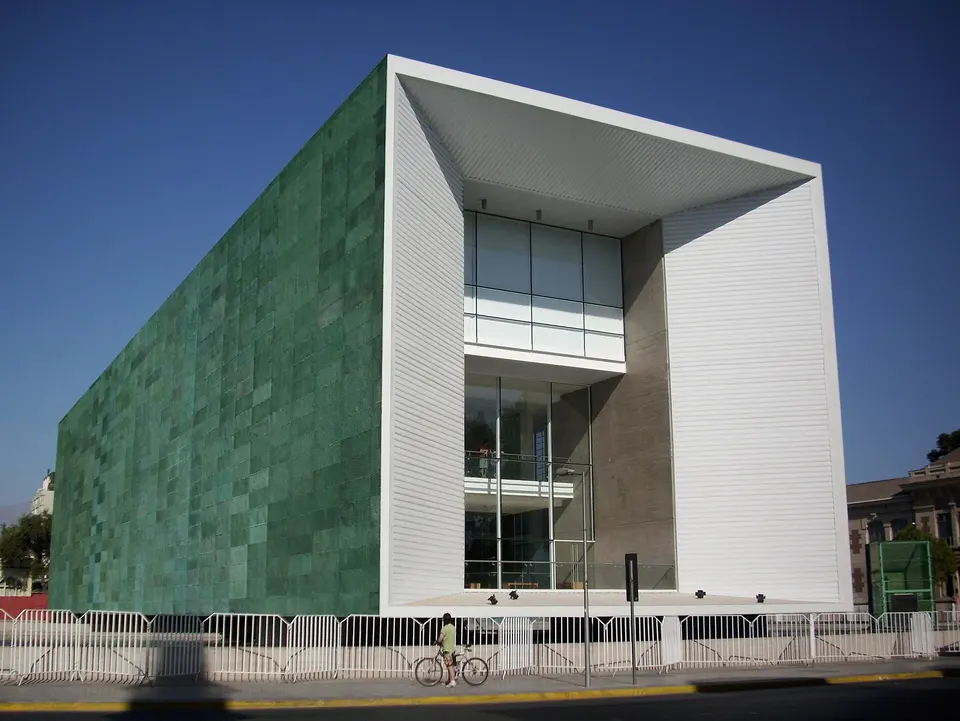
Museo de la Memoria y los Derechos Humanos
Photo: Jorge Barrios, CC BY-SA 3.0
1Museum

Museo de la Memoria y los Derechos Humanos

Opened in 2010 in a green glass block raised over a sunken plaza, the museum documents the dictatorship of 1973 to 1990: the coup and the bombing of La Moneda, the detention centres, the disappeared, whose photographs fill a three-storey wall, the exile, the resistance and the 1988 plebiscite. It is unsparing and calm, with an audio guide in English, and it is the one museum in the city that explains the country. Allow two hours.

  • Plan about 2 h
  • Tue–Sun 10:00–18:00, last entry 17:30; free; metro Quinta Normal
310 m · about 5 min on foot
Parque Quinta Normal
Photo: Carlos Figueroa Rojas, CC BY-SA 4.0
2Park and museums

Parque Quinta Normal

The city's oldest park, planted in 1841 as an agricultural experiment station, is 36 hectares of old trees, a boating lake and a cluster of museums: the National Museum of Natural History in a neoclassical pavilion of 1875, with a blue-whale skeleton in its hall, the railway museum with its locomotives outdoors and a science museum. It is the green break between the Museum of Memory and lunch in Yungay, and a Sunday-afternoon institution for the neighbourhood.

  • Plan about 1 h
  • Free; the Natural History Museum is free too

Midday

LunchBarrio Yungay, the 19th-century quarter south of the park, has the city's oldest lunch rooms: the Peluquería Francesa, a bistro behind a working 1868 barbershop, and the Boulevard Lavaud around it; the Museum of Memory's own café is the quick option.

Afternoon

Metro line 5 from Quinta Normal to Plaza de Armas, three stops, about 10 minutes
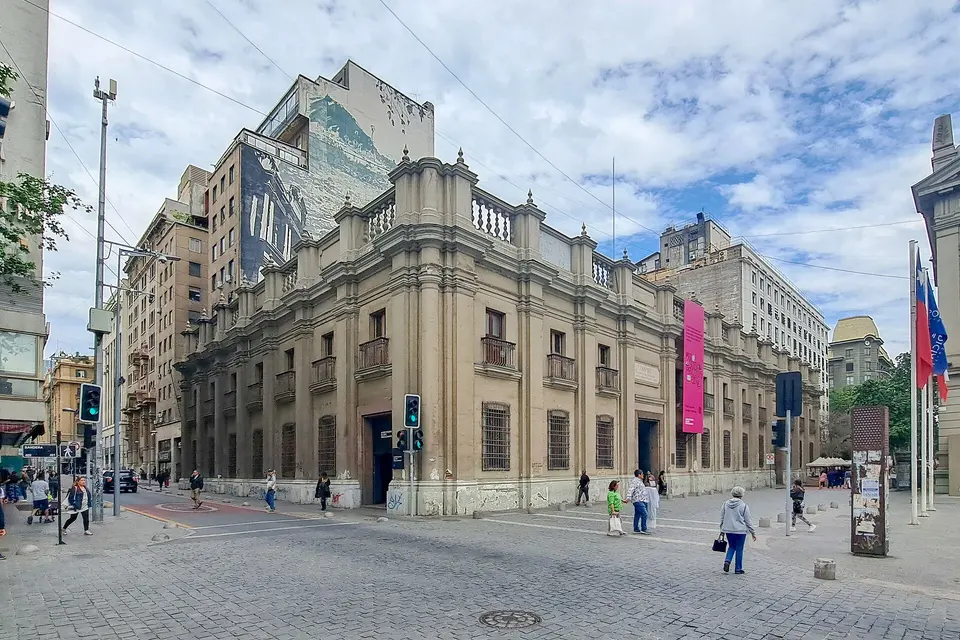
Museo Chileno de Arte Precolombino
Photo: Carlos yo, CC BY-SA 4.0
3Museum

Museo Chileno de Arte Precolombino

In the old royal customs house of 1807, a block from the Plaza de Armas, the finest museum in the city shows the arts of the Americas before Columbus, from Mesoamerica to Patagonia: Chinchorro mummies older than Egypt's, Chancay textiles, Mapuche silver, Moche pots, Andean khipus and, in the basement, the Chile Before Chile gallery of the country's own cultures. It is small enough for ninety minutes and beautifully lit.

  • Plan about 1 h 30 min
  • Tue–Sun 10:00–18:00, entry until 17:15; CLP 8,000 for foreign visitors, CLP 1,000 for Chileans and residents

Evening

Metro line 5 from Plaza de Armas to Baquedano and a 10-minute walk across the river, or a 10-minute taxi
Barrio Bellavista
Photo: Carlos yo, CC BY-SA 4.0
4Nightlife district

Barrio Bellavista

Across the Mapocho from the centre, at the foot of San Cristóbal, the bohemian quarter of painted houses, murals and street cafés is where Santiago eats and drinks late: the Patio Bellavista courtyard of restaurants, the bars of Pío Nono and Constitución streets, the lapis-lazuli shops and the old-fashioned picadas serving chorrillana, a plate of chips, steak, onions and eggs for the table. It is loud at weekends and the right last night.

  • Plan about 2 h

Good to know in Santiago

Tickets and opening days

  • Guided visits to the Palacio de La Moneda are organised by the Presidency and booked through its heritage-visits site; everyone aged 16 and over must present an ID card, passport or driving licence, every visitor from the age of one must be registered, and groups must arrive at the palace 15 minutes before the booked time for security checks.Source: Presidencia de la República, Visitas Patrimoniales · checked Sep 2026
  • The Funicular Santiago on Cerro San Cristóbal runs Tuesday to Sunday 10:00–18:45 and on Mondays 13:00–18:45, closing on the first Monday of each month for maintenance; a one-way ticket is CLP 1,580, a round trip CLP 2,250 Tuesday to Friday and CLP 2,060 at weekends and holidays.Source: Funicular Santiago, official tickets · checked Sep 2026
  • La Chascona (Fernando Márquez de La Plata 0192, Providencia) is open Tuesday to Sunday 10:00–18:00, and 10:00–19:00 in January and February; general admission is CLP 11,000, with CLP 4,500 for under-17s, accredited students and residents over 60. Entry is without reservation, in order of arrival, with audio guides in Spanish, English, Portuguese, French, German and Italian.Source: Fundación Pablo Neruda · checked Sep 2026
  • Sky Costanera is open Monday to Sunday 10:00–22:00 with last entry at 21:00. Adults (13+) pay CLP 25,000 by day and CLP 30,000 for entry between 18:00 and 20:00; children aged 5–12 CLP 10,000, under-4s free.Source: Sky Costanera, rates and schedules · checked Sep 2026
  • The Museo de la Memoria y los Derechos Humanos (Matucana 501, metro Quinta Normal on line 5) is open Tuesday to Sunday 10:00–18:00 with last entry at 17:30; admission is free and capacity is limited, in order of arrival.Source: Museo de la Memoria y los Derechos Humanos · checked Sep 2026
  • The Museo Nacional de Bellas Artes (José Miguel de la Barra 650) is open Tuesday to Sunday 10:00–18:30 with last entry at 18:20, and admission is free for everyone; closed on January 1, Good Friday, May 1, September 18–19 and December 25.Source: Museo Nacional de Bellas Artes · checked Sep 2026
  • The Museo Chileno de Arte Precolombino (Bandera 361) charges CLP 8,000 for foreign visitors and CLP 1,000 for Chileans and residents, with students at CLP 4,000 and CLP 500; the Chilean museums registry lists it as open Tuesday to Sunday 10:00–18:00 with entry until 17:15, closed Mondays.Source: Museo Chileno de Arte Precolombino / Registro de Museos de Chile · checked Sep 2026

Getting around

  • Santiago's public transport fares with the bip! card, valid from February 22, 2026: metro CLP 895 at peak (7:00–8:59 and 18:00–19:59), CLP 815 off-peak and CLP 735 in the low band (6:00–6:59 and 20:45–23:00); buses a flat CLP 795. One payment covers metro, bus and MetroTren with up to two transfers within 120 minutes.Source: DTPM, Directorio de Transporte Público Metropolitano · checked Sep 2026

3 days in Santiago: quick answers

Is 3 days enough for Santiago?

Three days cover the centre, the two hills, the tower, Neruda's house, the main museums and three of the best neighbourhoods. A fourth day is the classic day trip: the port of Valparaíso and its funiculars, a wine estate in the Maipo valley, or the Cajón del Maipo mountains and hot springs.

Which days should I plan around?

The Museum of Memory, the Museo Nacional de Bellas Artes, the Precolombino and La Chascona are all closed on Mondays, and the funicular runs a reduced schedule on Mondays, so keep days two and three off a Monday. La Moneda's free guided tours run on weekdays only and are booked through the presidency's website, up to two months ahead; slots go fast. Sky Costanera and the markets are open daily.

How much do the tickets cost?

The Museum of Memory and the Museo Nacional de Bellas Artes are free, and so are La Moneda's tours, the parks and the hills on foot. La Chascona is CLP 11,000, the Precolombino CLP 8,000 for foreign visitors, the funicular CLP 1,580 one way, Sky Costanera CLP 25,000 by day and 30,000 at sunset. Prices are in Chilean pesos; roughly 950 pesos to the US dollar in 2026.

How do I get around?

Buy a bip! card at any metro station and load it: a metro ride costs CLP 895 at peak, 815 off-peak and 735 early and late, buses a flat 795, with free transfers within two hours. Taxis are metered and cheap; ride-hailing apps work. Everything on day one is walkable; the Andes are always east, which makes the centre easy to navigate.

How much walking is this itinerary?

About 3.5 km in a straight line on day one, flat except for the climb up Santa Lucía; about 1 km on foot on day two, with the funicular and cable car doing the hill; and about 1.5 km on day three plus two metro rides. Summer afternoons are hot and dry, so the plan puts the hills in the morning.

Other Santiago itineraries

Keep exploring

Where this connects

THE TRIPWOA APP

Go somewhere.
Make it yours.

Build days around what you love. Follow your route, find your next stop and keep the moments along the way.

Get it on Google PlayAvailable for Android
Free to start
Tripwoa home with a Paris trip and nearby places to explore
Tripwoa day plan for New York with a route map and Times Square stop

A day that feels like you.

Sources and method

Places and coordinates: Wikidata and Tripwoa's open-data place catalog (Overture Maps Foundation, © OpenStreetMap contributors). Photos: Wikimedia Commons, credited on each image. Practical rules: the official sources linked in each note, checked in September 2026.

How this plan was made: Tripwoa's planner drafted the day order from real coordinates and typical visit times. Each stop was then reviewed, reordered where needed and rewritten with AI assistance. Walking distances are straight-line estimates, so allow a little extra time on real streets.